Biomolecules
Cell Transport
Enzymes
Prokaryotes vs Eukaryotes
Comparing Theories
Viral Structure
100
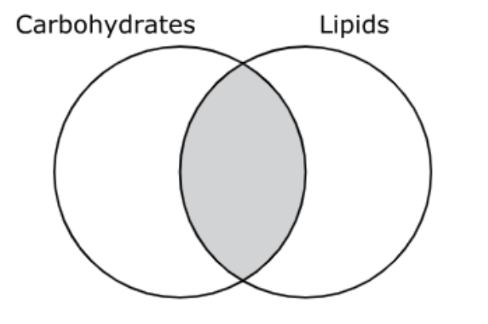
In a comparison of carbohydrates and lipids, this function would correctly belong in the shared (overlapping) region.
What is energy storage?
100
This type of transport moves substances down their concentration gradient and does not require cellular energy.
What is passive transport?
100
The function of an enzyme in a biochemical reaction is to ---
What is speed up the rate of the reaction?
100
This membrane-bound organelle is found in eukaryotic cells but NOT in prokaryotic cells and serves as the control center of the cell.
What is the nucleus?
100
Both endosymbiotic and autogenous theories attempt to explain this aspect of cell evolution.
What is the origin of eukaryotic organelles?
100
Viruses must have this in order to replicate.
What is a host cell?
200
A supplement designed to build muscle and provide quick energy must include these two types of biomolecules.
What are proteins and carbohydrates?
200
Four types of transmembrane proteins are shown in a section of the cell membrane.
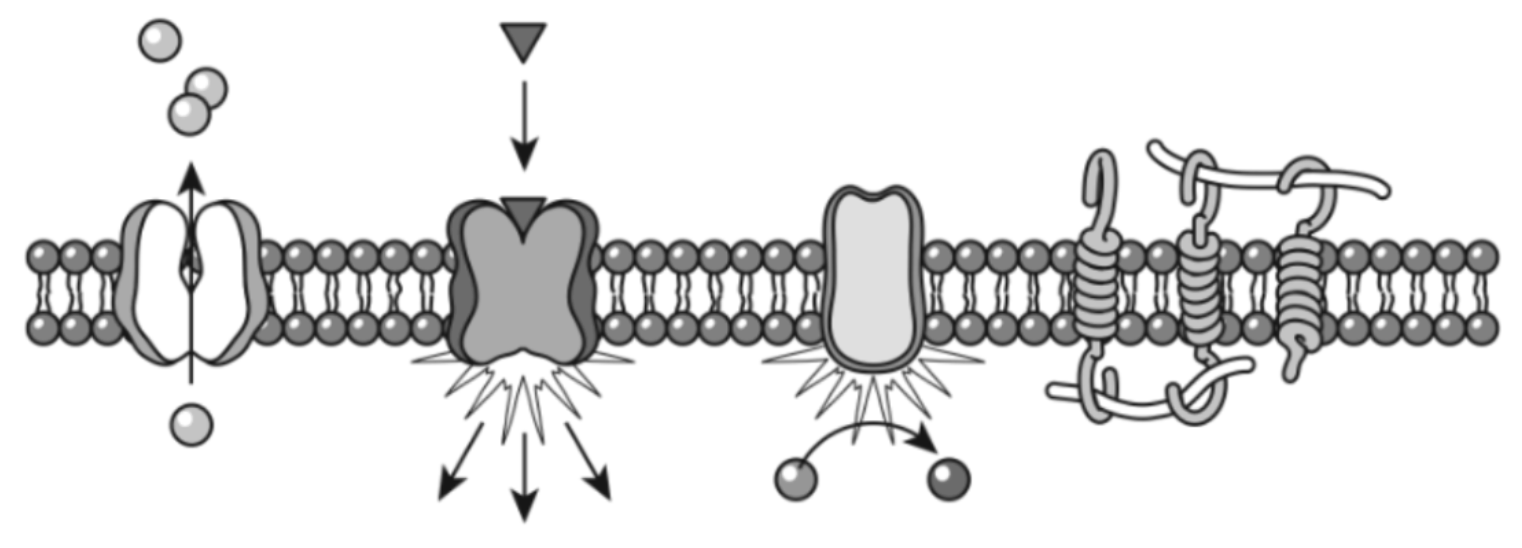
Although these proteins have different specific functions, they all...
What is help the cell interact with its external environment?
200
The specific location on an enzyme where a substrate binds and the reaction takes place is called this.
What is active site?
200
A student observes a cell under a microscope and notices it has a cell wall, but no membrane-bound organelles. Based on this observation, the cell is most likely this type of cell.
What is a prokaryotic cell?
200
This is the major difference between how the two theories explain the formation of organelles in early eukaryotic cells.
What is that endosymbiosis involves engulfment of external cells while autogenous theory involves internal folding?
200
Both viruses and cells contain this.
What is genetic material (DNA or RNA)?
300
During a lab procedure, a scientist adds a molecule that speeds up a reaction without being consumed. This biomolecule is most likely this type.
What are proteins (enzymes)?
300
A diagram represents the movement of three different substances across a cell membrane.
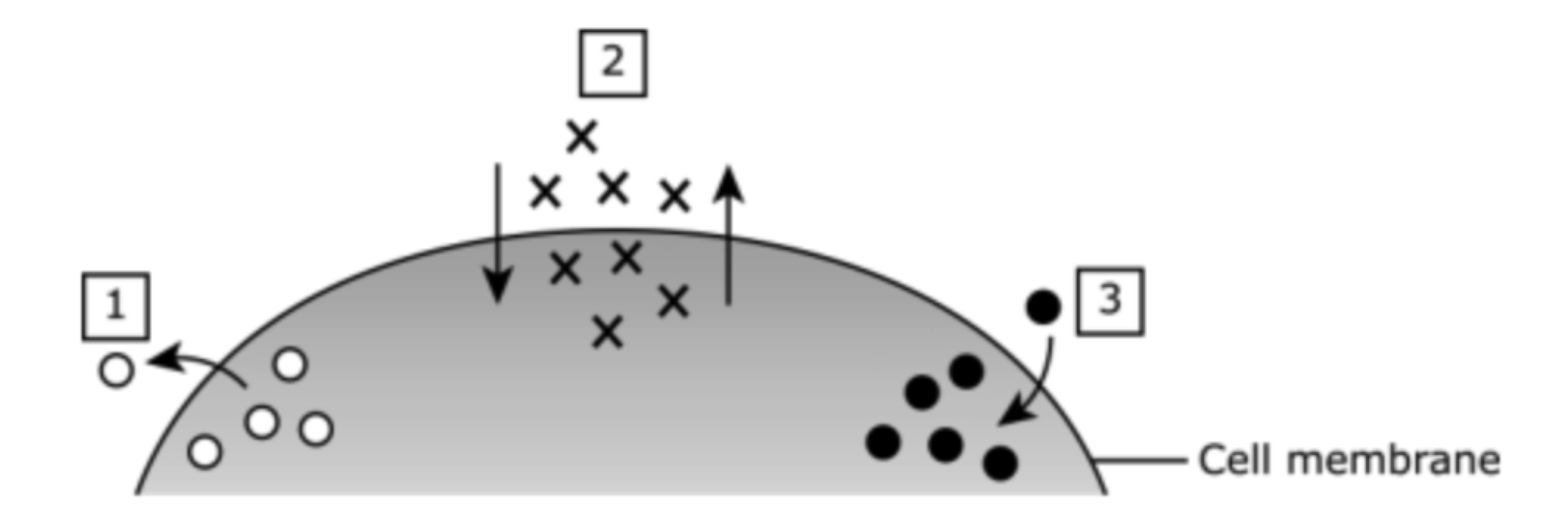
Which number(s) on the diagram would require energy, in the form of ATP, for transport?
What is only number 3?
300
For an enzyme to be able to catalyze a reaction, the active site must--
What is be complementary to the substrate?
300
This organelle is responsible for producing energy in eukaryotic cells and is believed to have originated from free-living prokaryotes according to the endosymbiotic theory.
What is the mitochondria?
300
Which theory is best supported by an organelle that forms from existing cell membranes rather than originating as an independent organism?
What is autogenous theory?
300
This characteristic is shared by viruses and prokaryotic cells but NOT eukaryotic cells.
What is lack of membrane-bound organelles?
400
If a cell loses the ability to regulate what enters and exits, which class of biomolecules is most directly affected?
What are lipids (phospholipids in the cell membrane)?
400
Two molecules cross a membrane: one moves with the concentration gradient through a protein channel, while the other moves against the gradient using ATP.
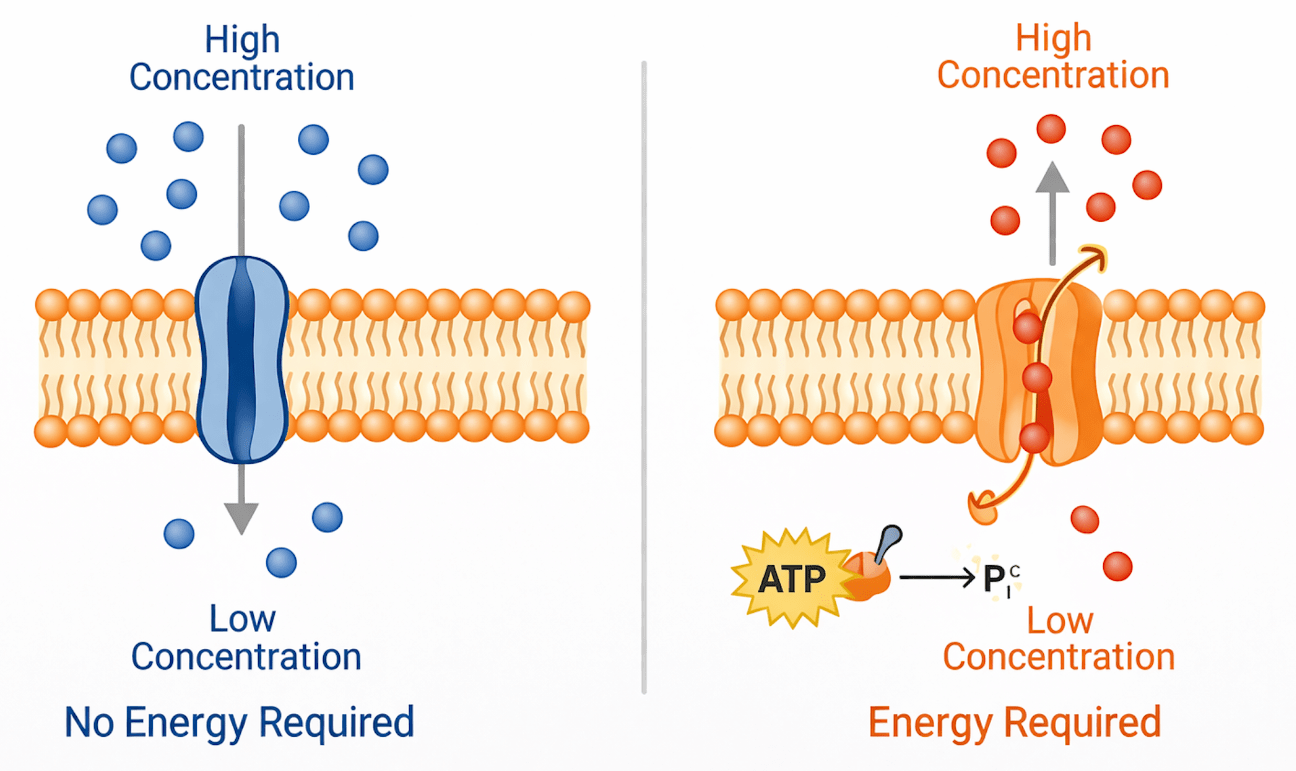
Name these types of transport.
What is facilitated diffusion & active transport?
400
A graph shows enzyme activity increasing with temperature up to a peak, followed by a rapid decline. What conclusion can be drawn about enzyme function?
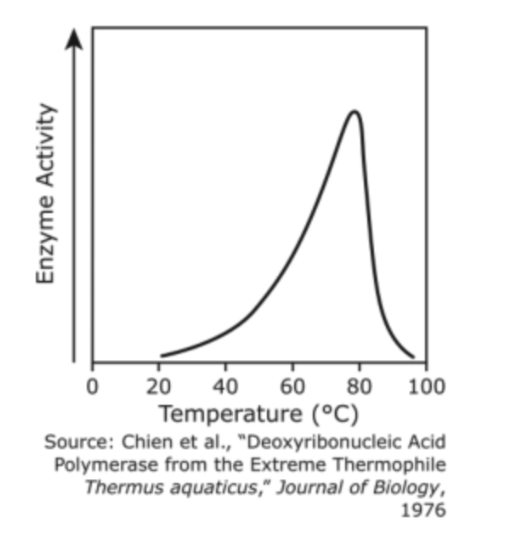
What is enzymes have an optimal temperature and lose function beyond that point due to denaturation?
400
A student is looking at a eukaryotic cell through a microscope. Identify the flaw in their description of the cell. (Bonus 200 points - Identify which type of eukaryotic cell would have these characteristics)
Student description:
"This eukaryotic cell has mitochondria, free-floating DNA, a cell membrane, and a cell wall."
What is free-floating DNA?
Bonus - What is a plant cell?
400
According to current scientific understanding, this theory is supported by the presence of double membranes around mitochondria and chloroplasts, suggesting a history of engulfment.
What is the endosymbiotic theory?
400
This structure in viruses has a similar function to the nuclear membrane in cells.
Bonus - Extra 200 points if you can name its function.
What is the capsid?
Bonus - What is protects the genetic material?
500
Explain why a cell cannot function if it only contains lipids and carbohydrates, even though both can provide energy.
What is the cell would lack proteins needed to catalyze cellular reactions and nucleic acids for genetic information, preventing regulation and reproduction?
500
The table shows the concentrations of substances inside and outside of the cell and the direction the substances move over time.
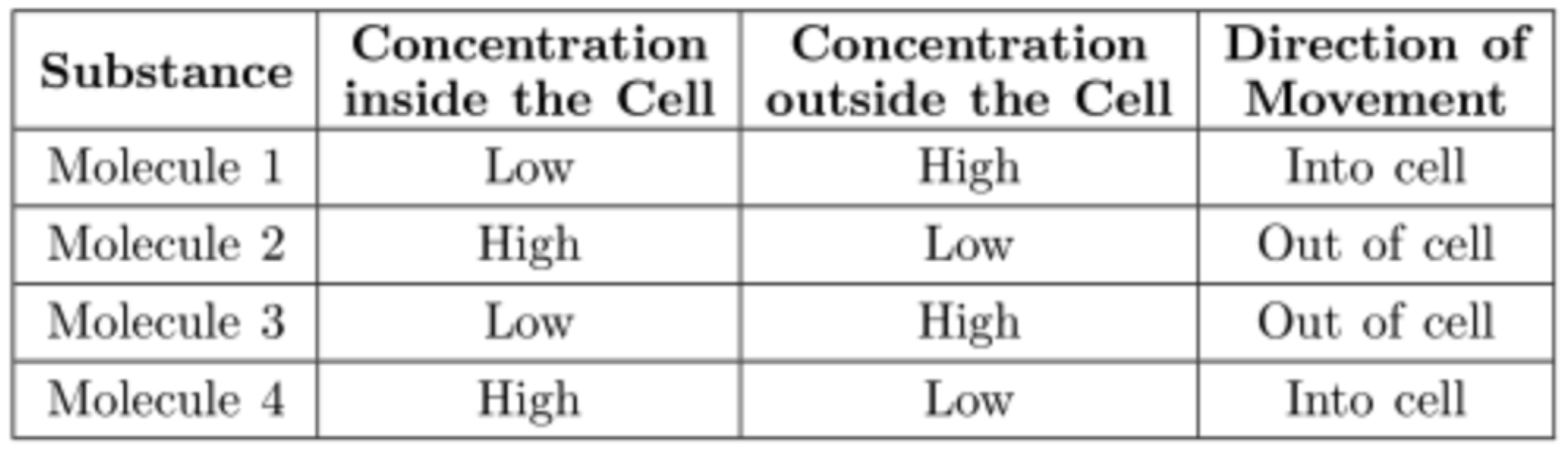
Which TWO molecules cross the cell membrane by active transport?
What are molecules 3 and 4?
500
Rennin is an enzyme that catalyzes a reaction that solidifies milk. Rennin was added to three different test tubes with milk. Each test tube was placed in a water bath for 10 minutes. The data collected during the experiment are shown.
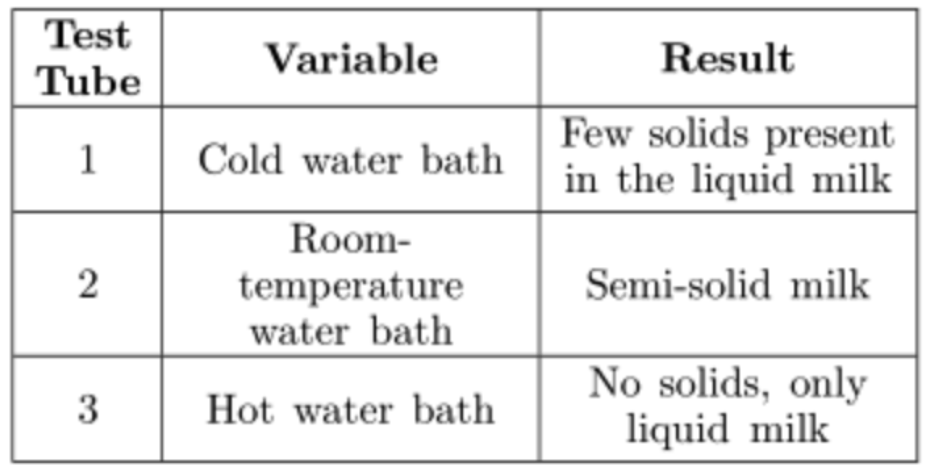
The best explanation for the results in Test Tube 3 is that...
(There is a scientific word for what happened to the enzyme)
What is the enzyme was denatured?
500
Students use a microscope to look for structures present in four different cells. The student placed an X for each structure that was viewed for each cell on the table shown.
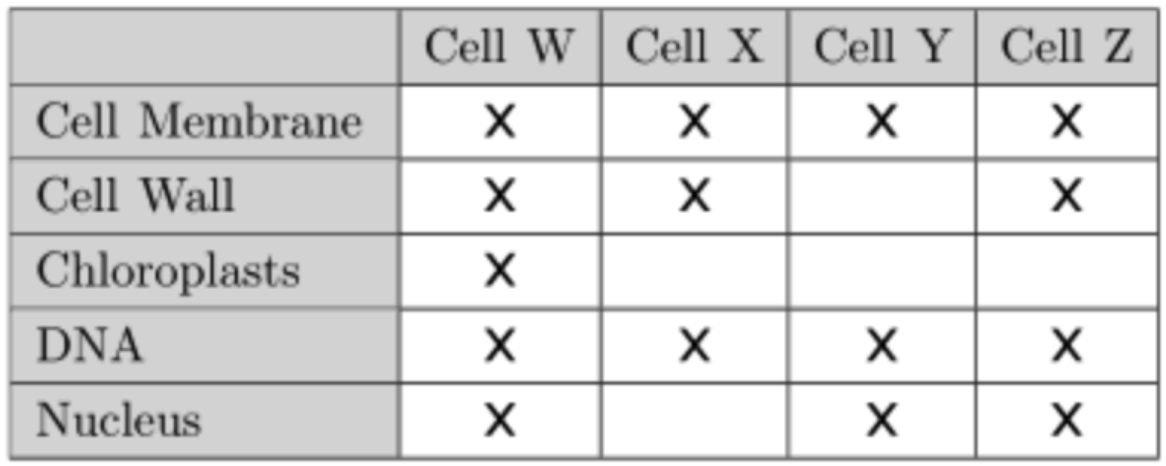
Which cell is most likely a prokaryote?
What is Cell X?
500
This observation—that mitochondria and chloroplasts can reproduce on their own without the nucleus controlling them—is explained better by endosymbiosis because it suggests they were once this.
What are prokaryotes?
500
A table comparing the characteristics of four samples is shown.
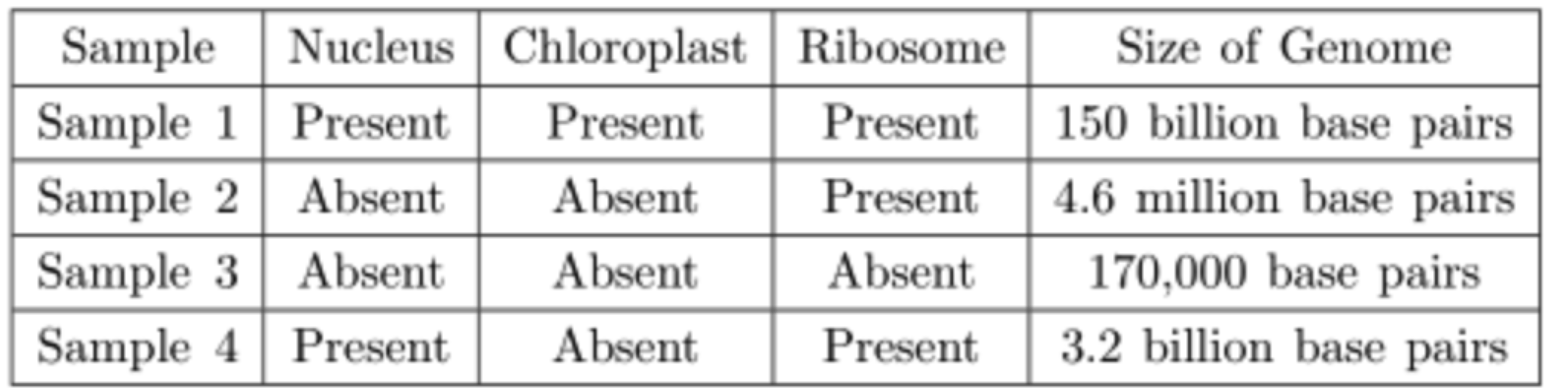
Which sample is most likely a virus?
What is sample 3?