Types
Characteristics
Life Cycle
Notable Stars and Nebulae
H/R Diagram
Stuff
100
This is the most common type of star in space.
Red Dwarfs
100
This word means 'brightness'
maginitude or luminosity
100
All stars begin in this giant cloud of gases and dust...
Nebula
100
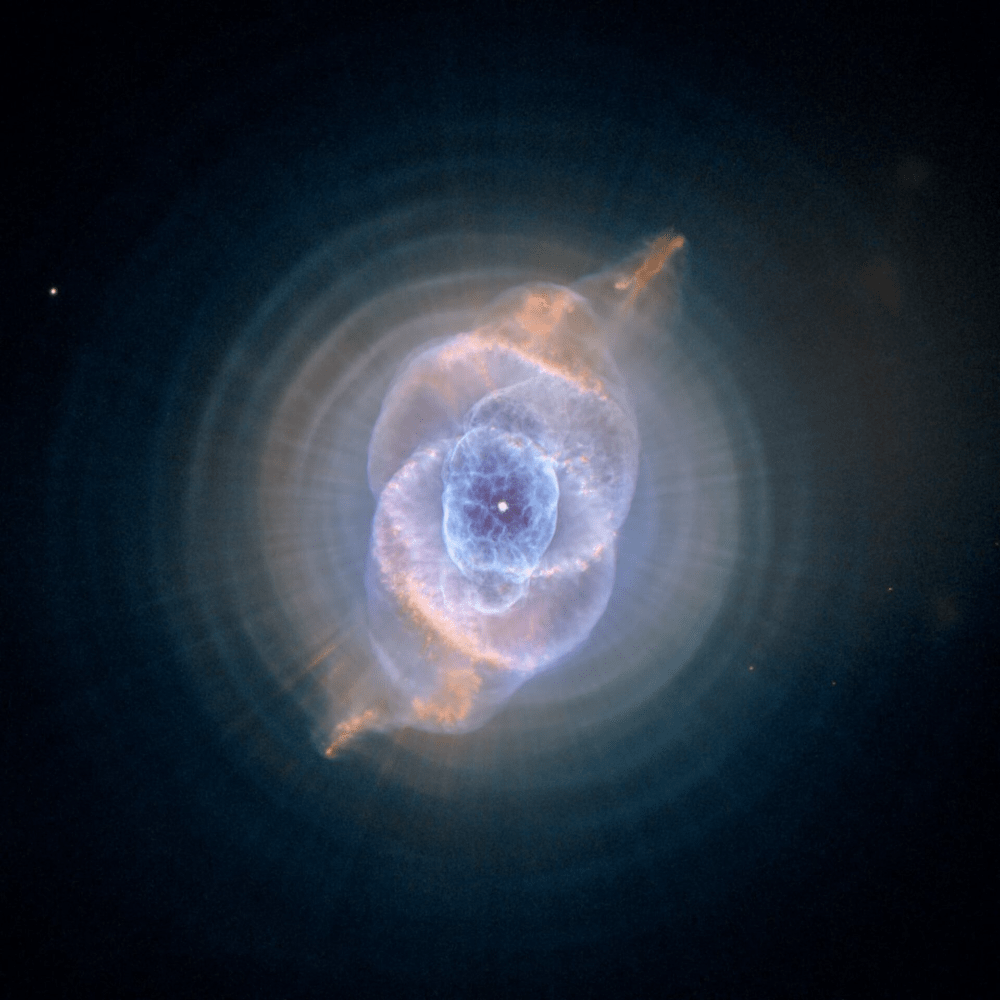 This is the Cat's Eye Nebula. Would new stars form in this nebula?
No...it is a planetary nebula that resulted from a main sequence star. There is not enough mass to create a new star.
100
Which of the following characteristics would a Hertzsprung-Russell diagram NOT plot?
a) temperature b) density
c) luminosity d) color
b) density
100
Scientists use this tool (we did too!) to see what elements stars and other celestial objects are made of.
spectroscope/spectroscopy
200
This is the type of star our sun is...
Main Sequence
200
A red star...would it be relatively cool or relatively hot (for a star)?
Cool...for a star
200
A 'baby' star is called a...
protostar/T Tauri
200
Name a super giant star.
Mr. Carney will check.
200
On a H-R Diagram, a star has a luminosity of 90,000 times that of our sun and a temperature of 19,000 degrees Kelvin. What type of star must this be?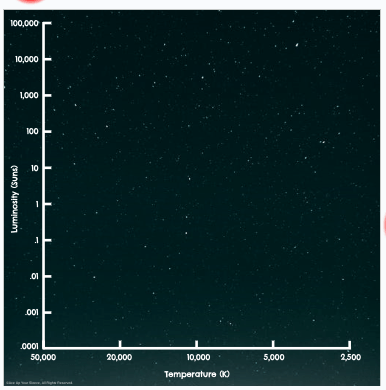
Main sequence - top left would only fit into that diagonal grouping.
200
Planets that revolve around any stars other than our sun are known as...
exoplanet
300
This is the first stage of any star, whether it becomes a main sequence or super/hyper giant star...
protostar/T Tauri
300
What element are stars mostly made of?
Hydrogen
300
Stars with a great deal of _______ could become super/hyper giants.
mass
300
Sirius is a star that we plotted on our H-R Diagrams and discussed in class. What is the significance of Sirius to those of us who live in the Northern Hemisphere?
The Dog Star/Canis Major/Brightest Star in our Northern night sky.
300
On a H-R Diagram, a star has a luminosity of 85,000 and a temperature of 4,000 degrees Kelvin. What type of star would it be?
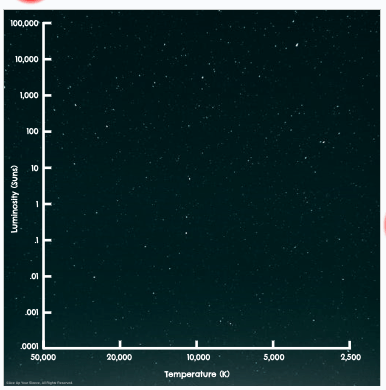
Super giant
Half credit for giant (They wouldn't be as bright, because they are not as big.)
300
All of the following could be end results of our sun (in billions of years) except...?
a) neutron star b) red giant
c) planetary nebula d) white dwarf
neutron star (only super/hyper giants)
400
This type of star is quite hot, but not very bright...because it's not very large...
white dwarf
400
This term means stars or galaxies as seen from earth...
Apparent Magnitude
400
There are two possible endings for super/hyper giant stars...what are they?
neutron star or black hole
supernova = half because it occurs before neutron stars and black holes
400
This famous star is a super giant and known as the North Star. Its name is...
Polaris
400
On a HR Diagram, a star with a luminosity of .003 (or less) and a temperature of around 3,000 degrees Kelvin, would be a....?
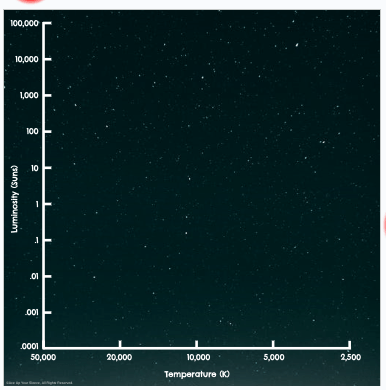
red dwarf
half points for main sequence, because they are technically main sequence stars
400
If a hypergiant star implodes (which must happen before it explodes or goes supernova), this could result...
black hole
500
A neutron star could result from which type of star?
A super giant/hyper giant/super massive star
500
This is the temperature scale/system that is used to measure the temperatures of stars in space.
Kelvin
500
Main sequence stars could live for ________ of years.
billions
500
Name this famous nebula...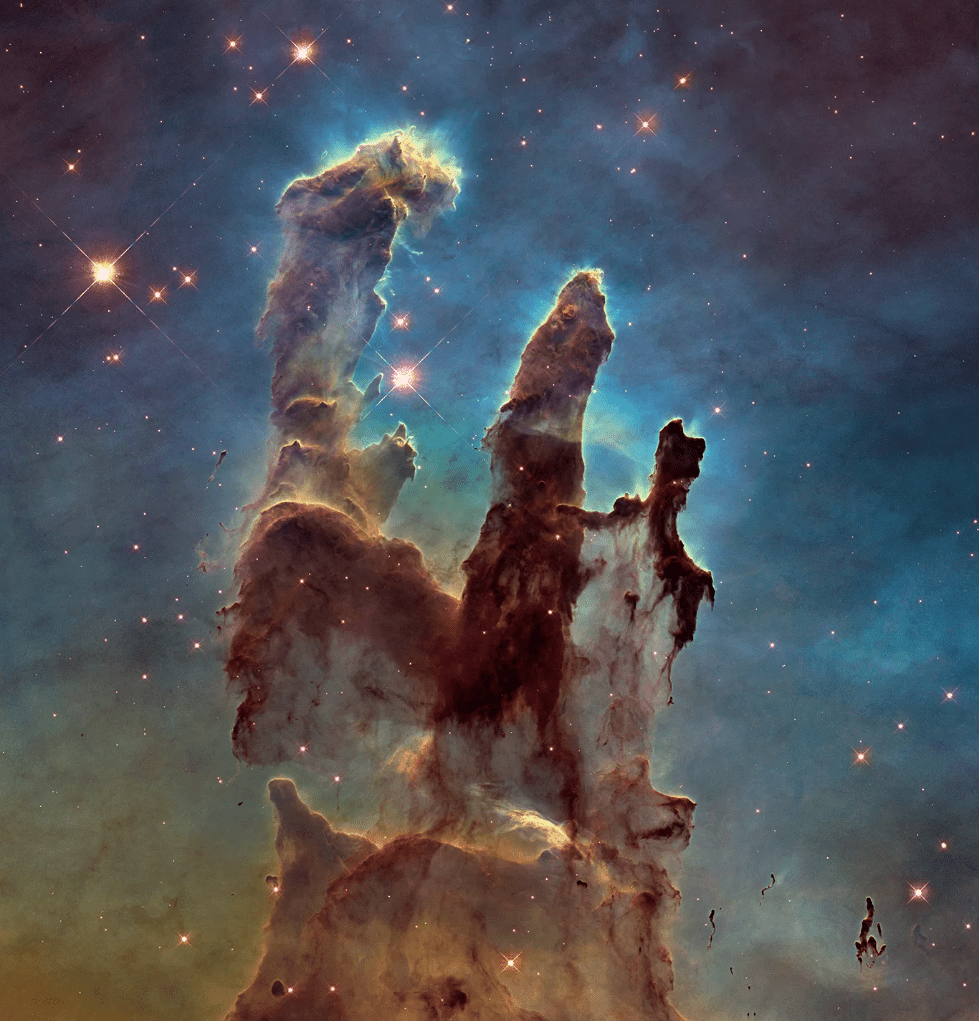
Eagle Nebula/Pillars of Creation/Horsehead Nebula
500
On a H-R Diagram, a star has a luminosity of 1/100 and a temperature of 35,000 degrees Kelvin. What type of star would this be AND what color(s)?
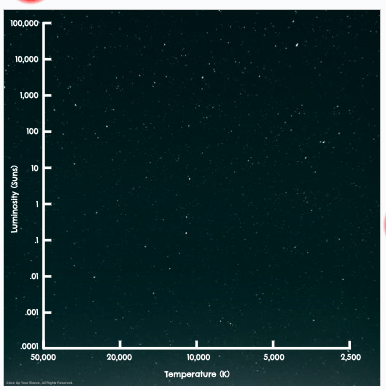
White dwarf - white or blue
500
This type of star has never been imaged or even located, yet scientists believe that it should exist....
black dwarf
half credit for neutron star/pulsar/magnetar because there is concrete proof they exist (radio waves)
no credit for black holes, because two have been imaged withing the last five years...
600
After a main sequence star becomes a red giant, what is one of the things that could result after this stage?
White, brown, black dwarfs/planetary nebula
600
The color of a star could give a scientist a good idea of its....
Temperature
600
This is the only type of star that could be very hot and very bright or very cool (for a star) and very dim.
main sequence
600
Proxima Centauri is a star we have discussed. It is a red dwarf, which, until recently - with modern technology, were not known to science. Why is it that we (humans) have known about Proxima Centauri long before other red dwarfs stars were discovered?
Proxima Centauri is the closest star to Earth, aside from the sun. It is part of a triple star system known as Alpha Centauri. Because it is close (in proximity - get it?), we can see it more clearly than other, more distand red dwarf stars.
600
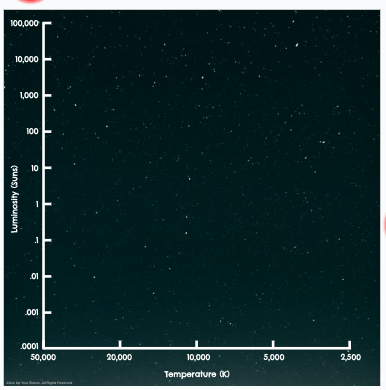
On a Hertzsprung-Russell diagram, a star with a luminosity of 500 and a temperature of 6,000 degrees Kelvin would be plotted as what type of star?
giant (orange/red)
600
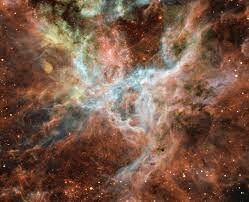 This is the name of the largest nebula scientists have discovered and imaged.
Tarantula Nebula