What are Biomes?
Biomes Knowledge
Changing Biomes
Geography Skills
100
Give the definition of biome using these words:
region, similar, distinctive, climate, soil, vegetation
A biome is a region in the world with similar and distinctive climate, soil and vegetation.
100
What 2 biomes are at the very top of the world map?
Polar and Tundra
100
Give one positive impact of deforestation.
positive - creating more farmland (cattle grazing - South America, palm oil - Asia)
100
What is shown on a climate graph (2 things)
Temperature and precipitation
200
Biomes are regions in the world with similar and distinctive (name 3 things)
Climate, soil and vegetation
200
Which biome typically occurs along the 0 degrees line of latitude?
Rainforest
200
Give two negative impacts of deforestation
negative - destroying habitat of animals that can spread diseases to humans, creating holes that collect water for mosqitoes to breed and spread diseases, increasing carbon dioxide in atmosphere through destroying the lungs of the earth, increasing erosion and desertification
200
How are the 2 things shown on a climate graph represented on the graph? (eg. ______ is shown by a _____graph, ________is shown by a _______graph)
Red line - temperature
Blue columns - precipitation
300
How does climate impact what type of biome will be in a region?
Climate means long term weather patterns in regard to rain and temperature of a region. The vegetation that will grow in an area depends on the climate.
300
In which biome is most of the world's food produced?
Grassland
300
What is desertification? Give two causes of this.
Desertification is 'spreading deserts'. Grassland biomes become more like deserts; the soil becomes less fertile and vegetation can't grow.
Causes - unsustainable farming, overgrazing, poor irrigation, deforestation, climate change (climate becomes hotter and less predictable)
300
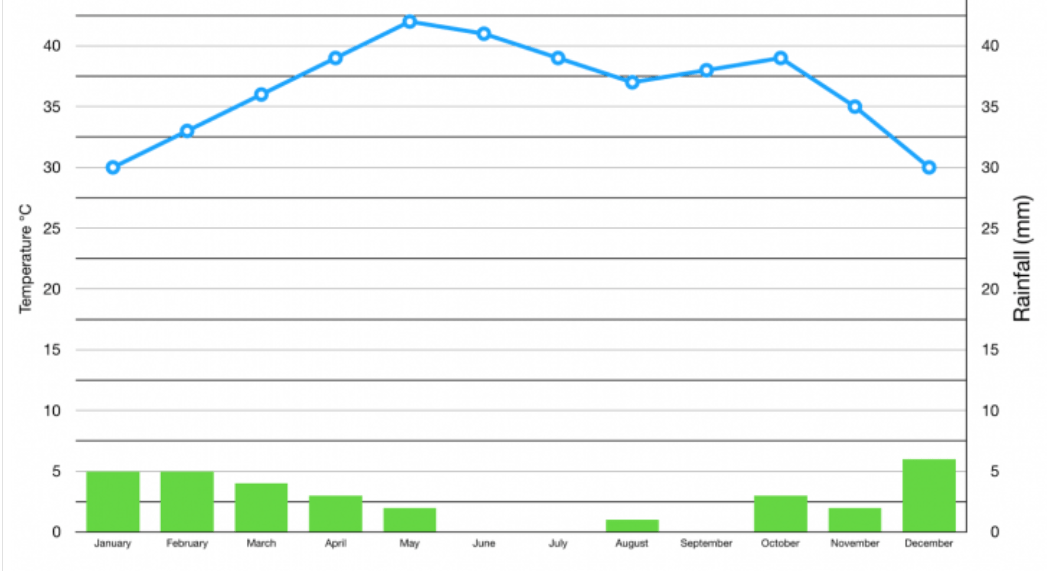 What is the likely biome for this location and why?
Desert - high temp, low rainfall
400
Biomes appear like bands along the lines of ___________. Give an example for either deserts or polar/tundra biomes.
Latitude. For example, deserts occur between 15 north and 30 south of the equator; polar and tundra above 66 N latitude (above Arctic circle).
400
Majority of the world is made up of which biome?
Deserts
400
Why is it important that our deserts do not expand further into grassland?
Because most of our food is produced in grassland biomes.
400
What is the temperature range of this location and how does it help you determine the likely biome?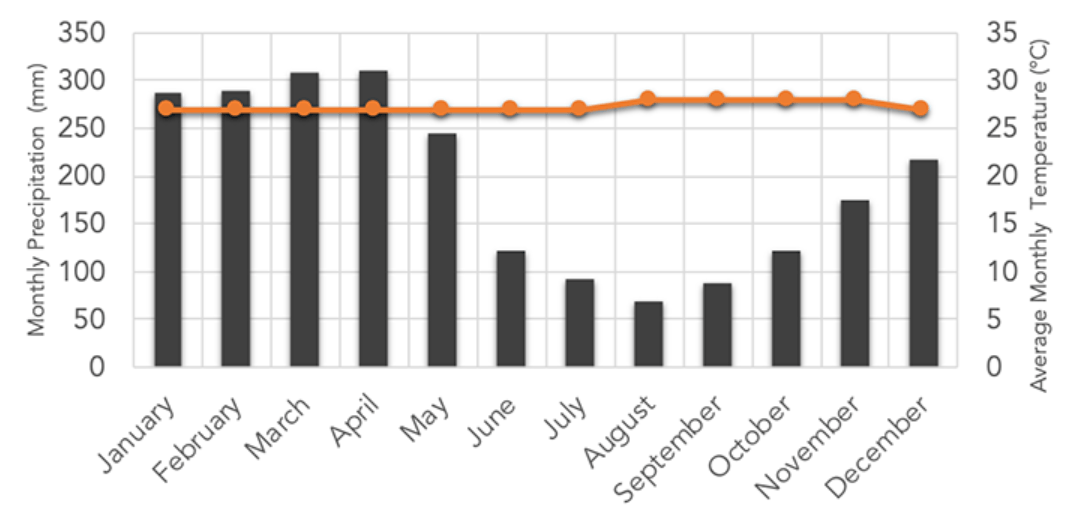
Temp range is high - low = 28 - 26 = 2 degrees.
Tropical rainforest because temp range is low close to the equator.
500
Give a full definition of what a biome is, including all parts. Give an example of each part in a rainforest.
A biome is a region in the world with similar and distinctive climate, soil and vegetation. For example, a rainforest typically has a hot and wet climate, fertile soil and a large variety of vegetation.
500
Starting from the top of the world map and following the lines of latitude south, give the correct order of 3 of the typical biomes found along that band of latitude.
Polar
Tundra
Boreal Forest/Taiga
Grassland
Desert
Rainforest
500
Why are grasslands the best biome for food production?
The climate suits a lot of staple grain crops (because grains are just grasses, so it's obviously a good choice!)
Soils are fertile to provide nutrients for high yield crops.
Open flat landscapes of grasslands suit grazing of cattle and sheep.
500
Describe the climate of this location - include the likely hemisphere and why, the likely biome and 1 fact for precipitation and 1 for temperature.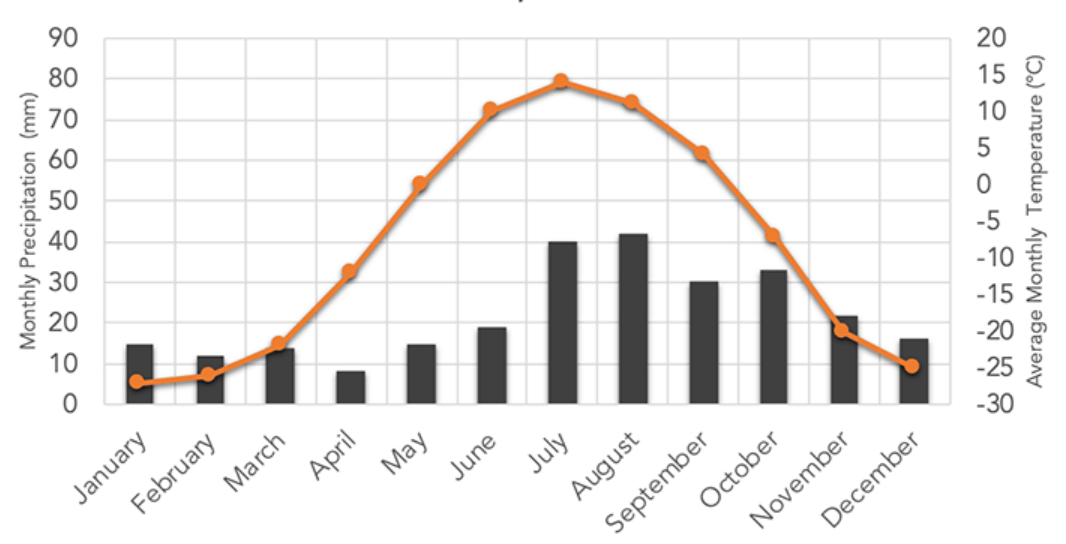
Answers will vary, but it's the tundra and northern hemisphere.