Earth
Layers
Science
Plates
Evidence
100
Which of the following graphs best represents temperatures inside the Earth?
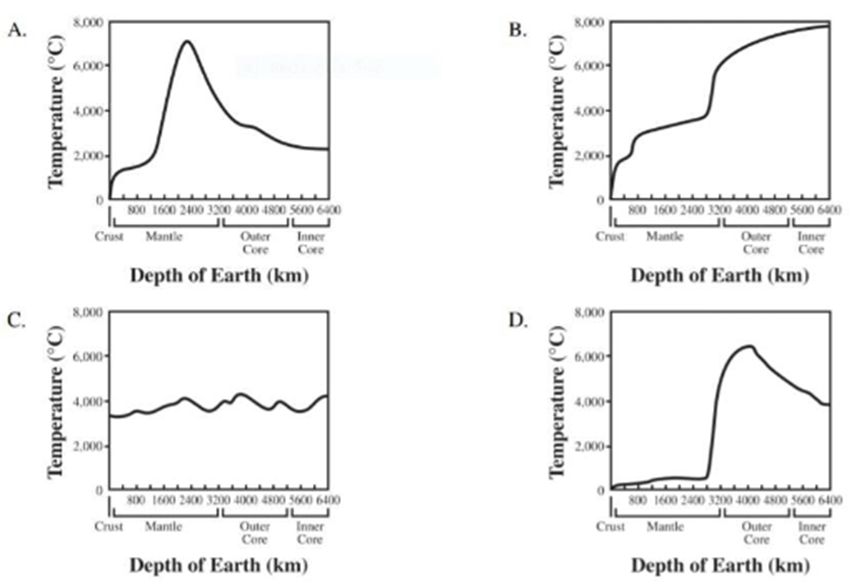
B.
Bonus Points - Why is this the correct answer?
f
100
what is the molten rock below the Earth's crust?
Magma
100
can a small group of scientists who studied a theory can make changes to it?
Yes or No
NO Bonus : Why?
100
On the map below
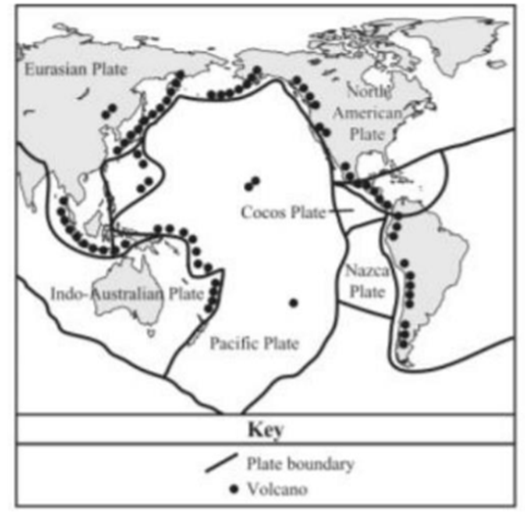
dark circles indicate the positions of volcanoes: this is know as
A the "Ring of Fire"
B " Circle of Life"
C. The" Volcanic Route"
D. The Great Circle of Magma
A The RING OF FIRE
100
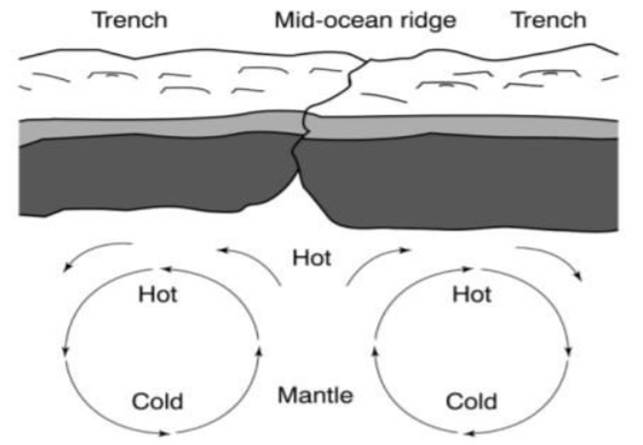
Looking at this diagram, what is the obvious cycle you see?
Convection
200
Can people's opinion change a scientific theory?
NO
200
Which layer is composed primarily of liquid nickel and iron? 1 2 3 4
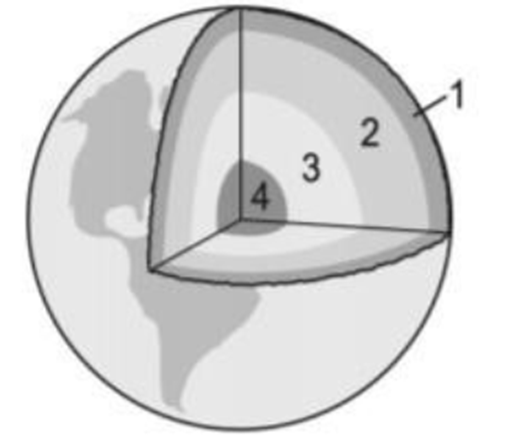
3 Bonus question:
What layer of the Earth is this?
200
Scientific theories can change.
Which of the following would lead to a change in current scientific theory?
A. The person who originally developed the theory can make changes.
B. A change in the world’s opinion.
C. A change in the scientific evidence regarding the theory.
D. A small group of scientists who studied the theory can make changes.
C. A change in the scientific evidence regarding the theory.
200
What is :A deep explanation of how or why something happens based on huge amounts of evidence usually in nature or the natural world around us.
Is this Scientific Law or is this Scientific Theory
Scientific Theory
200
A Statement that describes a repeatable patterns in nature. It tells you what to expect every time. Often times it has a math formula with it.
Is this a Scientific Theory or Scientific Law?
Scientific Law -
examples:
what goes up must come down
Laws of Force
300
Keith writes a report about how the land changes due to the movement of magma in Earth's mantle. Which of the following is he most likely to include in his report?
A. Lava flows out of places where the crust separates along mid-ocean ridges.
B. Volcanoes often form near transform tectonic plate boundaries.
C Volcanoes erupt gas into the earth’s atmosphere.
D. Mountain ranges are primarily formed at divergent plate boundaries.
A. Lava flows out of places where the crust separates along mid-ocean ridges
Bonus: WHY this answer?
300
Do volcanoes form where tectonic plates meet other plates or do they form below the surface of tectonic plates?
Plates meet other Plates
300
Scientists have divided the Earth into layers based on their composition.
Which of the following characteristics could be used to correctly indicate a relationship between two of Earth's layers?
A. The crust and mantle are the densest layers.
B. The inner and outer cores are both composed of solid iron.
C. The core radiates heat, which has a role in the convection of the mantle.
D. The lithosphere has convection due to heating and cooling, while the core radiates heat.
C. The core radiates heat, which has a role in the convection of the mantle.
300
What do you get when Continental and Continental plates meet?
Land + Land
Mountains
300
Do you need Scientific Evidence to change a scientific Theory?
YES
400
What are the giant pieces of Earth's crust that move and cause Earth quakes?
Tectonic Plates
400
Which of these events might cause a scientific idea to be changed?
A. A scientist performs an experiment and finds out that one of the chemicals used in the experiment was contaminated.
B. A scientist uses a computer to teach a scientific concept to students.
C. One scientist finds evidence that does not fit a theory. Other scientists agree with her results.
D. Two scientists doing the same experiment in different parts of the world under the same conditions get the same results.
D. Two scientists doing the same experiment in different parts of the world under the same conditions get the same results.
Bonus': Why not for the A,B,C
400
What layer of the Earth are tectonic plates?
A. Crust
B. Lithosphere ( the crust and the upper mantle)
C. Mantle
D. Outter Core
B. Lithosphere ( the crust and the upper mantle)
400
.Alfred Wegener is credited with developing the theory of plate tectonics through continental drift.
After it's development and acceptance by the scientific community, which of the following could have changed the theory of plate tectonics?
A. A change in the world’s opinion regarding the theory
B. A change in the scientific evidence regarding the theory
C. A small group of scientists made the change.
D. Alfred Wegener made the change.
B. A change in the scientific evidence regarding the theory
400
Two plates composed of rock of similar density meet along a convergent boundary. Which statement describes what will happen where the two plates meet?
A. The plates will rub against each other, causing shearing and creating fault lines in the interior of the plates.
B. One plate will subduct underneath the other plate, forming a deep trench along the boundary.
C. The plates will collide, and the compression will heat the plates to melt and form volcanic mountains.
D. The plates will collide with neither plate subducting, causing the crust to pile up and form a mountain range.
D. The plates will collide with neither plate subducting, causing the crust to pile up and form a mountain range.
500
Which of the following statements best explains the role heat flow has in changing Earth’s surface?
C. Volcanoes form when convection in the mantle pushes one tectonic plate under another.
500
What cause the tectonic plates to move?
Heat from with in the Earth - Plates Floating on Magma
500
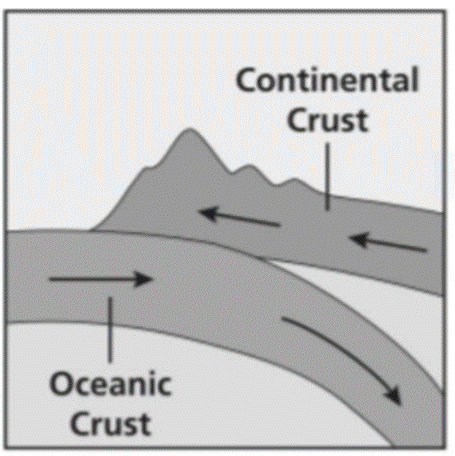
Which of these explains the feature that can form at the boundary of these two plates?
A. Island arc because the oceanic plate melts underneath the continental plate, forming volcanic mountains the eventually become islands.
B. A range of volcanoes because the oceanic plate melts underneath the continental plate, forming a line of volcanoes on the continent.
C. A broad canyon-like valley because the two plates act like a plow, digging out any soil in the plate's paths.
D. A mountain range because the two colliding plates have equal composition and density, causing both to fold and form wide, thick mountains.
B. A range of volcanoes because the oceanic plate melts underneath the continental plate, forming a line of volcanoes on the continent.
500
What layer of the earth is the hottest and what layer is the least hot?
Inner Core
Crust
500
As new information is discovered, scientific theories are changed. Sometimes, old theories are revised.
Why is this a necessary practice for science?
A. New scientists need to get credit for their ideas, or no one will go into science professions.
B. It ensures that the newest ideas are the ones used to develop medicines and important safety equipment.
C. Old theories are dependent on primitive technology that was flawed, so new technology must be used.
D. The process allows for an increasingly accurate understanding of the world
D. The process allows for an increasingly accurate understanding of the world
Example - Blackholes
600
Scientific knowledge results from the interaction of scientists who are investigating natural phenomena.
Which of these best describes how a scientific explanation becomes widely accepted?
A. A hypothesis is tested repeatedly and the results are partially supported by the scientific community.
B. A hypothesis is debated by the scientific community.
C. A hypothesis is tested repeatedly, and the results are confirmed with evidence and debated by the scientific community.
D. A hypothesis is tested repeatedly, and the results of the tests are debated.
C. A hypothesis is tested repeatedly, and the results are confirmed with evidence and debated by the scientific community.
600
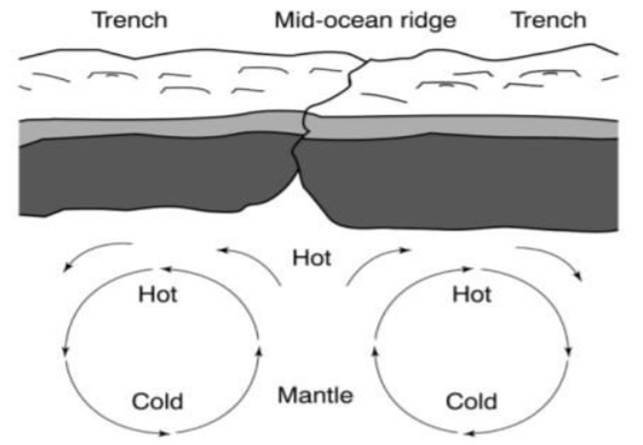
Based on the diagram, which process explains how mid-ocean ridges are formed?
A. Convection currents in the core push the plates away from one another.
B. Radiation from the sun cracks the lithosphere into pieces that drift apart.
C. Less dense, hot magma rises to the surface to displace more dense, cooler magma, pushing the plates away from each other.
D. Less dense, hot magma rises to the surface to displace more dense, cooler magma, pushing the plates toward each other.
A. Convection currents in the core push the plates away from one another.
600
Which of the following graphs are not a good representation for temperatures inside the Earth?
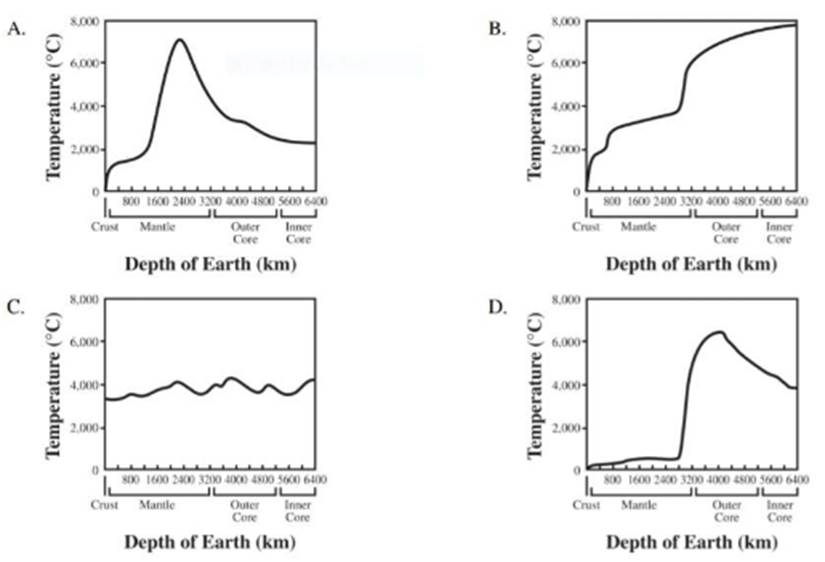
Graph A
A , C , D
Bonus: WHY NOT
600
According to this map, which of the following describes where volcanoes are most likely to form in the Ring of Fire?
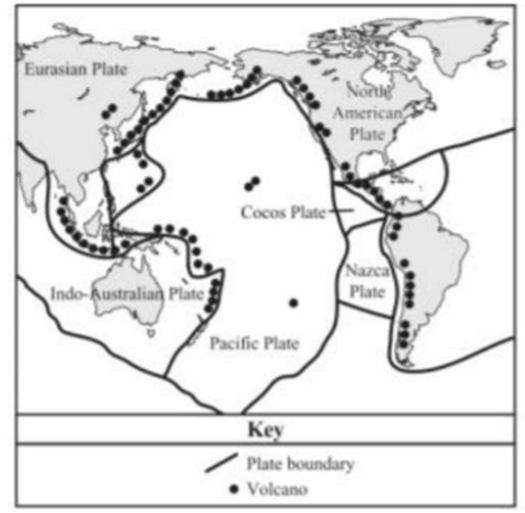
A. Volcanoes form in the middle of tectonic plates.
B. Volcanoes form where earthquakes are least likely to occur.
C. Volcanoes form below the surface of tectonic plates.
D. Volcanoes form where tectonic plates meet other plates.
D. Volcanoes form where tectonic plates meet other plates.
600
. How does the use of the term "theory" in science differ from its usage in everyday life?
A. In science, a theory is an idea lacking evidence, while in everyday life, it refers to a well-supported explanation based on empirical data.
B. The term "theory" is used the same in scientific and in everyday language, referring to an explanation that has not yet been proven conclusively.
C. In everyday life, a theory is a hypothesis that may or may not be true, whereas in science, it represents a well-substantiated explanation supported by a vast body of evidence.
C. In everyday life, a theory is a hypothesis that may or may not be true, whereas in science, it represents a well-substantiated explanation supported by a vast body of evidence.