Functions
Absolute value
Inequalities
Finding linear equations
Parallel/perpendicular lines
100
If f(x)=2x+3, then f(4)=
What is f(4)=11?
100
Evaluate 12=|5x|
12/5
100
Solve x + 5 > 12
x > 7
100
What is the slope of:
y=4x−7
m = 4
100
What is the slope of a line parallel to:
y=5x+2
m = 5
200
The domain and range of the function below is...
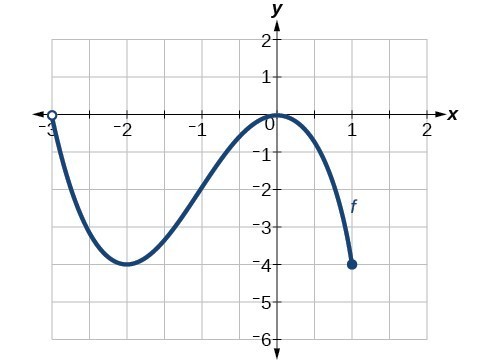
Domain: (-3, 1]
Range: [-4,0]
200
Solve: ∣2x−3∣=9
x=-3,x=6
200
3x+2<4x-1
x>3
200
Write the equation of a line with slope 3 and y-intercept 5
y=3x+5
200
What is the slope of a line perpendicular to:
y=3x−7?
m = - 1/3
300
If g(x)=4x2-5x+2, g(2)=
g(2)=8
300
|2x−3|=9
300: x=6,−3
300
-2(3x-1)>4x+10
x < -4/5
300
Find the equation of the line passing through: (2,5),(4,9)
y = 2x+1
300
Are these lines parallel, perpendicular, or neither? y=2x+4
y=-x/2+1
Perpendicular
400
Determine whether the following relation is a function. Explain why or why not.
{(−3,5), (0,2), (4,5), (−3,8)}
Not a function, -3 is paired with two outputs 5 and 8.
400
Solve:
|3x+2|−4=10
x = 4, -16/3
400
Solve:
3(x−2)≤2x+5
x≤11
400
Find the equation of the line passing through (-8,5) with a slope of 3.
y = 3x + 29
400
Find the equation of the line parallel to y=-4x+3 that passes through (2,7)
y = -4x + 15
500
Given f(x)=2x+1 and g(x)=x−4, find f(g(5))
f(g(5)) = 3
500
2|x−3|+5=17
x=9,−3
500
Solve:
−7≤3(2x−1)+4<19
−1/3 ≤ x < 8/3
500
Find the equation of the line passing through:
(−2,6) and (4,−3).
y=−3x/2+3
500
Find the equation of the line perpendicular to y=2x/3 - 5 that passes through (6,1)
y=−3x/2+10