The Cell
The Cell 2
Organelles
Organelles 2
Organelles 3
What is this
What is this 2
100
What is the smallest unit of matter that can carry on the process to sustain life?
The Cell
100
What organelle is in an animal cell and not in a plant cell?
Centrioles
100
This is the thick, gel-like substance where the other organelles are allowed to function independently. It acts like a conductor of information from one organelle to the next.
Cytoplasm
100
This is located outside the cell membrane of a plant cell. The main function is for support and protection for the plant.
Cell Wall
100
This is the storage unit of the cell
Vacuole
100
What is #3?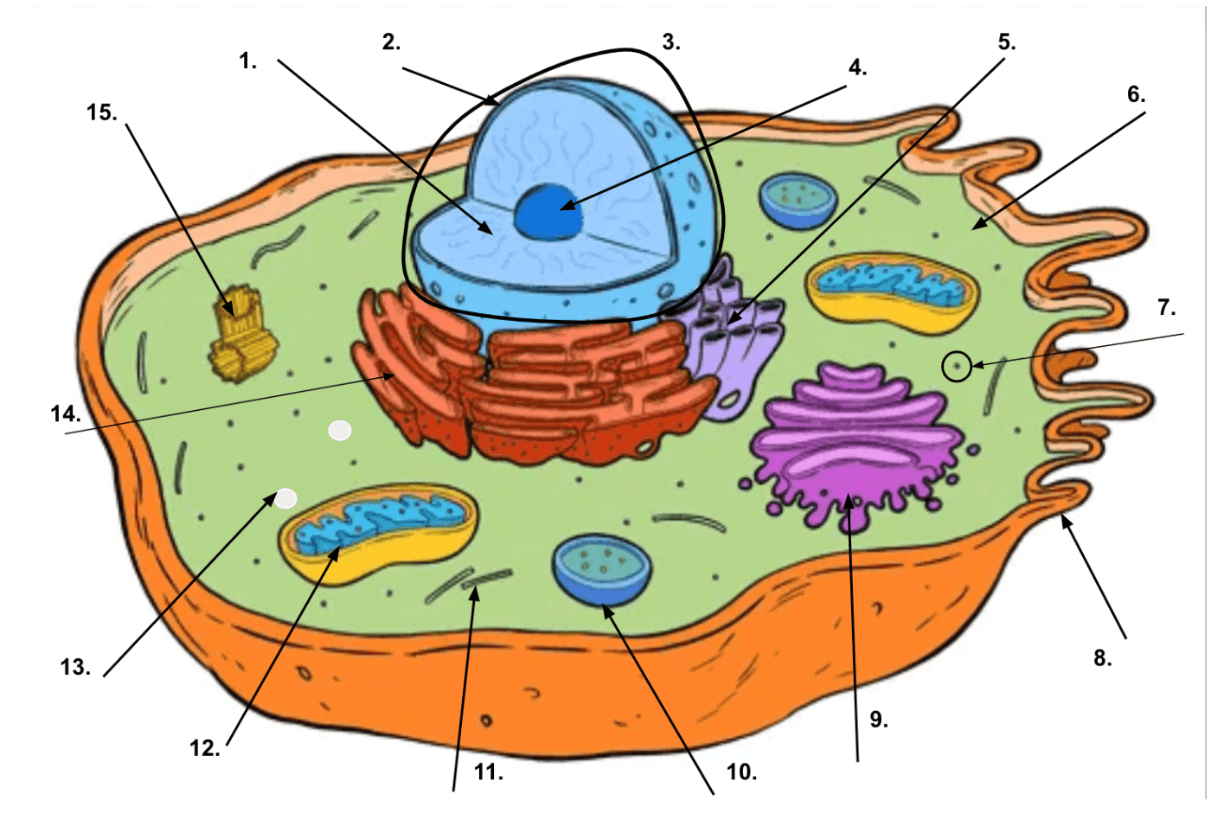
Nucleus
100
What is #9?
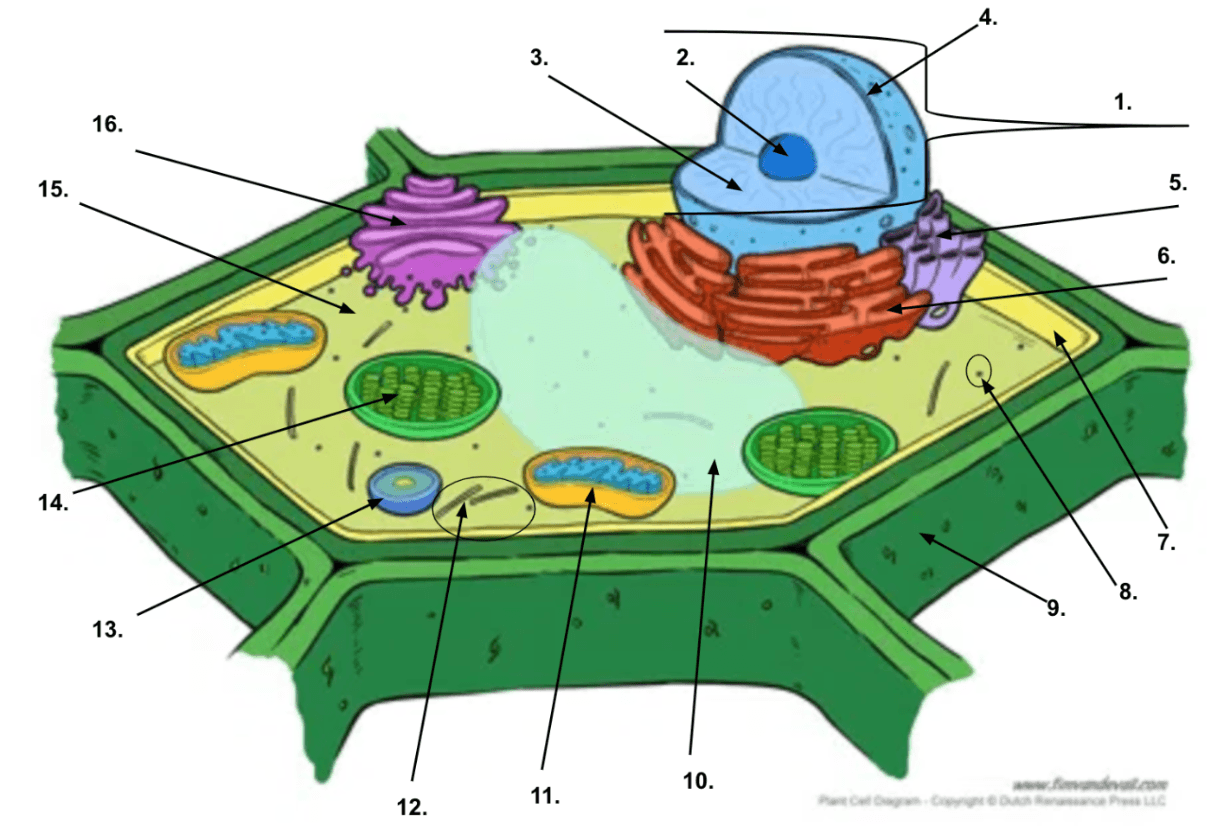
Cell Wall
200
All the following are correct about the cell theory EXCEPT:
A. Cells are the basic unit of structure and function.
B. All organisms are made of cells
C. All cells come from existing cells
D. Organisms can’t be a single cell.
D
200
What are the 3 organelles found in plant cells and not in animal cells?
Cell Wall, Chloroplasts, and Central Vacoule
200
This organelle contains all the cell's DNA and with it the coded instruction for making proteins and other import molecules.
The nucleus
200
This organelle regulates what enters and leaves the cell and provides protection and support to the cells. It has a double layer sheet called a phospholipid bilayer.
Cell Membrane
200
What organelle is known as the "power house" of the cell. It converts the chemical energy stored in food into compounds that are more convenient for the entire cell to use.
Mitochondria
200
What is #10?
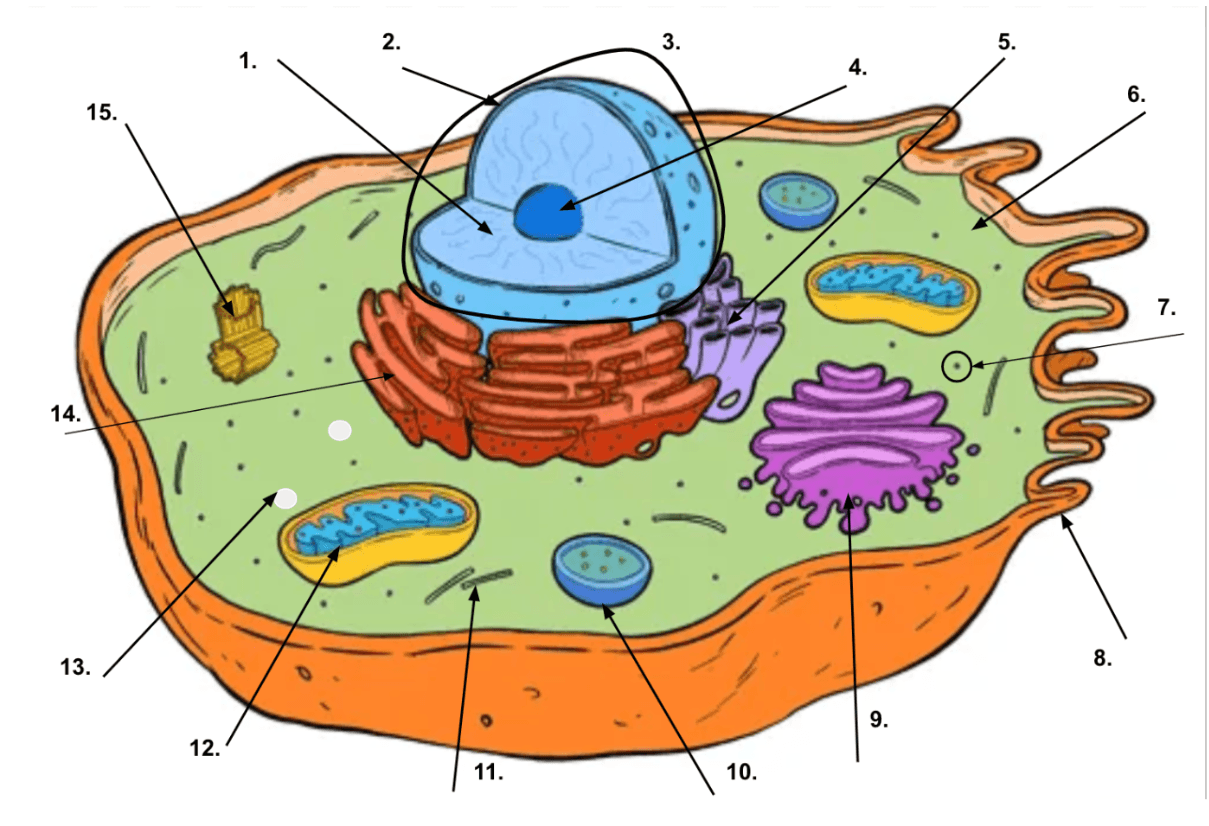
Lysosome
200
What is #14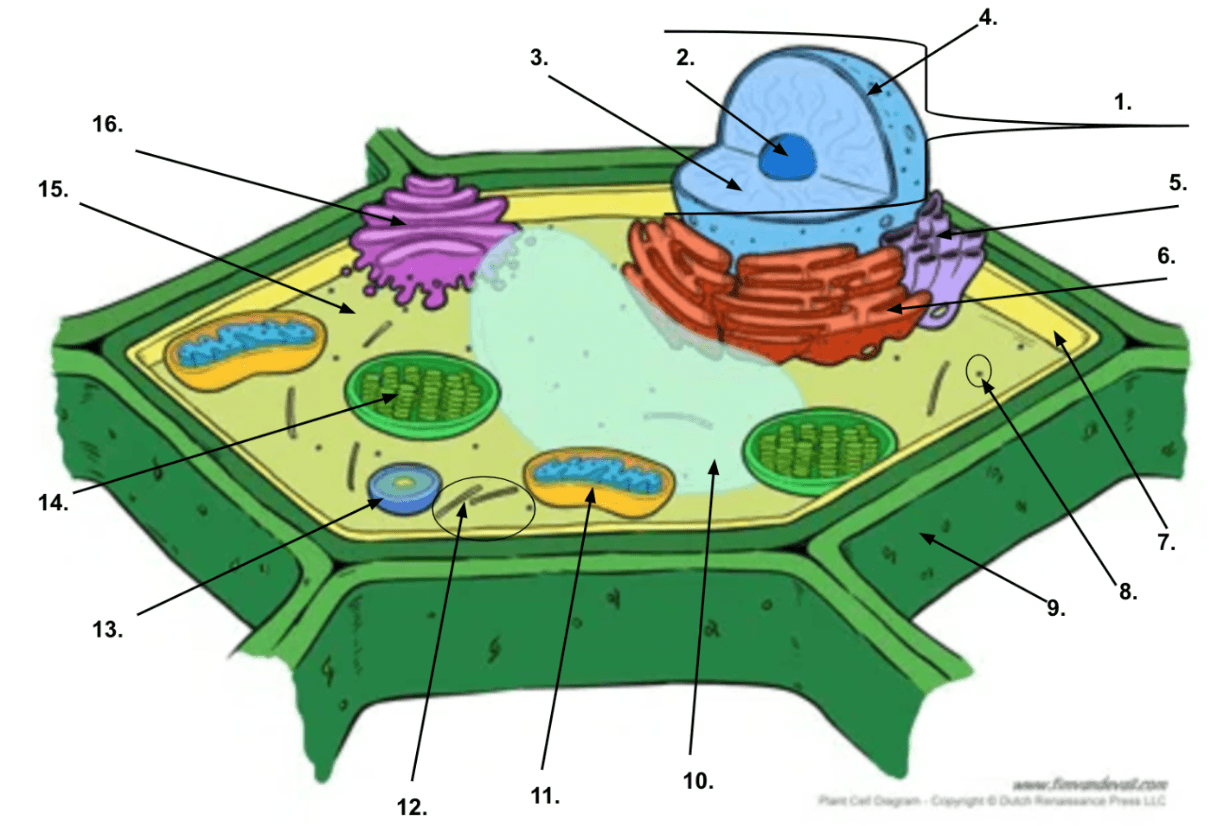
Chloroplasts
300
All the following are correct about the cell theory EXCEPT:
A. Cells contain genetic information
B. All cells are similar in composition.
C. The energy flow of life occurs in cells.
D. Cells just form on their own
D.
300
What organelles are found in all cells: Eukaryotic and prokaryotic?
Cell Membrane, Ribosomes, Cytoplasm, and Genetic Material
300
This organelle contains a collection of enzymes that perform specialized tasks, including the synthesis of membrane lipids and detoxification of drugs.
The Smooth Endoplasmic Reticulum
300
These are little factories that produce proteins, they carry information to all the organelles in the cell from the nucleus.
Ribosome
300
What organelle is involved in digestion or breakdown of lipids, carbohydrates, and proteins into small molecules that can be used by the rest of the cells and also breaks down organelles that have outlived their usefulness?
Lysosome
300
What is # 15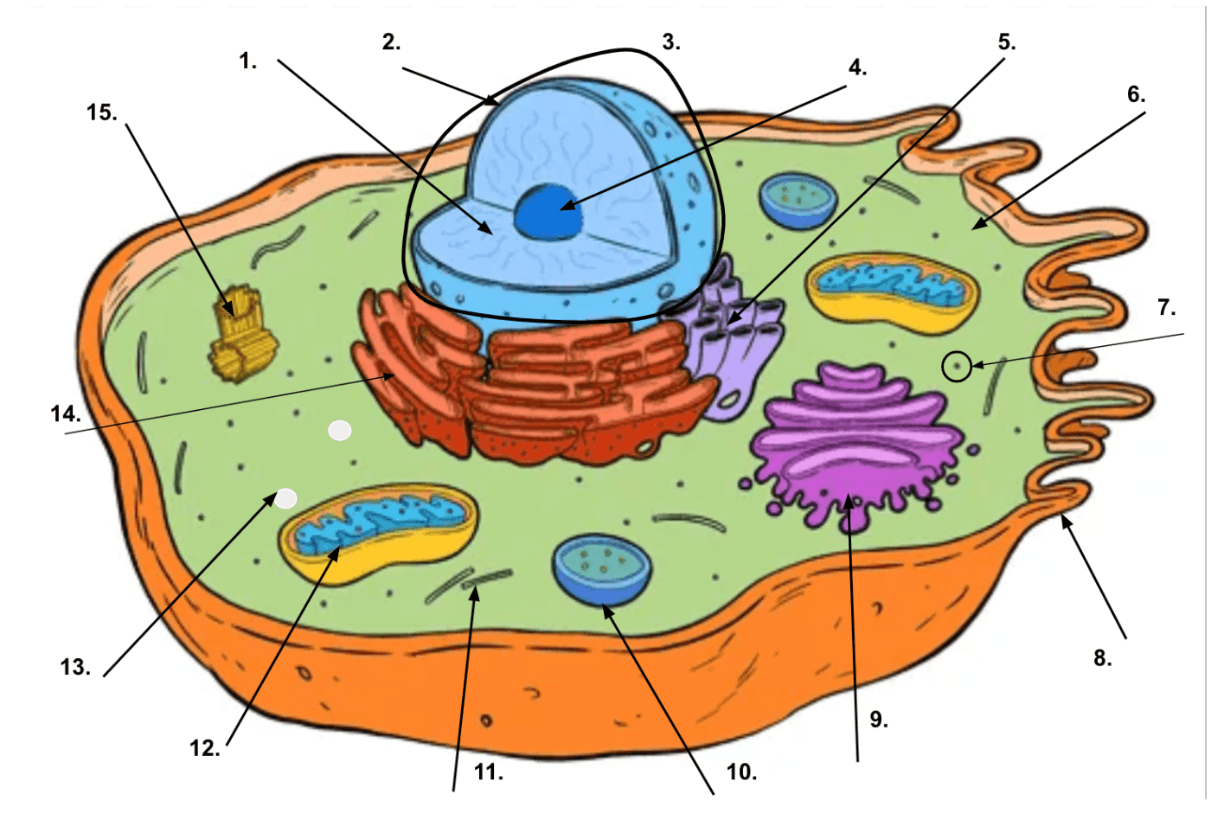
Centrioles
300
What is #11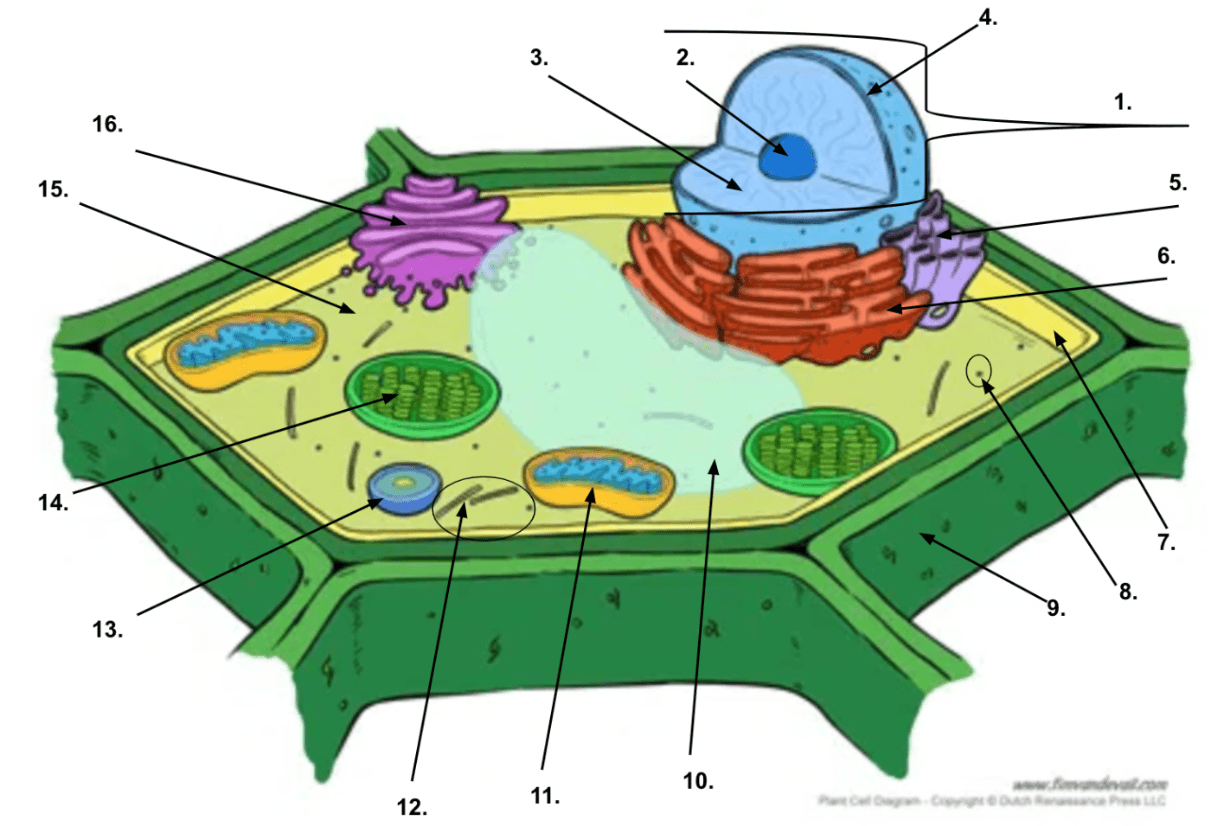
The mitochondria
400
This type of cell doesn't have a defined nucleus, it doesn’t have membrane-covered organelles except for ribosomes, has circular DNA, and is only single cellular.
Prokaryotic Cell
400
Give an example of a Eukaryotic Cell.
Animal, Plant, Protist or Fungi
400
This organelle is granular material you can see in the nucleus and consists of DNA bound to protein and the majority of the time it is spread throughout the nucleus.
Chromatin
400
This is the centers for photosynthesis, they contain the pigment chlorophyll that becomes excited from the energy in sunlight to produce sugar.
Chloroplasts
400
What organelle sorts and packages protein and other materials from the endoplasmic reticulum for storage into the cell or secretion outside of the cell and it is where the finishing touches are put on proteins?
Golgi Apparatus
400
What is #14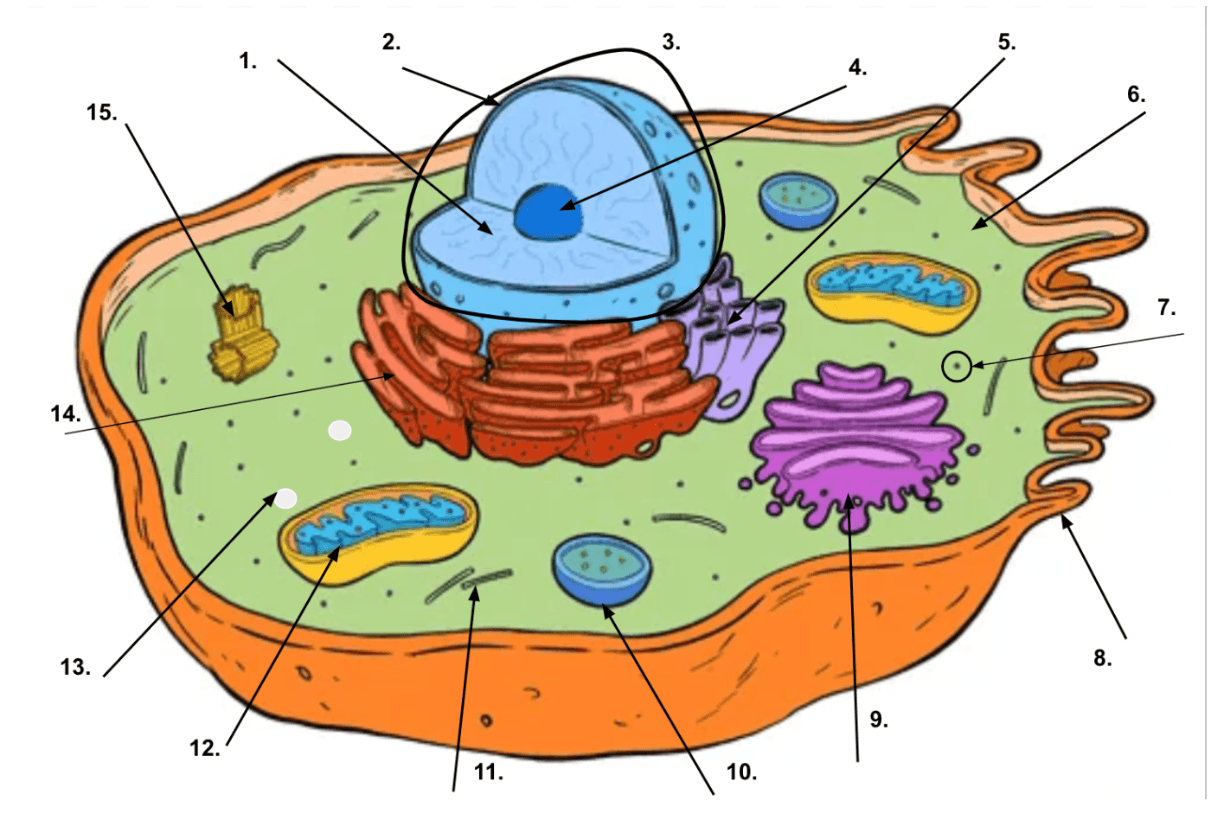
Rough Endoplasmic Reticulum
400
What is #16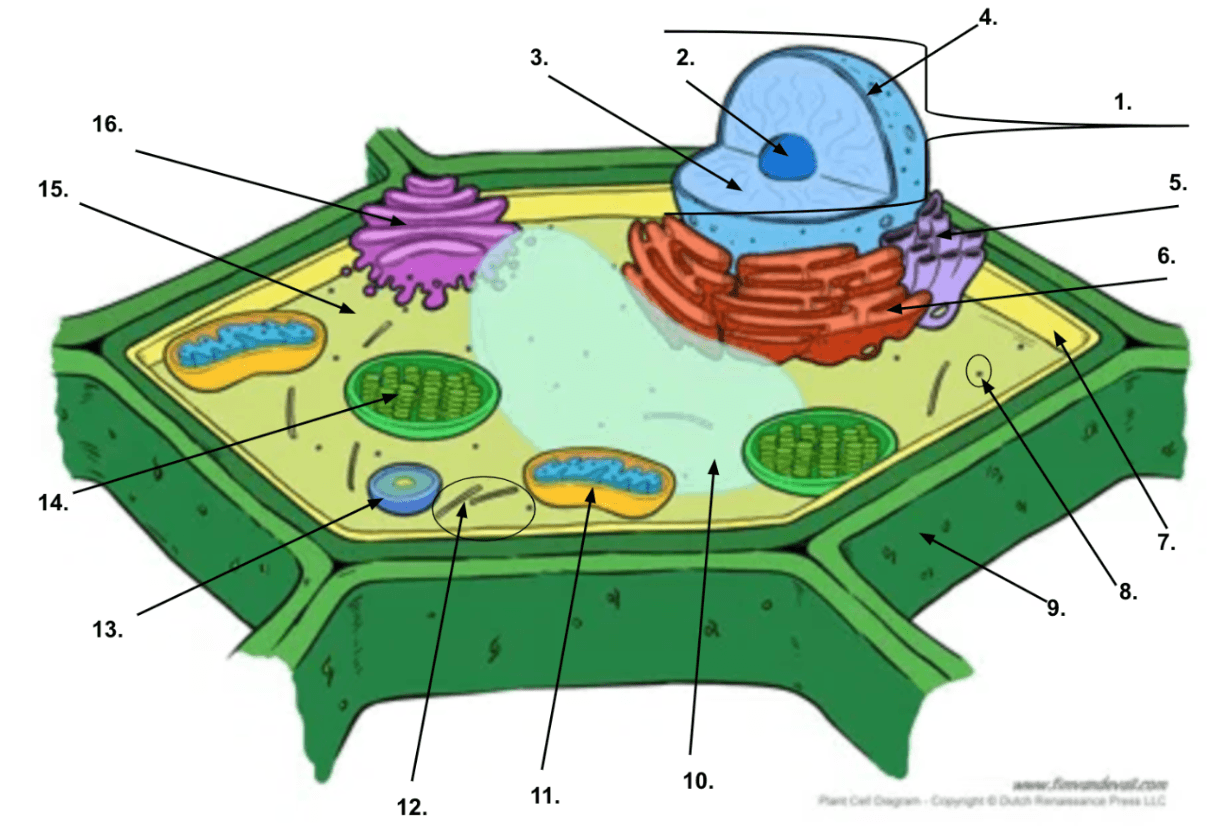
Golgi Body
500
This type of cell has a nucleus with linear DNA, they have membrane covered organelles, and are multicellular.
Eukaryotic Cell
500
Give an example of a Prokaryotic Cell.
Bacteria
500
This organelle has ribosomes attached to its covering. Newly-made proteins from the ribosomes are then changed to produce anything from antibodies in white blood cells to hormones.
Rough Endoplasmic Reticulum
500
These aid in cellular division, they are found in pairs and sit at right angles to each other near the nucleus. When it is time for cellular division, this organelle moves to the poles to aid in separation.
Centrioles
500
What organelle surrounds the nucleus and is composed of 2 membranes, It is filled with thousands of nuclear pores, which allow material to move into and out of the nucleus.
Nuclear Membrane
500
What is #2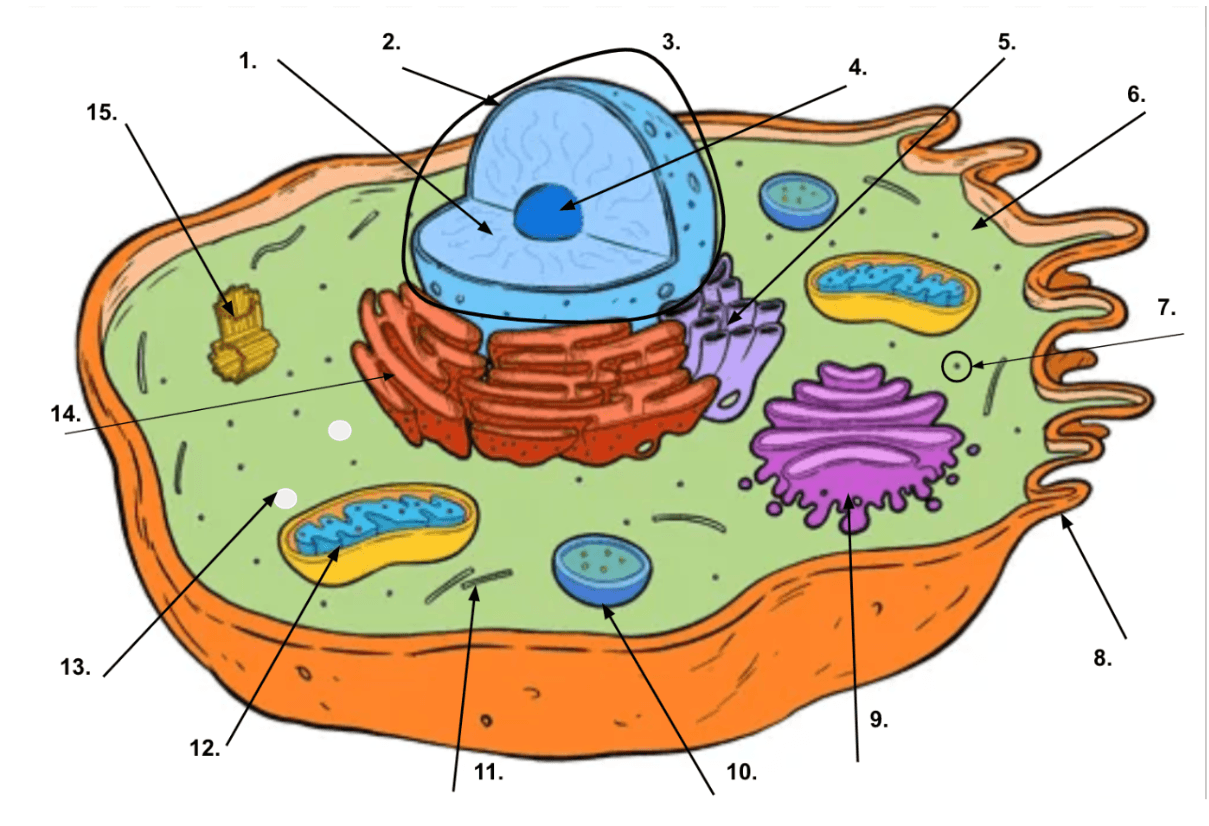
Nuclear Membrane
500
What is #12
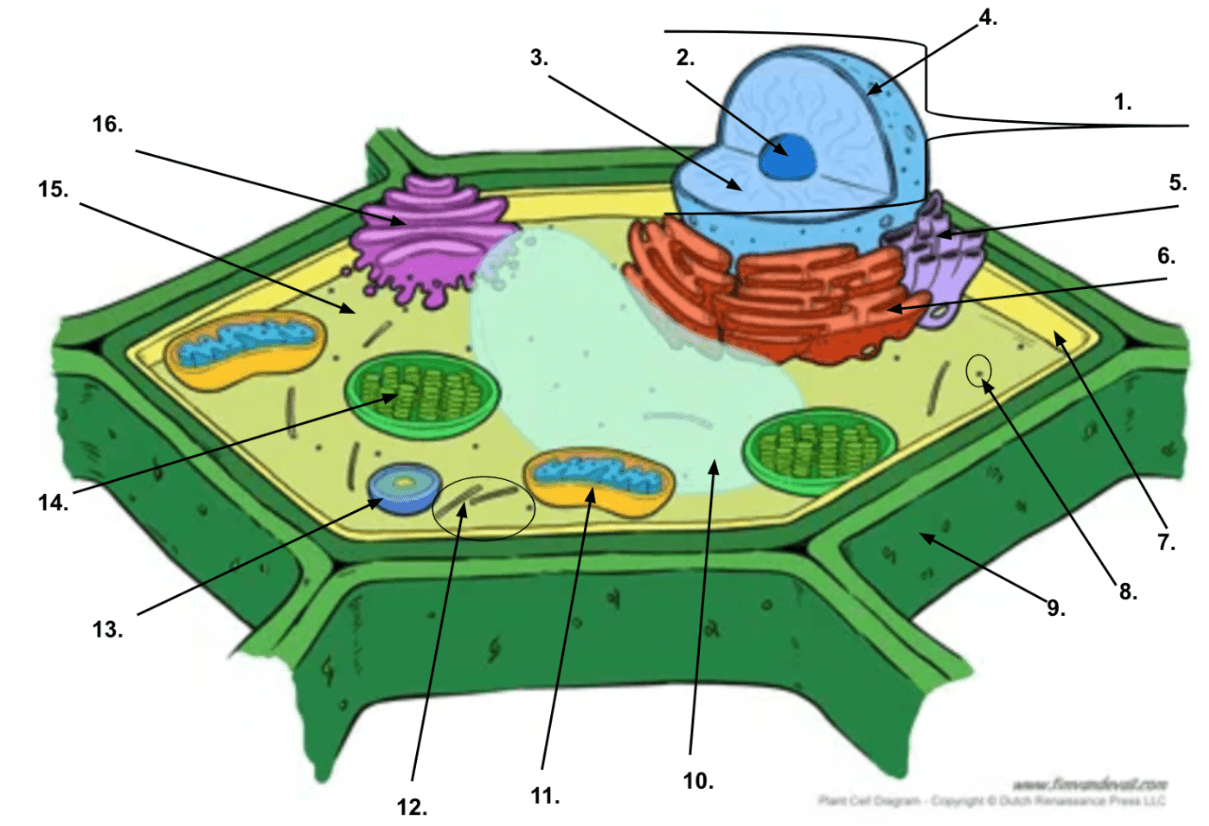
Cytoskeleton