Anatomy of
Anatomy of an Earthquake
Anatomy of an Earthquake
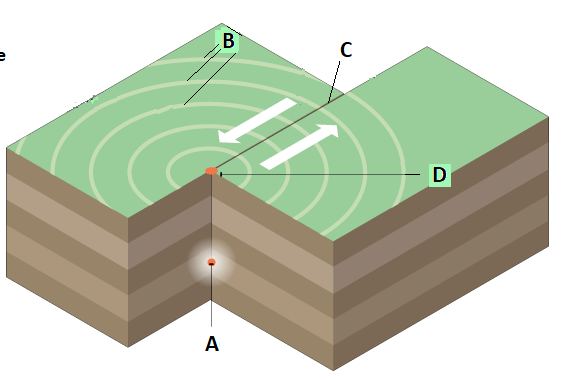
Where is the epicenter?
D
What part of the earthquake is in the middle of this diagram?
[Double click if you can tell where in the world it is.]
[Triple click if you can name the tectonic plate that forms it.]

epicenter
[off the coast of California]
[Juan de Fuca plate moving along the North American plate]
What is a movement or trembling of the ground that is caused by a sudden release of energy when rocks move along a fault.
an earthquake
Which does more damage, a longitudinal P wave or a transverse S wave?
a transverse S wave (secondary or shearing wave)
What forms when molten rock erupts to the surface, usually when an ocean plate converges with a continental plate causing great stress, but also above hot spots.
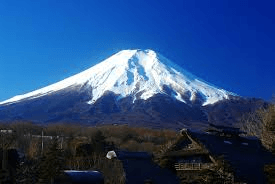
[Name the mountain for a double click.]
[Triple click for giving process that forms it.]
a volcano or volcanic mountain
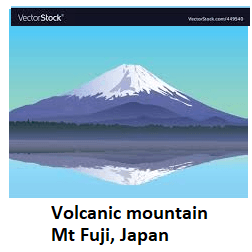
It is formed by subduction.
Where is the focus?
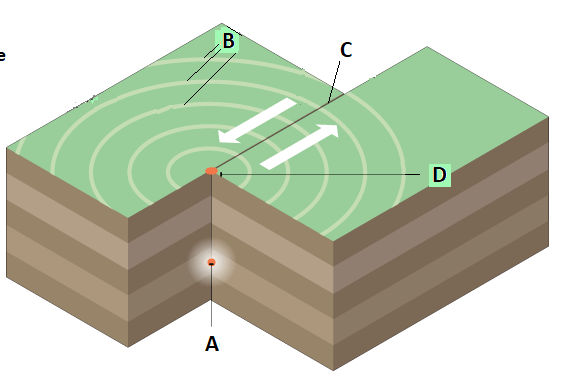
A
Name two continents that have few earthquakes because there are no tectonic plates located on them.
[Double click if you can ask a question that no one else can answer.]
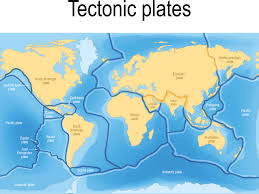
Any of these: Australia, Africa, Europe, Antarctica
You get a click for each type of fault that you can identify.

Normal Reverse Strike-slip
Which seismic wave leaves the focus first and travels fastest?
P waves (primary or pressure waves)
What type of mountain is described here and shown in the diagram?
These form when tension makes the lithosphere break into many normal faults. Along the faults, pieces of the lithosphere drop down compared with other pieces.
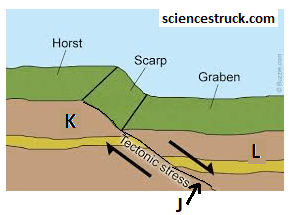
Get a double click for telling what type of fault occurs here.
a fault block mountain
[a normal fault]
What does 'C' represent in the diagram?
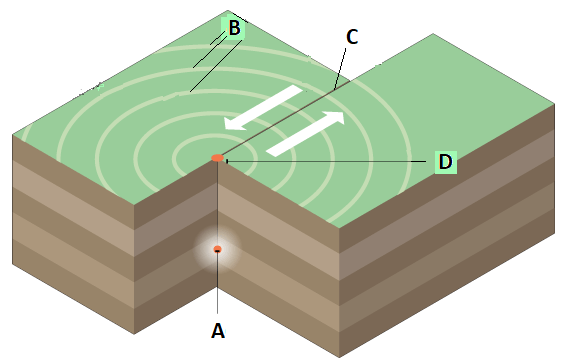
the fault or fault line
What are the lines moving from the epicenter?
[Double click for the type of wave produced by this event.]
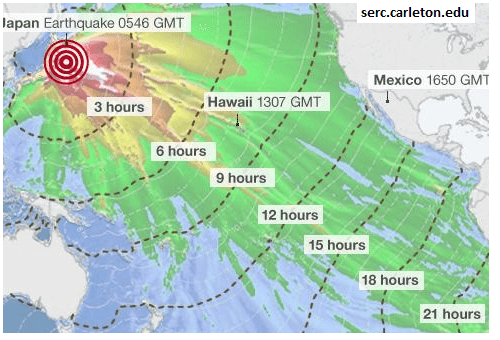
seismic waves
Which seismic wave is longitudinal; which is transverse?
A 'P' wave is longitudinal; an 'S' wave is transverse.
What is the most likely reason that there were no major earthquakes recorded in the interior of the continent of Africa?
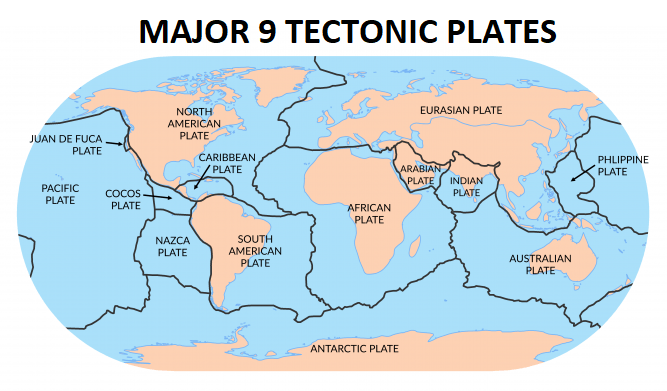
No major plate boundaries cut through the continent of Africa.
They form when rock layers are squeezed together and pushed upward. They usually form at convergent boundaries.
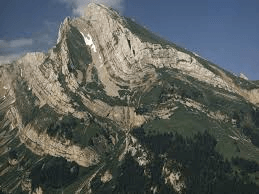
Folded mountains
Identify B in the diagram.
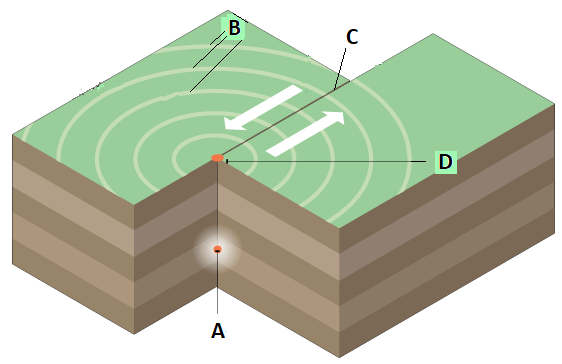
seismic waves
What is shown at letter 'J'?
[Double click for the kind of fault.]
[Triple click for the type of mountain that forms here.]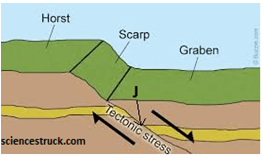
fault
normal fault
fault block mountain
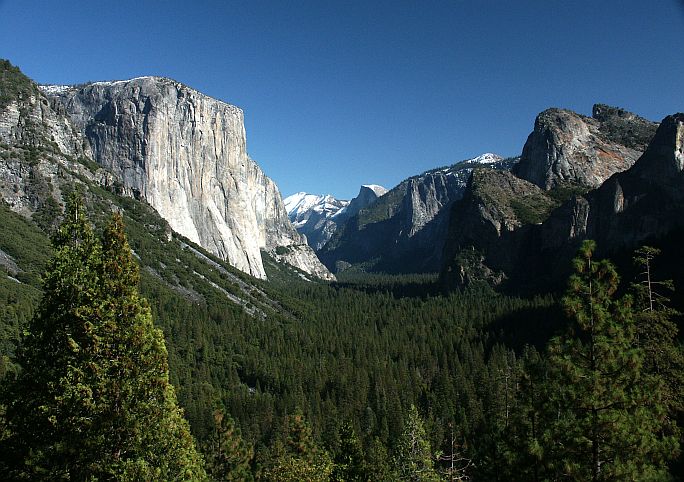
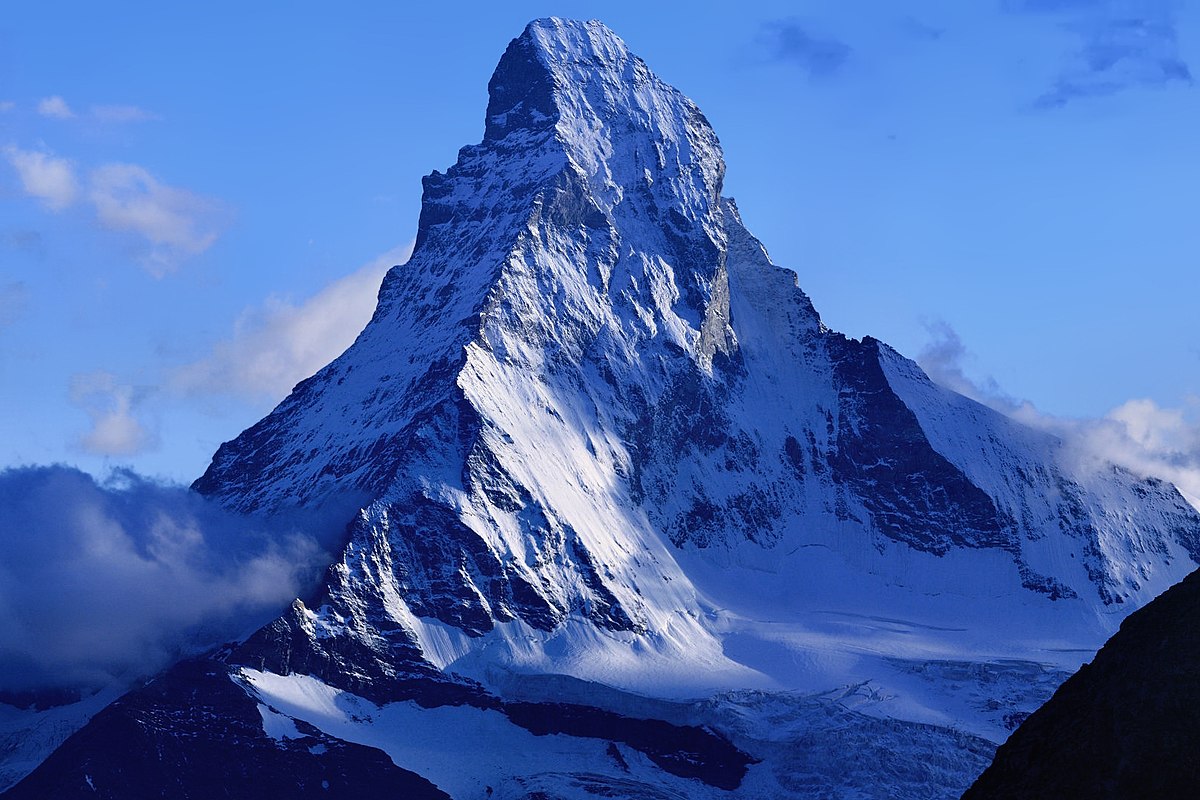
Note the sheer rock face. This is characteristic of fault-block mountains.
Complete the sentence.
P waves are ___________ and ___________, while S waves are ___________ and ___________.
P waves are faster and longitudinal while S waves are slower and transverse (or shearing).
How much sooner did the P wave arrive at the seismograph than the S wave?
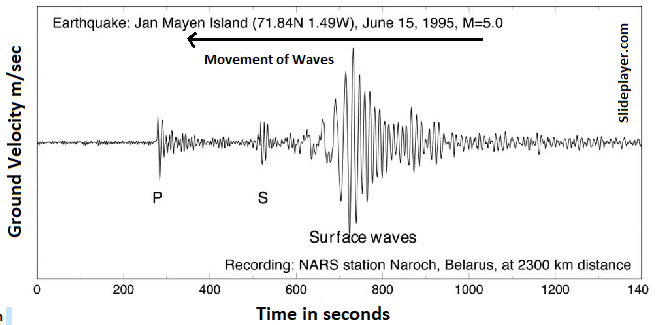
about 200 seconds
Its NOT a mountain but:
This is an area of great cracks that forms between two divergent tectonic plates at a Normal fault.
[double click for telling where this one is.]
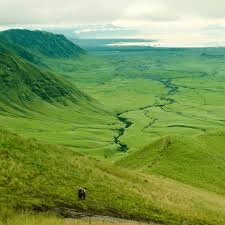
a rift valley

Identify A, B, C and D.
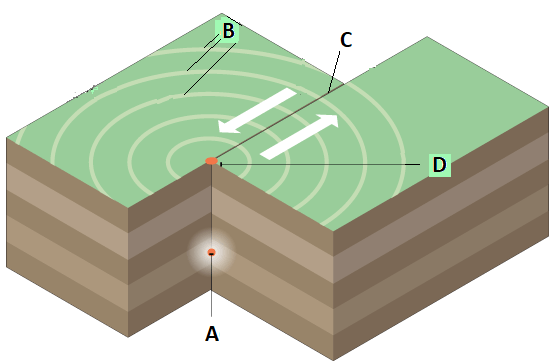
A focus
B seismic waves
C fault
D epicenter
What folded mountains are forming from the Indian Plate colliding with the Eurasian Plate?

The Himalayas began forming at an estimated 50 million years ago.
Secondary (S) waves and Surface waves are 'shearing' waves. What does that mean?
They vibrate perpendicular to the direction they travel. In other words they are transverse and so carry more energy than Primary (P) waves.
What is the difference in the Richter scale and the Moment magnitude scale?
The Richter scale measures the strongest wave that reaches a point. The Moment magnitude scale measures the total strength of an earthquake.
These form when tension makes the lithosphere break into many normal faults. Along the faults pieces of the lithosphere drop down compared with other pieces.
[Name this one for a double click.]
the Matterhorn in the Swiss Alps