Charles Darwin
Evidence for Evolution
Forces of Evolution
Organic Evolution
Transformational Evolution
100
Chain of islands in Pacific where Darwin made many crucial observations
Galapagos Islands
100
Scientist who finds and studies fossils:
paleontologist
100
creates new genetic variation; "raw" material for evolution
mutations
100
All of the same species that live in the same area:
population
100
A group of individual organisms that can breed and produce fertile offspring together in nature:
species
200
Darwin said that evolution occurred through the process of:
natural selection
200
The strongest evidence for evolution from a common ancestor:
comparing DNA sequences
200
When individuals move into or out of a population and affect the allele frequencies:
gene flow
200
All of the genes of all the members of the population:
gene pool
200
The process by which two interacting species evolve together, with each influencing the other's evolution:
coevolution
300
English geologist that suggested that the Earth had to be millions of years old because of the slow geological processes:
Charles Lyell
300
The study of how and why plants and animals live where they do:
biogeography
300
A random change in allele frequencies that happen in a small population:
genetic drift
300
What are the two equations used to calculate Hardy-Weinberg equilibrium?
(p2 + 2pq + q2 = 1) and (p + q = 1)
300
Isolating mechanism in which two organisms can interbreed, but don't because of different courtship rituals:

behavioral isolation
400
Came up with a theory of evolution through the inheritance of acquired characteristics:
Jean Baptiste Lamarck
400
What type of evolution evidence is shown below?
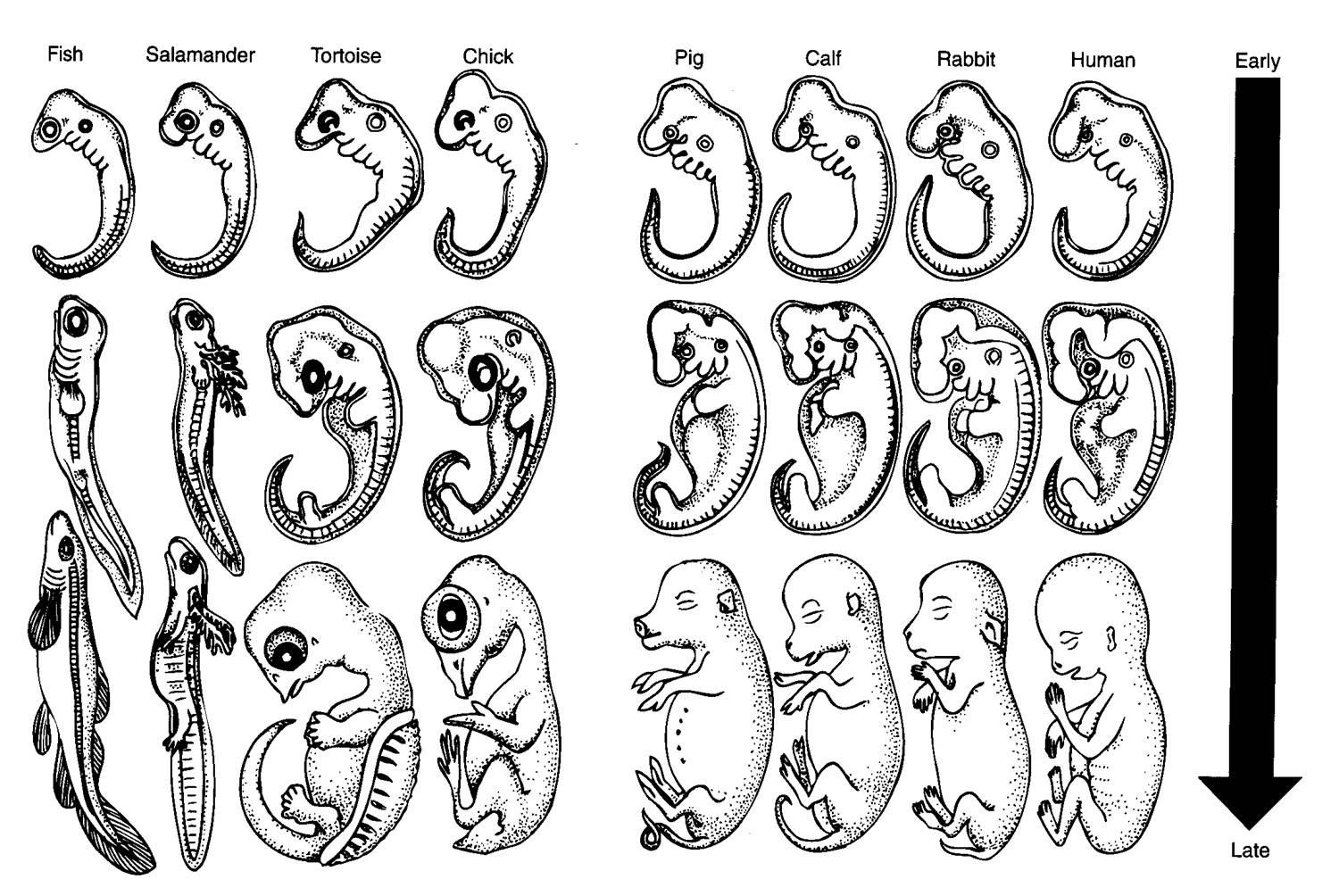
comparative embryology
400
When a population suddenly gets much smaller and the genetic variability is greatly reduced (cheetahs):
bottleneck effect
400
An organism's ability to survive and reproduce fertile offspring in an environment:
fitness
400
Type of speciation that occurs when some members of an original species become geographically separated from the rest of the species:


allopatric speciation
500
When humans select certain traits when breeding plants and animals:
artificial selection
500
structures that are similar in structure in related organisms because they were inherited from a common ancestor
homologous structures
500
Type of natural selection show below:
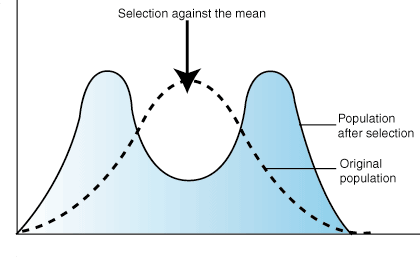
disruptive selection
500
State 4 of the 5 parts of the Hardy-Weinberg Theorem:
1) No new mutations
2) No migration
3) Large population
4) Random mating
5) No natural selection
500
What timing of evolution is show below?
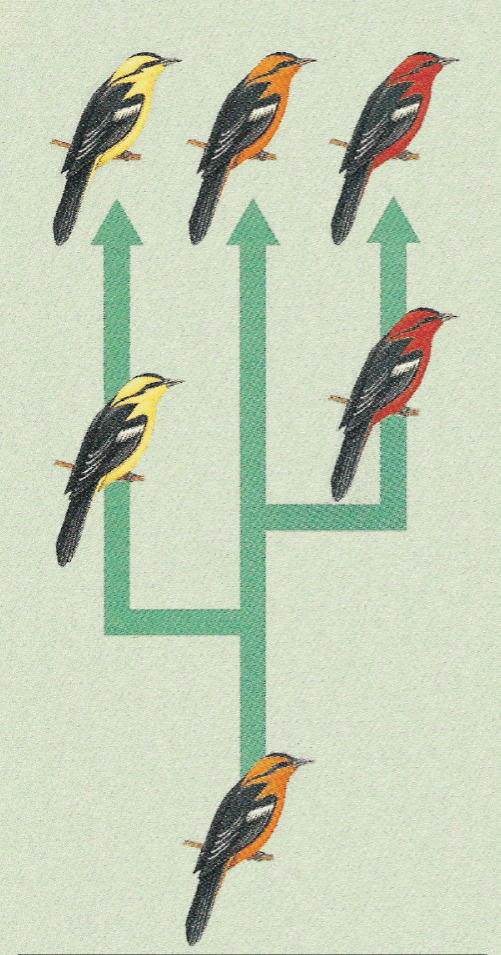
punctuated equilibrium