Models & Theories
Theories & Models
More Models
More Theories
Can you guess this category?
50

According to the above model, where would someone find a luxury shopping area?
Along the central spine
50
In which stage of the Epidemiologic Transition Model do degenerative diseases become more widespread and why?
Stage 4 - people live longer due to medical advances so more people experience degenerative diseases.
50
A modern American city has a declining downtown, multiple edge cities, and most retail located along suburban highways. Which model best describes this city?
Galactic City (Peripheral) Model
50
A car manufacturer decides to locate its factory near its dealerships rather than near the raw materials. What quality of this industry leads to placing the factory at this location?
Car manufacturing is a bulk-gaining industry.
50
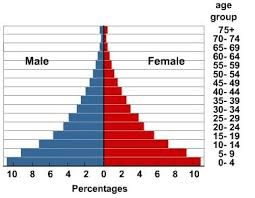
What coming concerns would a country with the above population pyramid have?
Concerns about providing food, housing, education.
Concerns about IMR
100
A student argues that the Amazon rainforest's dense vegetation "forced" indigenous peoples to develop certain cultural practices. What theory does this viewpoint fit into?
Environmental Determinism
100
According to Ravenstein's Laws of Migration, most migrants travel only short distances. What is the term for the pattern of moving in stages from rural areas to progressively larger cities?
Step migration
100
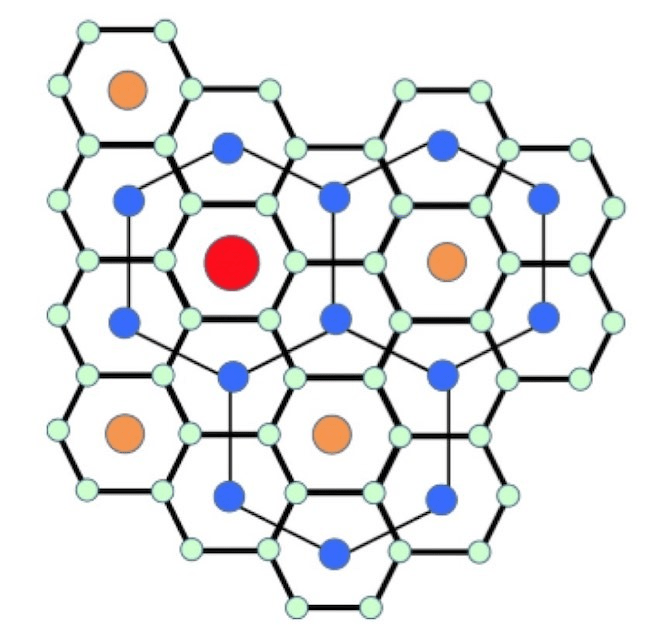
According to the above model, explain where you would find an international airport and why.
Red dot: the "central place"/big city - the population here can meet the threshold for a higher order service like the airport, according to Christaller's Central Place Theory.
100
How has the rise of social media challenged Distance Decay and reinforced Time-Space Compression?
Social media allows trends to spread globally instantly (challenging Distance Decay) and makes distant places feel connected (reinforcing Time-Space Compression) — e.g., a TikTok trend going viral worldwide.
100
Using the Gravity Model, predict which pair of cities has the greatest interaction:
A. City A (pop. 2 million) and City B (pop. 1.5 million) located 100 miles apart.
City B (pop. 1.5 million) and City C (pop. 500,000) located 40 miles apart.
City A (pop. 2 million) and City C (pop. 500,000) located 60 miles apart.
City A and City B — despite the greater distance, their populations are much larger, so the gravitational interaction is greater.
200
Weber identified three factors that influence industrial location. Name two of the three and give an example of each.
(1) Transport costs — locating near raw materials or markets
(2) Labor costs — moving to areas with cheaper labor
(3) Agglomeration — clustering near related industries for shared benefits.
200
Compare the Von Thünen Model and the Burgess Concentric Zone Model. What do they have in common, and how do they differ in what they explain?
Both based on the bid rent theory. Von Thunen applies to rural land/types of farming; Burgess applies to urban land use.
200
Name TWO changes that Thomas Malthus did NOT predict when he came up with his theory?
Factors that would increase food production:
Mechanized farming
Hybrid seeds
Chemical fertilizers
Factors that could keep food fresh longer:
Refrigerated trucks & railcars
Canned foods
Factors that would decrease population growth:
Development of contraceptives
Increases in education and work opportunities for women
200
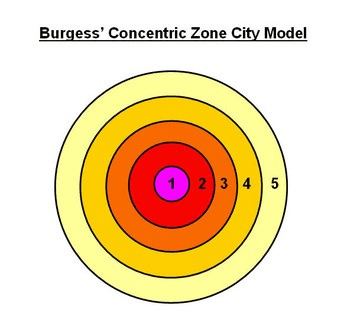
Explain why a newly arrived immigrant family is likely to settle in Zone 2 in Burgess' Concentric Zone Model.
Zone 2 (zone of transition) has cheap housing near factories and jobs.
200
How do the Latin American and African City Models both differ from North American models in their assumptions for where poverty is concentrated in a city?
LA and African city models predict poverty concentrated on the periphery; NA models predict poverty will be concentrated close to the CBD near the industrial areas.
300
Identify one core, one semiperiphery, and one periphery country according to Wallerstein's World Systems Theory.
Core: US, UK, Japan, Germany, Canada, Australia, France, etc.
Semiperiphery: Brazil, Russia, India, China, and South Africa (BRICS), Mexico, Argentina, Indonesia, etc.
Periphery: Bangladesh, Kenya, Niger, Democratic Republic of Congo, South Sudan, Yemen, Mali, Cambodia, etc.
300
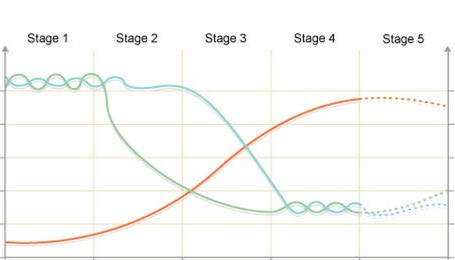 Country X is in based on the following data: birth rate = 38/1,000, death rate = 12/1,000. What is happening to the total population, and what is likely driving the drop in death rates?
Population is growing rapidly. Death rates are falling due to improvements in: medicine, sanitation, OR food supply
300
Explain what type of land use (commercial, industrial, residential) is found closest to the CBD and WHY according to the bid rent theory.
Commercial land use. Businesses are willing to meet a higher cost of rent to have the greatest level of access to consumers in the CBD.
300
Identify the three CBDs present in the African City Model.
traditional/local CBD, colonial CBD, market
300
Identify a limitation of Rostow's Modernization Model.
Assumes all countries follow the same linear path of development, always moving forward. Based on Western patterns of development. Assumes all countries want to reach a stage of high mass consumption. Ignores the history of colonization that allowed the most developed countries to reach their current stage.
400
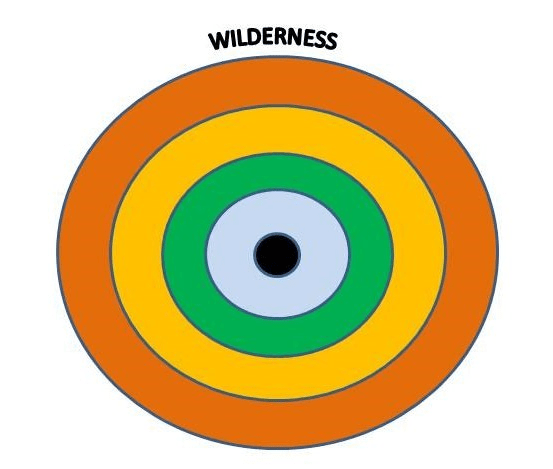
According to the Von Thunen model, what type of farming is located in the yellow ring? Explain why.
Zone 3 is typically grain/field crops — too far from the city for perishable products (Zone 1) but not as land-extensive as farming in Zone 4. Grain is non-perishable and has moderate transport costs.
400
Identify an assumption Von Thunen makes which limits the usefulness of his model.
Couldn't predict modern technology that improved shelf life of perishable goods (refrigerated trucks, canning goods). Couldn't predict the impact of globalized trade. Assumed land was flat without any barriers to transportation.
400
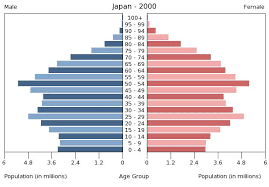
What are TWO economic challenges this country is likely facing?
Labor shortages, an aging workforce, rising pension and healthcare costs, and potential population decline
400
How does Wallerstein's World System Theory explain why some countries remain poor despite decades of development aid?
Core nations structure the global economy to benefit themselves — trade relationships, debt, and multinational corporations keep periphery nations dependent and unable to accumulate capital.
400

What kinds of areas are found in locations A and B?
New suburbs and squatter settlements
500
A country in sub-Saharan Africa exports raw cocoa beans to Europe, which processes them into chocolate and sells them back at a much higher price. Which theory best explains this relationship, and what term describes this country's role?
Dependency Theory (or Wallerstein's World System Theory) — the country is in the periphery, exporting raw materials while the core captures the profit of creating a value-added good.
500
Explain why there are three distinct CBDs in the African city model?
The three CBDs reflect the history of pre-colonial markets selling locally made goods, commercial districts developed during the colonial period, and commercial zones developed post-independence.
500
How do Ravenstein's Laws of Migration and the Gravity Model complement each other in explaining migration patterns?
Both predict that larger cities attract more migrants (Gravity Model: larger population = more pull; Ravenstein: migrants are drawn to urban centers). Both also suggest distance matters — migration decreases with distance.
500
According to Rostow's Stages of Economic Growth, what must a country achieve during the "Take-Off" stage? (At least two of the three).
Rapid industrialization, growth of a manufacturing sector, and investment in infrastructure.
500
How might a geographer use both Weber's Least-Cost Theory and Wallerstein's World System Theory together to explain why clothing factories moved from the United States to Bangladesh?
Weber: factories relocated to minimize labor costs. Wallerstein: Bangladesh (periphery) provides cheap labor that core nations exploit, keeping production costs low for multinational corporations.