Easy street
More difficult street
Trauma bae
A picture is worth a thousand words
At your in-service
100
What size IVs are considered "large bore" and should be inserted in anticipation of MTP
16 gauge or 18 gauge
100
What mnemonic is commonly used for a secondary survey in a trauma patient?
AMPLE
Allergies, medications, PMH/pregnancy, Last meal, Events/environment contributing to the injury
100
28 yo man arrives in the trauma bay after MCC. Confused, pale, BP 80/50, HR 130. 2 large bore IV lines are placed. What's the next best step in management?
A) Administer 2L normal saline
B) initiate uncross matched type O negative blood transfusion
C) Obtain a comprehensive CT scan
D) Insert a central line
B) This patient is showing signs of hemorrhagic shock, should receive blood product rather than crystalloid
100
Patient presents after MVC. He is severely dyspneic, BP 78/46, HR 138, SpO₂ 82%. Xray below. What's your first move?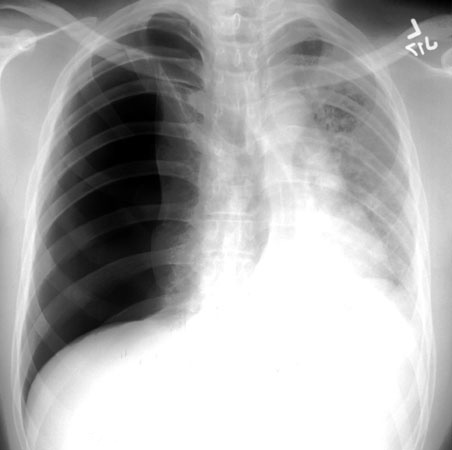
C- needle decompression of the right chest. this is a tension pneumothorax causing obstructive shock. immediate needle decompression relieves the pressure before placing a definitive chest tube.
100
A patient is extricated after being trapped under a collapsed structure for several hours. He has extensive muscle injury.
EKG: 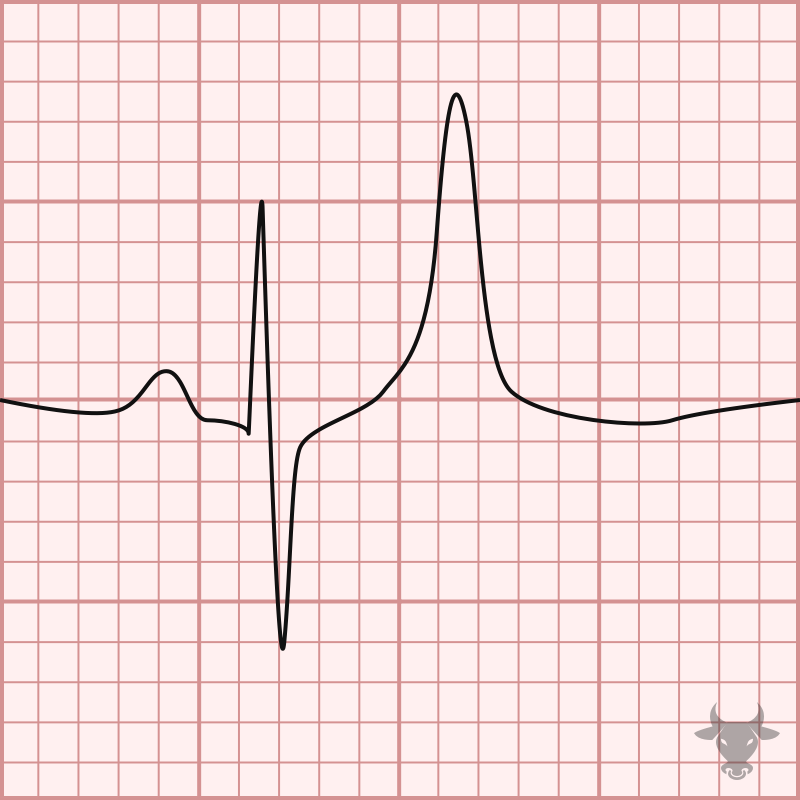
What is the diagnosis and what interventions are indicated?
Wide QRS and peaked T wave: hyperkalemia (released from injured muscle).
Treat with calcium gluconate (to protect cardiac membrane), insulin, glucose, alternative option: albuterol. k-exalate would work too slowly.
200
What does ABCDE stand for in trauma management, AND in a modern version of ABCDE there is a letter sometimes placed before the A. What is that letter and what does it stand for?
Airway, breathing, circulation, disability, exposure.
X-exsanguination
200
What does massive transfusion protocol consist of?
1 PRBC: 1 Platelets: 1 FFP
(1 FFP for every 6 PRBC and 6 platelets)
200
42 yo man presents to the trauma bay with a stab wound the the left upper abdomen. HR 130s, clammy skin, BP 70s/40s, RR 30s. FAST reveals free fluid in the peritoneal cavity. What is the next step in management?
A) CT panscan
B) Serial abdominal examinations
C) Diagnostic laparoscopy
D) Urgent exploratory laparotomy
D) this patient is hemodynamically unstable with intra-abdominal bleeding on FAST exam. He requires immediate ex lap, this should bypass further diagnostic imaging.
200
68-year-old Peds struck by MVC arrives hypotensive and tachycardic. Pelvic radiograph demonstrates an unstable pelvic-ring injury. There is no obvious external hemorrhage. He remains hypotensive despite blood-product resuscitation.
Initial way to address this? bonus points-what should you do if you see blood at the ureteral meatus?
Apply a pelvic binder
bonus: Retrograde ureterogram- do NOT insert a foley because you could turn a partial tear into a complete tear
200
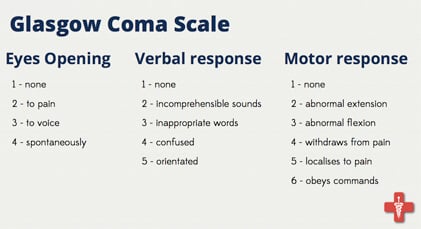
A 36 yo man presents to the trauma bay s/p boating injury. After doing assessing ABCs, you notice the patient moaning (not saying words), opening his eyes when you say his name, and pulling away when you touch his leg that has an obvious bony deformity. What's his GCS?
9
300
What are the spaces the body could bleed out into (name 6)
Abdomen, thorax, retroperitoneum, pelvis, long bones (thigh), street
300
A patient with a tibial fracture develops severe, escalating leg pain despite increasing doses of pain medication. Pain is worse with passive stretch, and the leg is becoming tense. What test can you do to confirm the suspected diagnosis and what intervention would be indicated.
Concerning for compartment syndrome- pain, parlor, paresthesias, poikilothermia, paralysis, pulselessness (last to occur)
Test: Striker needle with compartment pressure over 30mmHg
Intervention: 4 compartment fasciotomy
300
A 35-year-old patient presents after blunt abdominal trauma, primary survey is only significant for positive FAST. BP 128/76 mm Hg, HR 92/min, spO2 98% on room air, GCS 15. what's the next step in management?
CT abdomen/pelvis (assuming no contraindication). This patient is STABLE, so has time for a scan to help decide definitive management (ex-lap vs IR embolization)
300
What's the concern and what procedure would address this?
Pericardial effusion- this ones rather large, would be concerned for tapenade. Need a pericardial window (or emergency thoracotomy)
300
A patient after a left-sided penetrating thoracoabdominal injury is stable. xray demonstrates 
What is this presentation concerning for and what is the treatment?
Traumatic diaphragmatic hernia- requires urgent operative repair
400
Why is it important to monitor calcium during MTP?
Because citrate in FFP binds calcium in the extracellular fluid and can cause calcium to drop to a dangerously low level
400
Becks triad describes the clinical signs of cardiac tampenade. What are they?
Hypotension, muffled heart sounds, jugular venous dissension (all due to fluid buildup in the pericardial sac)
400
A 45 year old patient arrives to the bay with a large anterior chest-wall defect. Air moves visibly through the wound with respiration. He is tachypnic and hypoxic. What's the immediate intervention?
Apply an appropriate occlusive chest dressing and monitor/decompress the chest as indicated, followed by tube thoracostomy away from the wound
400
37 year old man presents as Peds vs MVC. Xray below. A chest tube is inserted and immediately returns 1,700 mL of blood, followed by continued brisk output and persistent hypotension despite blood-product resuscitation. Doctor, what should we do?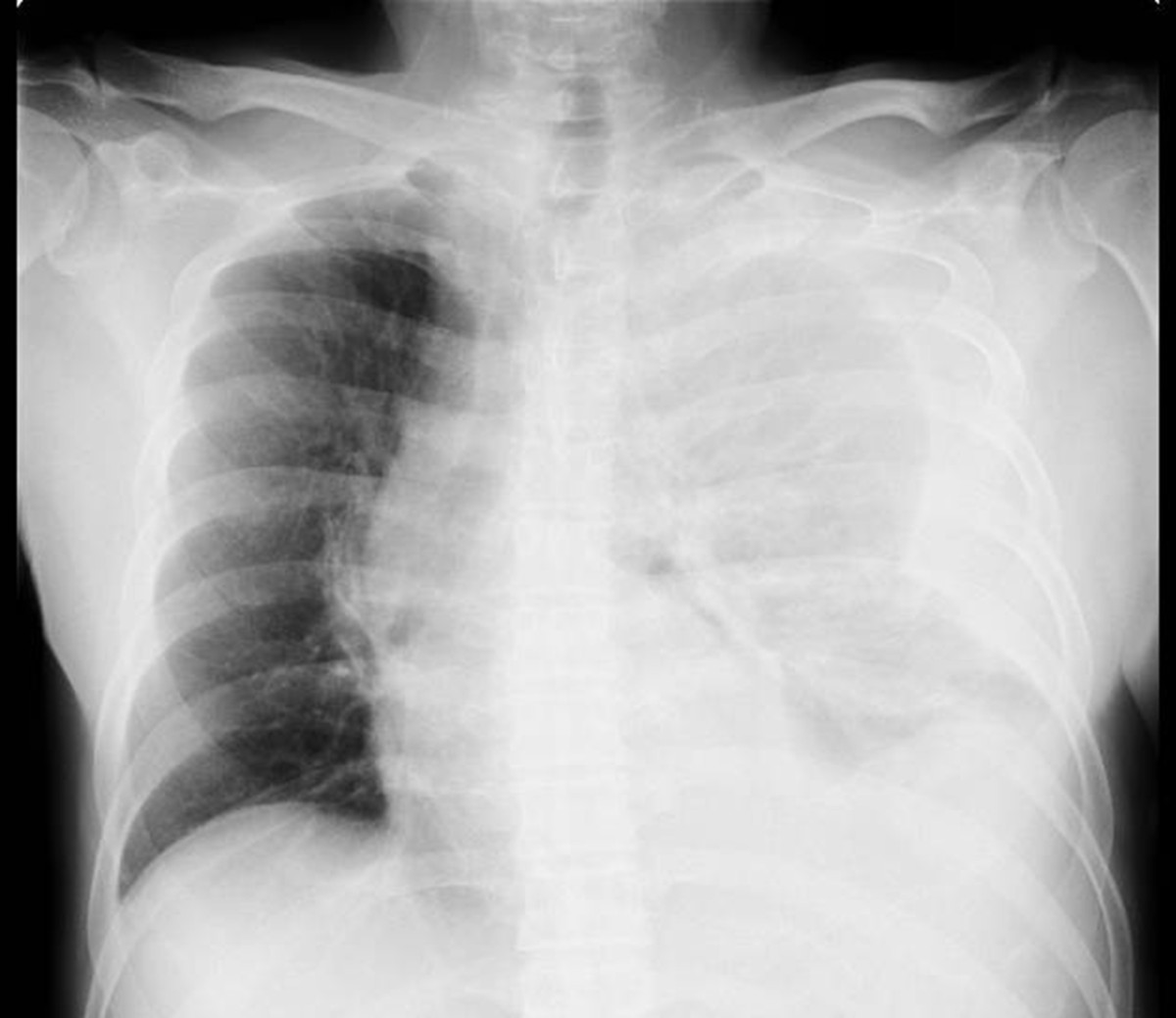
This is a hemothorax with high output into the chest tube- proceed to the OR for operative thoracotomy.
Indications for operative intervention for traumatic hemothorax:
1) Immediate drainage of 1000ml-1500ml upon insertion of chest tube
2) Continued drainage of >200ml per hour for 2-4 hours
3) Total output of over 1500ml over 24 hours
400
A 54 yo man presents after MVC with a suspected closed head injury. His eyes are closed and they do not open to voice or pain. he moans with sternal rub and is his highest level of motor response is flexing his arms, he does not withdrawal from pain. What is the your first intervention?
GCS is 6, should intubate with gcs less than 8
500
What makes up the lethal triad?
coagulopathy, acidosis, hypothermia
500
In a hemodynamically unstable trauma patient with suspected noncompressible abdominal hemorrhage below the diaphragm, this endovascular technique can provide temporary proximal aortic occlusion as a bridge to definitive hemorrhage control.
REBOA (resuscitative endovascular balloon occlusion of the aorta)
REBOA involves positioning and inflating a balloon within the aorta to temporarily reduce distal blood flow and maintain perfusion to the heart and brain while definitive hemorrhage control is pursued. It is a temporary bridge, not definitive treatment, and requires appropriate expertise, equipment, and patient selection.
500
42 yo man presents after stab wound to the neck with expanding hematoma. Has stridor and increasing respiratory distress. 2 attempts at endotracheal intubation have been unsuccessful. DESCRIBE the steps for the next indicated procedure
Cricothyrotomy:
 Feel for the crycothyroid membrane, make a vertical midline incision (taking caution to avoid the internal jugular and the carotids), finger direct through the soft tissues. Make a transverse incision through he CTM, insert your finger (to confirm the airway and mark the pathway) then pass the bougie. Run the entotrachial tube over it (usually 6mm) and inflate. look for chest rise, condensation, and continuous end-tidal co2. secure the tube.
500
Diagnosis and DESCRIBE how you'd perform the indicated procedure
Right-sided pneumothorax.
1) Position patient with arm above their head and identify the triangle of safety
2) Prep and drape, anesthetize (aspirate as you advance) with lidocaine (skin, subs, periosteum, intercostal muscles, pleura)
3) 2-3cm incision over either the 4th or 5th intercostal space just anterior to the mid-axillary line.
4) Dissect with a hemostat through the subq and intercostal muscle, stay just superior to the rib to avoid the intercostal neurovascular bundle
5) Once you enter the pleura, spread open the hemostat, insert a finger to confirm the space/release any adhesions, and insert the tube with your finger guiding it anteriorly and apically (where the air is).
6) Secure the tube and connect it to the seal/drainage system
500
A patient presents after MVC with hypotension and bradycardia. There is no obvious source of hemorrhage, CT shows high C spine injury. What's the treatment for his hypotension?
vasopressors. would start with norepinephrine (α-mediated vasoconstriction and some β₁ activity, which is useful for his vasodilation and bradycardia)
This patient is in neurogenic shock and has lost vascular tone. So vasodilation and reduced SVR lead to hypotension. There is unopposed vagal tone (due to loss of sympathetic stimulation) leading to bradycardia.