Naming
Transformations
Features from Equations
Features from Graphs
Planets
100
Name this type of function
f(x) = 3(x-1)^2+4
Quadratic
100
Name the transformations on the function
y = log(x+1)-2
Horizontal Shift Left One
Vertical Shift Down 2
100
Identify the Domain and Range for this function
y=5x+7
D: All Real Numbers
R: All Real Numbers
100
Write the Domain and Range of the function
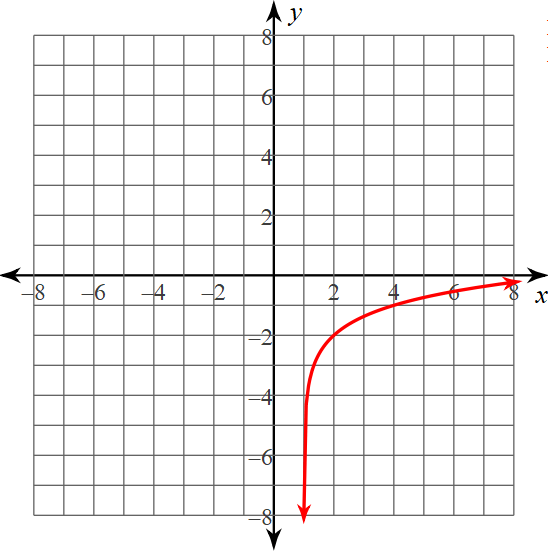
Domain: (1, infinity)
Range: All Real Numbers
100
This planet is known as the "Red Planet"
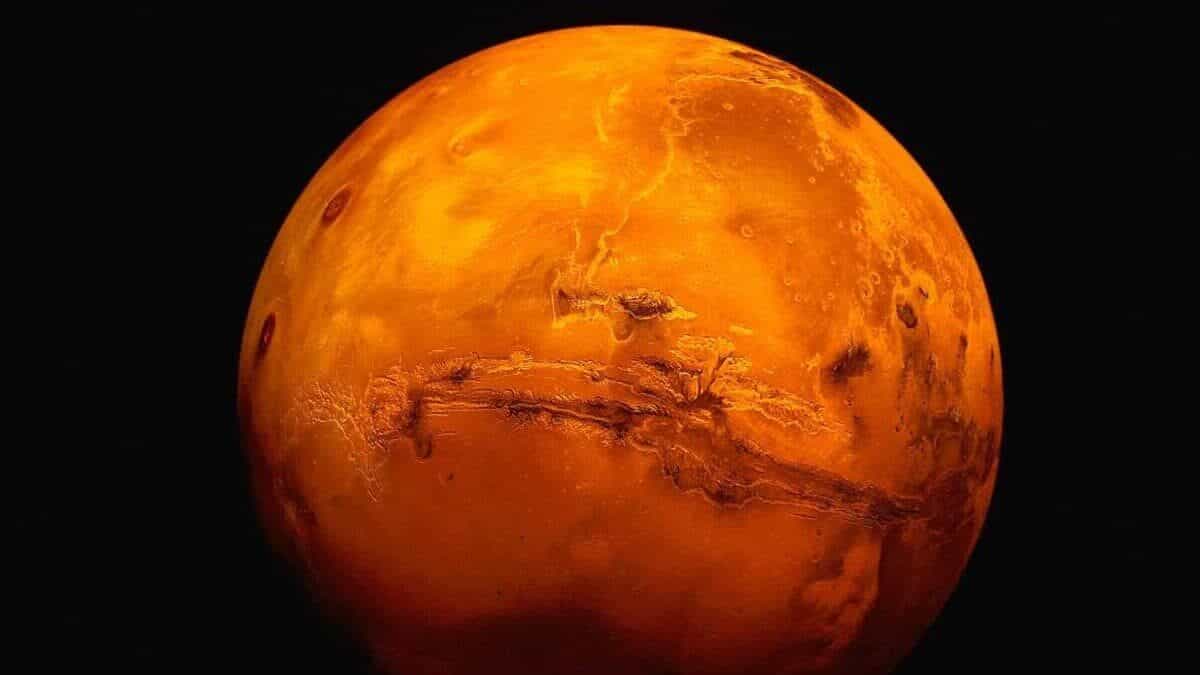
Mars
200
Name this type of function
g(x)=-3/(x+5)
Rational
200
Name the transformations on the function
y=-sqrt(x)+5
Reflection over the x-axis
Vertical Shift Up 5
200
Identify the Domain and Range for this function
y=3^x-8
Domain: All Real Numbers
Range: (-8, infinity)
200
Identify the y-intercept
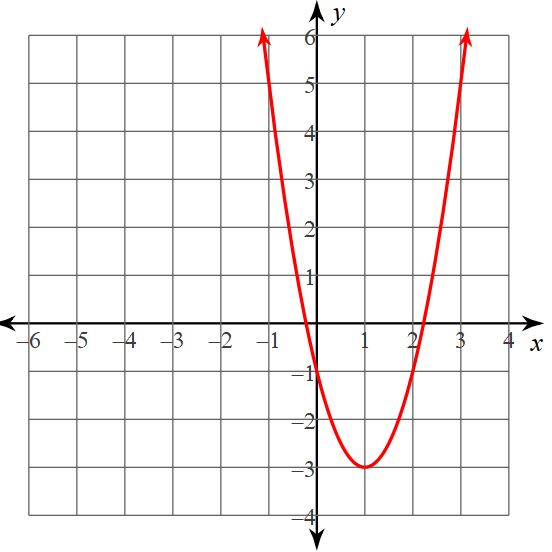
y-int: (0, -1)
200
How many moons does venus have?

zero
300
Name this type of function. Be specific!
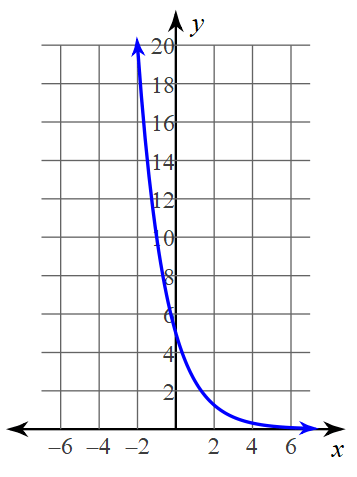
Exponential Decay
300
Name the transformations on the function
y=3(x-4)^2
Vertical Stretch by 3
Horizontal Shift Right 4
300
Identify the vertex for the following quadratic
f(x)=4(x-5)^2+9
Vertex: (5, 9)
300
Identify the equation of the asymptote
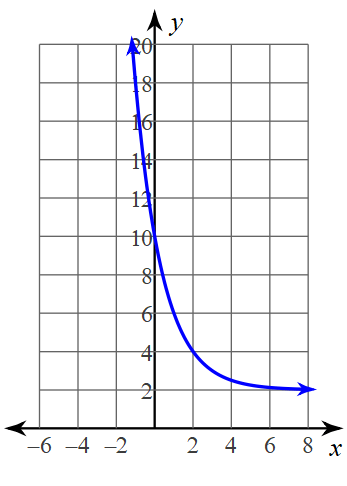
Horizontal Asymptote at y=2
300
Despite being the smallest planet, it has a massive iron core and is the most dense in our solar system.
Mercury
400
Name this type of function
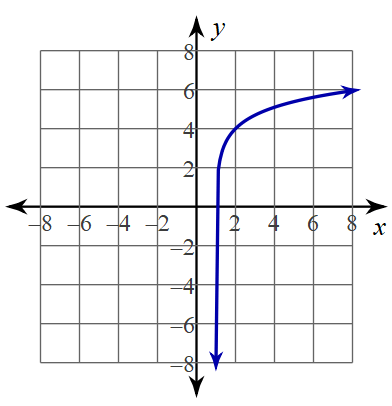
Logarithmic
400
Name the transformations on the function
y=(4)^(2x)-7
Horizontal Shrink by 1/2
Vertical Shift Down 7
400
Identify the Asymptotes for the function
f(x)=1/(x-2)-4
Vertical Asymptote at x=2
Horizontal Asymptote at y=-4
400
Identify the Domain and Range of the funtion
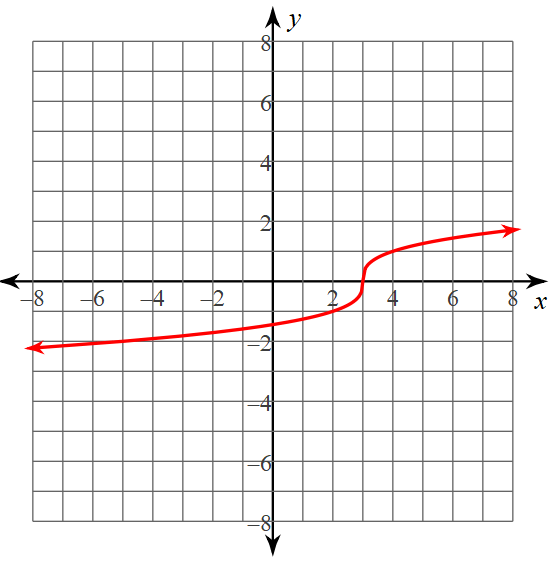
Domain: All Real Numbers
Range: All Real Numbers
400
Located 1.8 billion miles away, it is the coldest planet in the solar system, with a thick atmosphere of hydrogen, helium, and methane. It is known for its 98-degree axial tilt and rotating on its side.
Uranus
500
Name this type of function
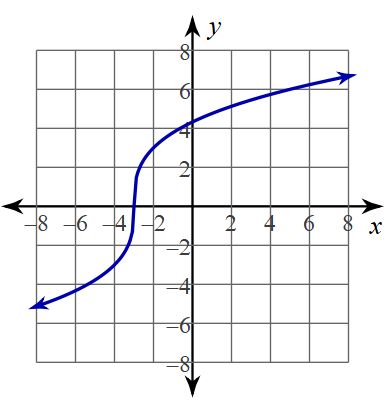
Cube Root
500
Name the transformations on the function
y=2/3sqrt(-x)
Vertical Shrink by 2/3
Reflection over the y-axis
500
Identify the Domain and Range for the function
g(x)=-sqrt(x+2)+1
Domain: [-2, infinity)
Range: (-infinity, 1]
500
Identify the Interval of Increase for the function
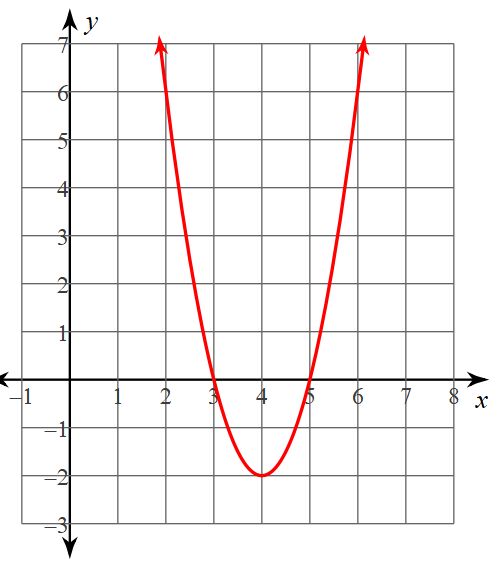
Interval of Increase: (4, infinity)
500
It is widely considered the most Earth-like planet discovered to date. Located 1,400 light-years away, it is dubbed "Earth 2.0" because it orbits a G2-type star similar to our Sun at a distance that allows for liquid water (habitable zone). It is roughly (1.6) times the size of Earth and takes 385 days to complete one orbit
Kepler-452b