All About the Atmosphere
The Carbon Cycle
Earth's Energy Balance
Impacts of Climate Change
Grab Bag
100
This gas makes up approximately 78% of all the gases in the atmosphere.
Nitrogen
100
The general term for a process that adds carbon to the atmosphere, often in the form of carbon dioxide.
Source
100
The source of all incoming energy on Earth.
the Sun
100
The name for gases that cause an increase in global temperatures as their concentration increases.
Greenhouse Gases
100
This gas being added to the atmosphere is responsible for the development of life outside the oceans.
Oxygen
200
O3 is the chemical formula for this molecule.
Ozone
200
Example processes include: formation of fossil fuels, photosynthesis, and diffusion.
Sinks
200
The impact on global temperatures from an increase in atmospheric CO2 levels in the atmosphere.
Increase
200
The lowering of the pH of the ocean because CO2 is absorbed via diffusion.
Ocean acidification
200
This process is both a source and a sink in the carbon cycle.
Diffusion
300
This human activity contributes high levels of greenhouse gases to Earth's atmosphere.
Burning fossil fuels
300
Places where carbon is stored or can be found, including the ocean, rocks, the atmosphere, plants, and animals.
Reservoirs
300
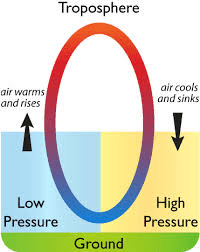 This form of energy transfer causes the pattern shown in the diagram.
Convection current
300
The reasons for sea level rise.
1. Melting land ice
2. Thermal expansion of the ocean
300
This action was taken to help restore the ozone layer.
Banning CFCs / the Montreal Protocol
400
This geologic phenomenon adds large quantities of several gases, such as sulfur dioxide, to the atmosphere.
Volcanoes / volcanic eruptions
400
Carbon in the atmosphere is most commonly found as this compound/molecule.
Carbon dioxide
400
These naturally occurring surfaces on Earth have a high albedo.
Ice / snow
400
This source of pollution is often credited with causing acid rain.
Burning fossil fuels.
400
The greater concentration of these ions makes a substance more acidic.
Hydrogen
500
The ozone layer can be found in this layer of the atmosphere.
Stratosphere
500
This process is done by plants that removes carbon dioxide from and adds oxygen to the atmosphere.
Photosynthesis
500
The reason for global cooling after a large meteor impact or volcanic eruption.
Gas/dust/ejecta would block the energy from the Sun and lower global temperatures.
500
3 examples of changes caused by an increase in global atmospheric temperatures.
- ice caps melting
- glaciers melting
- increased ocean temperatures
- increased atmospheric temperatures
- sea level rise
- increased intense weather events/storms
- increased likelihood of droughts
- increased likelihood of heatwaves
500
The name of the bacteria that first performed photosynthesis in the Earth's oceans, eventually adding oxygen gas to the atmosphere.
Cyanobacteria