Mise-en-scene
Sound
Editing
Cinematography
What is Cinema?
100
What are all of the elements of mise-en-scene?
1. figure expression and movement
2. sets and props
3. costumes and makeup
4. lighting
100
These two terms distinguish sound within the story space and sound outside of the story space
Diagetic and non-diagetic sound.
100
This shot depicts a character's response to something shown in the previous shot.
Reaction shot.
100
Term for lighting that surrounds a subject in film, giving full light to the subject.
Three point lighting
Double Jeopardy: what are the three lights used in three point lighting?
100
Three phases of filmmaking
Pre-production
Production
Postproduction
Double Jeopardy: name one part of each phase
200
These are the two traditional "types" associated with mise-en-scene.
Naturalistic and Theatrical
200
These are the four types of sound on film.
Dialogue, soundtrack, score, sound effects.
200
Connection of shots through shape and scale that provides a visual transition to a similar shape or line in the next shot.
Graphic match.
200
This is the normal frame rate for filmmaking.
24 frames per second.
200
What are the three phases from script to screen?
Production, Distribution, Exhibition
300
This is the term associated with the arrangement and movement of actors in relation to one another within the physical space of a mise-en-scene.
Blocking
300
These artists create sound in a separate studio to capture the sound shown on screen.
Foley artists.
300
The two rules of editing that deal with continuity of space.
180 degree rule and 30 degree rule.
300
Identify the camera angle and distance used in this shot. 
Canted (dutch) angle
Medium shot
300
The early phase of cinema associated with non-narritive short films.
Cinema of Attractions
(1895-1906)
400
Short Response: Briefly describe the elements of mise-en-scene at work in this photo: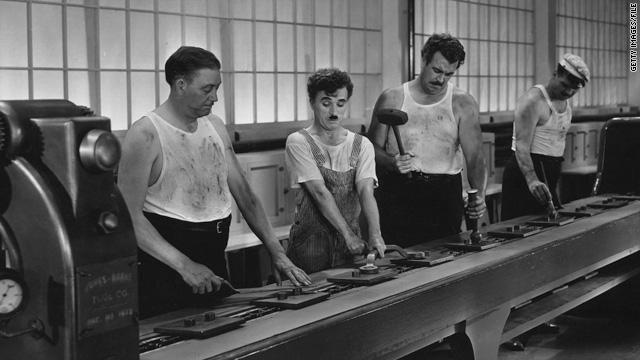
Blocking:
Lighting:
Sets and Props:
Costume and Makeup:400
Sound that is attached to an image on screen VS Sound that is not attached to an image on screen
Synchronous vs Asynchronous sound
400
These are the five different transitions used most often in film.
Cut, fade in, fade out, wipe, dissolve.
400
This technique imagines the frame divided horizontally and vertically and dictates placing objects along these lines for maximum visual interest.
Rule of thirds
400
French Brothers who pioneered filmmaking in Europe with their "actualities"
Lumiere Brothers
500
A version of play lighting that is dramatic, high-contrast lighting that emphasizes shadows and the contrast between light and dark. 
Chiaroscuro lighting.
500
This movie in this year was the first feature-length motion picture with both synchronized recorded music score as well as lip-synchronous singing and speech.
The Jazz Singer (1927)
500
This term refers to the quality of fictional representation that allows viewers to accept a constructed world as plausible.
Verisimilitude.
500
The equation 1.37:1 is associated with this term for aspect ratio.
Academy ratio
500
Device that Edision showed the first motion pictures on in America
The Kinetoscope