Atoms & Elements
Compounds & Mixtures
Periodic Table
Physical/Chemical Changes
Law of Conservation/Chemical Equations
100
What is the charge and location of the following subatomic particles?
Proton, Neutron & Electron
Proton - Positive, In the nucleus
Neutron - Neutral, In the nucleus
Electron - Negative, in the electron cloud or shell
100
A student draws an inaccurate diagram of a compound with sulfur (S) and oxygen (O) atoms. What is wrong with the student’s diagram?
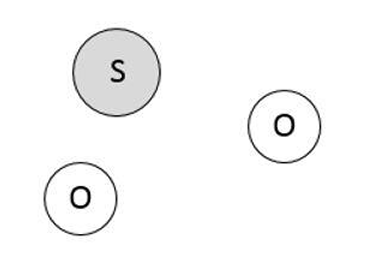
The three atoms have to be joined together chemically.
100
What happens to the molecules in water as heat energy is added?
They speed up and move further apart
100
What is the difference between a physical and chemical change?
Physical changes change the appearance and can usually be undone. Chemical Changes change the chemical composition and cannot usually be undone.
100
What does the Law of Conservation tell us?
Matter cannot be created or destroyed--the reactants must always equal the products.
200
Which diagram correctly shows an atom with 10 electrons, 8 neutrons, and 7 protons?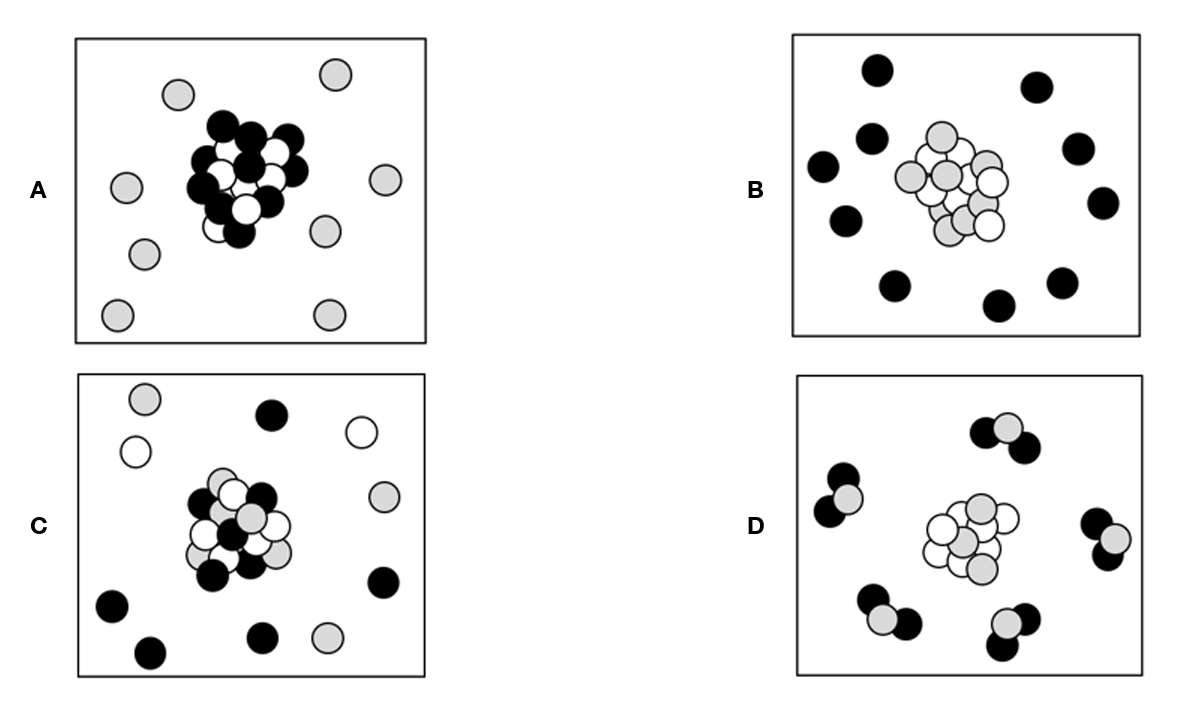
B
200
Which diagram shows a single type of compound molecule?
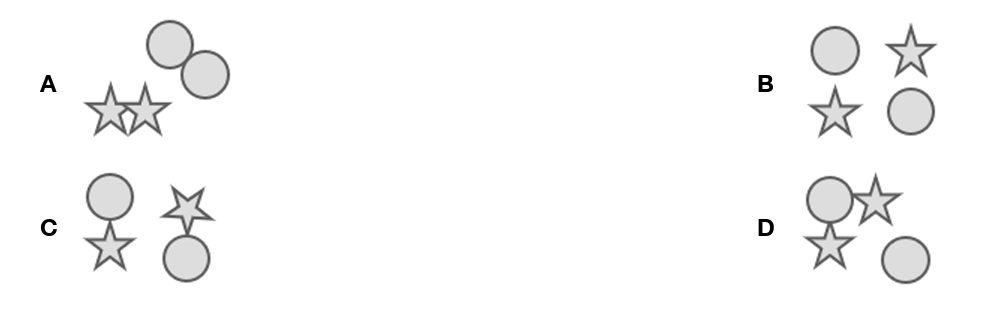
C
200
Which statement about the elements is true?
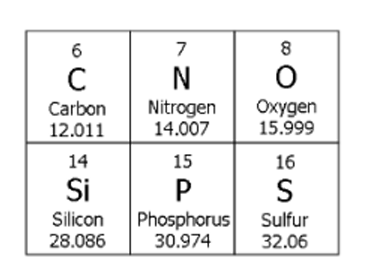
A Oxygen and sulfur share similar properties.
B Carbon and nitrogen share similar properties.
C Carbon and silicon have the same number of electrons.
D Oxygen and phosphorus have the same number of protons.
A, because they are in the same group
200
Which two pieces of evidence from the experiments indicate that a chemical change occurred?
A. Experiment 1 forms a clear liquid after mixing.
B. Bubbles form after combining liquid 1 and liquid 2.
C. The mass of liquid 1 is less dense than the mass of liquid 2.
D. There is no change in temperature in Experiment 3
E. A gray solid forms in Experiment 4.
B & E
200
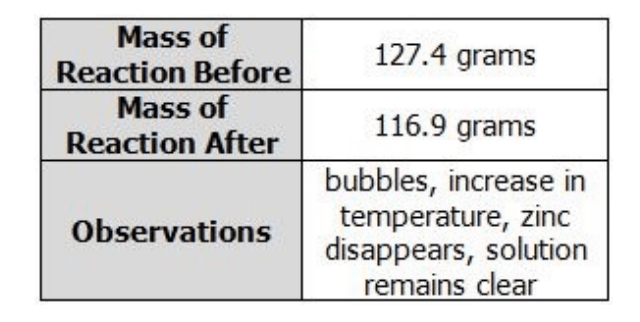
How can this experiment be improved to better represent the Law of Conservation of mass?
Create a closed system so that gases do not escape
300
A Boron (B) atom has 6 neutrons, 5 protons, and 5 electrons. What is the atomic mass of boron?
11 (5 protons + 6neutrons = 11)
300
How would you classify substance A and substance B?
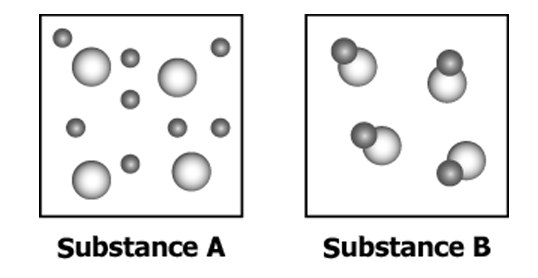
A - Homogeneous Mixture
B - Compound
300
A student has to select an element that is a poor conductor of heat and electricity. Which element should the student choose?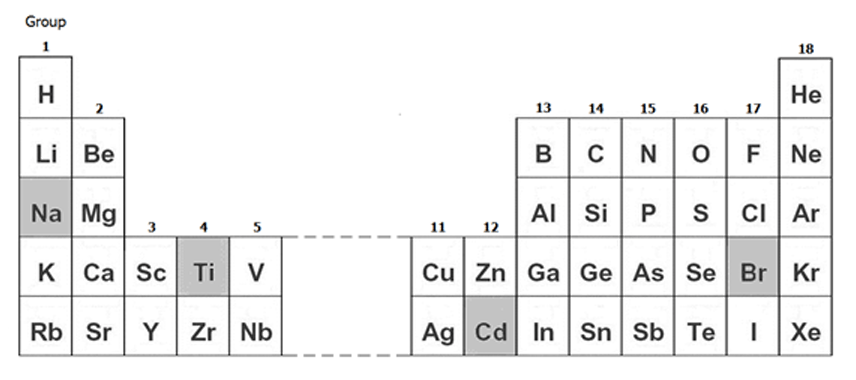
Br because it is a nonmetal
300
True or False: Water boiling is an example of a chemical change because bubbles are formed
False--It is a physical change because we are just changing states of matter (liquid to gas)
300
A student mixed 5 g of baking soda with 10 g of vinegar. After the reaction the total mass was 13g. What is the reason for a change in mass?
Open system- A gas was created
400
What do the gray, black and white dots represent?
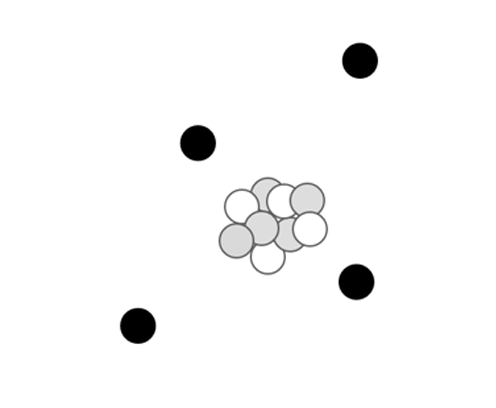
Black - Electrons
White - Protons
Gray - Neutrons
400
What is the difference between and homogenous and heterogenous mixture?
Homogenous mixtures look the same or uniform throughout. Heterogenous mixtures are non-uniform and you can see the different ingredients.
400
A new element is discovered that is lustrous, malleable, and conducts heat and electricity well. Into which periodic table group should this new element be placed?
a) gases
b) metalloids
c) metals
d) nonmetals
c) metals
400
Which type of chemical reaction releases energy in the form of heat or light?
Exothermic
400
Which concept diagram represents a balanced reaction?
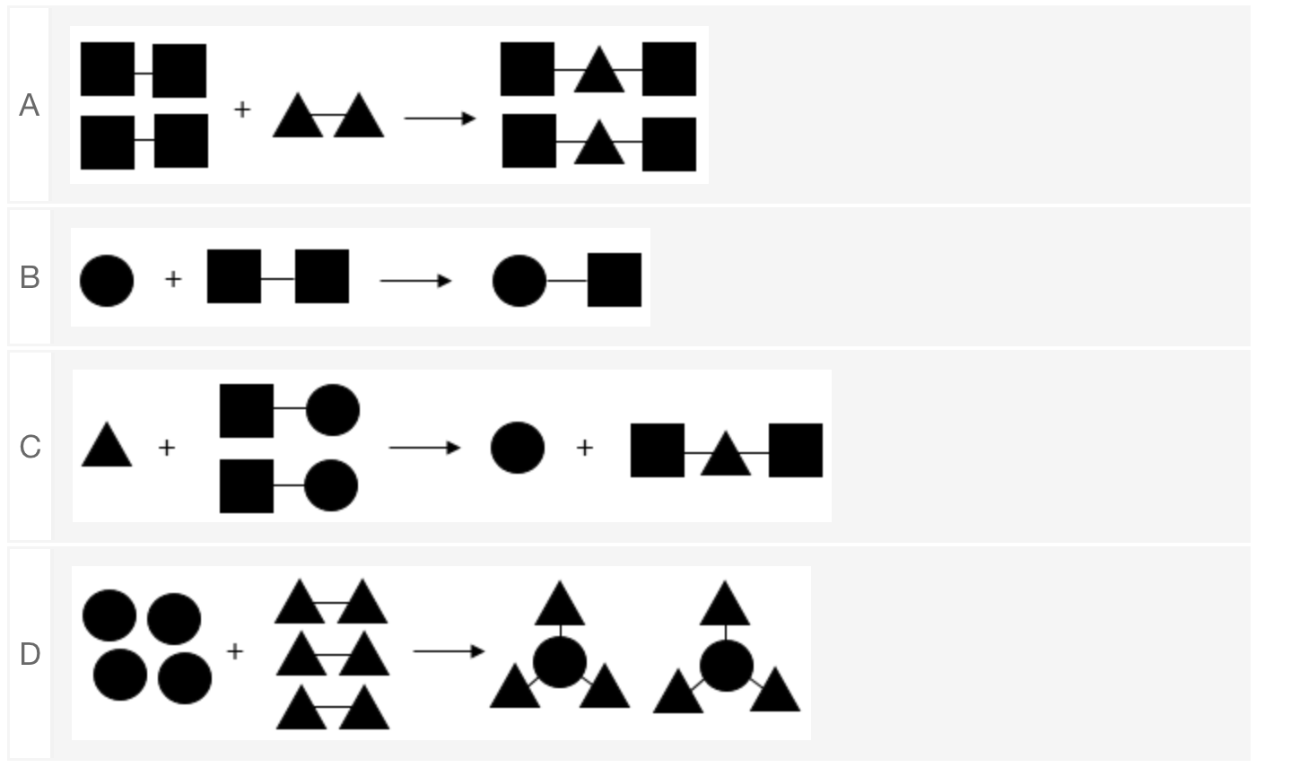
A
500
Which two nuclei are the same element?
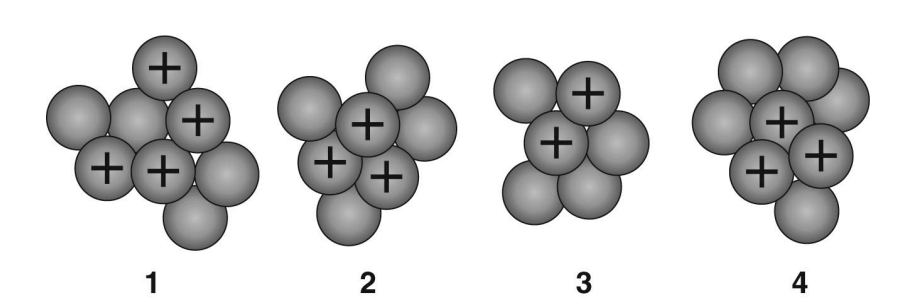
2 & 4
500
How many atoms of Hydrogen are found on the products?
Na + H2O --> NaOH + H2
3
500
Which group of elements reacts with Group G?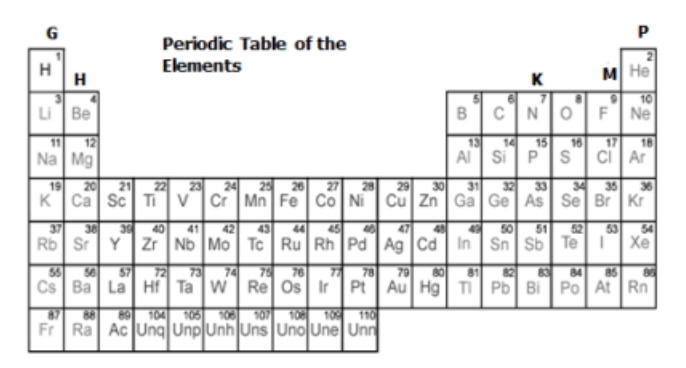
M
Group 1 (G) has 1 Valence Electrons. Group 17 (M) has 7 Valence Electrons = 8 Valence Electrons
500
What is a preciptate?
A solid that forms from two liquids after a chemical reaction.
500
The chemical equation represents the partially balanced combustion of glucose.
What should the missing coefficient be?

6