Periodic Table
Chemistry
Mix-It-Up
Atomic Structure
100
Columns on the periodic table are referred to as:
Groups
100
If an atom has an atomic mass of 65 and atomic number 40, how many neutrons does it have?
25
100
Which group on the periodic table is non-reactive and why?
Group 18 has a full outer shell of valence electrons
100
What subatomic particle(s) make up the mass of an atom and are found in the nucleus of the atom?
neutrons and protons
200
Draw a Bohr model for Silicon (Si)
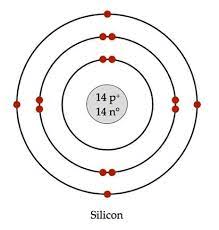
200
When drawing a Bohr diagram for Radium, how many energy shells are needed?
7
200
How many valence electrons does Aluminum have?
3
200
What subatomic particle identifies the element?
Proton
300
What do elements in the same column (group) have in common?
The number of valence electrons
300
Which of the following is not a pure substance?
CO2
O2
H
salt water
salt water
300
______ - _________ = number of neutrons
mass number - atomic number (or number of protons)
300
_______ + ________ = atomic mass
Protons, neutrons
400
What do elements in the same period have in common?
Same # of energy shells
400
Which 2 types of matter are considered pure substances?
Compound
Mixture
Element
Element
Compound
400
Name two groups on the periodic table that are likely to bond with each other
Group 1 and Group 17
Group 2 and Group 16
Group 13 and Group 15
400
What are the charges of the 3 subatomic particles?
Proton +
Neutron 0 (neutral)
Electron -
500
What's the maximum number of electrons the 1st 3 energy shells can hold?
2
8
8
500
Which 2 groups on the periodic table are the most reactive?
1 & 17
500
In a neutral atom, which 2 subatomic particles are equal in amount?
protons and electrons
500
Which 2 subatomic particles have the same mass and what is their mass?
Protons and Neutrons
1 amu