Atoms
Phase Changes
Properties of Substances
Density
Extra Vocab
100
Substances that can't be broken down into smaller substances are what?
Elements
100
What is a phase change?
A change from one state of matter to another
100
What is melting Point?
The temperature at which a solid starts to turn into a liquid.
100
What is the formula for Density?
Mass/ Volume
100
Anything that takes up space and has mass
Matter
200
Where are protons and neutrons located in an atom?
Nucleus
200
Particles are vibrating and packed close together. What state of matter is this?
Solid
200
What property measures how well a substance can dissolve in another?
Solubility
200
If I cut a piece of gold with a density of 19.3 g/cm^3
in half what is the density of each of the two pieces?
Both are 19.3g/cm^3
200
The amount of Matter in an object
Mass
300
Name the charges for protons, neutrons and electrons
Positive, neutral, negative
300
What is it called when a gas turns into a liquid?
Condensation
300
What property describes how resistant a material is to being scratched?
Hardness
300
I have an object with a mass of 46 grams and a volume of 23 cm^3. What is its density?
2g/cm^3
300
Define Solute
The substance that dissolves (Usually a solid)
400
What is the atomic msss of Boron?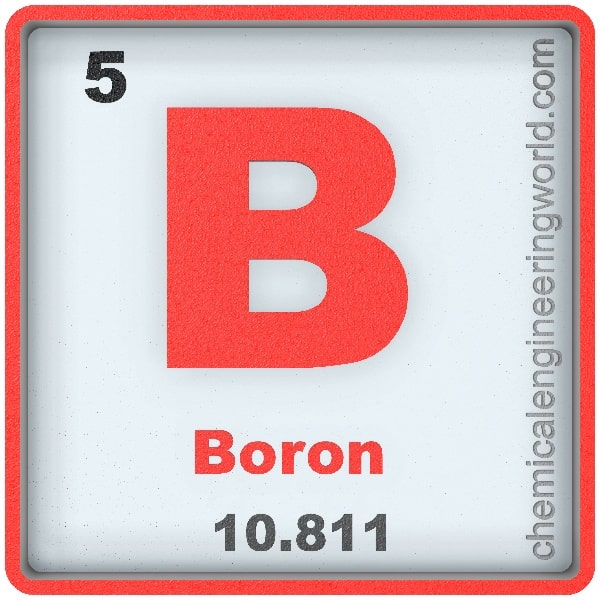
10.811 amu
400
What does it mean if a phase change is exothermic?
Heat energy is released and molecules slow down.
400
Why are mass and volume not properties?
They will change as the size of a substance changes
400
I have a object with a density of 64 grams and a volume of 100 cm^3. What is its density?
0.64 g/cm^3
400
Define Molecules
Atoms that are chemically bound together.
Ex: H2O
500
What is the number of neutrons in Boron?
11-5
6 neutrons
500
What phase change happens when a solid turns into a liquid? Is it exothermic or endothermic?
Melting
Endothermic
500
Name 3 Properties of substances
Hardness, melting point, color, density, ect.
500
I have an object with a mass of 81 grams and a volume of 90 cm^3. What is its density and will it sink or float in water?
Water has a density of 1g/cm^3
0.9 g/cm^3
Float
500
Define Properties
Unique characteristics that help identify a substance and distinquish from one substance to another.