The Scientific Method
Experimental Design
Variables
Graphs
Metric Unit Conversions
Parts of an Experiment
100
What is the first step of the scientific method?
Identifying a problem, asking a question or making an observation
100
How many variables should a scientist test at one time?
Just one!
Professional scientists may test more than one variable at a time but they use advanced statistics to keep track of all of these variables.
100
A researcher conducted an experiment to see if increasing water consumption lessens the visible effects of a skin rash.
The dependent variable in this experiment was...
The size, shape, color of the skin rash (the "visible effects of a skin rash)
100
What variable should be placed on the X-Axis?
The Independent Variable almost always goes on the X-Axis.
Bonus Point - What are some exceptions?
100
How many centimeters are in 2 meters?
2 m = 200 cm
100
A researcher is curious to find out what effect classical music has on people’s level of relaxation (as measured by heart rate). He suspects that listening to classical music will make people feel more calm and relaxed. He lets one group listen to classical music for one hour. He lets another group sit in a quiet room for one hour and they hear no music. After one hour, he monitors the heart rate of each participant to measure their level of relaxation.
What is the independent variable?
Playing music
200
Is the following a hypothesis? Why or why not?
The Toyota Sienna mini-van is the coolest car.
No! This is an opinion. We can't even test this because it depends on what you think of Toyotas, Toyota Siennas and mini-vans.
200
What is the variable that scientists compare their results to?
This is also called your "comparison group," or your "baseline data."
The control or control group.
200
Which variables are those that a researcher chooses to study in order to assess their possible effects on one or more other variables?
Independent Variables
200
What variable should be placed on the Y-Axis?
The dependent variable almost always goes on the Y-Axis
200
How many milliliters are in 2.5 Liters?
2.5 L = 2500 mL
200
A researcher is curious to find out what effect classical music has on people’s level of relaxation (as measured by heart rate). He suspects that listening to classical music will make people feel more calm and relaxed. He lets one group listen to classical music for one hour. He lets another group sit in a quiet room for one hour and they hear no music. After one hour, he monitors the heart rate of each participant to measure their level of relaxation.
What is the dependent variable?
Heart Rate
300
Is random guessing part of the Scientific Method?
No! Decisions should be based on what you already know, what other scientists have proven to be true or false OR evidence and data
300
What information can you use to create a hypothesis?
- Prior Knowledge
- Background Research
- Logical Inferences
300
The amount of light and temperature are examples of...
a) hypothesis
b) conclusions
c) observations
d) variables
d) variables
300
Identify the following:
1. X-Axis
2. Y-Axis
3. Relationship between the two variables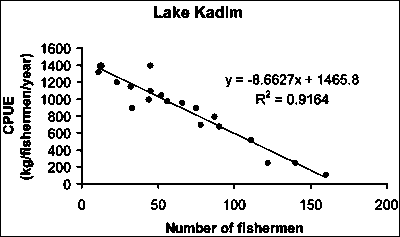
1. X-Axis --> Number of Fishermen
2. Y-Axis --> CPUE (kg of fish caught by each fisherman every year)
3. There is a negative relationship between the number of fisherman and the amount of fish that they each catch every year.
300
How many kilometers are in 789 millimeters?
789 mL = 0.000789 km
300
A researcher is curious to find out what effect classical music has on people’s level of relaxation (as measured by heart rate). He suspects that listening to classical music will make people feel more calm and relaxed. He lets one group listen to classical music for one hour. He lets another group sit in a quiet room for one hour and they hear no music. After one hour, he monitors the heart rate of each participant to measure their level of relaxation.
What is the control group?
The people who sat in a quiet room for one hour with no music
400
You suggest that the presence of water could speed up the growth of bread mold.
This is an example of a...
Hypothesis
400
True or false:
All hypotheses have to be true in order to be useful.
False!
Hypotheses only have to be testable. If you can test a hypothesis, then you can use that hypothesis whether it is correct or not!
400
What were our independent and dependent variables in our Greenhouse Gas experiment?
Independent Variable - CO2 in the bottle
Dependent Variable - Temperature in the bottle
400
Why does the amount of CO2 in the atmosphere go up and down every year in the Northern Hemisphere?
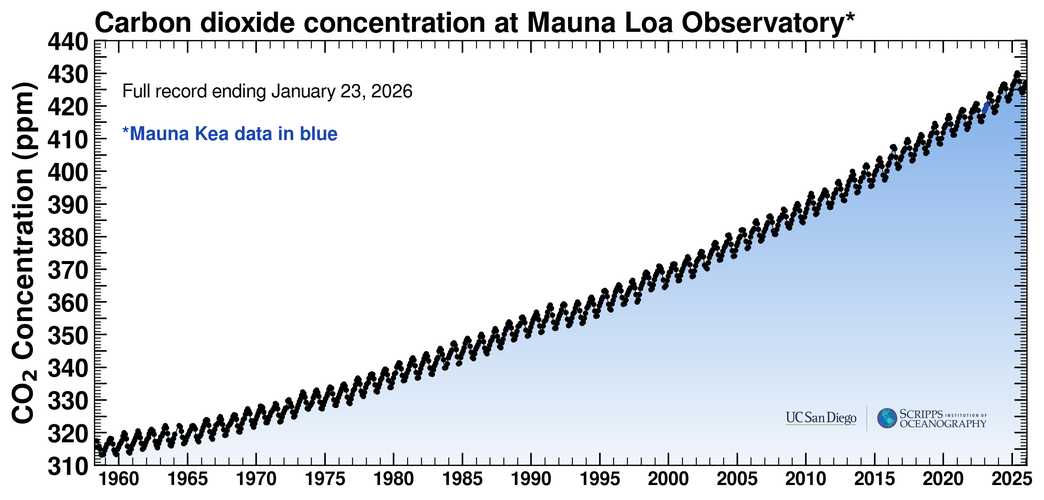
In spring and summer, plants photosynthesize and pull CO2 from the atmosphere.
In fall and winter, plants in the Northern Hemisphere "senesce," drop their leaves and photosynthesis slows down or stops. This means nothing is pulling CO2 from the atmosphere and CO2 concentration goes up.
400
The metric system is based on the power of which number?
a. 1
b. 5
c. 10
d. 12
10
Raising or lowering the power of ten gives us our different unit prefixes.
10-3 = 0.001 --> millimeter
10-2 = 0.01 --> centimeter
101 = 10 --> meter
102 = 100 --> hectometer
103 = 1000 --> kilometer
400
A researcher is curious to find out what effect classical music has on people’s level of relaxation (as measured by heart rate). He suspects that listening to classical music will make people feel more calm and relaxed. He lets one group listen to classical music for one hour. He lets another group sit in a quiet room for one hour and they hear no music. After one hour, he monitors the heart rate of each participant to measure their level of relaxation.
What are the constants?The time that people spent in the room, either listening to music or with no music
500
What do all good scientists do when they are done with an experiment?
Interpret their results, draw conclusions about their results and then share their results with others
500
What were 3 constants in our Greenhouse Gas Experiment (alka-seltzer in the bottles under heat lamps)?
- Color of the bottle's plastic
- Distance from the heat lamp
- Type of thermometers used
- Brand of alka-seltzer used
500
A scientist gathers information on a daily basis regarding the growth of a plant over three weeks, these measurements are called
a. inferences
c. hypotheses
b. variables
d. data
d. data
Data are your measurements, information, observations that you gather during an experiment.
500
Which coast of the U.S. experiences the most wave power?
The West Coast or the East Coast?
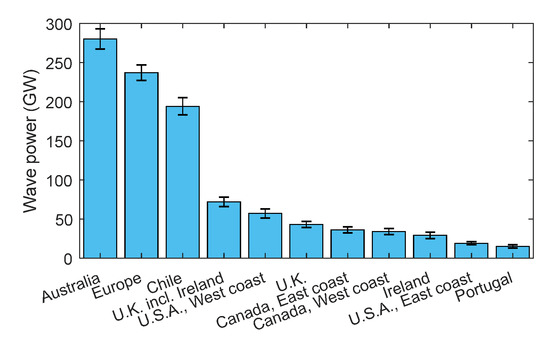
The U.S. West Coast receives the most wave power.
You can tell, because the bar above "U.S.A., West Coast" is larger than the bar above "U.S.A., East Coast."
Bonus Point: Why does "Europe" have the second largest bar in this graph?
500
1 mL of water = 1 cm3 of water = 1 g of water
How many grams is 50 mL of water
50 grams!
If 1 mL of water has a mass of 1 g, then we can calculate the mass of 50 mL by multiplying:
1 x 50 = 50
500
A researcher is studying the effect of sleep on aggression, thinking that less sleep will lead to more aggression. She has some people sleep 6 hours per night, some people sleep 3 hours per night and some people sleep as much as they want. She then monitors aggressive behavior during basketball games among participants.
What is the independent variable?
What is the dependent variable?
What is the control group?
What are the constants?
Independent Variable = Time spent sleeping
Dependent Variable = Aggressive behavior during the basketball game
Control = The group who slept as much as they wanted
Constants = Playing basketball, time spent playing basketball