Cell Theory & Organelles
Cell Organelles
Cell Transport
Cell Cycle
100
What is an organelle that can be found in eukaryotic cells but NOT in prokaryotic cells?
The nucleus!
100
Identify one other organelle only plants have and one organelle animals have.
plants - chloroplast, cell wall, central vacuole
animals - lysosomes, centrioles
100
What are the two general types of transport? Identify which uses energy and which does not.
Passive - no energy needed
Active - uses energy
100
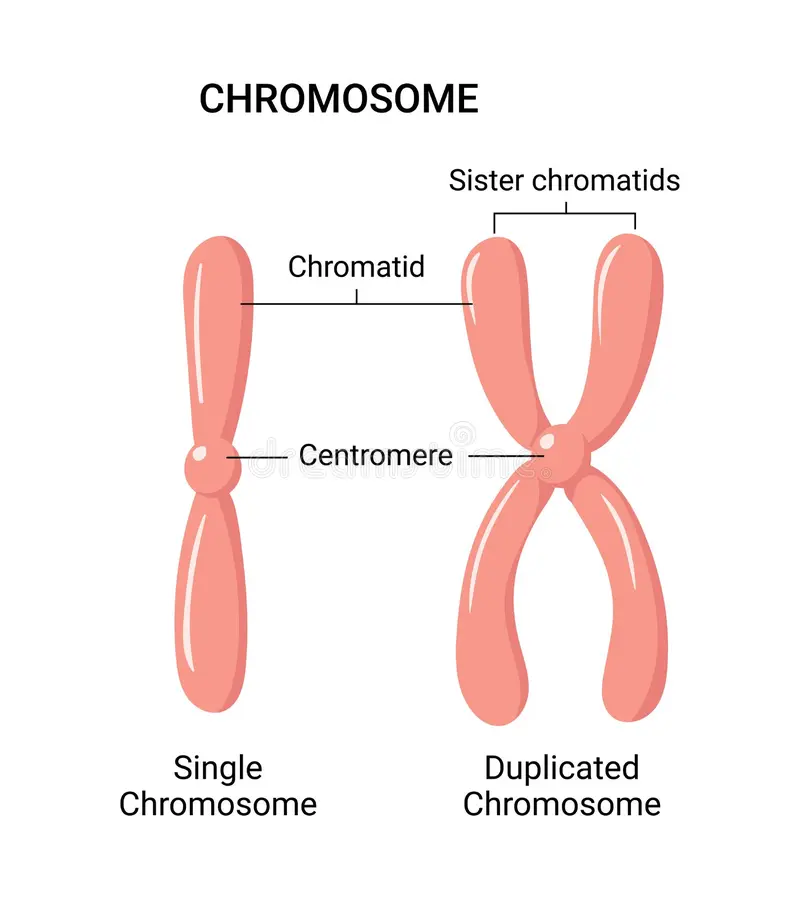
Draw the structures and label the following vocabulary words:
- duplicated chromosome
- sister chromatids
- centromere
200
Identify one principle of the cell theory.
- All living things are made of cells.
- Cells are the basic units of structure and function of living things.
- All cells come from existing cells.
200
Which organelle helps break down or digest cellular waste?
Lysosomes
200
What happens to the water in a hypotonic, hypertonic, and isotonic solution?
Hypertonic - water leaves the cell
Hypotonic - water enters the cell
Isotonic - water leaves and enters the cell
200
What type of cells divide using the cell cycle to make identical copies?
Somatic or body cells
300
Look at the image, what organelle is it and what does it do?

It's the chloroplast! The chloroplast converts light energy from sun into sugar (chemical energy)
300
When a cell is ready to process, modify, and ship out proteins using vesicles, two organelles are involved in this process. What are those two organelles?
ER and the Golgi apparatus
300
Look at the image! What type of active transport is being pictured and HOW do you know?
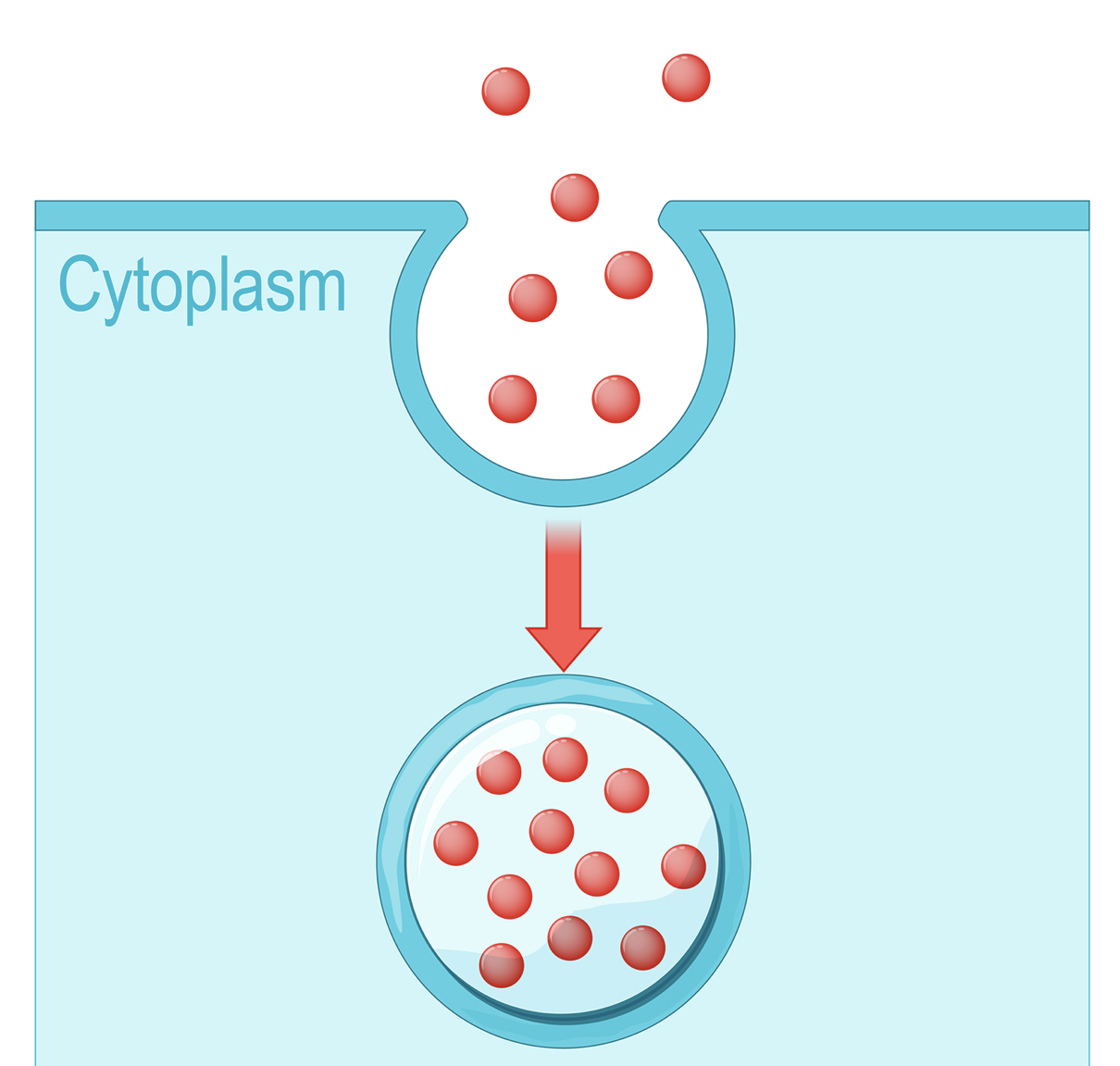
Endocytosis, because the cell is engulfing materials into the vesicle.
300
WHY is interphase the longest phase of the cell cycle?
Because it's the step where ALL the genetic information (DNA) of an organism needs to be replicated, the cell needs to grow, and proteins need to be made.
400
Even though there are eukaryotic and prokaryotic cells, there are four things ALL cells have. What are those four things?
- Genetic material (DNA, RNA)
- Cytoplasm
- Cell membrane
- Ribosomes
400
(1) Consider a disease that results in a lack of energy. Which organelle would you predict most likely be impacted?
(2) If this organelle wasn't working, then why would someone struggle to use or process macromolecules (like carbs, lipids, and proteins) on a cellular level?
(1) the mitochondria
(2) They would struggle because without functioning mitochondria, cells can’t convert the products of carbs, lipids, and proteins into ATP, the energy needed for cellular processes.
400
What is the difference between simple and facilitated diffusion?
Simple - molecules move across a membrane from high to low concentration until equilibrium is reached.
Facilitated - A transport protein helps facilitate the diffusion or movement of molecules that normally couldn‘t pass through the cell membrane. They move from high to low concentration
400
Identify which phase of the cell cycle is shown below AND how do you know?
This is telophase because it’s the step before the cell divides. It’s almost split in half but it’s still attached by the cytoplasm.