Inheritance
Reproduction
Animal Behavior and Growth
Plants
Vocabulary
100
Term 1 refers to the genetic makeup or "code" of an organism (like Bb), while term 2 refers to its actual physical appearance (like "Brown hair").
1- Genotype
2- Phenotype
100
This type of reproduction requires only one parent.
Asexual Reproduction
100
Singing, dancing, and showing off bright feathers are all examples of these behaviors used to attract a mate.
Courtship Behaviors
100
This is the male reproductive structure of a flower that makes pollen.
Stamen
100
This term describes a section of DNA on a chromosome that contains genetic information for one specific trait.
Gene
200
These are the different versions of a gene, often represented by uppercase or lowercase letters.
Alleles
200
This type of reproduction requires two parents and results in offspring that have a unique combination of DNA.
Sexual Reproduction
200
This type of behavior is given to an animal’s genes from birth.
Innate behaviors
200
The stigma, style, and ovary make up this central female reproductive part of the flower.
Pistil
200
These two terms are used to describe a genotype: one means the two alleles are the same, while the other means the two alleles are different.
homozygous and heterozygous
300
This type of trait is "hidden" or masked unless an organism has two lowercase alleles for it.
Recessive trait
300
This is the primary advantage of sexual reproduction, allowing a species to better adapt to a changing environment due to their different traits (phenotypes)
Genetic Variation
300
A dog sitting on when you say "Sit" or a bird avoiding a specific insect are examples of this type of behavior.
Learned Behavior
300
A seed that is shaped like a parachute or is very lightweight is most likely moved by this seed dispersal method.
Wind
300
This is the formal study of how traits are passed from parents to offspring.
Genetics
400
An organism with the genotype "Rr" is described by this term, meaning it has two different alleles.
Heterozygous
400
This is a major disadvantage of sexual reproduction compared to asexual reproduction.
It takes more time/energy to find a mate
400
Organisms of different species will grow exactly the same if they are raised in the same environment.
False (Genetics determines potential growth).
400
These are the things, such as bees, birds, butterflies, or even the wind, that carry pollen from one flower to another.
Pollinators
400
In asexual reproduction, this specific process occurs when an offspring grows from a detached piece of its parent.
Regeneration
500
If you cross a homozygous dominant (RR) parent with a homozygous recessive (rr) parent, these are the genotypes found in all four boxes of the Punnett Square.
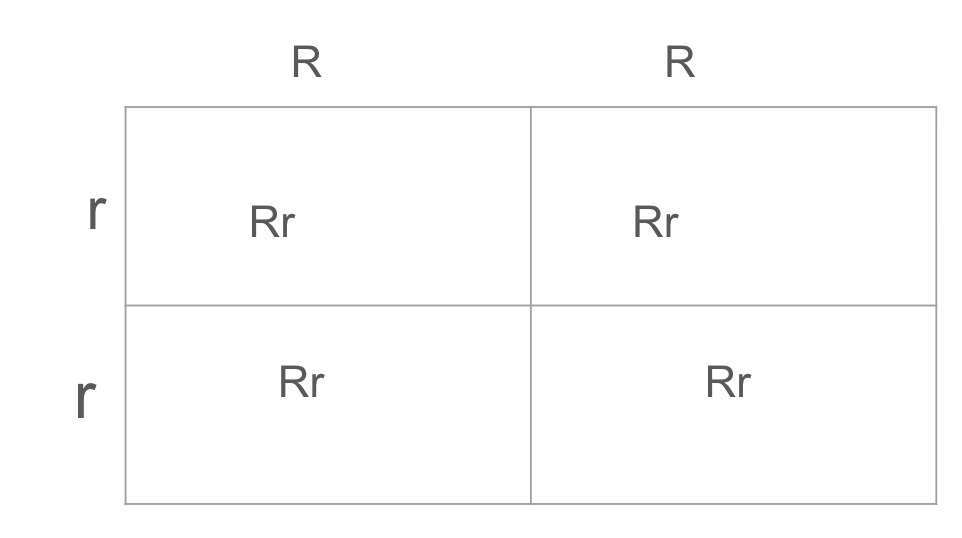
500
For pollination to occur, the pollen need to go from _____ of one flower to the ______ of another flower.
Anther of one flower to the stigma of another flower
500
This specific type of asexual reproduction involves a new organism growing directly off the body of the parent, like in a Hydra.
Budding