Bonding
More Bonding
Additional Bonding
Further Bonding
Extra Bonding
100
When Al reacts with Br, Al _____________ __________ electrons (2 words)
What is loses three?
100
The ability to pull electrons towards the nucleus
What is electronegativity?
100
The group the halogens belong to in the periodic table and the number of electrons lost/gained when forming an ion.
What is Group 7 and gain 1 electron?
100
The octet rule states that atoms tend to gain, lose, or share electrons to achieve how many valence electrons?
8 valence electrons
100
A bond created between a metal and a non-metal.
What is an iconic bond?
200
The number of valence electrons in an atom of fluorine.
What is 7?
200
_____ has the strongest attraction of electrons in a chemical bond.
1) N 2) Na 3) P 4) Pt
What is nitrogen?
200
Electrons in the outermost shell are called
Valence electrons
200
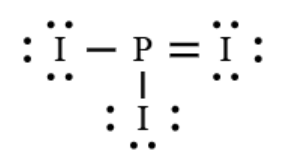 Identify the error and draw a correct version
Teacher will check
200
The bond created by the unequal sharing of electrons.
What is a polar covalent bond?
300
What is equally shared electrons?
Nonpolar covalent
300
An atom that loses one or more electrons becomes a
DOUBLE POINTS
What is a cation
300
A bond forms between carbon (2.55) and hydrogen (2.20). What type of bond would form based on the electronegativity values.
Nonpolar covalent
300
The names for the three intermolecular forces in the order: weakest first and strongest last.
What is London dispersion forces< dipole-dipole attraction< hydrogen bonding?
300
CH2Cl2 (Ionic/polar/nonpolar)
What is polar?
400
Of the three states of matter, which has the strongest IMF bonds.
What is a solid
400
What is the name of the molecule Cl2
Chlorine
400
What is the name of this molecule NH3
Ammonia
400
The molecular geometry for a water molecule.
What is bent
400
What is the formula for the following
ammonium chloride
NH4Cl
500
The IMFs present in water.
What are LDF, dipole-dipole attraction, and hydrogen bonding?
500
What is the formula for the following
Si2S4
Disilicon tetrasulfide
500
What are the 7 diatomic molecules
Hydrogen, nitrogen, oxygen, fluorine, chlorine, bromine, iodine
500
The shape of CCl4.
what is tetrahedral?
500
The shape for NH3.
What is trigonal pyramidal?