Medieval Worldviews to Scientific Revolution
New Methods, New Knowledge
Political & Economic Thinking
Society & Religion
18th C. Culture & Society
100
This worldview placed Earth at the center of the cosmos and shaped medieval astronomy.
Geocentrism
100
This practice of gathering knowledge through direct sensory evidence became central to modern science.
Empirical observation / Empiricism
100
This political philosophy argued that liberty could be preserved by dividing authority into different branches.
Separation of Powers
100
These influential meeting spaces allowed philosophes to exchange ideas, debate new concepts, and circulate Enlightenment thought beyond formal academic institutions.
Salons
100
This massive Enlightenment project aimed to compile all human knowledge and make it accessible to the public.
Diderot’s Encyclopédie
200
This thinker first significantly challenged the geocentric model by proposing a sun-centered universe.
Nicolaus Copernicus
200
This structured approach took shape as thinkers blended observation, hypothesis, calculation, and verification into a new model of inquiry.
The Scientific Method
200
This philosopher argued that government must protect natural rights and that humans are born with a “blank slate” (tabula rasa).
John Locke
200
This Enlightenment writer became one of Europe’s strongest voices for religious toleration, famously criticizing fanaticism and church power in his Treatise on Toleration.
Voltaire
200
This broad category of 18th-century life included festivals, taverns, oral stories, and communal celebrations shared by ordinary Europeans, in contrast to artistic and recreational tastes of the Elite.
Popular Culture
300
This figure united the heavens and Earth with laws of motion and universal gravitation, transforming mechanics.
Isaac Newton
300
This scientist overturned Galen by demonstrating that blood circulates continuously throughout the body, originating from the heart.
William Harvey
300
This economist promoted free-market policies and argued that competition and self-interest drive economic prosperity.
Adam Smith
300
A belief system positing that God exists as a creator of the universe but does not intervene in its affairs.
Followers of this belief system believe that God's existence can be understood through reason and the observation of nature, rather than through miracles, or holy texts.
Deism
300
This artistic style, associated with elegance, pastel colors, and soft curved lines, reflected a shift away from Baroque grandeur.
Rococo Art 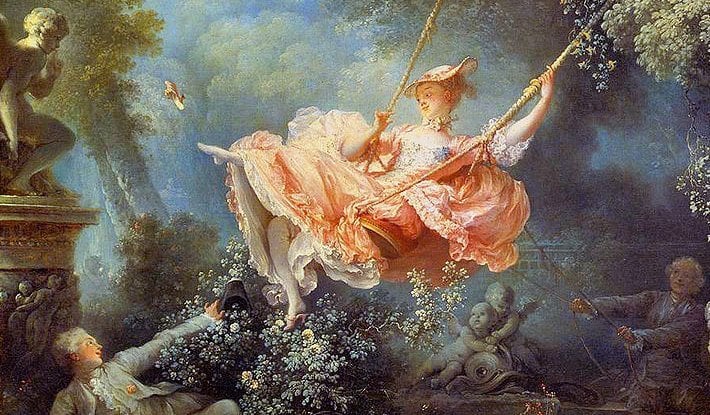
400
This scientist refined heliocentrism by demonstrating that planets move in elliptical orbits.
Johannes Kepler
400
Galileo's telescope allowed him to observe these two natural phenomena, proving that heavenly bodies were not celestial orbs of light, but rather physical terrain.
Sunspots & Moon Craters
400
This political theory proposes that individuals willingly surrender some freedoms to a government in exchange for protection of their rights and improvement of society.
The Social Contract
400
This Enlightenment thinker advocated for a rational and humane criminal justice system, emphasizing that punishment should be proportional to the crime and aim to prevent crime rather than exact vengeance.
Cesare Beccaria
400
This style of monarchy blended strong central authority with reform initiatives inspired by Enlightenment thought.
Enlightened Absolutism
500
This ancient medical framework dominated Europe for centuries and claimed the body was governed by four fluids.
Galen's humorism
500
This metaphor for describing the world and universe as a predictable, mechanical system governed by natural laws emerged as a result of Newton's laws governing motion and gravity
Newtonian World Machine
500
This economic idea reduced government involvement; the principle arguing that markets work best with minimal government restrictions.
Laissez-Faire
500
These 18th century religious movements pushed back against Enlightenment rationalism in religion and stressed the need for emotion and mysticism as a part of the religious experience.
Pietism & Methodism
500
This social trend increased as primary schools expanded and inexpensive printed materials made reading more accessible across Europe.
Literacy