Earth's Motions
Seasons
The Moon
Eclipses
Tides
Unique Earth
100
The spinning of the Earth on its axis creates this
Day and Night
100
The primary reason that we have seasons
The tilt of Earth's axis
100
The amount of time it takes for the Moon to complete its lunar cycle
~29.5 Days
100
The moon phase you witness during a solar eclipse
New Moon
100
The primary cause of the tides
The Moon's gravitational pull on the Earth's water
100
Earth is the only planet known to support this
Life
200
An object in space going around another object
Revolution / Orbit
200
When it is winter in the north, it is this season in the south
Summer
200
The source of the Moon's light
The Sun
200
The Moon phase you witness during a lunar eclipse
Full Moon
200
The strongest tide
Spring Tide
200
The atmosphere provides this gas needed for life on Earth
Oxygen
300
The amount of time it takes the Earth to rotate
24 hours / 1 day
300
What would happen if the Earth wasn't tilted on its axis
There would be no seasons
300
The Moon phase where you can see more than half of the Moon's light
Gibbous
300
This eclipse occurs when the Moon blocks the Sun's light from the Earth, casting a shadow on the surface
Solar eclipse
300
The weaker of the two tides
Neap
300
The reason why water can exist on Earth in all three phases (solid, liquid, gas)
Earth's distance from Sun
400
The amount of time it takes for the Earth to orbit the Sun
365.25 Days / 1 year
400
The month that the Earth is closest to the Sun
January
400
The moon phase shown in this picture (include waxing/waning)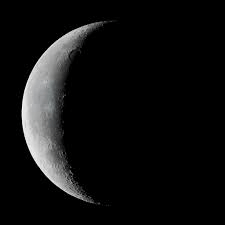
Waning Cresent
400
This eclipse occurs when the Moon moves into the Earth's shadow
Lunar eclipse
400
During which two moon phases do spring tides occur?
Full/New
400
Earth is located in this "just right" zone
Goldilocks zone / Habitable zone
500
Earth's axis is tilted at this angle
23.5o
500
The season in the south at letter D
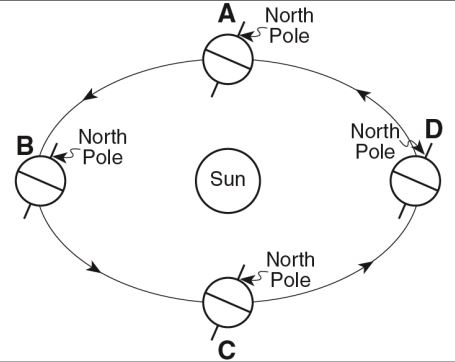
Summer
500
The reason we only see one side of the moon at any given time
Revolution = Rotation
500
The reason why we don't have eclipses every month
The Moon's orbit around the Earth is tilted
500
The amount of high and low tides each day
2 high / 2 low
500
This part of the Earth protects the atmosphere from harmful x-rays, gamma rays, and solar wind
The magnetic field