Charles Darwin
Adaptations
Selection
Genetics in Evolution
Speciation
100
Charles Darwin documented his findings in a book. What is the title of this book?
What is "The Origin of Species."
100
Any heritable characteristic that increases an organism’s ability to survive and reproduce in its environment is called a(n) ___________.
What is an adaptation.
100
_________ _________ is the process by which organisms in nature with variations most suited to their local environment survive and leave more offspring.
What is Natural selection.
100
Explain the process of how giraffes developed into long neck species.
Longer necked giraffes ate, reproduced, and passed along the genes for long necks. Short necked giraffes didn't eat, therefore couldn't reproduce, and thus did not pass along the short necked genes.
100
_________ is the evolutionary process by which populations evolve to become distinct species.
What is speciation.
200
What objects, when found, allowed Darwin to propose that species vary over time?
What are fossils.
200
Many Owls are nocturnal, meaning they are active at night. What type of adaptation is this?
What is a behavioral adaptation.
200
Describe what a "texas wedge" in golf?
What is any shot with a putter from off the green.
200
Which type of selections favors one extreme over the other?
What is directional selection.
200
Two species of frogs inhabit the same area, but one reproduces from January to March, whereas the other reproduces from March to May. What type of isolating mechanism does this describe?
What is temporal (reproductive) isolation.
300
Over time organisms may be bred specifically for particular traits. What type of selection is this?
What is Artificial Selection.
300
According to Darwin, finches species adapted their beaks based on their environment. What type of adaptation is this?
What is a structural adaptation.
300
A species is said to have a good fitness when it can do these two things...
What is survive and reproduce.
300
This term is used to describe a sharp reduction in the size of a population due to environmental events resulting in a random chance of which individuals and traits remain.
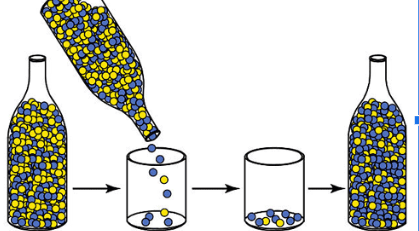
What is genetic bottlenecking.
300
Identify the two mechanisms of isolation that can cause species to become separate even while living in the same geographic location.
What is behavioral isolation and temporal (reproductive) isolation.
400
These three organisms vary locally, but are thought to be related based on what physical characteristic?
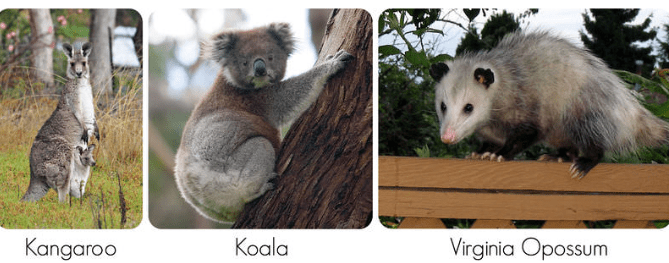
What is their marsupium (pouch).
400
The American Black Bear can slow its heart rate down as low as 7 beats per minute. What type of adaptation is this?
What is a physiological adaptation.
400
Which insect in the image is best suited for survival and why?

What is the orange/brown butterfly because it is best camouflaged.
400
What type of selection is depicted in this graph of a population?
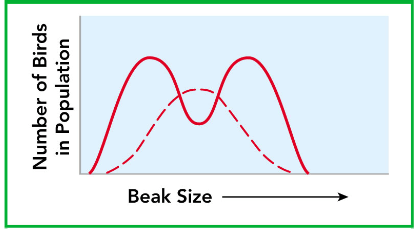
What is disruptive selection.
400
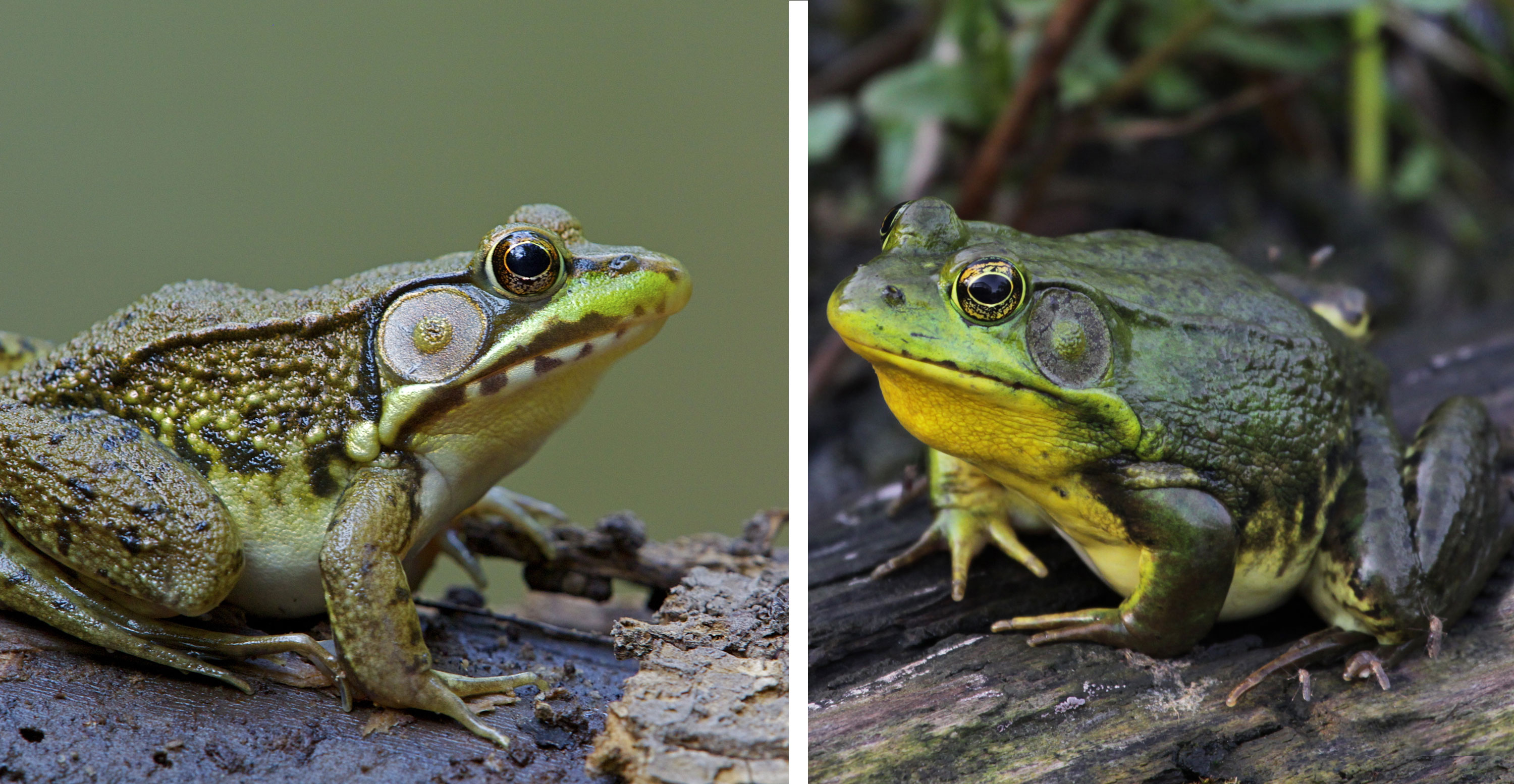
While the American Bullfrog and the Green Frog look very similar they know not to breed with one another based upon their different songs for attracting mates. What mechanism of isolation is this an example of?
What is behavorial isolation.
500
Darwin noticed three patterns of diversity on the HMS Beagle: (1) species vary _________, (2) species vary _________, and (3) species vary over _________.
What is (1) species vary globally, (2) species vary locally, and (3) species vary over time.
500
Identify each category of adaptation (there are three).
What is structural, physiological, and behavioral.
500
What two concepts drive natural selection?
What is competition for resources and inheritance of adaptations.
500
Which type of selection is show in the graphic below and why?
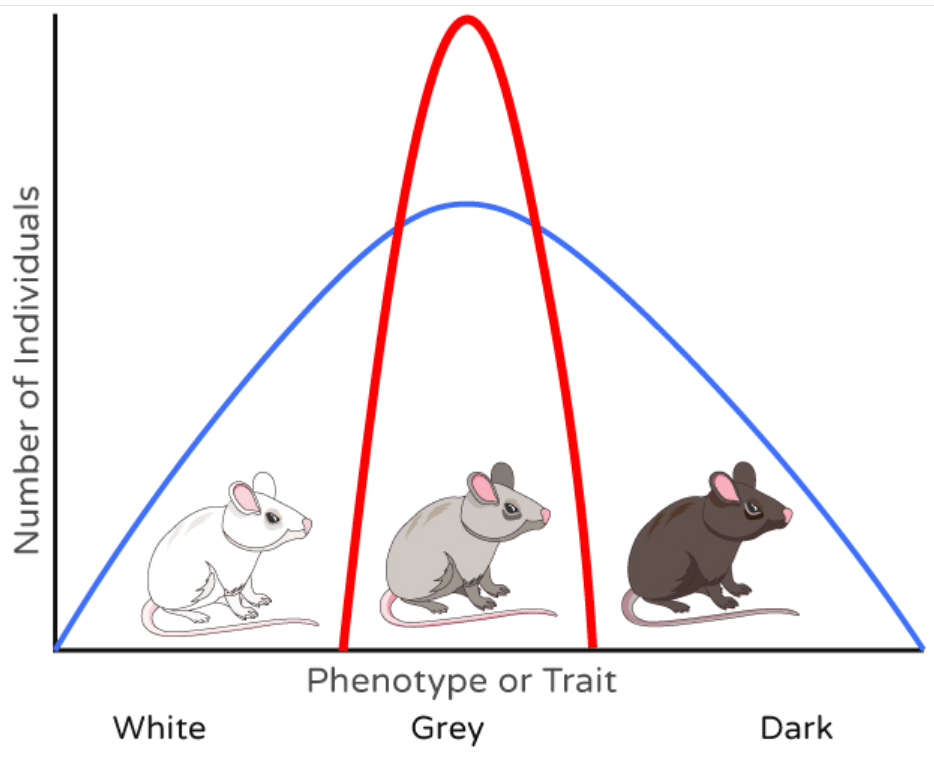
What is stabilizing selection because neither extreme is being favored, but the blending of the two is favored.
500
What type of speciation is it believed the Galapagos Finches undergone to form 13 separate Finch species and why?
What is allopatric speciation because the finches were separated geographically causing the adaptations to differ based on environmental pressures.