Vocabulary
Limiting Factors
Ecosystem Changes
Symbiosis
Population Graphs
100
What is the largest population size of organisms the environment can support/hold?
Carrying Capacity
100
What are the 4 major limiting factors for most animals?
Food, water, shelter and space
100
what are the three relationships or interactions that can cause populations to change?
competition, predation, symbiosis
(cooperation will also be accepted)
100
What is symbiosis?
what are the three types?
A close, long term relationship between two or more organisms of different species.
mutualism, commensalism, parasitism
100
Is this exponential or logistical population growth?
Why is this unrealistic?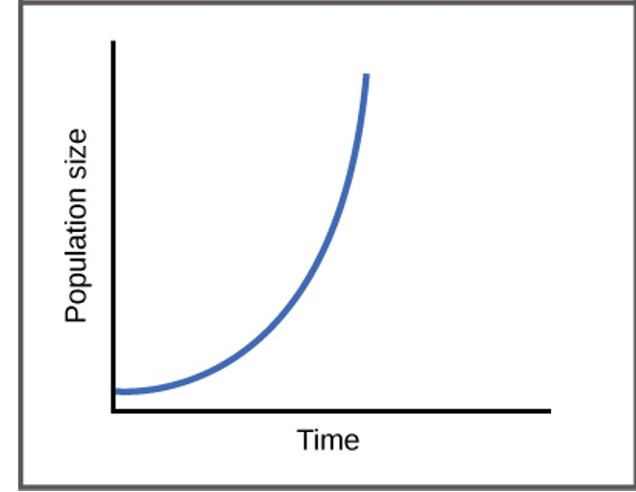
Exponential
This is unrealistic because in this population, individuals are increasing and the population is growing rapidly and there is no limiting factors controlling the population. This would mean there is unlimited food, water, and space on earth for these living things, which is untrue.
200
What is something that limits the size of a population?
A limiting factor
200
How are limiting factors related to carrying capacity?
Limiting factors create and influence the carrying capacity of an ecosystem.
What ever resource is LIMITED this sets how much of an organism the ecosystem can carry/hold
200
Abiotic factors that can affect a population
sunlight, temperature, water quality, weather events, lack of minerals in soil.
200
Explain mutualism and give an example
What is two species benefitting from the relationship such as clown fish and anemone?
200
Explain what this graph is showing.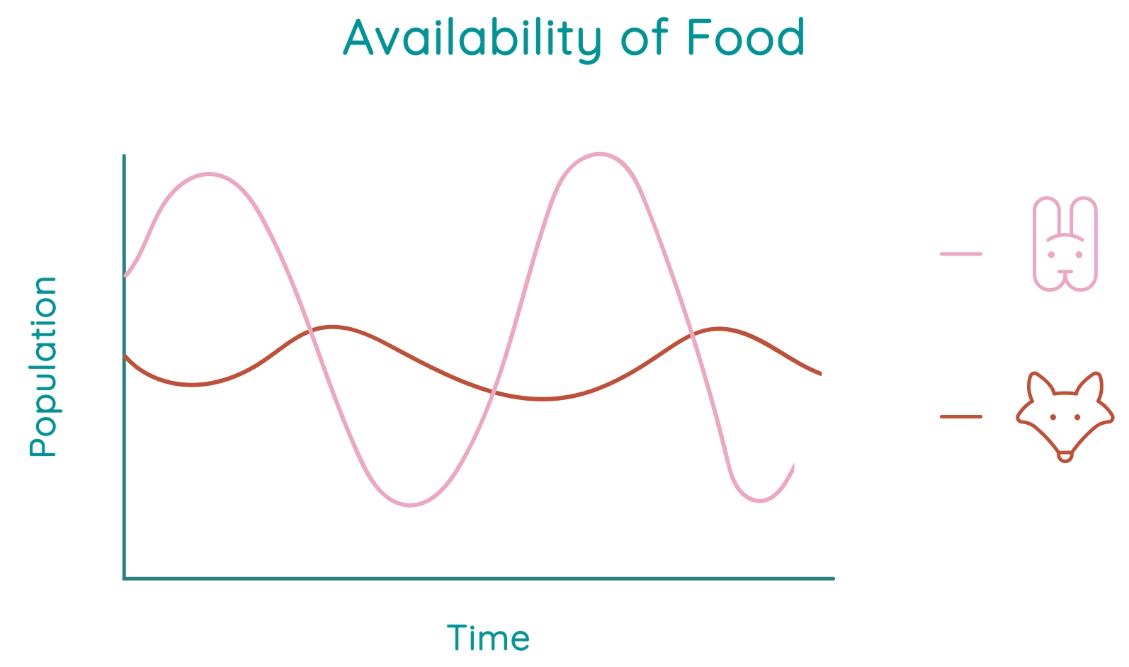
This graph shows the predator-prey population cycle
When predators increase, prey decreases, when prey then is scarce, predators decrease, and then prey will increase again, etc.
300
What is a feeding relationship where one organism hunts and eats another organism
predator-prey relationship
300
There are burrows for 350 rabbits, food for 400 rabbits, and water for 1000 rabbits.
What is the limiting factor and why?
The limiting factor for this population is burrows/shelter.
This resource is the one that has the smallest amount. This means there are very little burrows to go around, and only 350 will be able to find shelter even though up to 400 may be able to eat or 1000 may be able to drink.
300
Biotic factors that affect a population
Animals eating plants, bacteria harming local plants or animals, fungi that helps plants grow faster/better.
300
Explain parasitism and give an example
What is one benefits and one is harmed such as tick and dog?
300
As more ticks survive over warmer winters, biologists have seen changes in the moose populations. Using what you know about types of symbiosis explain why the graph looks like this: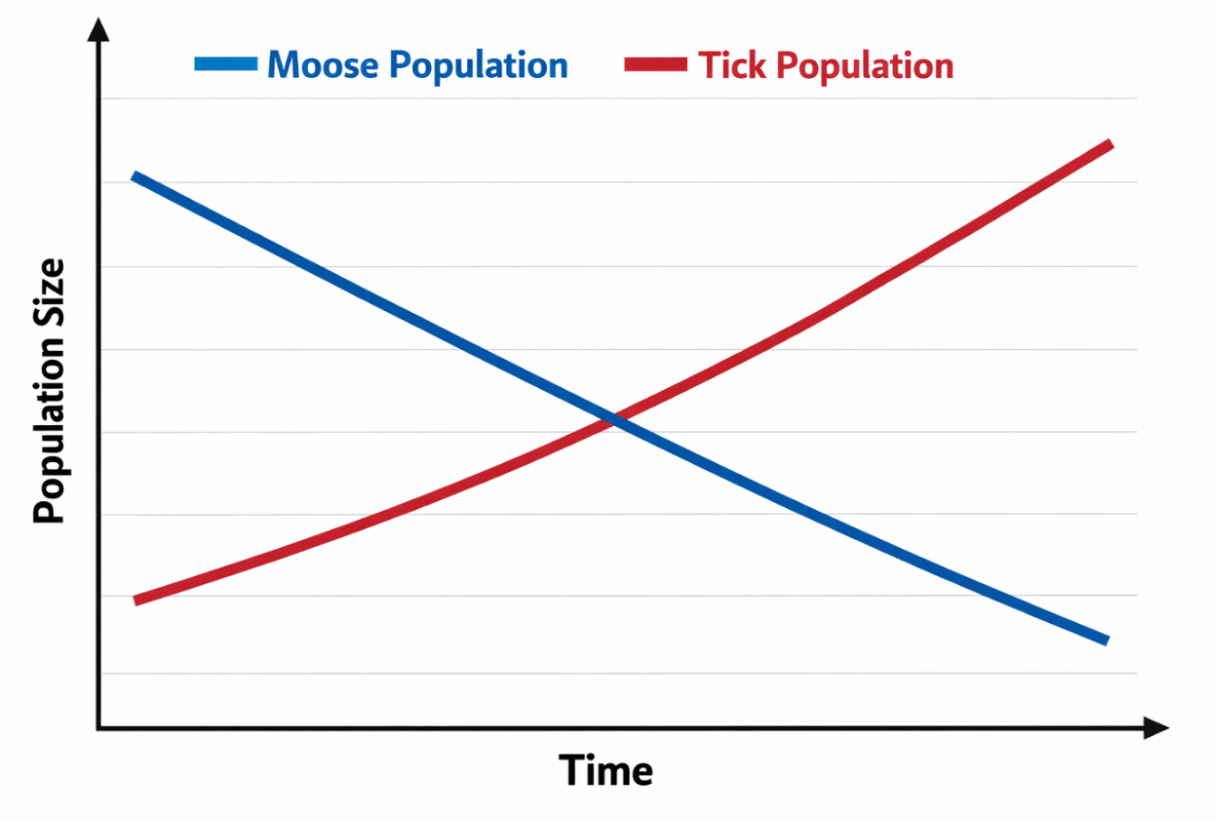
This graph shows the population changes that come from parasitism.
Ticks (parasite) feed on moose (host) and this causes tick populations to increase and moose populations to decrease. Moose decrease as in this symbiotic relationship, harm comes to the moose - however the tick enjoys a blood meal that helps it reproduce..
400
Define "population" and give an example
A group of the same species living in the same area at the same time
ex. All the elk in Yellowstone
400
Explain limiting factors in a pond environment
What is compete for resources, become prey or use resources around the pond?
400
Explain how predation changes populations of predators and prey (predator prey cycle)?
Predation causes a cycle of population changes. When there is a lot of prey, predator populations increase as they hunt more and more. As this happens prey starts to run out because their populations go down. When prey populations decrease due to overhunting, predators start to run out of food since there are so many of them who need to eat. They then start to die off due to starvation. Once this occurs and predators decrease, prey will be given time to reproduce with less predators and the cycle starts over again.
400
Explain commensalism and an example
What is one helped and other not harmed such as shark and ramora fish
400
Explain why even through the ecosystem is healthy, the populations of Zebra and Gazelle are both decreasing.
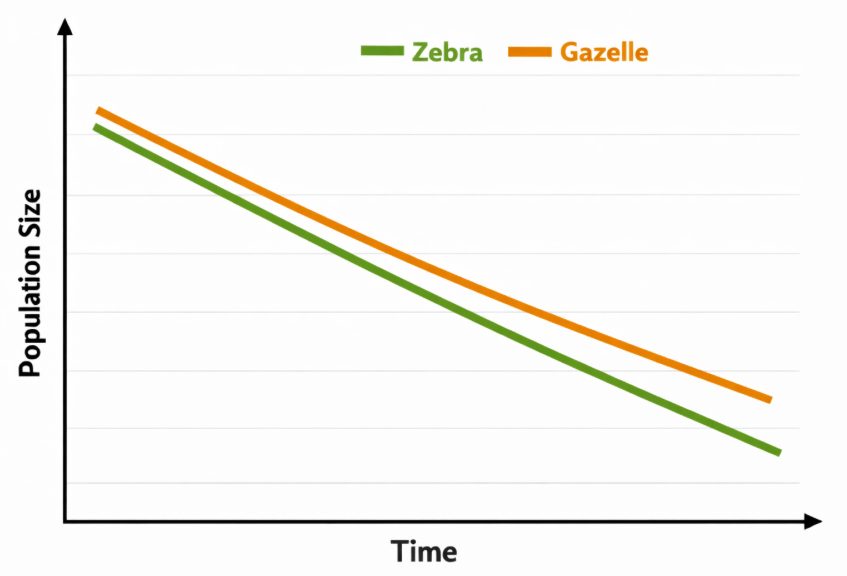
Zebra and Gazelle are both herbivores, therefore they will compete for the same food (limiting factor). This will cause BOTH species to get less, and their populations will decrease as some individuals die due to starvation.
500
Define resource
Anything an organism needs to survive that is naturally around in the environment such as food, water, space, or shelter
500
What was a limiting factor in the Yellowstone ecosystem for our phenomenon? How did it limit a population?
Predation
Wolf- Wolves being added decreased elk population and limited the size of this herbivore's population. This was important because it increased the population of trees, songbirds, beavers, and other organisms.
Elk- Elk eating the trees along the rivers limited cottonwood and other tree species populations in Yellowstone when wolves were absent. This was a big problem as it led to a loss of many species and problems with the river due to erosion.
500
Explain how competition between two species of animals for food can affect both of their populations.
Competition for food causes both species to receive less. For example if wolves and coyote eat the same thing, they will compete for this food and both populations of coyote and wolf will decrease (go down) as both will receive less food then they would if there were not competing.
500
Relate symbiosis to the Yellowstone phenomenon.
What is a symbiotic relationship Beavers have with another creature in the ecosystem? Explain.
Beavers/fish - mutualism
Beavers/frogs - commensalism
Beavers/ticks - parasitism
500
What symbiotic relationship does this graph represent?
How do you know? Explain.
This represents commensalism
This is because organism B's population is increasing over time, while organism A's population is remaining unchanged. This is something you would expect to see with this relationship as in commensalism, one species benefits and the other is not affected at all so the benefited species' population would increase and the one who is not affected wouldn't change at all.