Vocabulary
Natural Selection
Adaptations
Nature of Science
100
The process by which species cease to exist is
Extinction
100
Yellow beetle and green beetles live in the rainforest canopy. What may happen to the population?
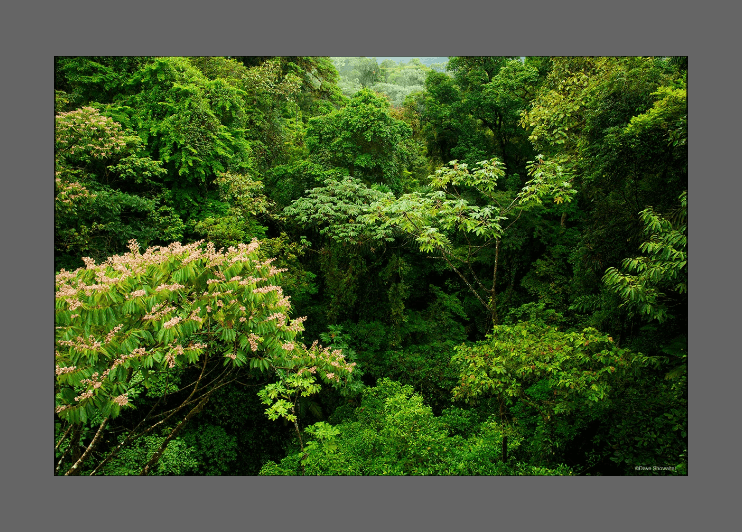
The green beetle population will increase and the yellow beetle population will decrease because the green ones are better camouflaged and able to avoid predators!
100
The climate is warming, so the Arctic environment is changing. Walruses live in this environment and are used to a very cold icy climate.
Write an adaptation that will be beneficial to walruses in the warmer climate and an adaptation that will give the walrus a disadvantage in the warmer climate.
Beneficial: Tusks to use against predators
Disadvantage: Thick Blubber
100
Why is empirical evidence needed to form a scientific explanation or new scientific knowledge?
A. Provides objective, testable information that can be replicated
B. Biased to the scientist collecting the information
C. Is based on scientists opinions and feelings on a topic
D. There must be controls in place
A. Provides objective, testable information that can be replicated
200
A trait that helps an organism to survive and reproduce in its environment
Adaptation
200
Which of the following is an example of natural selection?
A. Farmers crossbreed 2 types of corn to produce a crop that can tolerate a drier environment and gives larger ears of corn
B. Dogs that can hunt well are bred together to produce more puppies that can hunt with their owners.
C. Tortoises with longer necks are able to eat more food since they can reach the leaves at the top of a bush. These tortoises breed more successfully than short necked tortoises that year.
D. People kill spiders that are visible in their houses. However, they leave alone the spiders that hide in the walls and never come out. The hidden spiders survive and breed.
C. Tortoises with longer necks are able to eat more food since they can reach the leaves at the top of a bush. These tortoises breed more successfully than short necked tortoises that year.
200
A species of mouse can be found in many colors: brown, grey, and white. They are found in the woods, the city, and on the beach.
Why are the mice different colors?
Natural Selection: the different colors allow the mice to blend into their different environments to hide from predators.
200
What do theories tell us?
A theory explains why something happens
300
Differences among a species are called...
Variations
300
How are traits selected in a population?
Survival of the Fittest: Organisms best adapted to their environment will survive to reproduce and pass on their traits to their offspring!
Over time, more of the population will have the trait.
300
Over a period of years, the average rainfall in an area decreases, causing environmental changes. What factor is the most important to give the species a chance at survival?
Genetic Variation
300
What process results in new scientific knowledge being accepted by the scientific community?
A. The method is not replicable, so that it is a scientist's pure work
B. The experiment used is original and does not use methods used in other experiments before it
C. The experiment can only be completed by scientists in the US and scientists in other countries are not allowed to analyze or repeat the experiment
D. The experiment is repeated by multiple scientists and the data is analyzed and debated to determine if the new scientific knowledge is accepted.
D. The experiment is repeated by multiple scientists and the data is analyzed and debated to determine if the new scientific knowledge is accepted.
400
2 species evolved from 1 species that lived in the past
Common Ancestor
400
How does studying the fossil record support the Theory of Evolution?
Shows how groups of organisms have changed over time
400
What would happen if the environment changed drastically and organisms were unable to adapt to these changes?
Species would go extinct
400
How can a theory be changed or updated?
New evidence!
500
The process in which species with favorable traits for the environment survive to reproduce more offspring
Natural Selection
500
Why is it important for a species to have genetic variation?
If there is a change in the environment, the species is less likely to become extinct.
500
After traveling to the Galapagos Islands, Darwin noticed a lot of variation among beak sizes in Finches. This variation was a result of:
Different food sources available on the different islands, so finches with the beak favorable for the food available survive and reproducee!
500
Empirical evidence is evidence obtained through observations or experiments. Which of the following is an example of collecting empirical evidence?
A. Scientists writing a theory based on their opinions
B. Scientists learning about human blood vessels from a fellow scientist
C. Scientists making observations about the Galapagos finches from their diets
D. Scientists researching mammal behaviors by reading textbooks and articles.
C. Scientists making observations about the Galapagos finches from their diets