Technologies and Innovations
Government Structures
Social Structures
Religion
Maps and Regions
100
This innovation of food was essential to China's population boom. It was drought resistant and had a high harvest yield, which allowed the Chinese to maintain a stable food supply
Champa Rice
100
Officials who work for the government (This may include lawmakers, scribes, tax collectors, governors, etc.)
Bureaucrats
100

This Social Structure which dominated European society till the 1450s is called what?
Feudalism
100
This Abrahamic religion seeks to "submit to the will of Allah". It is Monotheistic, its founder is the prophet Muhammad, and adheres to the 5 pillars that are described in the Quran.
Islam
100

This area that encompasses modern day India, Nepal, and Pakistan. It is an area of heavy influence in the Silk road and Indian Ocean Trade. What region is this?
South Asia
200
A traditional, lateen-rigged (triangular) sailing vessels featuring long, thin hulls, primarily used in the Indian Ocean, Red Sea, and East African coast. Historically vital for trade, they were used for transporting goods like ivory, gold, spices, and slaves, along with fishing and pearling.

Dhows; Junks
200
This was a rigorous, merit-based tests used in Imperial China—beginning in the Sui dynasty and heavily utilized during the Song dynasty—to select government bureaucrats based on knowledge of Confucian classics, rather than familial status.
Civil Service Exams
200
A historical Chinese custom (10th–early 20th century) involving the tight wrapping of young girls' feet, often breaking toes and bending the arch, to restrict growth to around 3-4 inches (the "Golden Lotus"). Primarily a symbol of wealth, status, and an example of Patriachy in Chinese Society.
Foot binding
200
"I am in love with every church and mosque and temple. And any kind of shrine. Because I know it is there. That people say the different names. Of the one God." — Pir Vilayat Inayat Khan
"Don't give me scissors! Give me a needle! I sew together! I don't cut apart!" — Baba Farid ud-Din Shakar-gan
Quotes like the ones above best reflect what religious movement?
Sufism
200
This region played a central role in the development of early civilizations. They were the middle men of the "Silk Road" connecting Africa, Europe, and Asia. A common feature is the Abrahamic religions and its warm climate
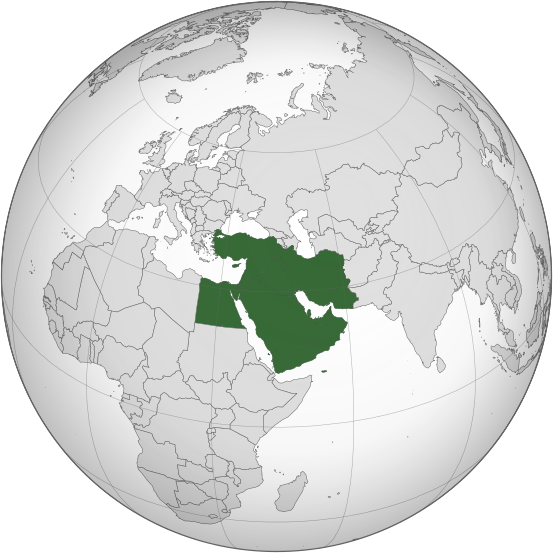
The Middle East
300
A premier intellectual center, library, and research academy in Baghdad, established during the Abbasid Caliphate (8th–9th centuries) to translate and study foreign knowledge. It served as the hub of the Translation Movement and Islamic Golden Age, fostering advancements in science, mathematics, and philosophy.
House of Wisdom
300
Which Dynasty came after the Song Dynasty when the Mongol conquer China in 1270 CE?
The Yuan Dynasty (1271-1368 CE)
300
A policy and framework where foreign states acknowledged Chinese superiority by Kowtowing (humiliatingly bow) and presenting the emperor with gifts in exchange for trade rights, protection, and legitimacy
The Aztec also did this similar act by demanding foods, currency, and slaves from their conquering people
Tribute System
300
What native Chinese religion believes individuals should have a connection and "oneness" with nature - known as the Way. The Founder of the religion is Lao Tzu.

Daoism/Taoism
300
A network of desert caravan routes connecting West African empires (Mali, Ghana, Songhai) to North Africa. It enabled the exchange of West African gold for North African salt, facilitating the spread of Islam and the growth of trade hubs like Timbuktu.
Trans-Saharan Trade route
400
These ancient Aztec "floating gardens" were essential to their society. It allowed them to grow beans, squash, corn and other foods around their capital Tenochtitlan which rested on the lake Texcoco.

Chinampas
400
This spiritual and political head of the Roman Catholic Church, help political and social power over kings with the power of excommunication during Medieval Europe.
The Pope
400
This religion gave legally mandated rights regarding property, inheritance, marriage, and education, to women often seen as a liberating force compared to other Abrahamic religions. Such rights included financial independence, consent in marriage, the ability to initiate divorce, and retention of their family name
Islam
400
A major Indian religion and philosophy founded by Siddhartha Gautama (the Buddha) in the 5th–6th century BCE, focusing on ending suffering and achieving nirvana. This religion spread into East Asia, and syncretized with local religion like Taoism and Confucianism
Buddhism
400
Defined as the narrow isthmus—or land bridge—located between North America and South America, bridging the two continents. It comprises seven independent nations: Belize, Costa Rica, El Salvador, Guatemala, Honduras, Nicaragua, and Panama

Central America; MesoAmerica
500
the world's longest artificial waterway which connects major river basins in China from Beijing to Zhejiang. Constructed over 2,500 years, it acts as a vital artery linking northern and southern China for grain transport, trade, and economic unity.
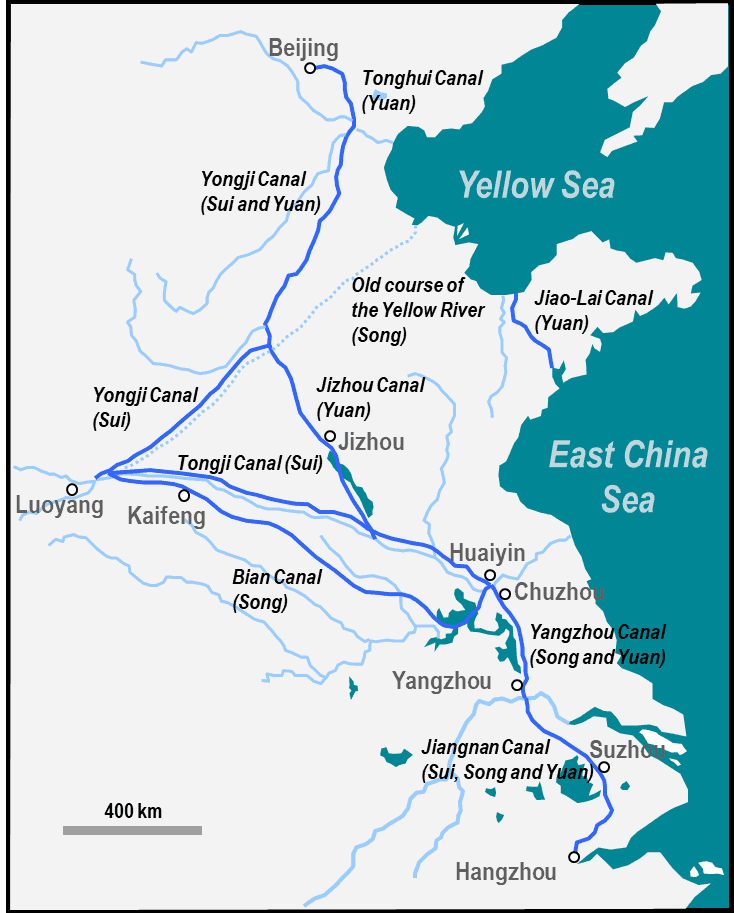
Grand Canal
500
A Chinese belief that asserts that a ruler's legitimacy is derived from divine approval. A "Son of Heaven" governs justly, but if they act immorally or if disaster strikes, then rebellion will spark and replace the emperor with a just one.
Mandate of Heaven
500
The blending or fusion of different religious beliefs, rituals, and traditions into a new, hybrid system. It commonly occurs through cultural interaction, trade, colonization, or migration, allowing faiths to adapt to new contexts, ensure cultural survival, or foster social cohesion.

Syncretism
500
This movement was a syncretic religion which was inspired by Sufi Muslims' teaching of One God. However, it continued to Hindu practices and traditions. This religious movement spread from South Asia (India), through Southeast Asia and even the Middle East. This movement empowered women in their respective societies. Starts with a "B"
Bhakti Movement
500
The third Islamic caliphate, succeeding the Umayyads and ruling from Baghdad, which became a center of culture, trade, and the "Islamic Golden Age". It stretched from Persia,The Middle East, and into Northern Africa

The Abbasids