Shoulder Injuries
Shoulder Anatomy
Spine Injuries
Spine Anatomy
Random
100
Baseball pitchers that throw _________________ have been linked to a 50% Increase risk of having shoulder pain. (Type of pitch)
Curveball
100
The primary job of the biceps brachii is to ________ the elbow.
Flex/ Flexion
100
When observed from behind, the spine may run crooked rather than running a straight line from the skull to the sacrum. This lateral curvature is known as...
Scoliosis
100
Which part of the vertebrae is being shown below?
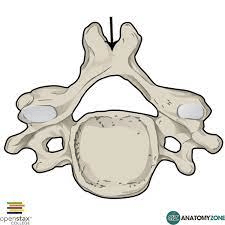
Spinous process
100
Athletes who are wearing helmets and suspected of a cervical spine injury need to have the _______________ removed to allow access to the airways in the event of CPR or oxygen needs to be administered.
Facemask
200
This occurs when the humeral head comes out of socket and then slides back in
Subluxation
200
What is the name of the tissue that sits between the humeral head and the scapula that aids in the stabilization of the humeral head.
Labrum
200
With a suspected spine injury of an athlete lying on the field, it is important to log roll the athlete onto a __________________ to transport them to the emergency room.
Spineboard/Backboard
200
How many total vertebrae are in the adult human body?
33
200
This occurs when a force is applied to the head while the head is lowered into flexion and straightens the cervical spine and applies a force that easily causes cervical fractures.
Axial Load
300
An athlete comes to the training room and felt a pop in their arm. You notice they have an obvious deformity on the anterior aspect of the upper arm. They also have a positive hook test. They have likely sustained a rupture to the ________________ tendon of their arm.

Biceps/ Biceps Brachii
300
What is the name of this uniquely shaped muscle that action is to protract the scapula and is the prime mover for reaching and pushing actions?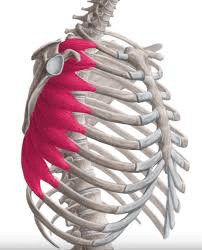
Serratus Anterior
300
In a plumb line, if the line were to pass through the back of the shoulder instead of the middle, the athlete would have .......
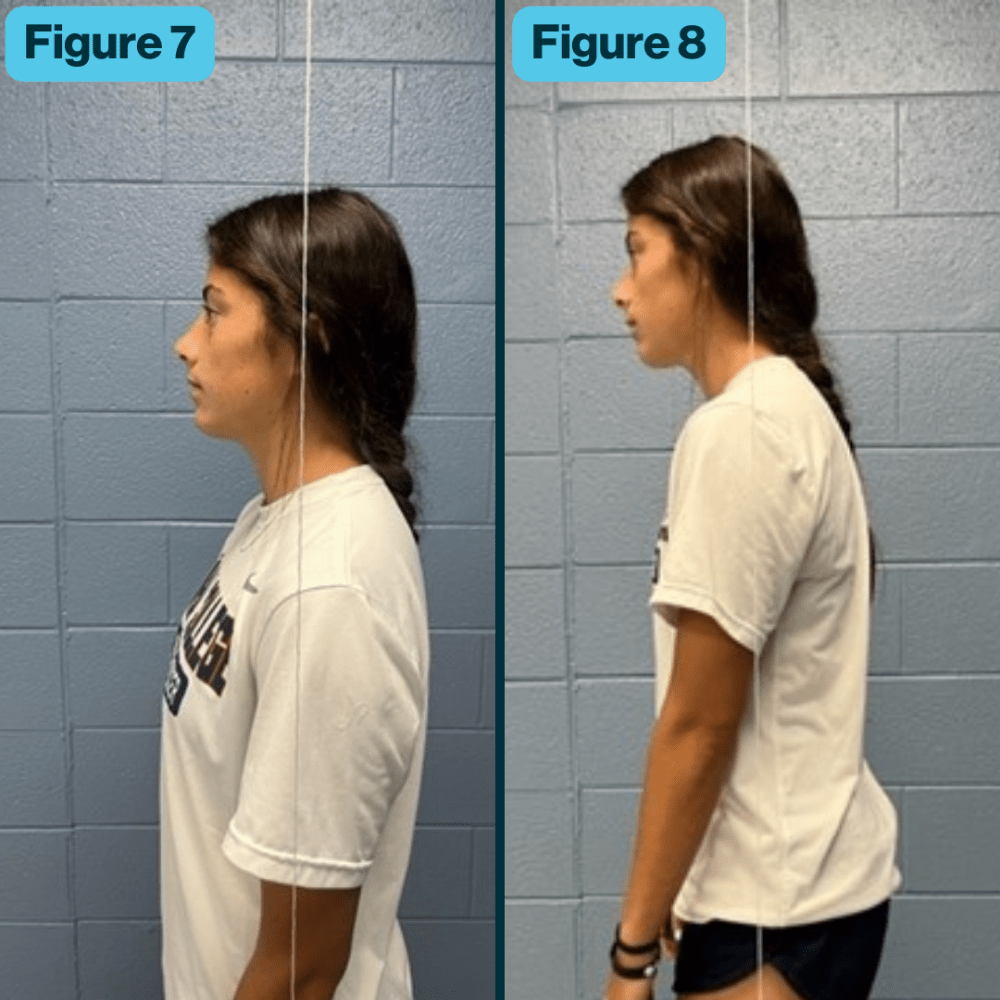
Rounded shoulder
300
These 2 regions of the spine fuse together as we skeletally mature.
Coccyx and Sacrum
300
Identify the following muscle
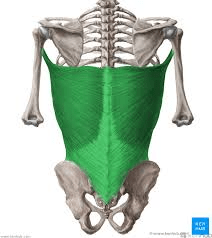
Latissimus Dorsi
400
If an athlete with a suspected rotator cuff injury is unable to _______________ their arm, a third degree tear should be expected.
Abduct
400
The 2 forward projections on the scapula that act as attachment sites for muscles and ligaments are named the acromion process and the ___________________.
:watermark(/images/watermark_only_413.png,0,0,0):watermark(/logos/logo_url_sm.png,-10,-10,0):format(jpeg)/images/learnable/processus-coracoideus/msutdlVtxSo57e9VALQZA_vZiB8h2hXz_Processus_coracoideus_1.png)
Coracoid
400
Under stress, intervertebral discs can bulge out and push on the spinal cord causing pain. This is also known as a.....
Herniated Disc
400
Intervertebral disc have a jellylike core to them. This is called the
Nucleus Pulposus
400
This network of nerves that exit the cervical spine run through the shoulder and down the arm. If it is stretched in the opposite direction, it can cause a burner or a stinger that temporarily causes burning, tingling, numbness, or stinging in that arm.
Brachial plexus
500
Repetitive overhead movements are the primary cause of ______________________________. Commonly seen in throwing athletes and swimmers.
Impingement syndrome
500
An athlete comes to the training room after a fall. They felt a pop in their shoulder and are having difficulty moving their arm. You notice a flat appearance to the deltoid muscle. It is likely that they have sustained a _________________________
Glenohumeral (GH) Dislocation
500
Degeneration of a vertebrae that fails to heal, therefore separating and causing the spine to become unstable. The resulting instability allows the vertebrae to slip, forward onto the vertebra. This is known as
Spondylolisthesis
500
Spondylolysis is often described as a stress fracture of bone degeneration of the vertebrae specifically at a location called the ......
Pars Interarticularis
500
A blow to the head of the humerus, or falling on the elbow and driving the humerus into the glenoid fossa can cause a ____________________ fracture to the humerus. This is most common in young athletes and can cause permanent growth impairment.
Epiphysis/Epiphyseal