Catheters & Collection Bags
Signs & Symptoms
Prevention
Diagnosis & Treatment
100
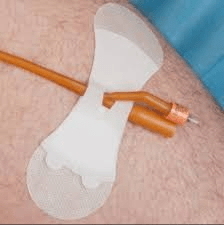
True or False: securement devices are used to keep the catheter from falling out
False: they are used to prevent the catheter from moving in and out of the urethra, which causes erosion of the urethra. This will lead to bypassing.
100
True or false: If a resident's urine has a foul odour, they have a UTI and need antibiotics.
False: all resident's with foley catheters have urine that is colonized with bacteria, which can cause a foul odour. A nursing assessment for suspected UTI will include other signs and symptoms of infection.
100
When should foley bags be emptied?
1. Q4H
2. When 1/3 to 1/2 full
3. at the beginning and end of your shift
2 - to help prevent UTIs, bags should never be allowed to get over half full
100
What is the best way to collect a urine sample for diagnostic testing?
* In & Out catheter specimen
* Midstream collection, after good pericare
* Before the administration of antibiotics
* If catheter has been in situ >7 days, change catheter and then collect specimen
200
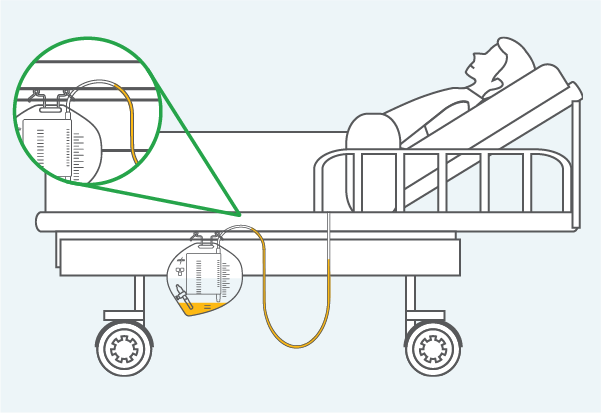 True or False: Position the foley bag on the bed or wheelchair so the catheter loop dips below the bag - this will help the urine flow into the bag properly.
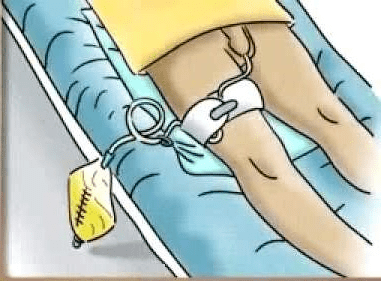 False, urine flows into the bag by gravity, so if there are loops below the bag the urine will not drain properly into the bag.
200
What do you do when your resident has foul smelling urine?
Push fluids for 24 hours, then reassess.
200
Can a resident with an indwelling catheter have a bath?
No - It is not best practice to bath residents with indwelling catheters as this can increase the risk of a UTI.
200
What is the most common microorganism in uncomplicated UTIs
What is Escherichia Coli (E.Coli - gut bug)
300
Your resident doesn't use a leg bag. How often should the night bag be cleaned?
Never. If the resident doesn't use a leg bag, they will always have the night bag connected to their catheter. this night bag should not be disconnected for any reason. The night bag is only changed when the nurse changes the catheter. If you think the night bag needs to be changed for some reason let the nurse know.
300
What are three clinical signs or symptoms of a UTI?
* Acute Dysuria (pain, burning during urination)
* Temperature >38C or 1.1 above baseline on 2 consecutive occasions
* New or increased frequency, urgency or incontinence
* New flank pain or suprapubic pain or tenderness
* Hematuria
* Rigors (can be seen with indwelling catheters)
** Non-specific symptoms of a UTI may also include worsening functional or mental status.
300
True or False: Pushing fluids is the first step if you notice your resident has had very little urine in their foley bag throughout your shift
False: their catheter could be blocked, and pushing fluids will not solve the problem. Check first if the tubing is kinked or blocked and un-kink it if so. If there are no kinks, alert the nurse who can investigate further (often catheters get blocked on the inside)
300
If a urine sample has 3 or more organisms, what does that usually indicate?
The urine sample was contaminated.
400
True or False: Always ensure your resident with a catheter has a brief on too, just in case the catheter bypasses.
False: the use of briefs with a catheter increases the chances of a UTI. Unless your resident has frequent loose incontinent BMs, they don't need a brief with a catheter.
400
Can urine in a urinary collection bag be purple?
Yes -
Purple urine (or a purple-stained catheter bag) occurs when certain bacteria in the urinary tract break down tryptophan (an amino acid found in many foods) into pigments called indigo (blue) and indirubin (red). When these pigments mix and react with the plastic of a catheter bag, the equipment and urine turn purple.
400
What happens with the overuse of antibiotics?
Bacteria develop the ability to defeat the drugs designed to kill them. This is referred to as Antibiotic Resistant Strains (AROs) which makes it harder or impossible to treat the infection.
400
What is the role of urine Culture & Sensitivity (C&S) testing?
The test is done to guide antibiotic selection, not diagnoses.