Know your vector
Parasites on Blood Smear
Diagnostic Pitfalls
Vector-Borne Bacteria & Viruses
Cases
100
This mosquito genus transmits malaria and bites primarily at night.
What is Anopheles?
100
Intraerythrocytic ring forms without hemozoin, sometimes in tetrads (“Maltese cross”).

What is Babesia?
100
Thick smears are more sensitive, but thin smears are required for this purpose.
What is species identification and parasitemia quantification?
100
This intracellular bacterium causes human granulocytic anaplasmosis.
What is Anaplasma phagocytophilum?
100
A traveler returns from West Africa with fever, anemia, and thrombocytopenia. Thin smear shows multiple rings per RBC.
What is Plasmodium falciparum malaria?
200
This tick transmits Babesia microti and is commonly found in the northeastern US.
What is Ixodes scapularis?
200
Crescent-shaped gametocytes seen on peripheral blood smear.
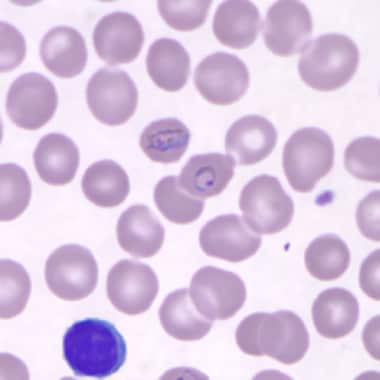
What is Plasmodium falciparum?
200
This test may remain positive long after successful malaria treatment.
What is malaria antigen testing (HRP2)?
200
Morulae seen in monocytes suggest infection with this organism.
What is Ehrlichia chaffeensis?
200
A splenectomized patient with fever after a tick bite shows ring forms but no hemozoin.
What is Babesiosis?
300
This organism can be misidentified as Plasmodium on smear in asplenic patients.
What is Babesia microti?
300
This mosquito-borne virus can cause hemorrhagic fever and shock syndrome.
What is Dengue virus?
300
A febrile patient with recent travel to Southeast Asia tests negative on malaria rapid test, but symptoms persist. What is the next lab step?
What is repeat thick and thin blood smears every 12–24 hours (×3)?
400
This flea species is the vector for Yersinia pestis.
What is Xenopsylla cheopis?
400
Microfilariae with a sheath and nocturnal periodicity.
What is Wuchereria bancrofti?