Bacteria structure
Bacteria Structure/Functions
Virus Structure and Function
Vocab-bacteria
Misc
100
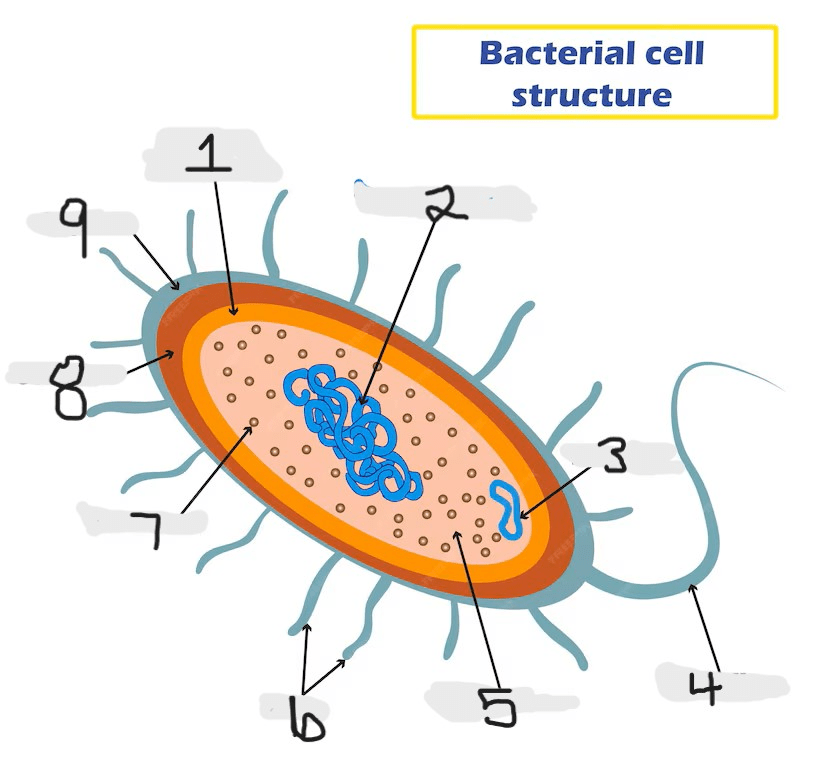 What is number 5?
cytoplasm
100
What is the function of #7?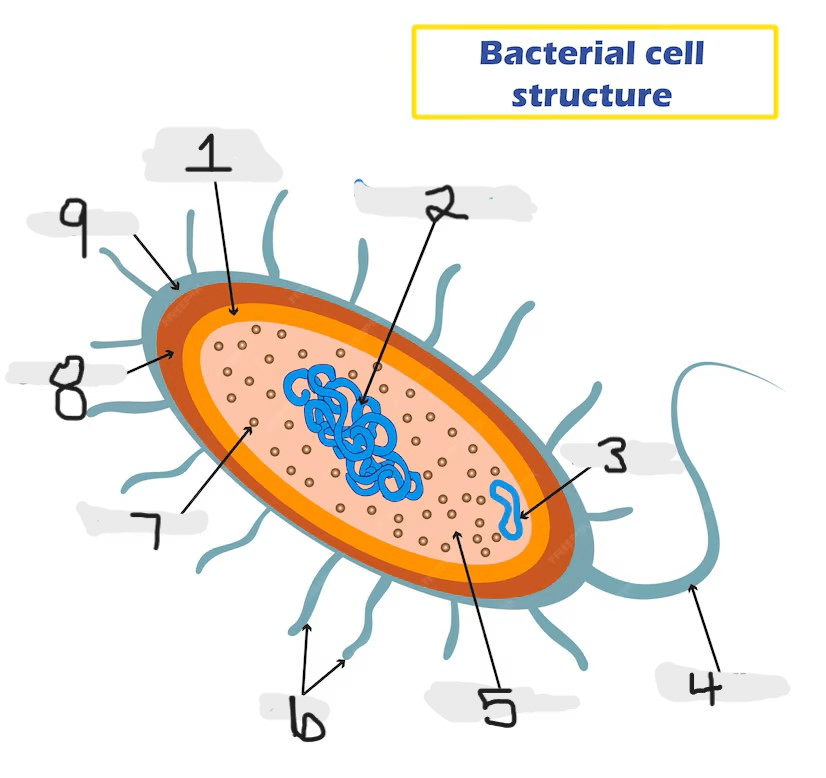
to make proteins for the cell
100
True or False: A latent virus can remain in the body for years before destroying host cells.
True
100
Are bacteria classified as prokaryotes or eukaryotes?
prokaryotes
100
(True or False): Viruses are classified as prokaryotes since they are small and simple.
False
200
What is number 2?
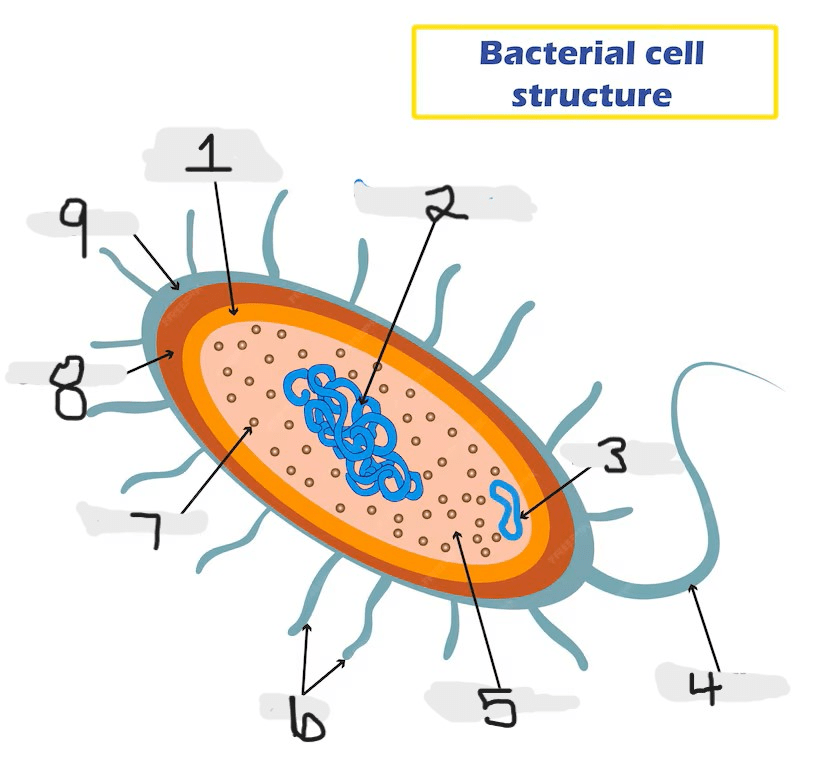
DNA/nucleoid/chromosome
200
What is number 5?
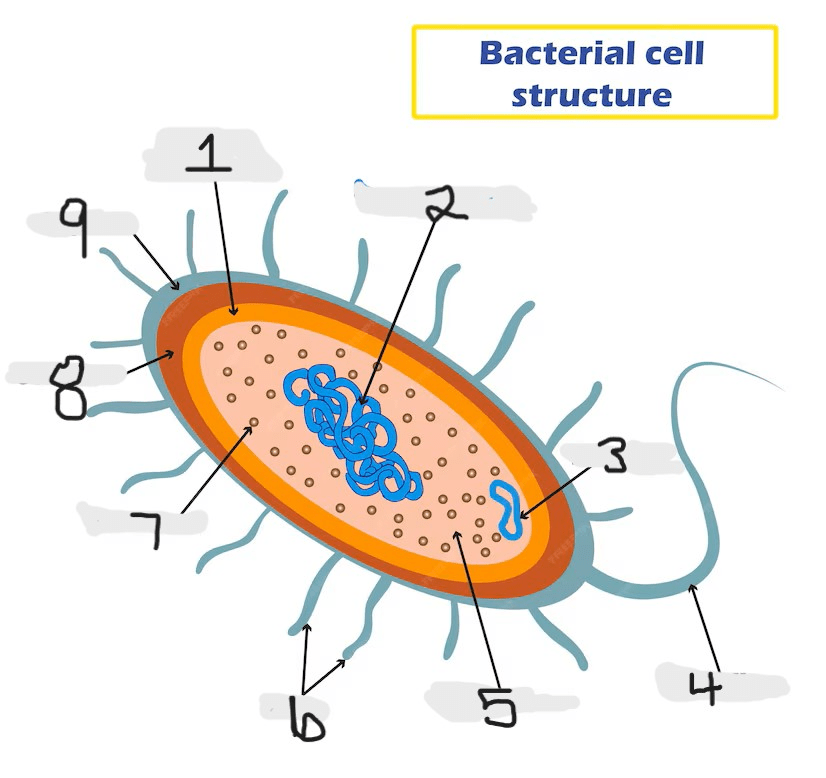
cytoplasm
200
What is number 2?
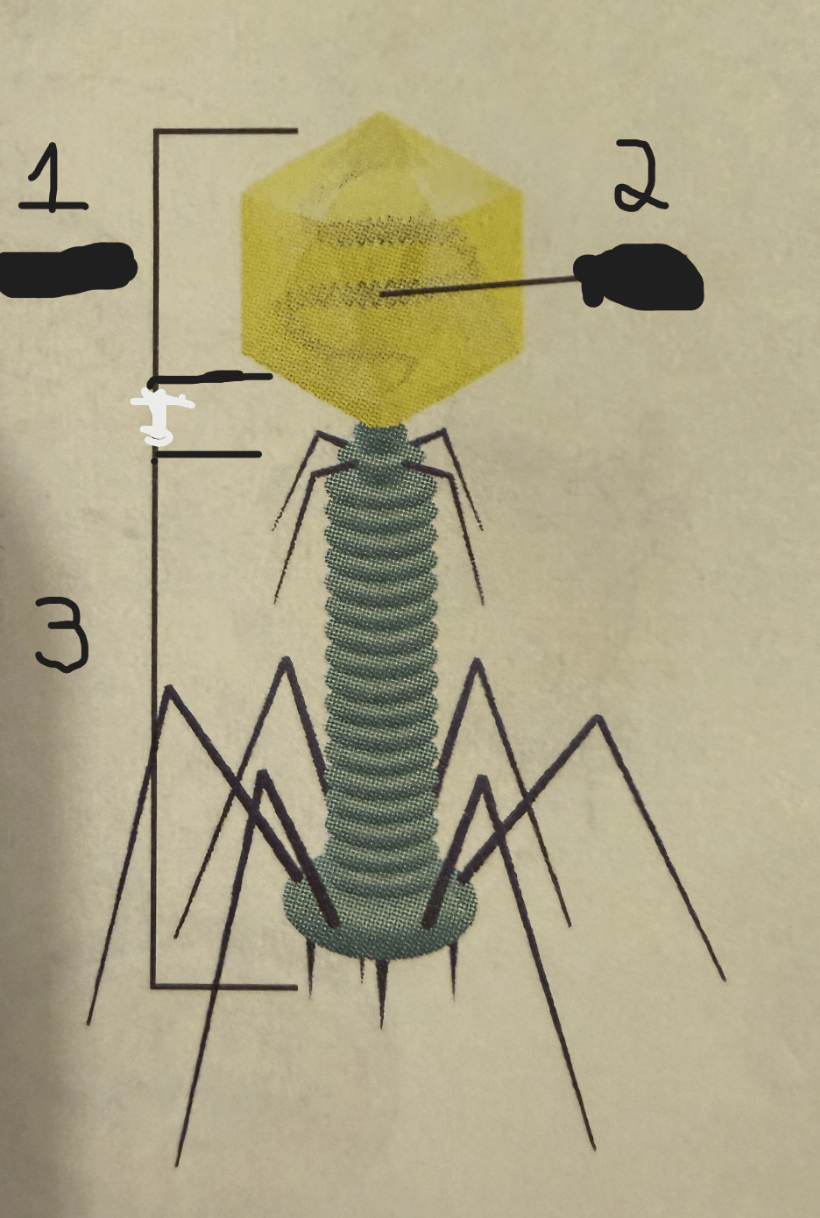
DNA/genetic material
200
This is how bacteria reproduce.
binary fission
200
Archaea or bacteria? A small group of living organisms that have some genes more similar to eukaryotes and can live in extreme conditions.
archaea
300
What is number 4?
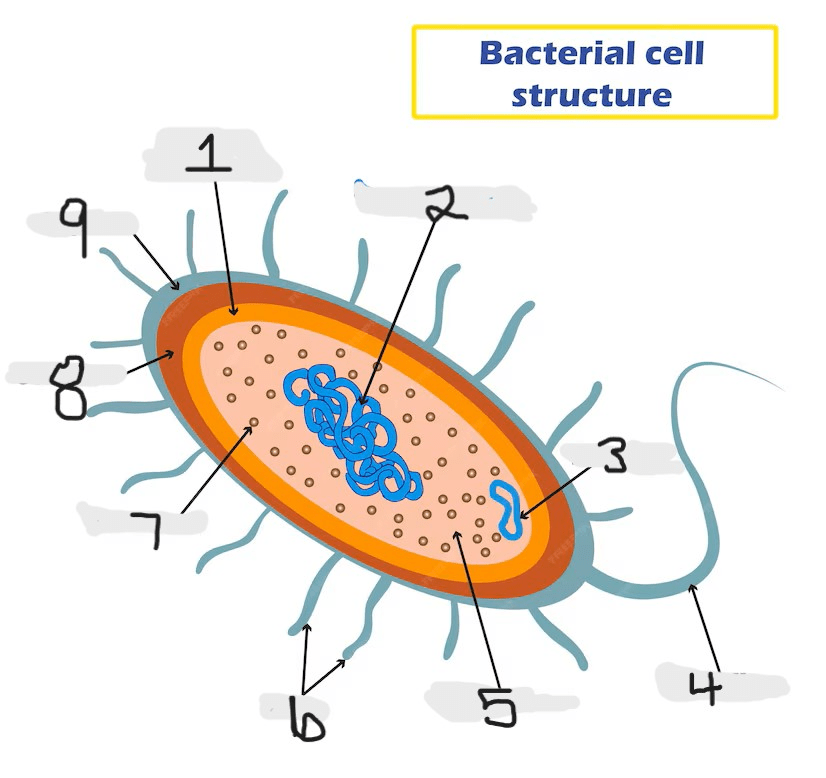
flagellum
300
What is number 3?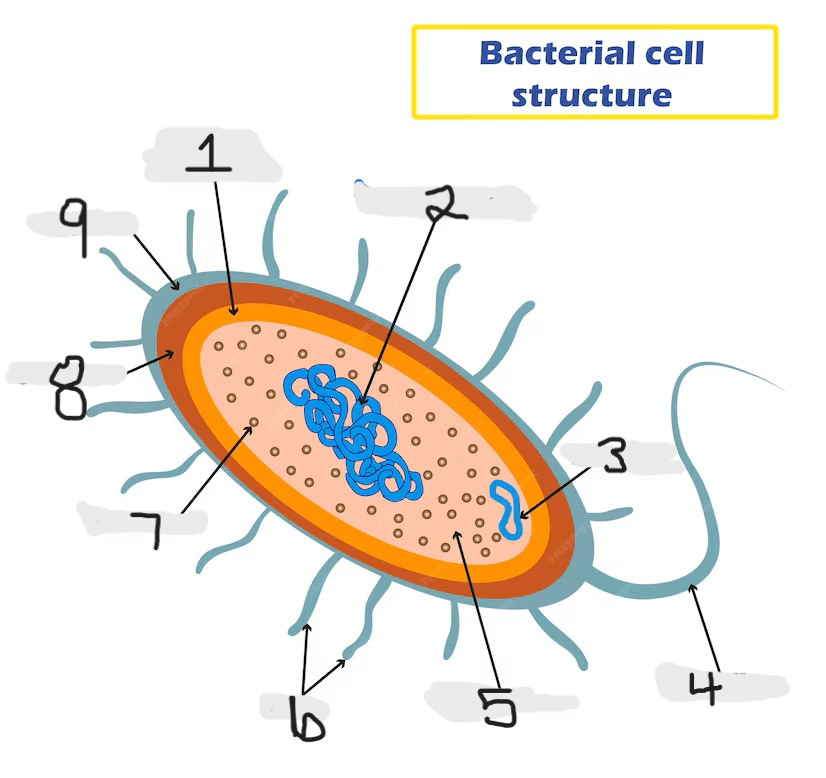
plasmid
300
What is number 1?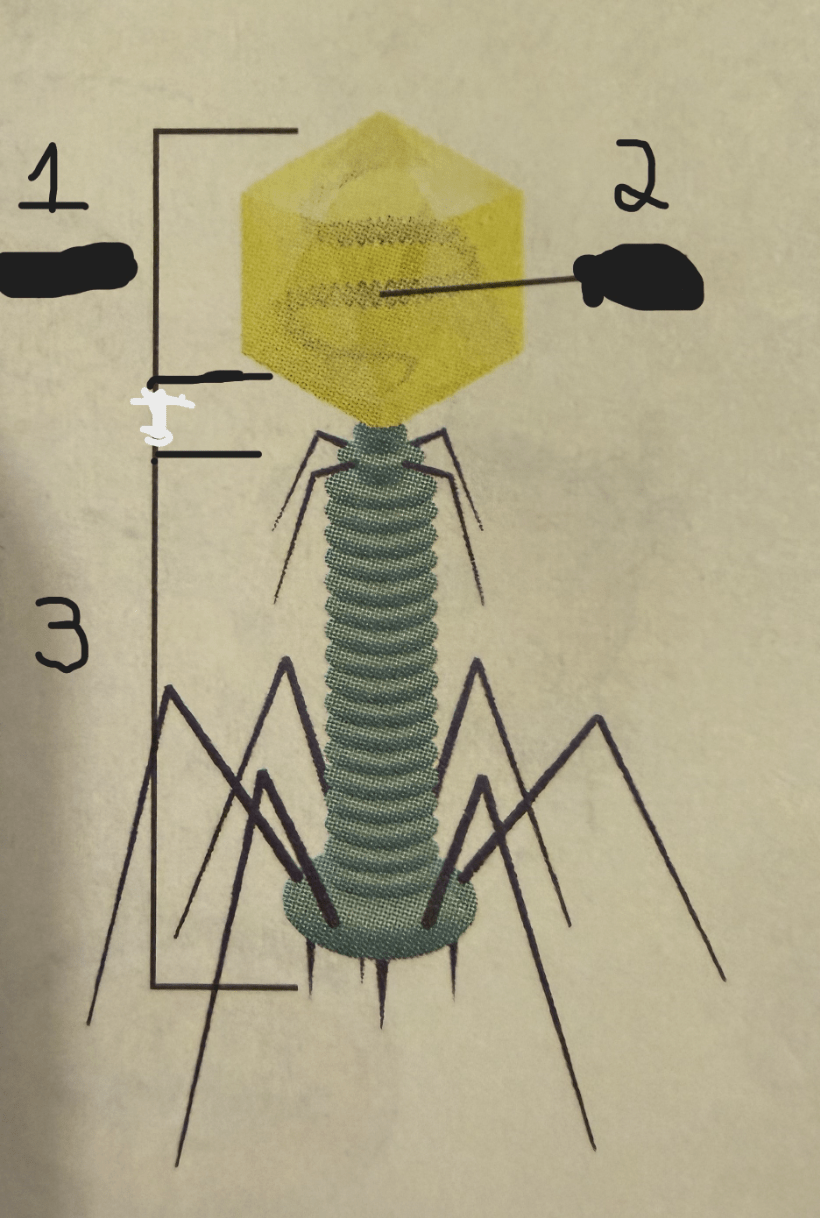
capsid
300
What is the name of the molecule that is found in the cell walls of bacteria but is absent from archaea?
peptidoglycan
300
We mentioned 2 characteristics of life that viruses lack. Give me one of the two
viruses are not made up of a cell/cells
viruses cannot reproduce on their own
400
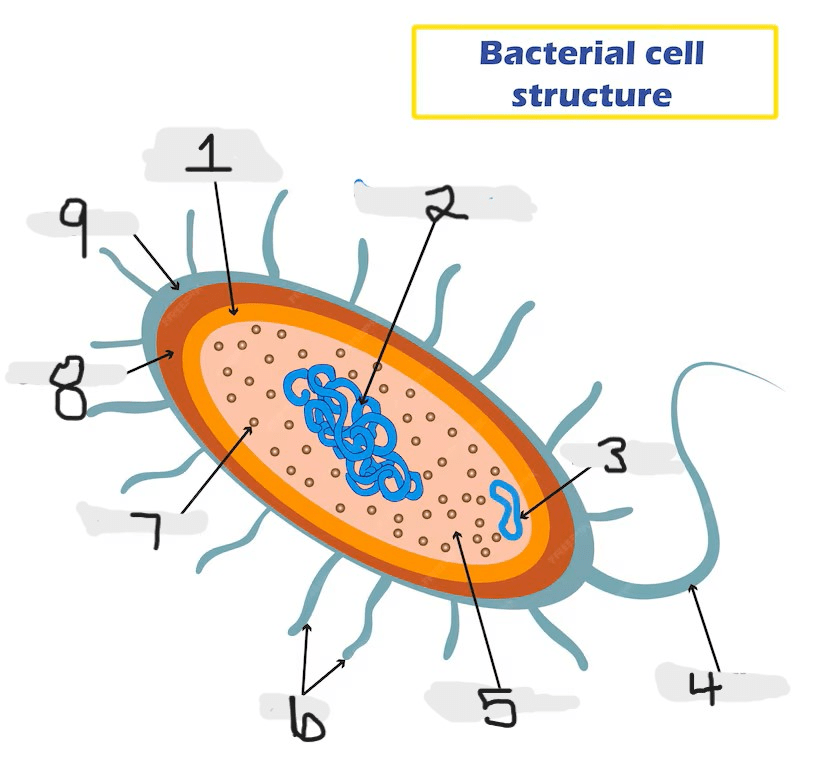 What is number 8?
cell wall
400
What is number 9 and what is its function?
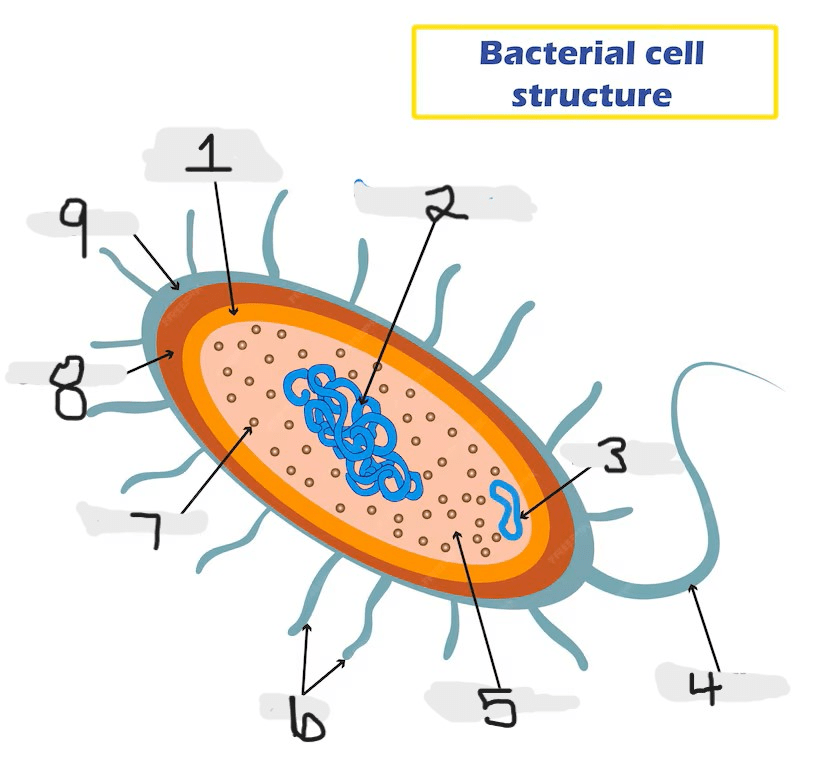
The capsule. To keep the bacterial cell from drying out
400
Is this active or latent viral reproduction? 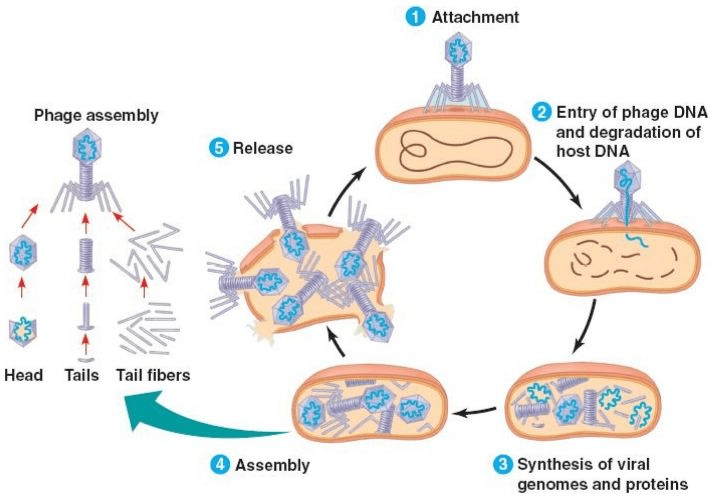
it is active-lytic cycle
400
When conditions are unfavorable and bacteria struggle to survive, some bacteria will escape these conditions by forming _____________________.
endospores
400
How do bacteria help ruminants?
they help ruminants, such as cows, to be able to digest cellulose.
500
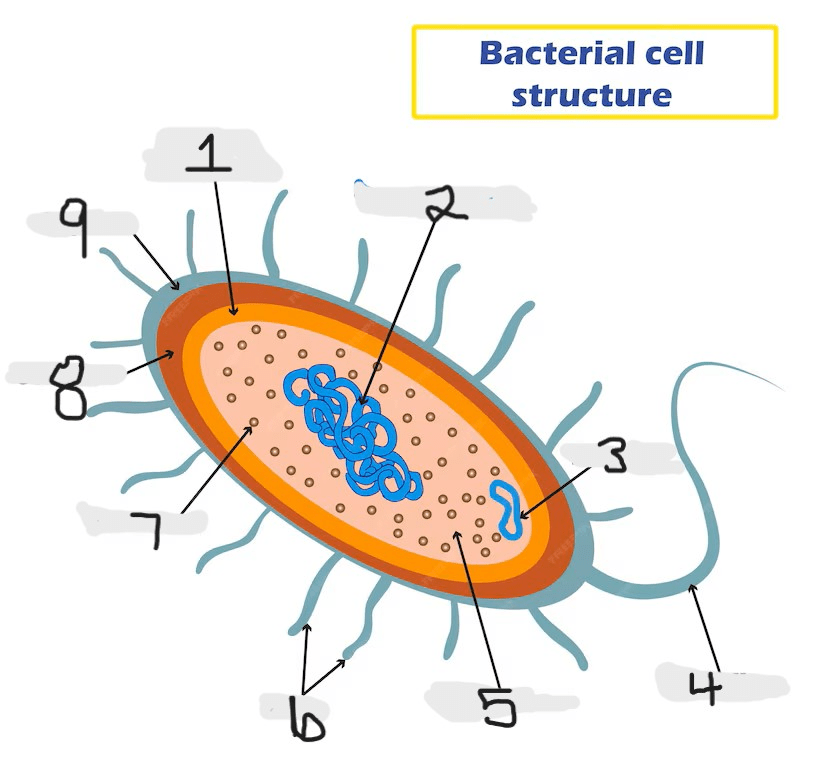
What is number 6?
Pili/pilus
500
What is number 1?
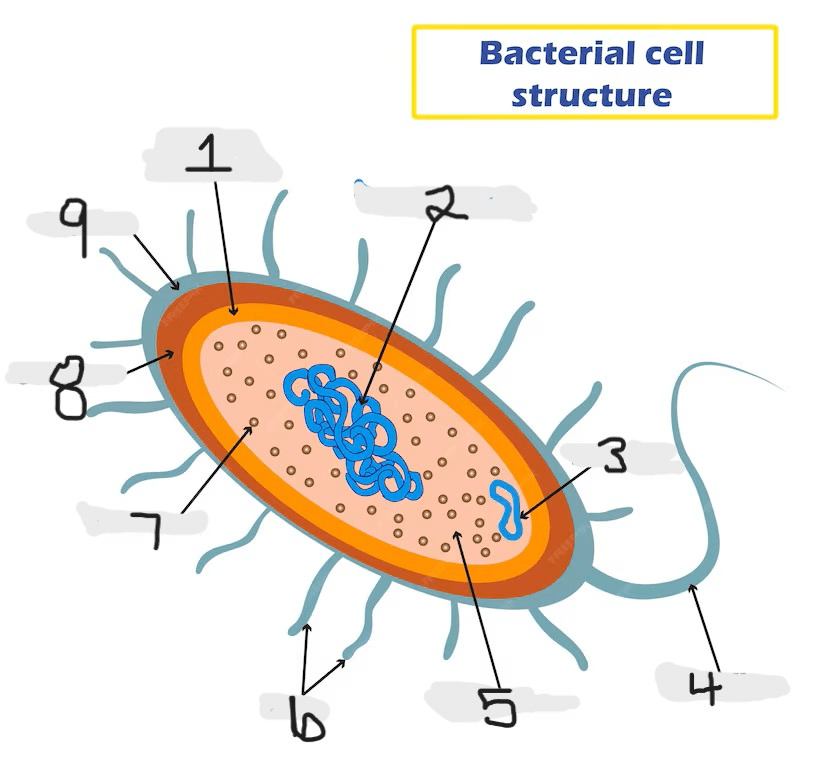
the plasma membrane
500
A type of virus that does not immediately kill the cell it infects since the viral DNA can remain inactive for months or even years.
latent virus
500
The process by which bacteria share their plasmids. This process can make bacteria more resistant to antibiotics.
conjugation
500
How do bacteria help plants?
They fix the nitrogen from atmospheric nitrogen to nitrogen the plants can actually use.