Equations
Duplex Retina
Visual Fields
Temporal Vision
Entopic Phenomenon
Visual Acuity / Factors Limiting VA
Motion Perception
Spatial Vision
Psychophys. Methodology
Depth Perception
100
Convert Snellen Acuity to Spatial Frequency
Spatial Frequency = (600 / Snellen Denominator)
Unit = Cycles per degree (cpd)
100
The system with overall greater temporal summation
Scotopic system
100
Boundary between region of visibility and invisibility
Stimulus can be seen anywhere within it
Represent limits of equal retinal sensitivity (appear as concentric circles)
Isopters
100
What is temporal acuity?
The temporal frequency (i.e., the upper limit of the CFF) that represents the high temporal resolution limit of the visual system for a given depth of modulation
100
Most commonly-occurring entopic phenomenon
Floaters or Muscae Volitantes
100
The smallest spatial separation between two nearby spots (points) or lines that can be discriminated or resolved
AKA, the minimum angle of resolution (MAR)
Resolution acuity
100
What is the formula for Temporal Frequency?
Temporal Frequency = (Velocity of Stimulus) * (Spatial Frequency)
100
The least amount of contrast that can be seen (or resolved by the patient) in a chart.
Expressed in %.
Contrast Threshold (CT)
100
What are the x- and y-values of the psychometric function?
X-Axis: Stimulus intensity
Y-Axis: Percentage of stimuli detected100
Monocular patients manifest robust depth perception largely due to _________ cues
pictorial
200
Convert Snellen Acuity to MAR
MAR = Snellen Denominator / Snellen Numerator
200
Shape of cone synaptic ending
Pedicle
200
State the vision requirements for driving in MA
At least 20/40 distant visual acuity (Snellen) in either eye, sc or cc and not less than 120 degrees combined horizontal peripheral field of vision
200
At high luminance, the critical flicker frequency is highest here
Mid-peripheral retina
200
Type of entopic phenomena caused by shock waves in vitreous humor hitting retina, resulting in the appearance of lightning type streaks
Moore's Lightning Streak
200
Resolving limit for fovea
1 arc min
200
This area in the visual cortex is responsible for processing motion
Damage to this area can result in akientopsia
Middle Temporal (MT) area; V5
200
Contrast sensitivity reaches adult levels within this age range
Ages 7-9
200
Asking patients what the lowest line they can read on the Snellen chart is an example of this psychophysical method
Method of Descending Limits
200
Objects that produce a smaller retinal image are seen as ____________
further away
300
Convert LogMAR Visual Acuity to Snellen Visual Acuity
Snellen Visual Acuity = 10(LogMAR)*20
300
An environment with a luminance level of 10-1 cd/m2 elicits what kind of vision?
Mesopic vision
300
The peak of the Hill of Vision corresponds to this ocular landmark
Fovea
300
Stimuli that fall inside of the temporal modulation transfer function (TMTF) are seen as...?
Resolved
Perceived as flickering
300
A form of VITREOUS degeneration in which calcium soaps (phosphates or phospholipids) aggregate in vitreous body and are visible as small mobile WHITE to YELLOW-WHITE opacities (in the vitreous humor).
- More prevalence in older patients with Male to Female ratio 2:1.
- Etiology is not clearly understood.
- Known to occur in humans, dogs, cats, horses.
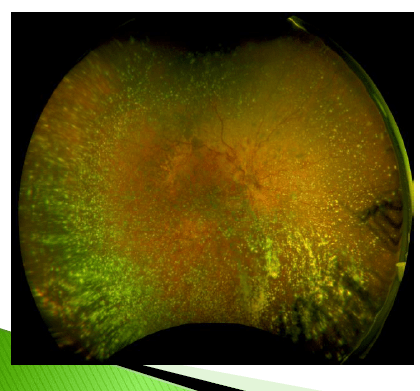
Asteroid hyalosis
300
This method of acuity is 'relatively' insensitive to optical defocus which makes it not an ideal way to measure resolution acuity in adults
However, it can be used to estimate resolution for patients who have cataracts to estimate their VAs post cataract surgery
Grating acuity
300
Televisions, bowling alley signs, flip-books, and stop motion movies rely on this visual phenomenon to depict the illusion of motion.
When sequentially flashed with an appropriate interval between the flashes, sense of motion is elicited
Stroboscopic motion
300
Type of contrast in a letter chart
Weber contrast
300
Subjects with this criterion will have a high hit rate and a high false positive rate
Lax criterion
300
This monocular cue is used when viewing objects of known size
Familiar size (size constancy)
Example = Familiar with size of average plane. See plane flying far up in bright blue sky in the distance with no other plane to reference size (i.e., cannot rely on relative size monocular cue in this situation so instead rely on familiar size monocular cue)
400
What is the Michelson Contrast formula?
Michelson Contrast Formula (in %) = (Lmax - Lmin) / (Lmax + Lmin) x 100 = ___ %
400
When the slope of the scotopic light adaptation curve is 1, (i.e., m=1) this law is followed
Weber's Law
Change in increment threshold (ΔI to the background intensity is constant (IB)
k = ΔI / IB
400
Most diagnostic visual field testing concentrates on the area ___ degrees of fixation
30
400
What are the CFF values in both scotopic and photopic vision?
Scotopic vision: 20 Hz
Photopic vision: 70 Hz
400
Entopic phenomenon characterized by experiencing seeing light without light actually entering eye
Vague visual sensations
Arising when retina stimulated by energy other than light
Can be directly induced by mechanical, electrical, or magnetic stimulation of the retina or visual cortex, as well as by random firing of cells in the visual system
Common symptom produced = Flashing lights
Phosphene
400
The minimum separation between two light sources that may be resolved into distinct objects.
Example: When the separations between two
stars (objects) on the retina is less than half the
spread of the each image, they will appear as a
single star
Rayleigh criterion
400
A consequence of direction-selective (DS) adaptation
After prolonged viewing of a moving
stimulus a stationary stimulus appears to drift in the
opposite direction
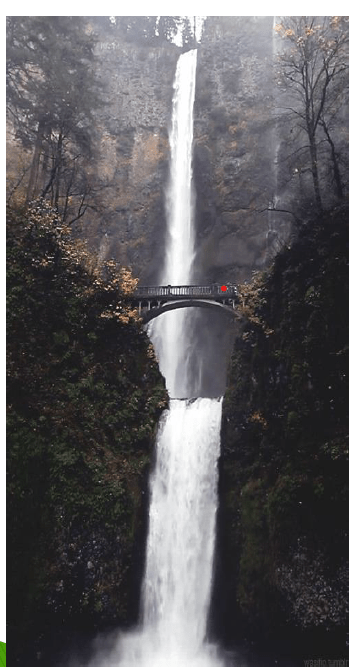
(literally his favorite picture)
Motion Aftereffect
400
Formula to calculate contrast threshold of the chart if only given contrast sensitivity (CS)
Contrast of the chart = [1 / CS] * 100
answer is in %
400
In optometry, we use these scales to grade redness, staining, bulbar roughness, and contact lens fittings
Ordinal scales
400
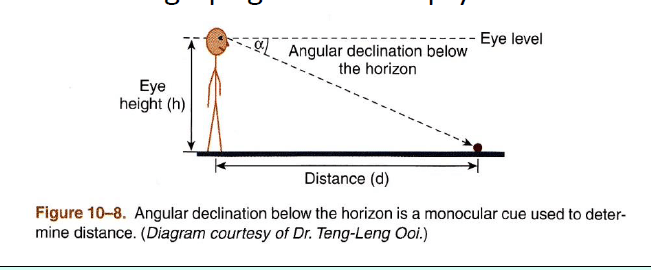
The angle the object makes with the horizon
Visual system uses this angle to determine object distance
Angular declination below the horizon
500
What is the formula for the Nyquist limit?
Nyquist limit = 1/2 Photoreceptor sampling rate
**Anything beyond/above this Nyquist limit value will be aliased!**
500
This law applies to stimulus up to 10 mins of arc in critical diameter
Ricco's Law (spatial summation): With critical diameter of 10 arc mins, total number of quanta needed to reach threshold remains same for different flash duration.
Size/intensity interchangeable for detection! Reciprocal relationship between stimulus intensity and stimulus area
IA = K
500
Type of perimetry where stimulus is moved from a non-seeing region of the visual field to a seeing region of the visual field while measuring its isopter
Kinetic perimetry
500
The Purkinje Tree effect is an example of this visual occurrence
Troxler Phenomenon
500
Which vascular beds do "flying spots/corpuscles - white blood cells (i.e., blue field) entopic phenomenon originate from?
Capillary loops of the inner nuclear layer and outer plexiform layer
500
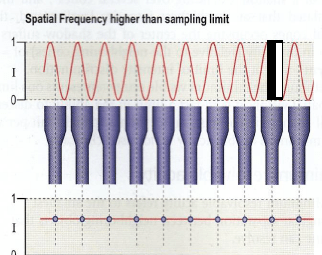
How would this stimulus be perceived?
Perceived as 'gray' or aliasing
Need at least 2 cones per cycle to perceive accurately/be able to resolve stimulus
500
The effect that is well known as an illusion, affecting pilots who fly at night
(Small isolated light in darkness; appears to be moving)
Autokinetic Motion Effect
500
The concept of retinal responses depending more on the local average intensity (i.e., local contrast) rather than absolute luminance
Perception of brightness of an object depends on CONTRAST more than absolute luminance.
Simultaneous contrast
500
At low background levels, the human visual system acts as an ideal detector.
What law applies in this situation?
deVries-Rose Law
As background luminance levels increase, threshold change in luminance needed to differentiate test stimulus from background increases approximately as square root of background luminance
500
Kinetic monocular depth cue
Results when moving observer fixates an object while noticing the relative motion of surrounding objects
Relative motion provides information regarding relative distance
MOTION PARALLAX
600
Convert LogCS to CT (contrast threshold)
CT = 1/(10LogCS)
600
Law that applies to stimulus when their diameter is greater than 10 arc mins
Piper's Law
Spatial summation less complete for larger stimuli
A1/2*I = c
A = area
I = intensity
c = constant threshold value600
Short Wavelength Automated Perimetry (SWAP) assesses the function of this photoreceptor that is thought to be affected in the early stages of glaucoma
S-Cone
600
What does the Granit-Harper Law state?
The High Frequency CFF increases with the log of the STIMULUS AREA
▪ Flicker is more likely to be perceived if the stimulus is LARGE.
600
Maxwell's spot is an entoptic visual phenomenon appearing as a small, reddish or dark spot in the center of the visual field, often surrounded by a faint blue halo.
It occurs because of the selective absorption properties of this macular pigment
(The size of the spot seen depends on how diffuse the Retinal Macular Pigment is for particular subject in question)
Xanthophyll
600
The visual acuity measure most sensitive to optical defocus
Sensitive to the effect common clinical conditions have on vision
Recognition acuity
600
This clinical test can be used to study complex global motion perception. It presents complex first-order stimuli that require the integration of motion cues across the visual space
Random dot kinematograms (RDT)
600
The high spatial frequency cutoff (x-axis) of the contrast sensitivity function corresponds to this
Best visual acuity (VA)
600
Automated visual field testing uses this psychosocial method
Staircase method
600
The visual system uses this angle to determine object distance
Angular declination below the horizon
700
What is the equation for negative predictive value?
Negative predictive value (NPV) = (True negative) / (False negative + True negative)
NPV = Probability that subjects with negative screening truly do not have the disease/condition
700
Critical duration of photopic system
10-50 msec
700
Humphrey Static Perimetry is an example of this type of visual field testing
Qualitative / Diagnostic field testing
700
The low temporal frequency cutoff of the temporal modulation transfer function (TMTF) is caused by what?
Lateral inhibitory processes in the retina
700
Best known occurrence of pathological haloes are those associated with this ocular condition
(This symptom is key to diagnosis of this condition!)
Angle Closure Glaucoma
700
Ideal value for chart luminance?
Moderate photopic luminance (80-320 cd/m2)
700
This visual phenomenon has been utilized to enable a type of stereoscopy, or 3D visual effect in visual media such as film and TV to create the illusion of a three dimensional image
The Pulfrish Effect
700
Adult contrast sensitivity is at its peak at this particular value
4 cpd
700
This law depicts a log relationship between intensity and sensation
S = c*log(I)
S = Sensation magnitude
I = Stimulus intensity
c = Constant related to Weber's constantFechner's log law
700
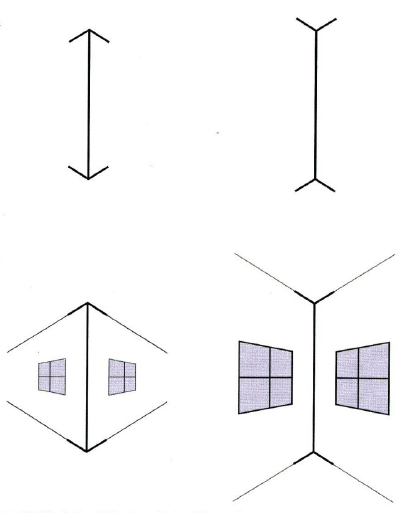
Name this optical illusion
Muller-Lyer illusion
Lines equal size but line that appears to form outgoing corner appears farther away than line that appears to form ingoing corner
800
You have a light flash of 50 units on for 20 msec. Assuming Bloch’s law to be valid, if you now double the light flash luminance, what should the TIME DURATION be?
10 msec
50 * 20 = 1000 = K
100 * t = 1000. t = 10
800
50% of the cones recover from bleaching in this time
1.5 minutes
800
An optic disc or nerve problem may result in this type of visual field loss
Central visual field loss
800
An amblyopic having worse visual acuity with a standard eye chart rather than isolated optotypes is an example of this type of masking taking effect
Simultaneous masking
800
Corneal edema will NOT occur (i.e., halos will not form in vision) if this particular layer of the cornea is able to accommodate this change
Corneal endothelial layer
800
A limit of the optical image formation of the eye
Increases defocus of eye. Decreases VA
Poor MTF due to large pupil (>6 mm)
Aberrations
(spherical or chromatic)
800
Achieved by selective inhibition of the magnocellular pathway (i.e., suppressing high temporal frequencies), this phenomenon allows us to look from 1 side to another without our vision being "smeared"
Saccadic suppression
(Vision is suppressed shortly before, during, and shortly after saccadic eye movements)
800
How do you produce the perfect square wave?
By adding all the odd numbered harmonics (up to infinity)
800
Law that states that sensory magnitude is proportional to the stimulus magnitude raised to some power
S = Ic
Steven's Power Law
800
Type of disparity that results in images forming temporal to fovea
Crossed disparity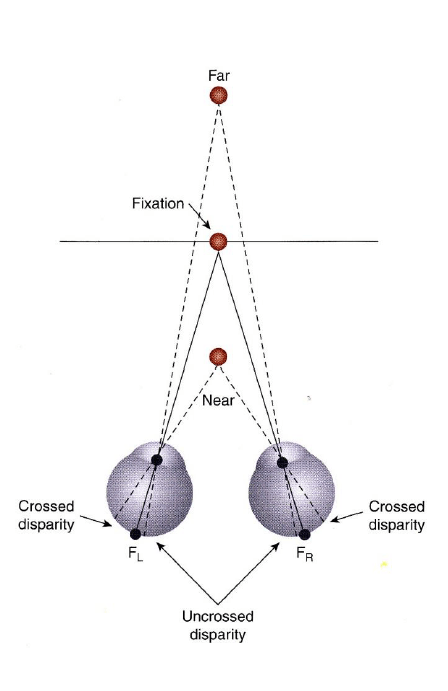
900
Calculate the height of the 20/40 optotype for a regular projector chart at 20 ft
17.73 mm
(Problem #30 on Lab #2)
900
A bright light bleaches 100% of your patient's rhodopsin. What period of dark adaptation is required to ensure that 75% of the rhodopsin has regenerated?
10 minutes
900
Background illumination of Humphrey Perimetry test
31.5 apostilbs
i.e., minimum brightness for photopic vision
900
Temporal Modulation Transfer Function (TMTF) can assist in the early diagnosis of this ocular condition.
This suggests loss of temporal sensitivity at moderate and high frequencies may be characteristics of this disease
Glaucoma
900
Haidinger's brushes were NOT visible in light that exceeded this wavelegngth
> 560 nm
900
This measurement of acuity is not the best descriptor of visual acuity because it's stimulus bound
(Meaning you can change the strength of the stimulus and alter the visual acuity value)
Detection acuity
900
This area of the brain uniquely processes BIOLOGICAL MOTION
(biological motion = Ability to perceive object movement by connecting small stimuli; depicts natural movements of humans and other animals)
Posterior Superior Temporal sulcus Cortex (STC)
900
Regions of increased or decreased brightness caused by the response of the visual system to luminance boundaries
It exaggerates the contrast between edges of the
slightly differing shades of gra y, as soon as they contact
one another, by triggering edge detection in the human
visual system Illusion of brightness
MACH bands
900
What is the formula for specificity?
Specificity = True negative / (False positive + True negative)
Specificity = Percentage of patients who are healthy and test negative on given measure (i.e., correctly identified by test as NOT having condition)
900
Normal value for stereoacuity
40 arc seconds
1000
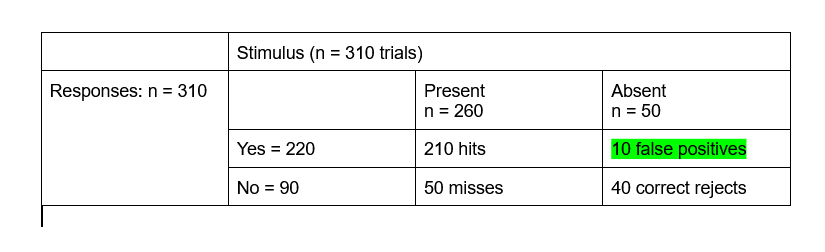
A Yes-No experiment (i.e., asking patient if they can detect stimulus in question) is performed with 310 trials.
There are 50 blanks within this experiment
The subject reports seeing the stimulus 220 times
The stimulus was present but not seen for 50 trials
Calculate the number of 'false positive' responses
10 false positive responses
1000
Property of the human eye that describes the directional sensitivity of the cone receptors. Light rays that strike cone perpendicularly are perceived as brighter (in photopic conditions).
When a pupil is decentered, cones shift themselves toward so they can still orient toward the pupil center.
This feature may be abnormal for patients who have retinal disease that causes disruption of cone orientation
Stiles Crawford Effect I
1000
How many locations are tested in a 24-2 visual field?
54
each location tested at least 2x
1000
Compare the (x) and (y) axes of the CSF/SMTF and the TMTF
CSF/SMTF: Sensitivity (spatial contrast) vs Function of spatial frequency
TMTF: Sensitivity (% modulation) vs Function of temporal frequency
1000
Treatment for most severe cases of floaters
Vitrectomy
1000
An observer with myopic astigmatism at axis 180 will have more difficulty distinguishing these letters
Letters with vertical contours
V, Y
1000
As stimulus velocity increases, resolution acuity remains constant until the stimulus reaches this velocity
60-80 degrees/second
1000
Name 2 factors that contribute to the reduction in sensitivity for high spatial frequencies in the human visual system
Optical limitations (e.g., aberrations)
Packing density of photoreceptors (60 cpd cutoff due to spacing of foveal cones 0.5 min arc apart)
1000
Name the x- and y- axes of the receiver operating characteristic (ROC) curve
X-Axis: Probability of false positive
Y-Axis: Probability of a hit
1000
A common clinical practice of correcting
One eye corrected for distance, one eye corrected for near
Does result in some reduction of stereopsisMonovision