Pulse
Temperature
Respiration
Blood Pressure
Pain
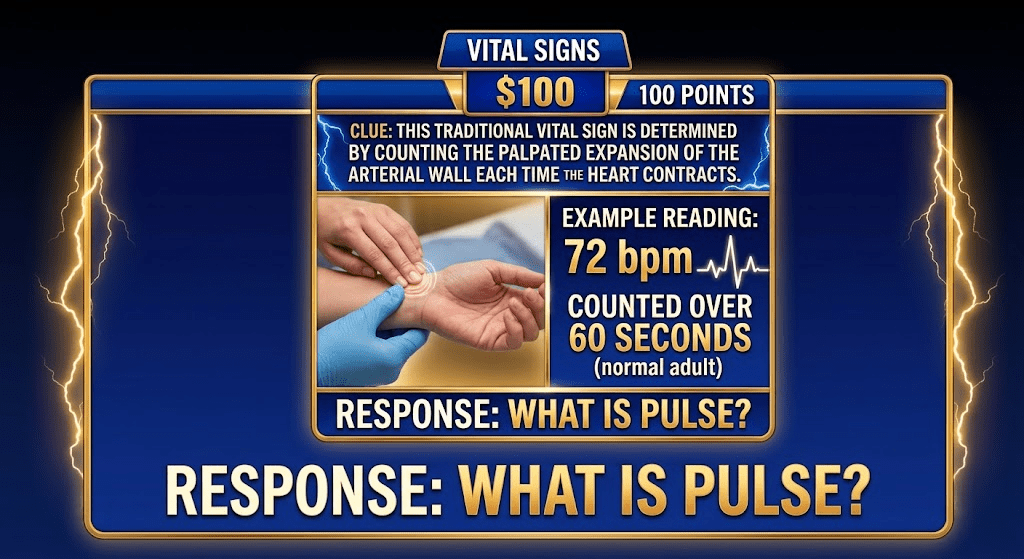
100
This traditional vital sign is determined by counting the palpated expansion of the arterial wall each time the heart contracts.
What is Pulse?
100
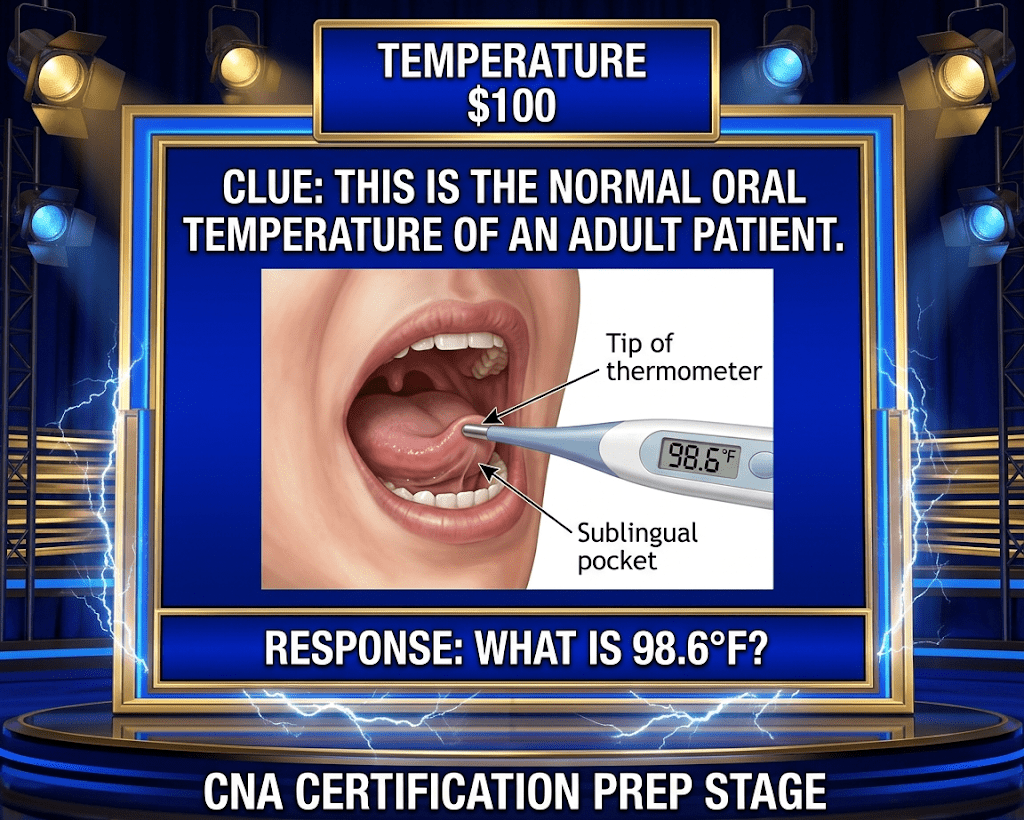
This is the normal oral temperature of an adult patient.
What is 98.6°F?
100
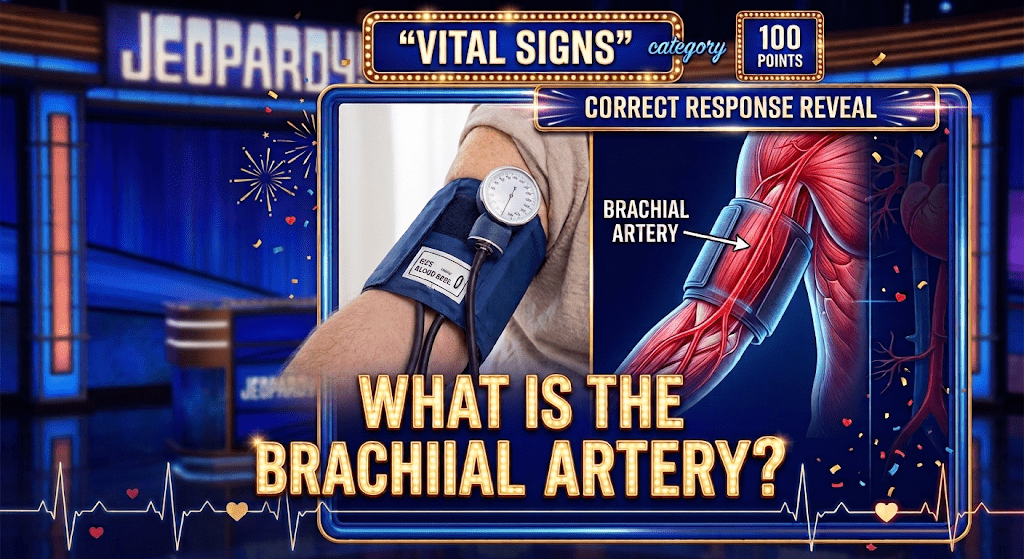
Blood pressure is most commonly measured at this artery.
What is the brachial artery?
100
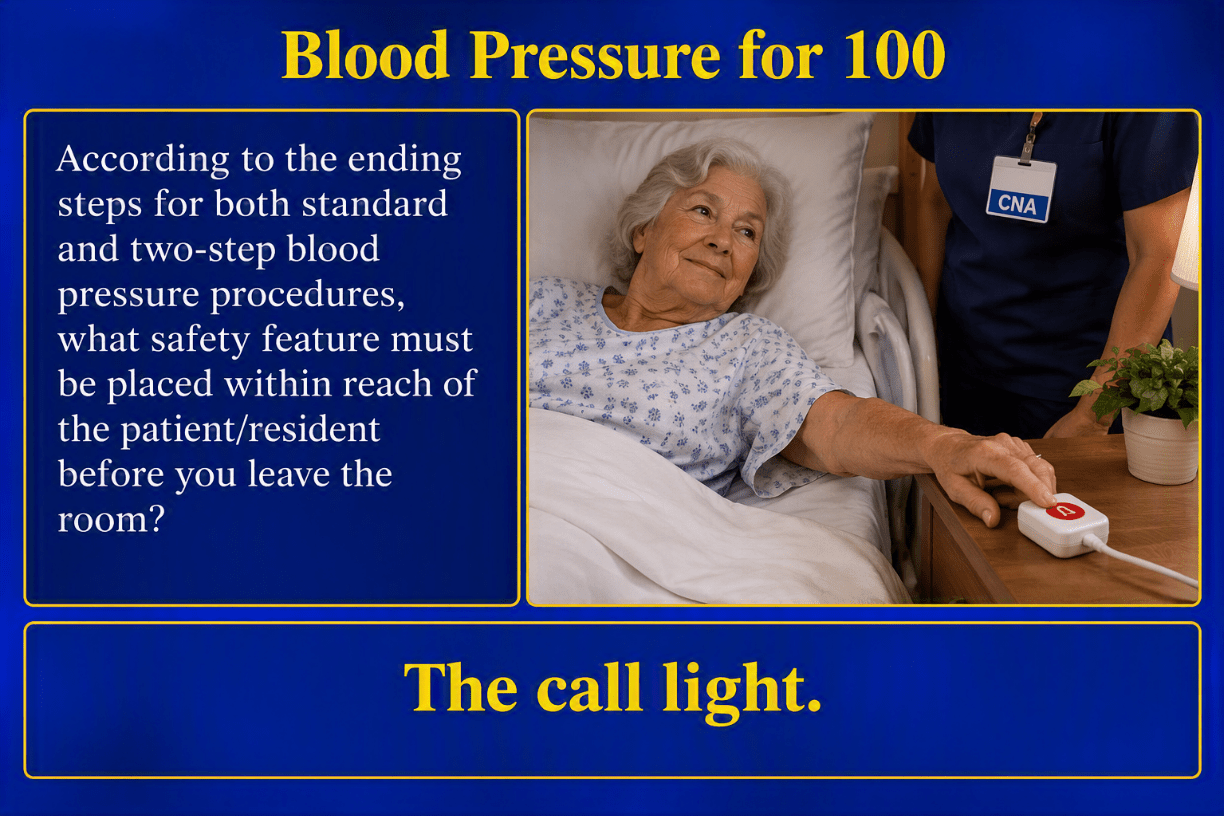
According to the ending steps for both standard and two-step blood pressure procedures, what safety feature must be placed within reach of the patient/resident before you leave the room?
What is the (call light).
100
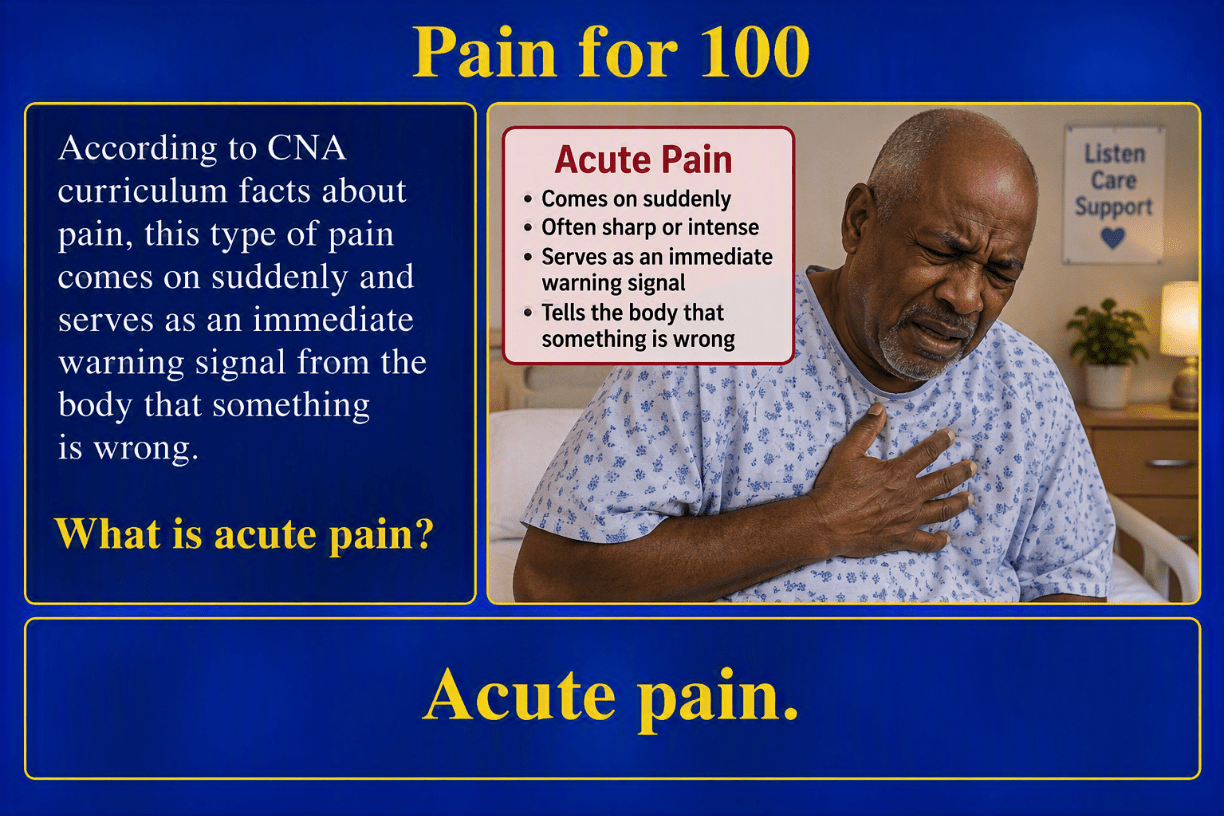
This type of pain comes on suddenly and serves as an immediate warning signal from the body that something is wrong.
what is acute pain.
200
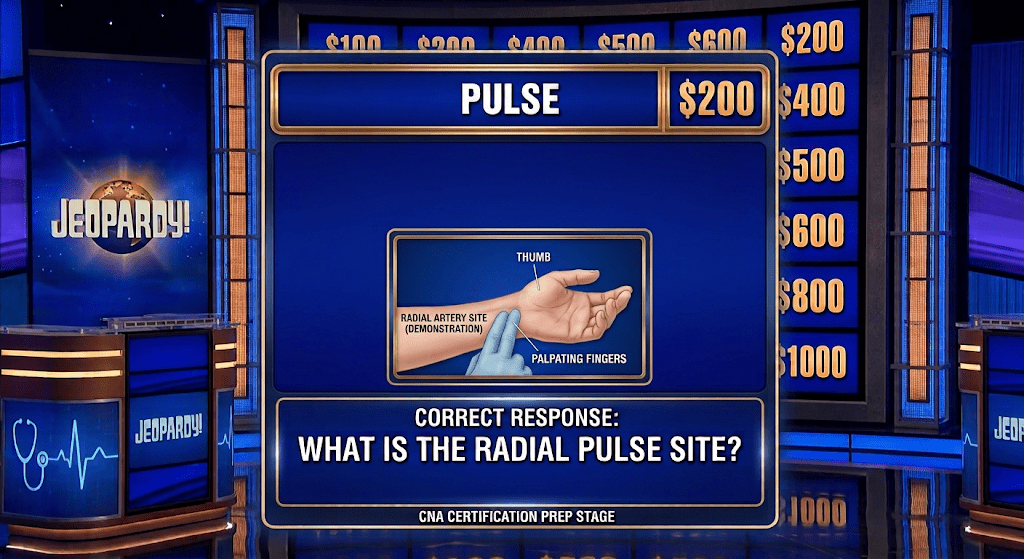
Located on the thumb side of the wrist, this is a common major pulse site.
What is the Radial pulse site?
200
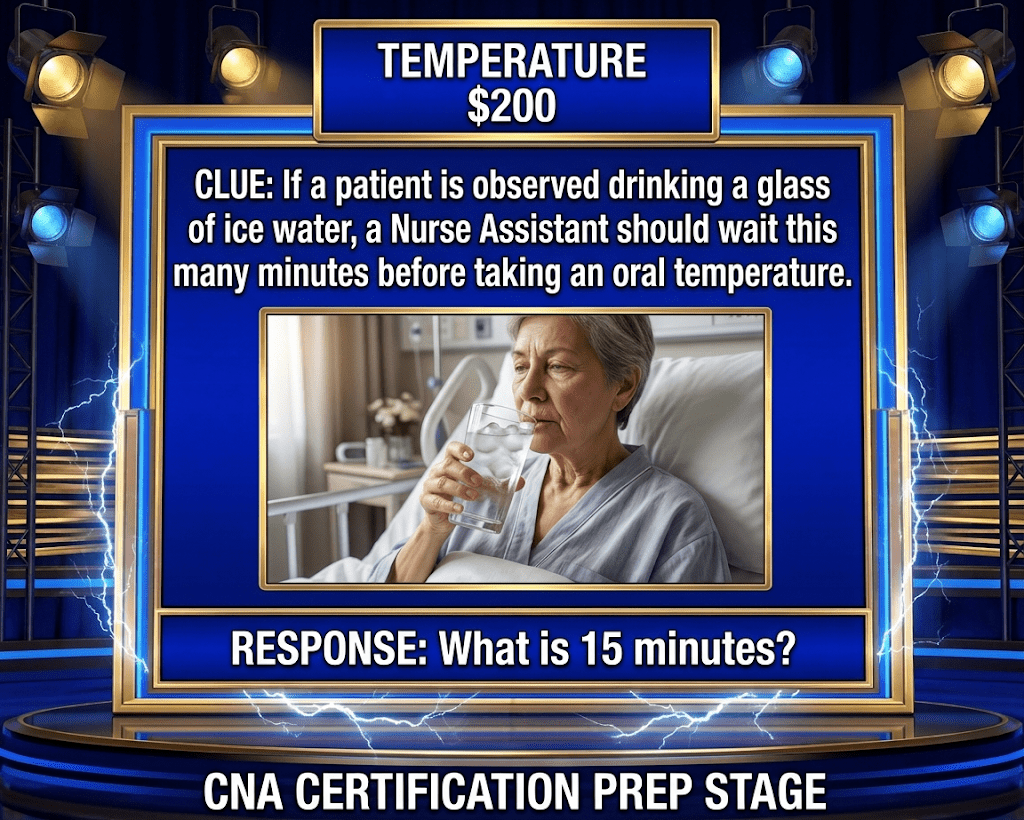
If a patient is observed drinking a glass of ice water, a Nurse Assistant should wait this many minutes before taking an oral temperature.
What is 15 minutes?
200
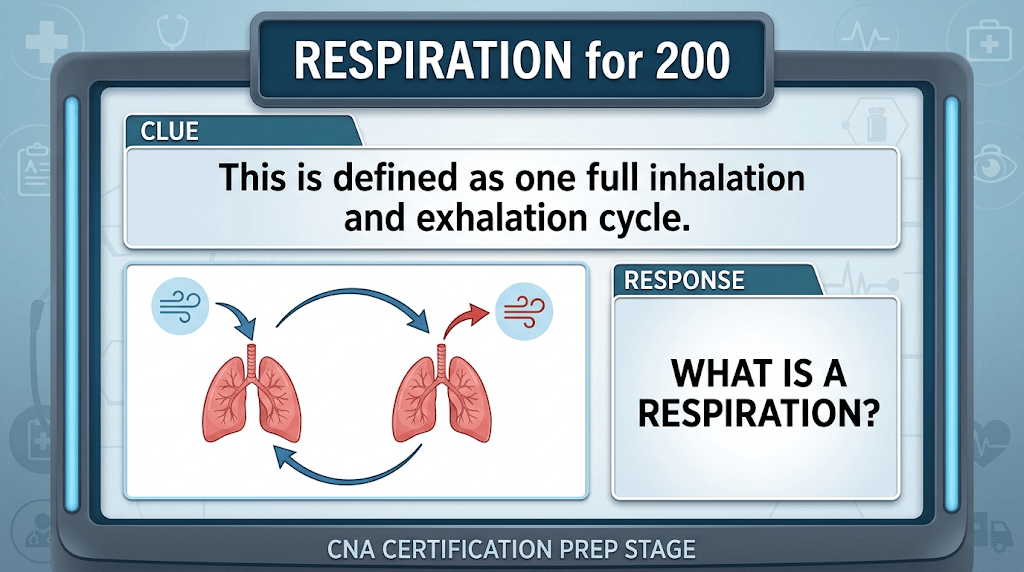
This is defined as one full inhalation and exhalation cycle.
What is a respiration?
200
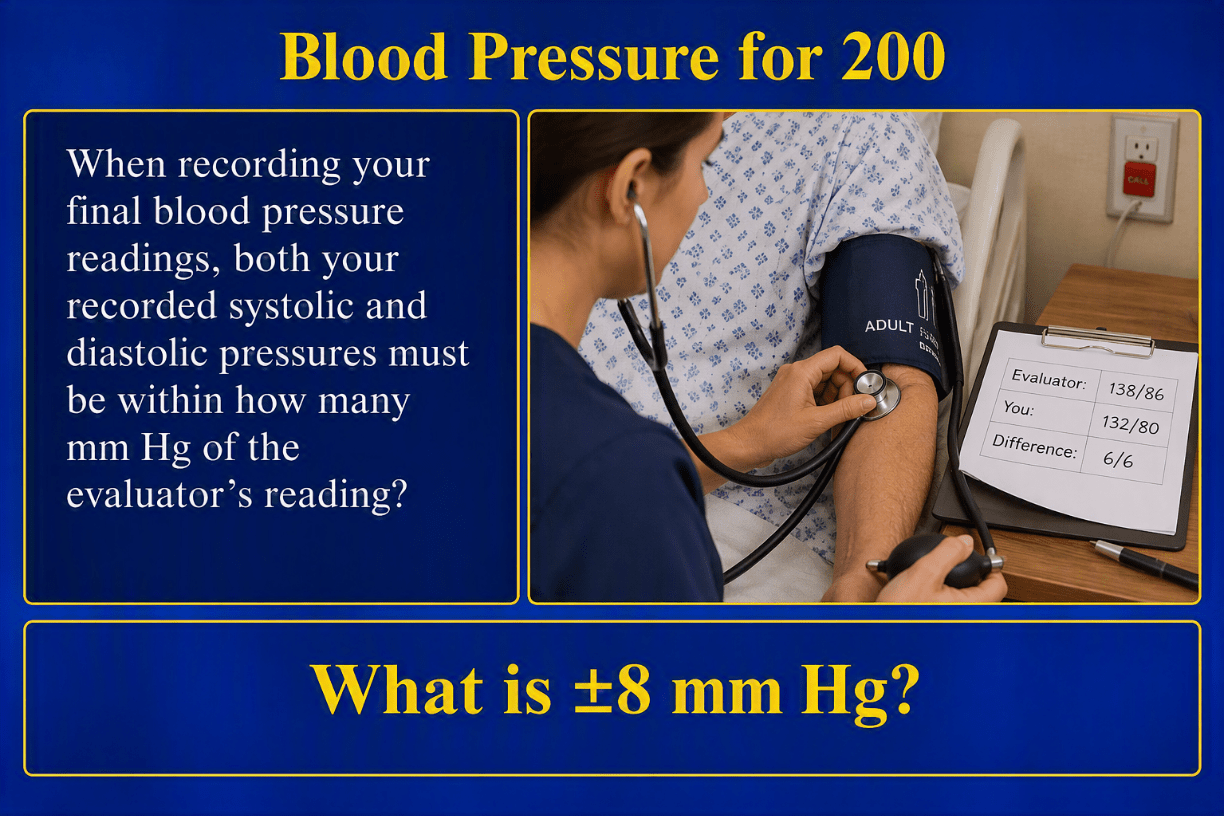
When recording pressure, both your recorded systolic and diastolic pressures must be within how many mm Hg of the evaluator's reading?
Plus or minus 8mm Hg.
200
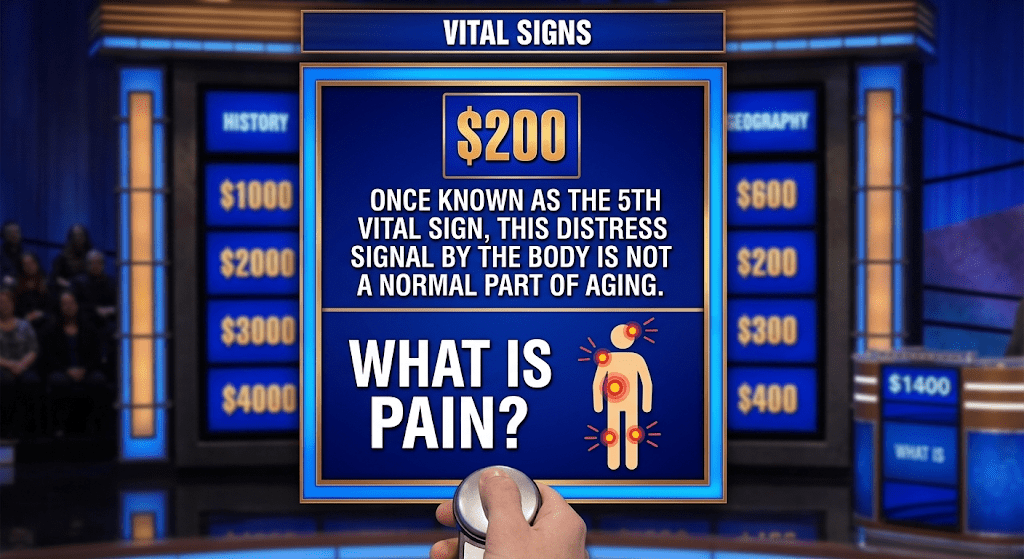
Once known as the 5th vital sign, this distress signal by the body is not a normal part of aging.
What is pain?
300
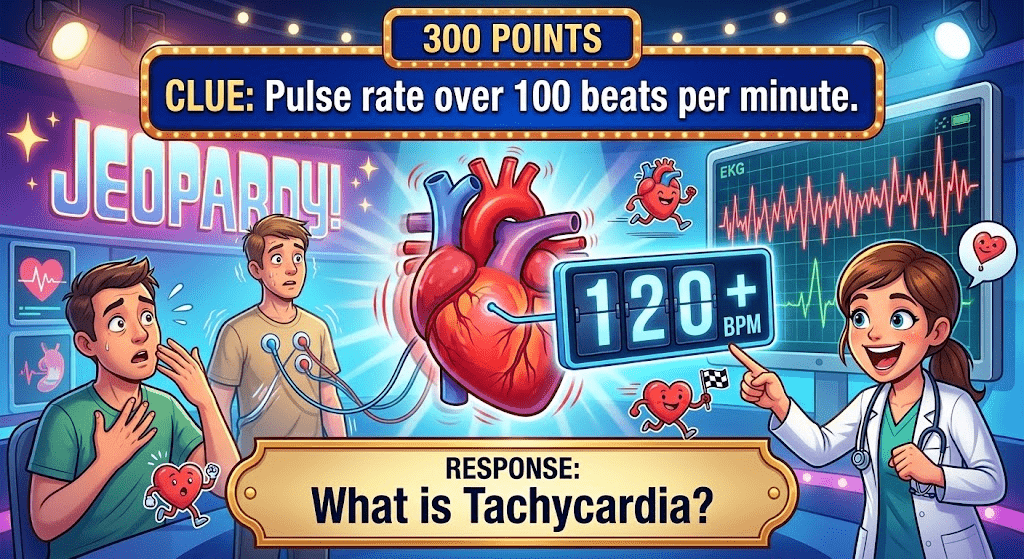
This medical term describes a pulse rate that is over 100 beats per minute.
What is Tachycardia?
300
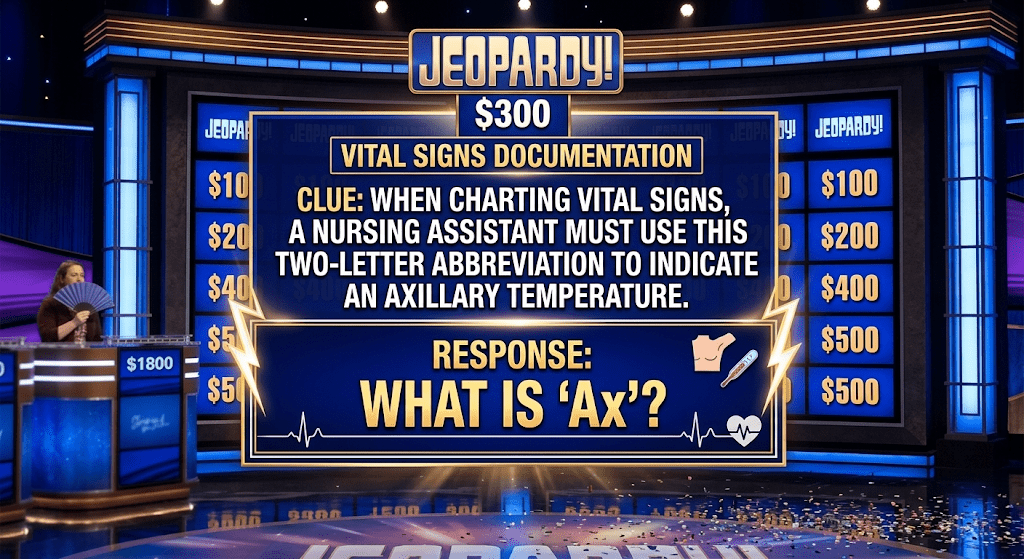
When recording vital signs, a Nursing Assistant must use this two-letter abbreviation to indicate an axillary temperature.
What is "Ax"?
300
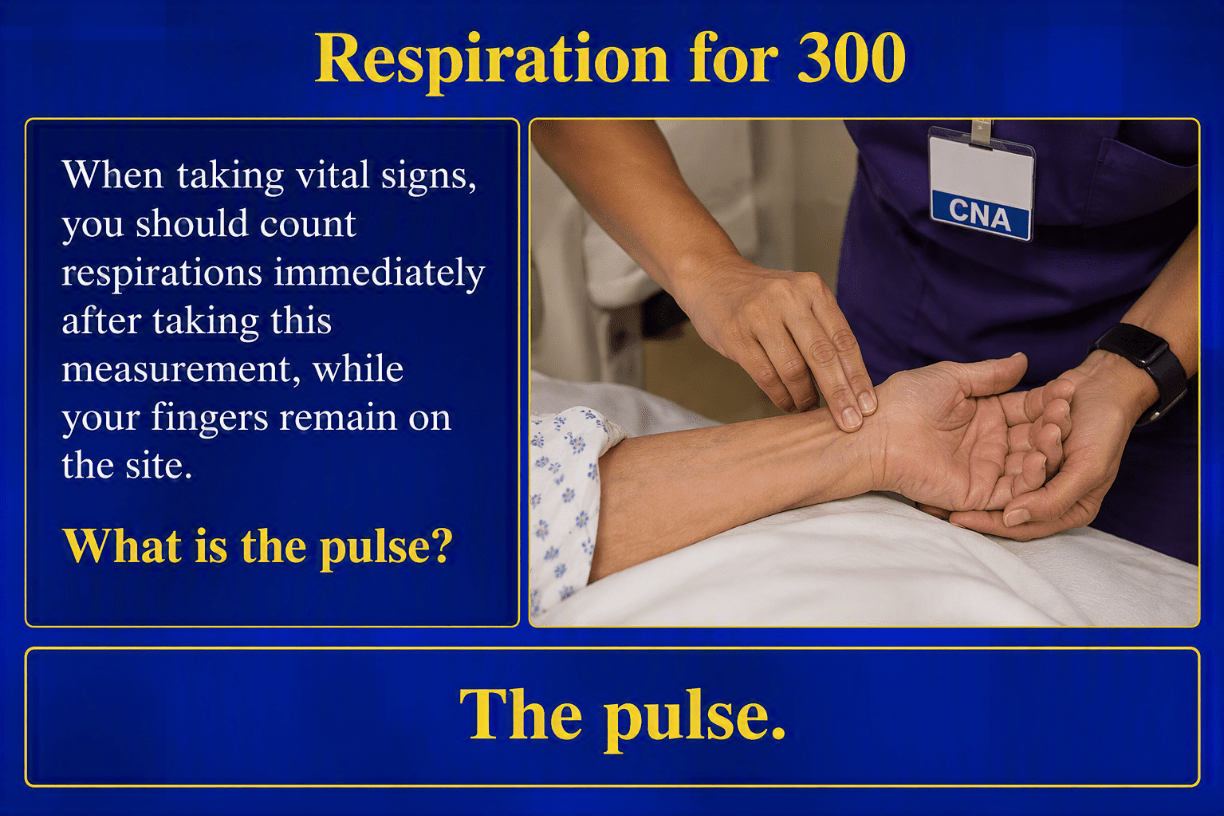
You should count respirations immediately after taking this measurement, while your fingers remain on the site.
What is the pulse?
300
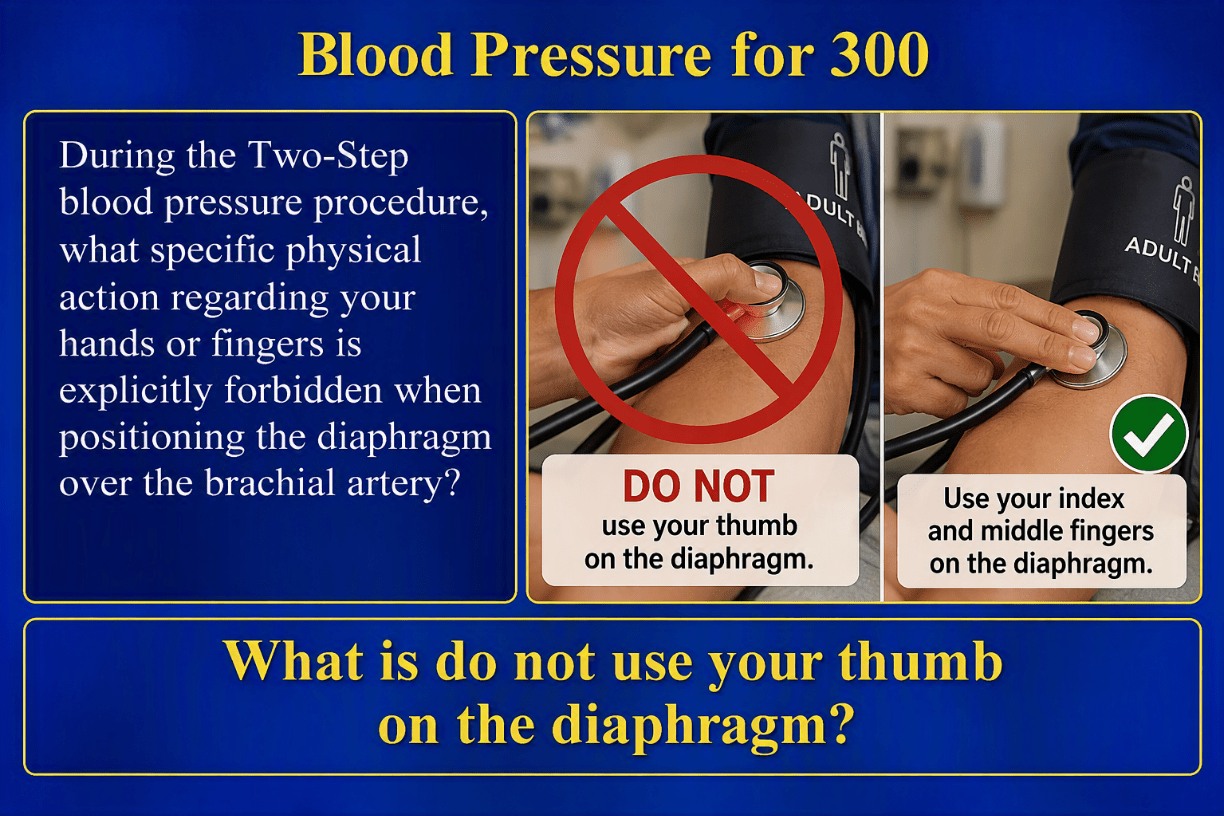
What specific physical action regarding your hands or fingers is les acurate when positioning the diaphragm over the brachial artery?
What is do not use your thumb on the diaphragm.
300
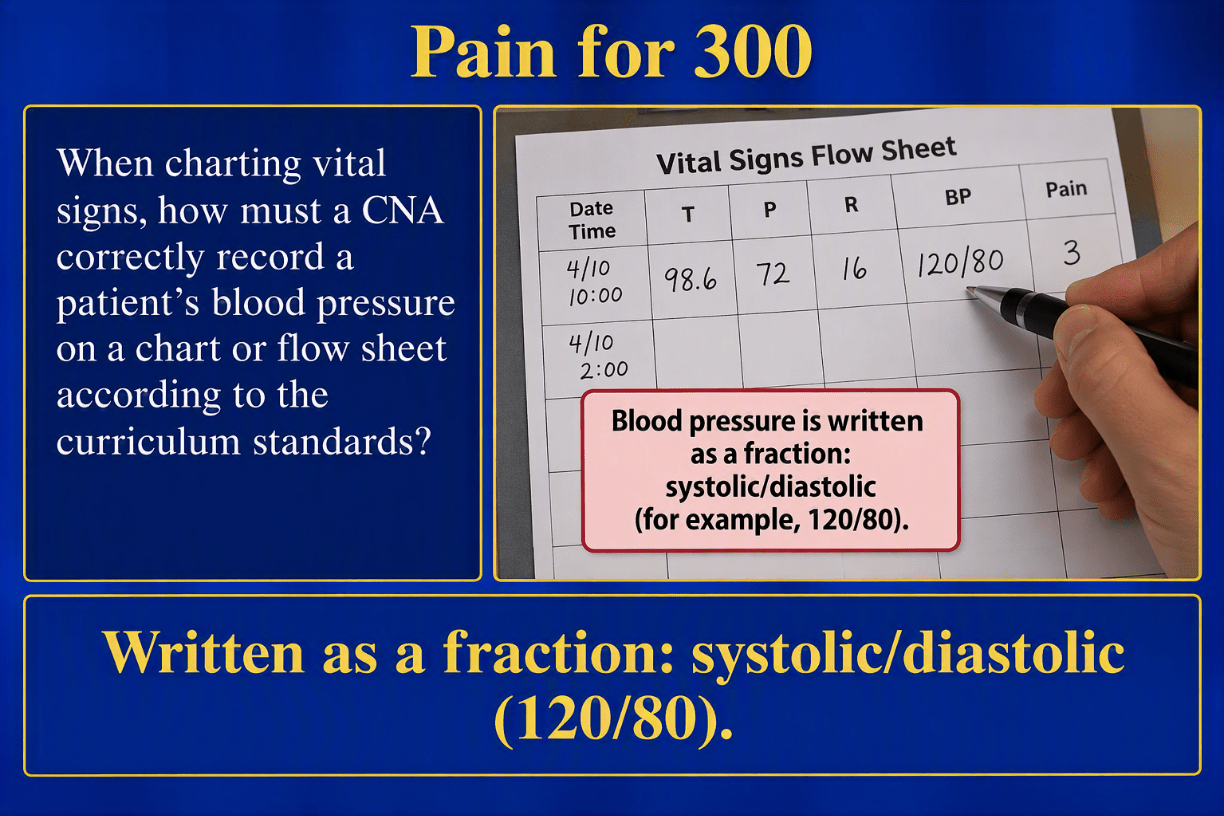
How must a CNA correctly record a patient's blood pressure on a chart or flow sheet according to the curriculum standards?
What is written as a fraction: systolic/diastolic (120/80).
400
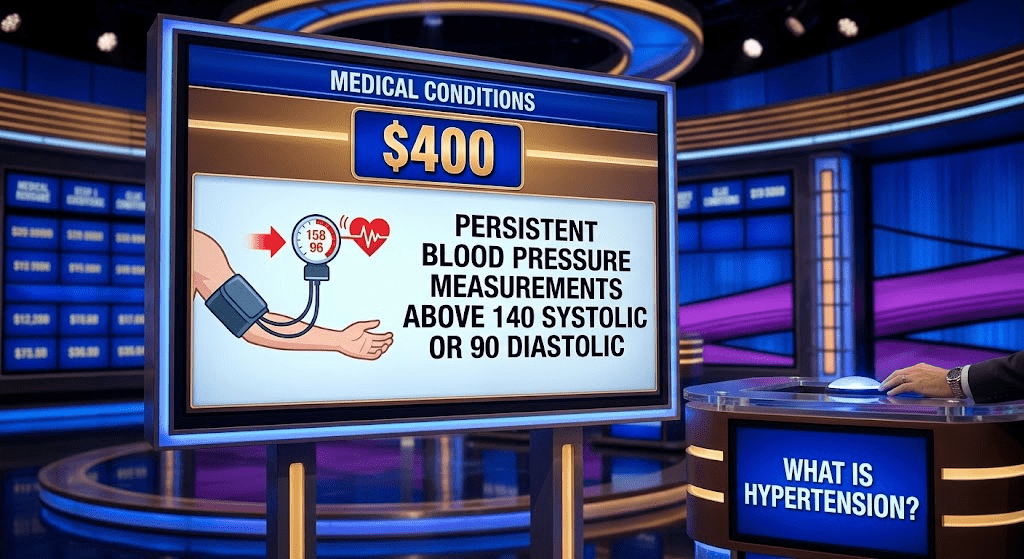
This condition is defined by persistent blood pressure measurements above 140 systolic or 90 diastolic.
What is Hypertension?
400
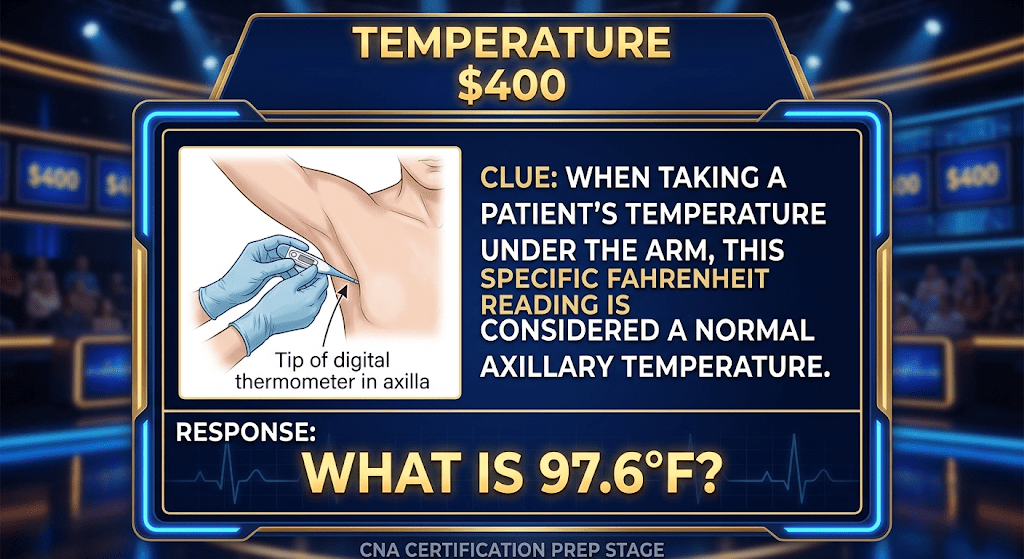
When taking a patient's temperature under the arm, this specific Fahrenheit reading is considered a normal axillary temperature.
What is 97.6°F?
400
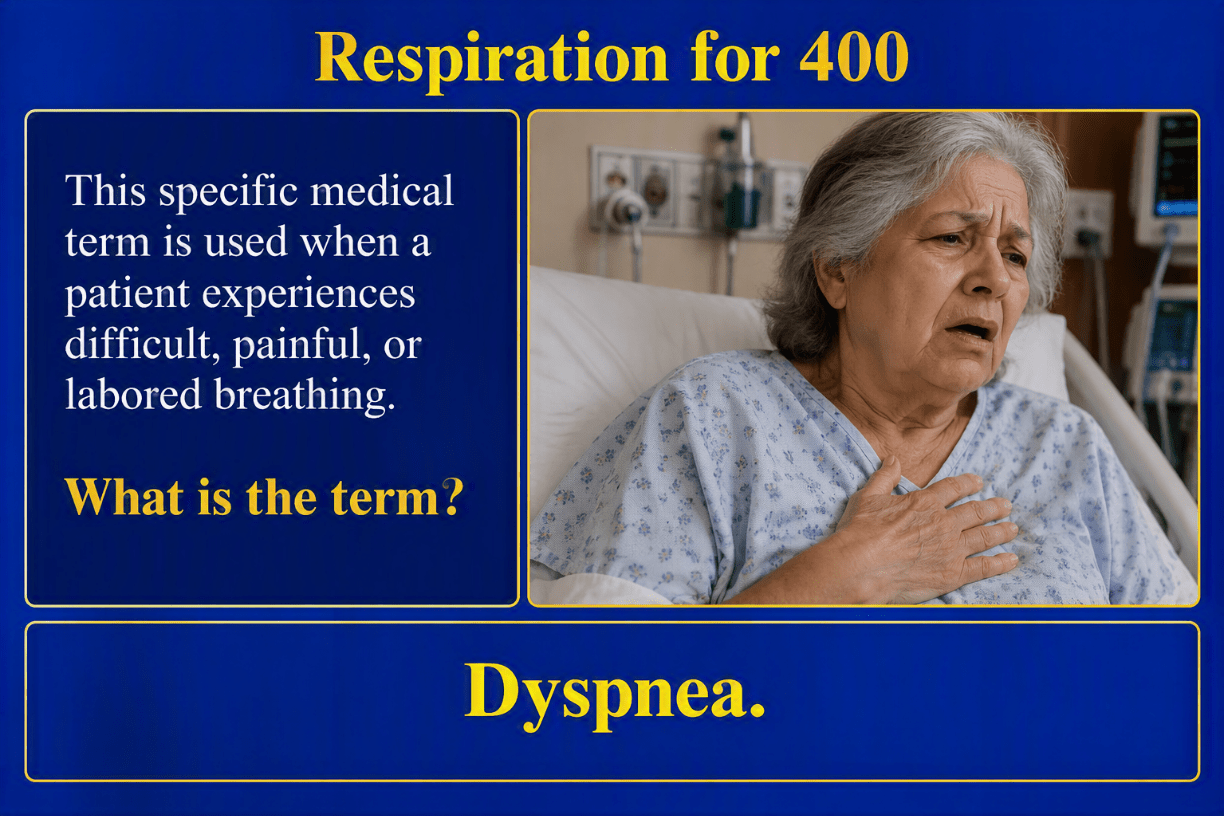
This specific medical term is used when a patient experiences difficult, painful, or labored breathing.
What is Dyspnea.
400
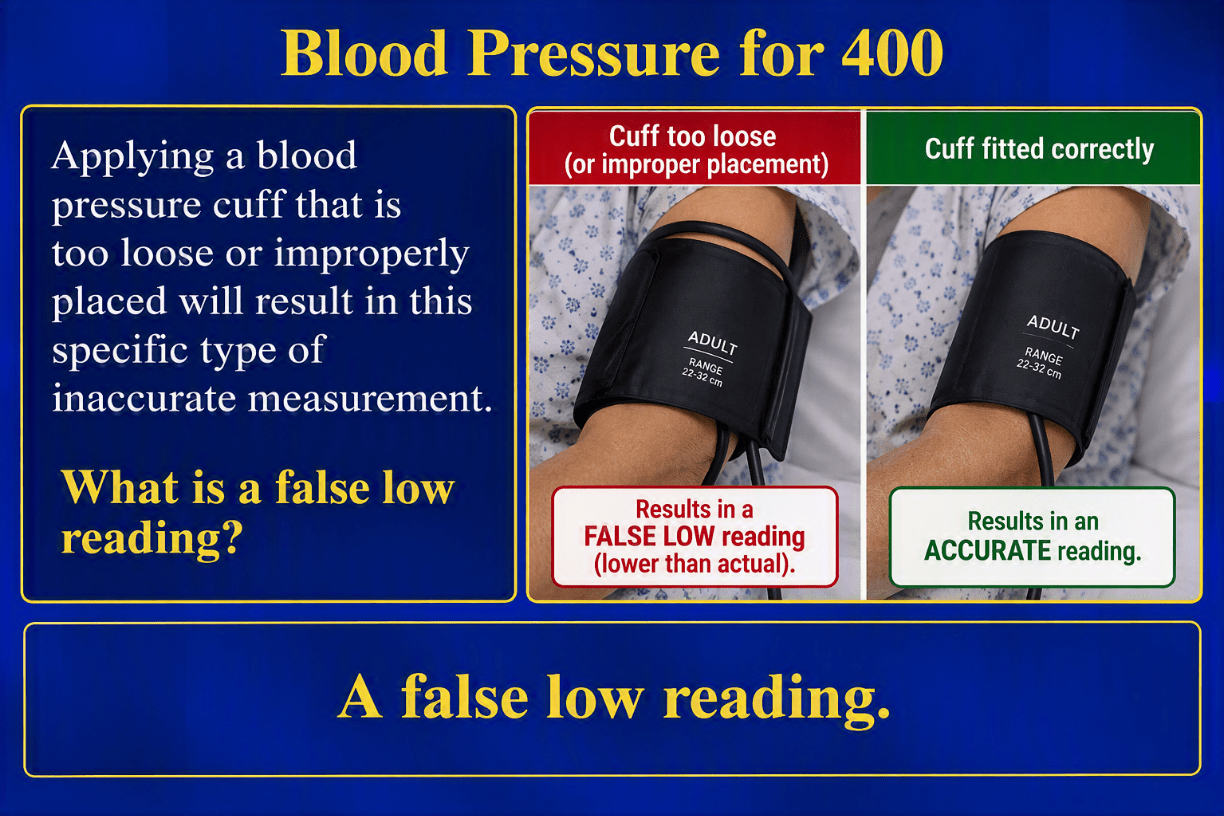
Applying a blood pressure cuff that is too loose or improperly placed will result in what type of measurement?
What is a false reading/inaccurate reading?
400
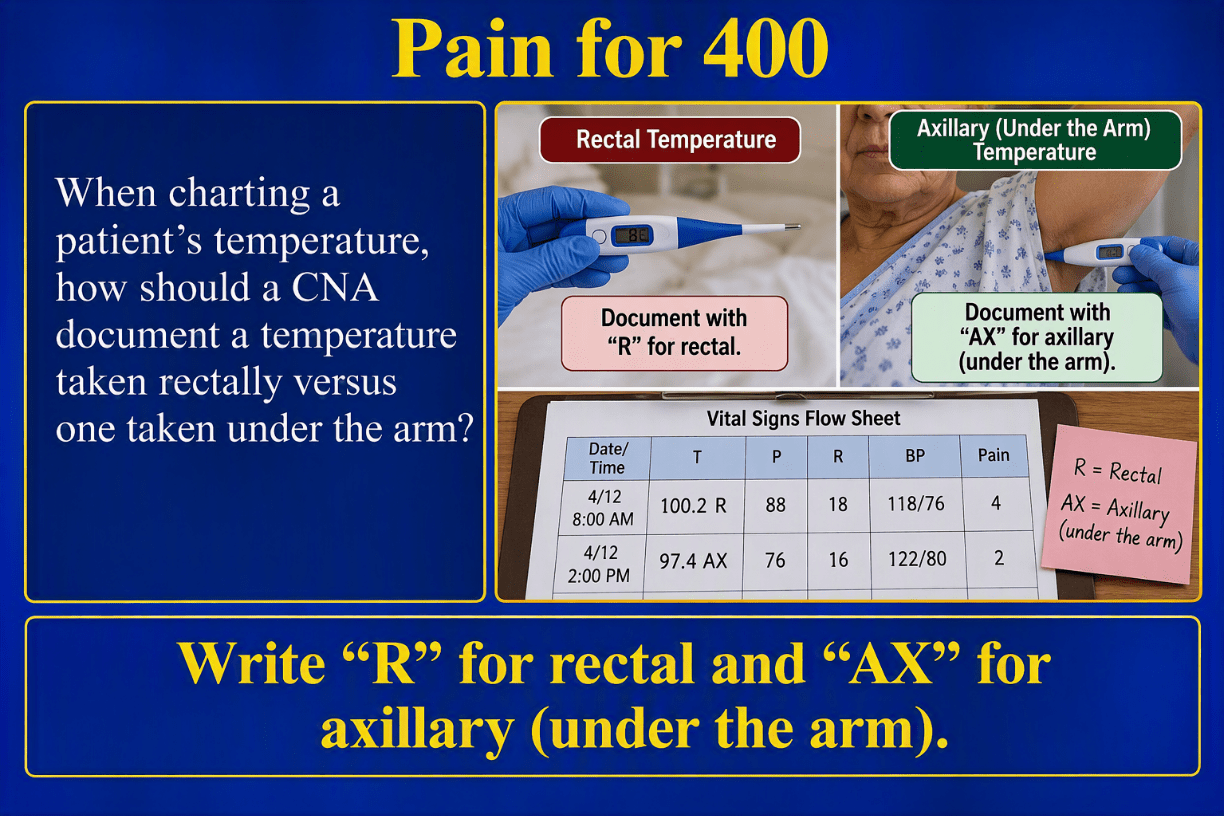
When documenting a patient's temperature, how should a CNA record a temperature taken rectally versus one taken under the arm?
What is write "R" for rectal and "AX" for axillary/under the arm
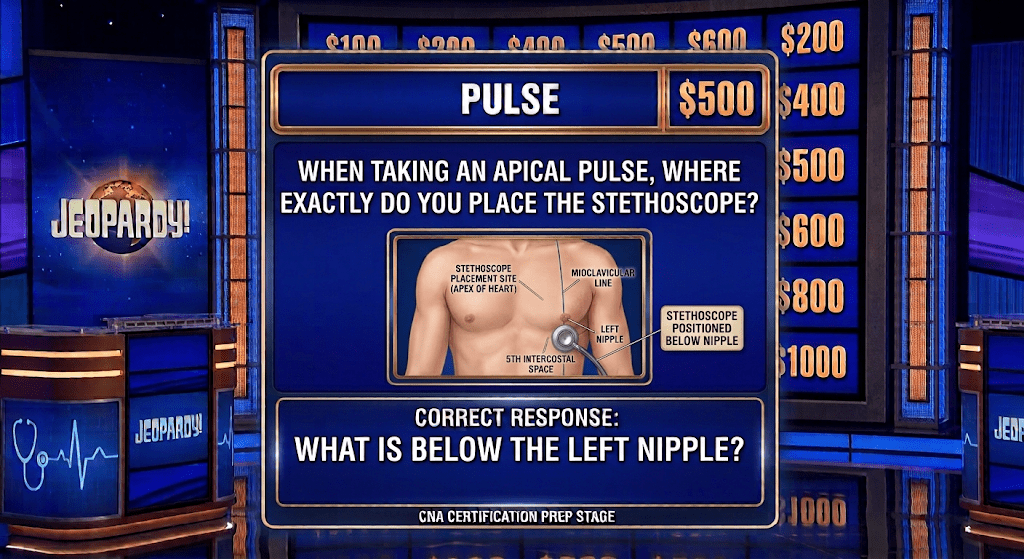
500
When taking an apical pulse, where exactly do you place the stethoscope?
What is below the left nipple.
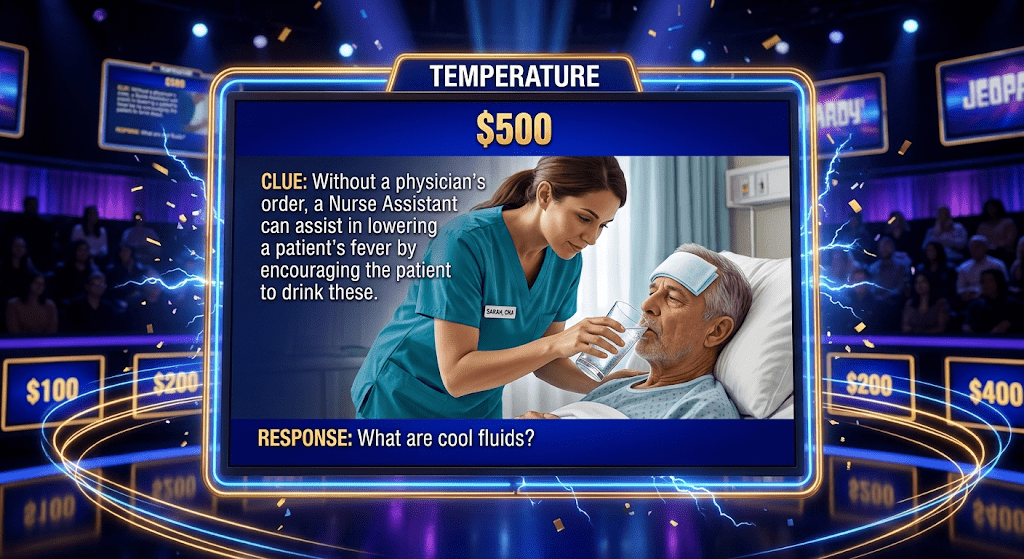
500
Without a physician's order, a Nurse Assistant can assist in lowering a patient's fever by encouraging the patient to drink these.
What are cool fluids?
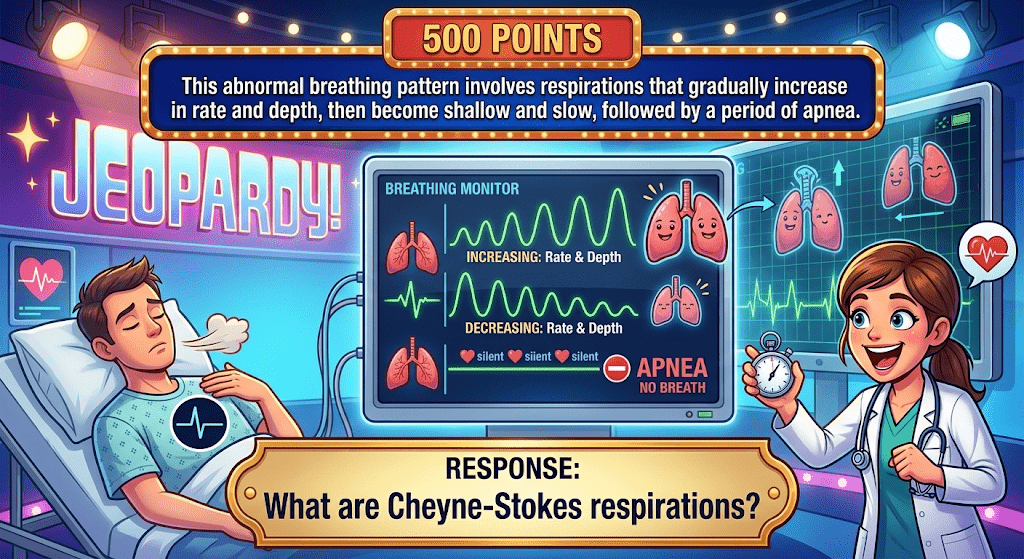
500
This abnormal breathing pattern involves respirations that gradually increase in rate and depth, then become shallow and slow, followed by a period of apnea.
What are Cheyne-Stokes respirations?
500
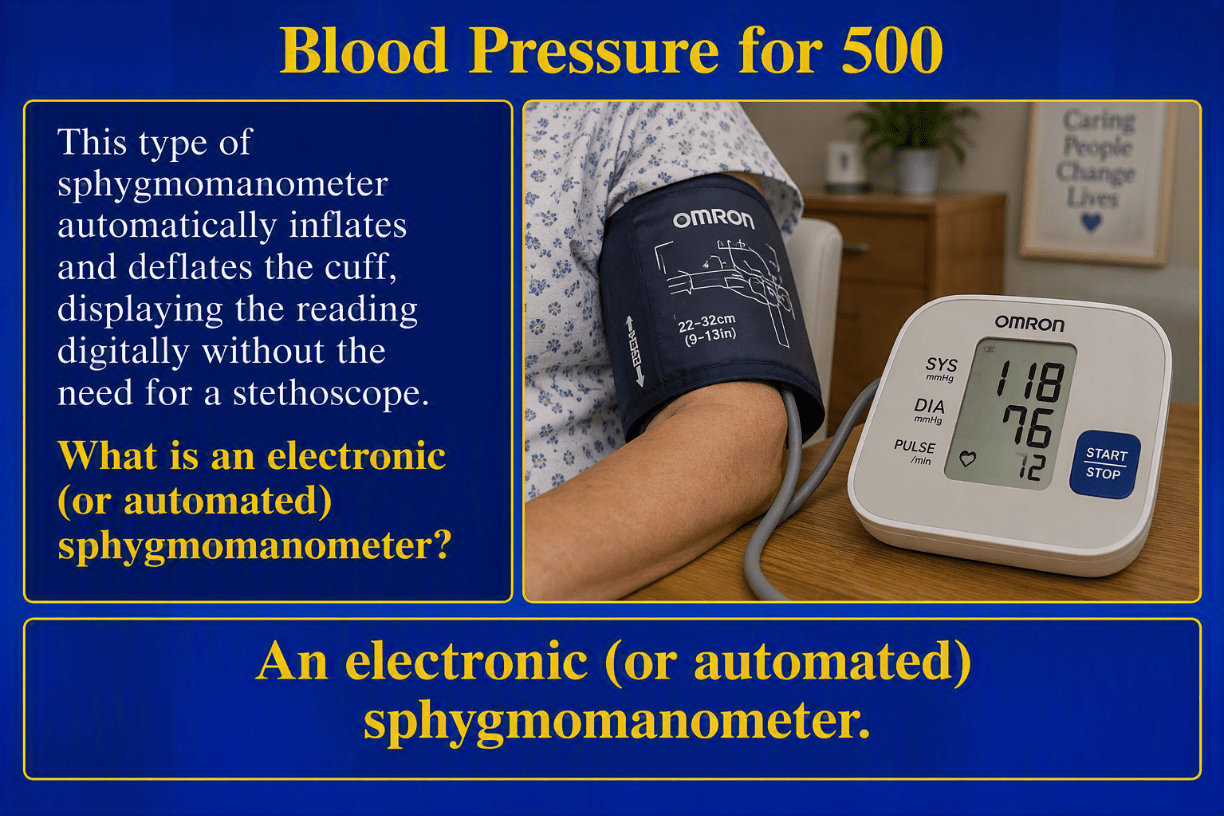
This type of sphygmomanometer automatically inflates and deflates the cuff, displaying the reading digitally without the need for a stethoscope.
What is an electronic (or automated) sphygmomanometer?
500
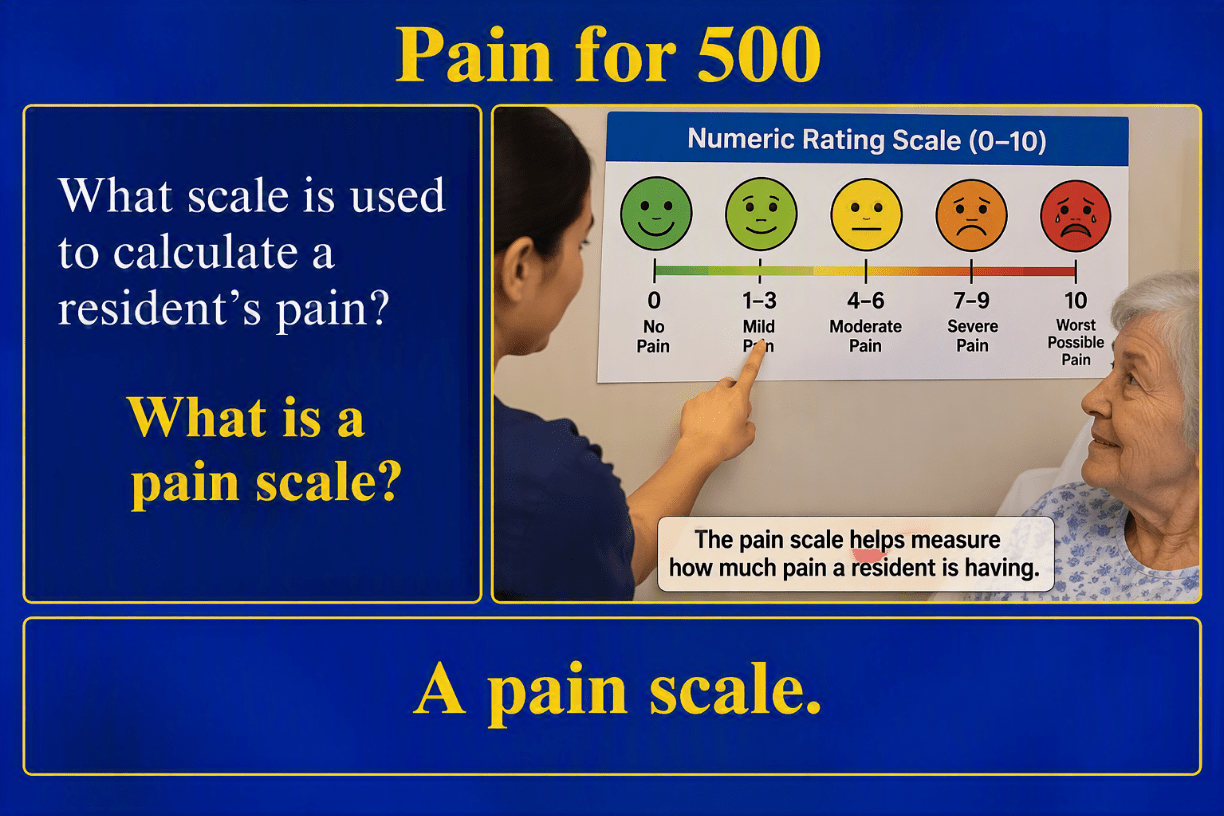
What scale is used to calculate a resident's pain?
What is pain scale.