Wave Vocab
Parts of a Wave #1
Parts of a Wave #2
Wave Interactions
Wave Relationships #1
Wave Relationships #2
100
The highness or lowness of a sound
Pitch
100
The highest part of a wave
crest
100
Which letter represents the trough?
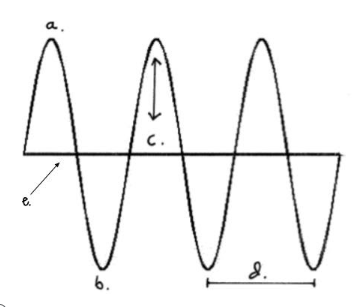
B
100
To bounce off
reflect
100
If the amplitude of a wave decreases, what happens to the energy of the wave?
Energy decreases
100
Which wave has a higher frequency?
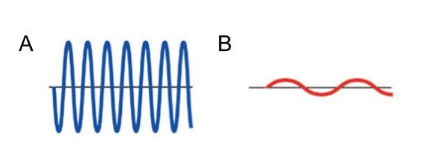
A
200
The softness or loudness of a sound
Volume
200
The lowest part of a wave
trough
200
Which letter represents the amplitude?
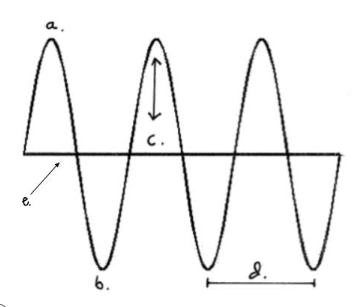
C
200
To pass through
transmit
200
What is the effect when more force is applied to a sound source?
The volume increases
200
Which wave has a longer wavelength?
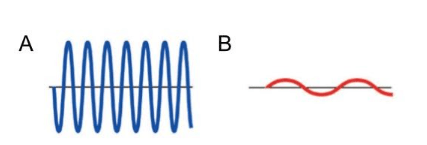
B
300
The material a wave travels through
Medium
300
The height of a wave (from line of origin to crest or line of origin to trough)
amplitude
300
Which letter represents the crest?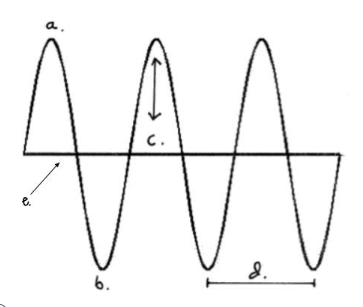
A
300
To take in
absorb
300
Which wave has more energy?
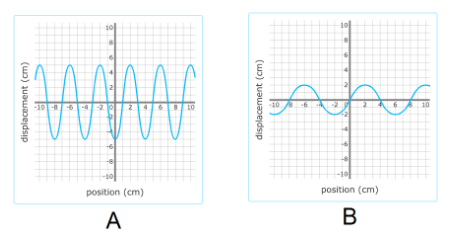
Wave A
300
If the wavelength of a wave increases, what happens to frequency?
Frequency decreases
400
Movement back and forth past it's starting position
Vibration
400
The distance between two waves (from crest to crest or trough to trough)
wavelength
400
Which letter represents the line of origin?
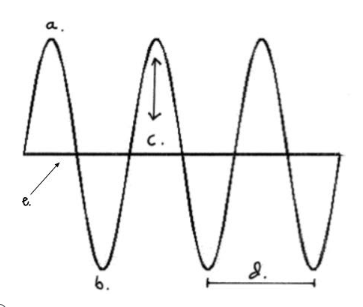
E
400
To bend
refract
400
What creates a low pitch sound?
A long object or increased length
400
When the distance increases, what happens to the volume?
Volume decreases
500
The number of wave cycles that pass a given point per unit of time (one second)
Frequency
500
The middle of a wave where the wave is at rest
line of origin
500
Which letter represents the wavelength?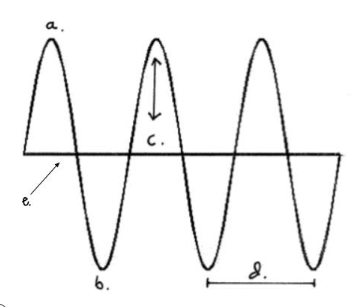
D
500
The name of a sound when it reflects
An echo
500
If the amplitude of a wave increases, how does it affect the frequency of the wave?
No effect
500
When the frequency is increased, what happens to the sound?
The pitch is increased. There is a high pitch.