Factual Questions
Cause & Effect Questions
"Why Does This Matter?" Questions
Comparison Questions
Image-Based Question
100
Who was the first scientist to mathematically prove the heliocentric theory?
Answer: Nicolaus Copernicus.
100
How did the invention of the telescope affect the relationship between scientists and the Catholic Church?
Answer: It provided physical evidence that contradicted Church doctrine, leading to conflict and the trial of scientists like Galileo.
100
Why does the development of the "Scientific Method" matter for modern society?
Answer: It established a standard for using observation and experimentation to find truth, rather than relying on tradition or faith.
100
How did the goals of "New Imperialism" in the 1800s differ from the "Age of Discovery" in the 1500s?
Answer: The 1800s focused on raw materials for factories and strategic military bases, whereas the 1500s focused on gold, spices, and spreading religion.
100
If you were looking at a map of European Alliances in 1914, which three major countries would you see labeled as the Triple Entente?
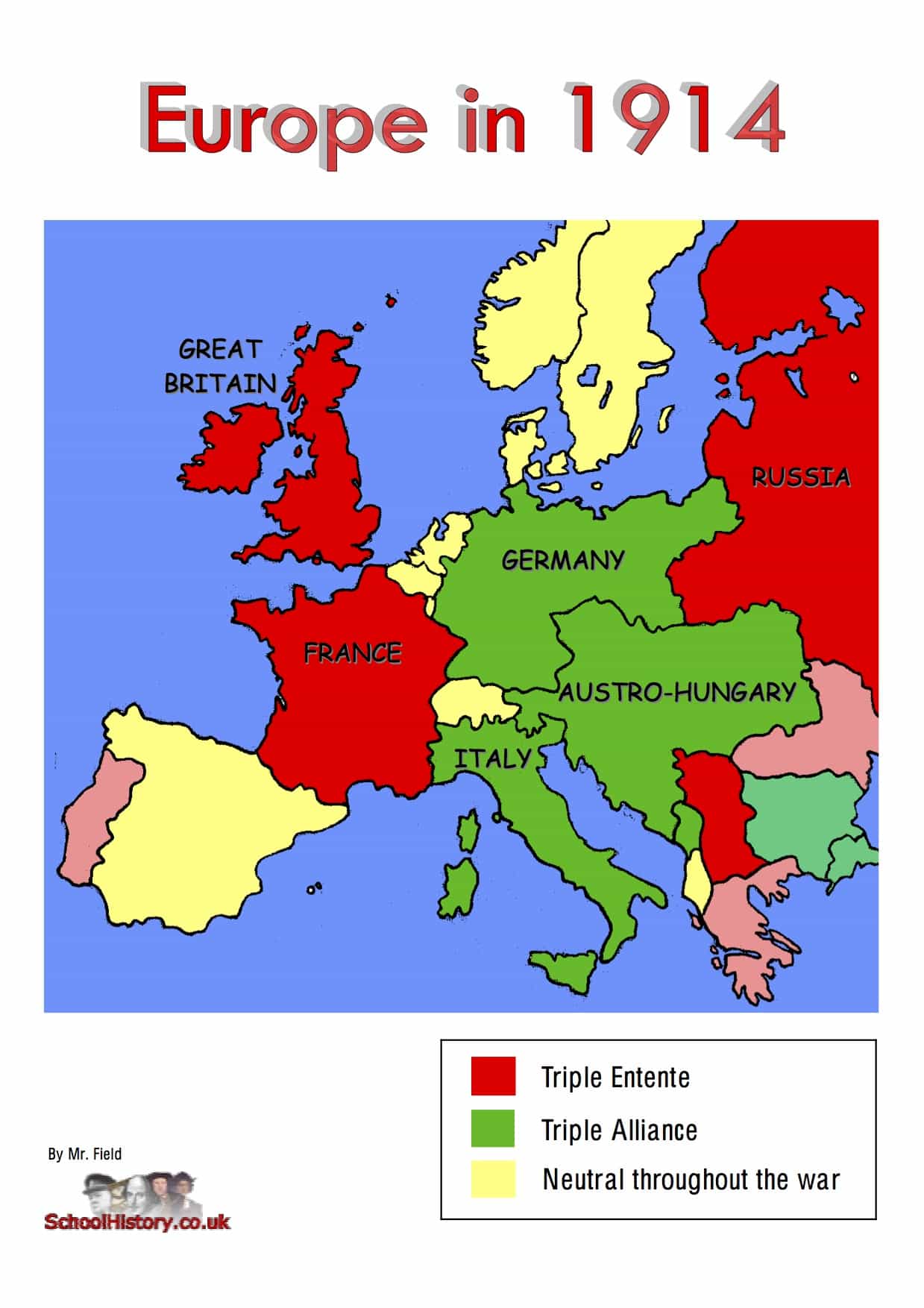
Answer: Great Britain, France, and Russia.
200
Who developed the theory of separation of powers to prevent any one part of government from becoming too powerful?
Answer: Montesquieu
200
How did the Scientific Revolution directly cause the Enlightenment?
Answer: The Scientific Revolution used reason to explain the physical world; Enlightenment thinkers then applied that same logic and reason to solve problems in human society and government.
200
Why does John Locke's theory of "Natural Rights" (Life, Liberty, Property) matter to modern democratic governments?
Answer: It established the idea that governments exist to serve the people, and if they fail to protect these rights, the people have a right to overthrow them.
200
How did the view of the individual change between the Middle Ages and the Enlightenment?
Answer: In the Middle Ages, individuals were often seen as subjects of a king or the Church; the Enlightenment viewed them as rational beings capable of self-government and progress.
200
In a diagram showing the Heliocentric model, what object would you see at the very center?
Answer: The Sun.
300
What was the "Spark" that immediately triggered the start of World War I?
Answer: The assassination of Archduke Franz Ferdinand.
300
What was a major cause of Japanese expansionism in the 1930s?
Japan lacked natural resources (like oil and rubber) to support its rapid industrialization, which led it to invade neighboring territories like China and Korea.
300
Why does the concept of "Appeasement" matter when studying the lead-up to World War II?
Answer: It demonstrated that allowing aggressive nations to take territory without consequences often leads to larger, more violent conflicts later.
300
Compare the main goal of "Enlightened Despots" to the goals of "Absolute Monarchs."
Answer: Both wanted to keep their total power, but Enlightened Despots (like Catherine the Great) tried to use that power to modernize their countries and improve the lives of subjects through reform.
300
In the Scientific Revolution diagrams, which tool is most frequently pictured as the "symbol" of new astronomical discoveries?
Answer: The telescope.
400
Where was the Treaty of Versailles signed, officially ending the state of war between Germany and the Allied Powers?
Answer: The Palace of Versailles in France.
400
What was a primary cause of the Scientific Revolution, and what was one major effect it had on European society?
Cause: The Renaissance encouraged curiosity and the questioning of traditional authorities; Effect: It led to the Enlightenment and a shift toward using reason and evidence to solve social and political problems.
400
Why does the failure of the League of Nations matter for understanding global politics today?
Answer: It showed that international organizations are ineffective if they lack the military power or participation from major nations to enforce their rules.
400
Compare the political focus of the Enlightenment to the political focus of the French Revolution.
Answer: The Enlightenment was about the ideas of rights and liberty, while the French Revolution was the violent action taken to put those ideas into practice.
400
Look at your "Causes of WWII" map/diagram. What is the very first event listed that shows a country physically invading another?
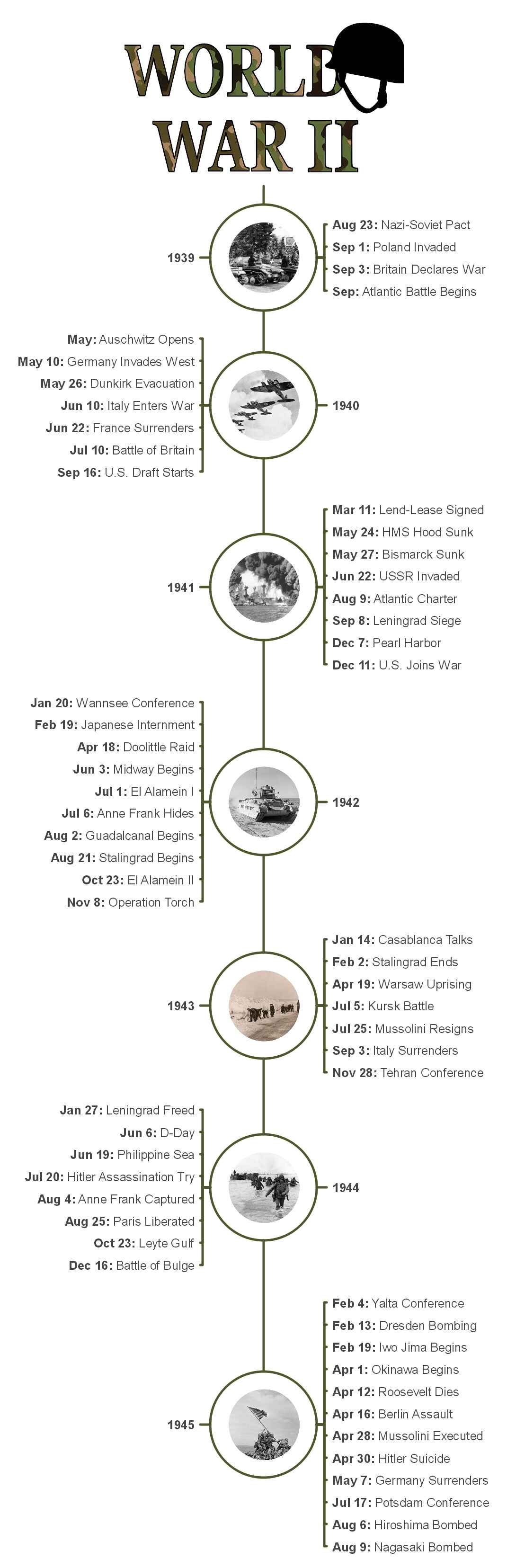
Answer: The German invasion of Poland (1939)
500
Where did the Industrial Revolution begin before spreading to the rest of the world?
Answer: Great Britain.
500
What was the primary economic effect of the Treaty of Versailles on 1920s Germany?
Answer: It led to massive reparations payments which caused hyperinflation and economic collapse.
500
Why does the invention of the printing press matter for the spread of the Scientific Revolution and the Enlightenment?
It allowed new scientific discoveries and radical political ideas to be mass-produced and shared quickly across Europe, making it impossible for the Church or monarchs to fully suppress "dangerous" new information.
500
Compare how a Totalitarian leader and a Democratic leader would likely respond to a major economic crisis like the Great Depression.
A Totalitarian leader would likely seize absolute control, use propaganda to blame "enemies," and expand the military to create jobs; a Democratic leader would typically focus on government-funded social programs, economic reforms, and seeking public consensus through elections.
500
Look at the "Causes of WWII" mind map: Which specific 1930s economic event is linked to the rise of totalitarian leaders?

Answer: The Great Depression.