Origins & Founders
Sacred Texts & Places
Core Beliefs & Practices
Symbols & Traditions
Global Reach & Influence
100
Founded in 1st-century Judea, this religion grew out of Judaism following the life and teachings of Jesus of Nazareth.
Christianity
100
The holy book of Islam, believed by Muslims to be the verbatim word of God as revealed to Muhammad through the angel Gabriel.
Quran (or Koran)
100
DOUBLE JEOPARDY
Name the Five Pillars of Islam
Declaration of Faith (Shahada)
Daily Prayer (Salah)
Almsgiving (Zakat)
Fasting during Ramadan (Sawm)
Pilgrimage to Mecca (Hajj)
100
This six-pointed star, named after an ancient Israelite king, is the universally recognized symbol of Judaism and modern Israel.
Star of David (or Magen David)
100
With over 2.4 billion followers spread across every continent, this is currently the largest world religion by population.
Christianity
200
Born as Prince Siddhartha Gautama in ancient India, he gave up his royal life to seek enlightenment and became known as the "Awakened One."
The Buddha
200
The Christian Bible is split into two main sections: this first section contains the Hebrew Scriptures, while the second tells the story of Jesus and the early Church.
Old Testament & New Testament
200
In both Hinduism and Buddhism, this concept refers to the total sum of a person's actions (good or bad) in this life, which determines their fate in future lives.
Karma
200
Often depicted on flags and mosques, this dual symbol became associated with Islam during the Ottoman Empire.
Crescent & Star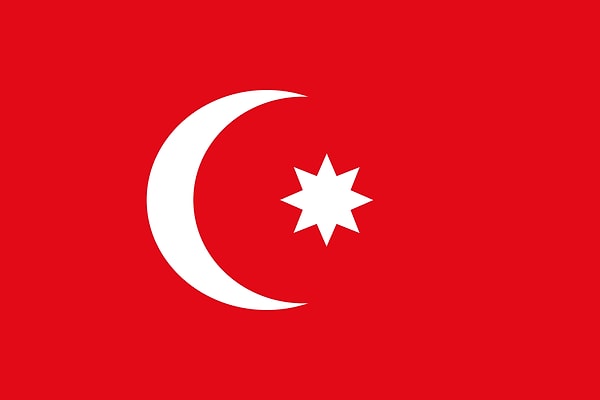
200
Over 80% of the world's Hindu population lives in this South Asian nation, where the religion originated.
India
300
This religion, founded in Mecca during the 7th century CE, considers Muhammad to be the final prophet in a line that includes Abraham and Moses.
Islam
300
The first five books of the Hebrew Bible, which outline the laws and foundational history of Judaism, are known by this name.
The Torah
300
Central to Buddhist teachings, these four statements explain that suffering exists, is caused by desire, can be ended, and that the path to ending it is the Eightfold Path.
Four Noble Truths
300
In Hinduism, this sacred symbol and sound represents the universe and the ultimate reality (Brahman), often chanted during prayer or meditation.
Om (or Aum)
300
Although Buddhism was founded in India, it spread extensively along this ancient trade route, becoming dominant in East and Southeast Asian countries like China, Japan, and Thailand.
Silk Road
400
Unlike the other major world religions, this tradition has no single founder, single holy book, or specific point of origin, tracing back to the Vedic period of ancient India.
Hinduism
400
Ancient sacred Sanskrit texts of Hinduism that contain hymns, philosophy, and rituals; the Upanishads and Bhagavad Gita are derived from these traditions.
The Vedas
400
DOUBLE JEOPARDY
While Christians view God through the concept of the Trinity (Father, Son, Holy Spirit), Hinduism envisions one ultimate reality expressed through many gods—a concept known as this.
Brahman
400
In Buddhism, this eight-spoked wheel symbolizes the Eightfold Path toward achieving enlightenment and liberation from the cycle of rebirth.
Dharma Wheel

400
DOUBLE JEOPARDY
The historical displacement and scattering of the Jewish people away from their ancestral homeland to other regions around the world is referred to by this term.
Diaspora
500
Tradition traces the roots of this monotheistic religion back over 4,000 years to a covenant made between God and Abraham in the Fertile Crescent.
Judaism
500
DOUBLE JEOPARDY
This city is uniquely sacred to three Abrahamic faiths: Judaism (Site of the Western Wall), Christianity (Site of the Church of the Holy Sepulchre), and Islam (Site of the Al-Aqsa Mosque).
Jerusalem
500
This central Christian doctrine states that Jesus died on the cross and rose from the dead three days later, offering salvation to humanity.
Resurrection
500
Judaism, Christianity, and Islam are collectively known as the "Abrahamic Religions" because all three trace their spiritual lineage to Abraham. Name the two major religions originating in India that share a belief in reincarnation and the continuous cycle of rebirth (Samsara).
Hinduism & Buddhism
500
While Islam originated in the Arabian Peninsula, this Southeast Asian island nation actually holds the world's largest Muslim population today.
Indonesia