3.1 Density
3.2 and 3.3 Energy
3.4 and 3.5 Heat Transfer
3.6 Evaporation
Practical Skills
100
Which box is denser, A or B? Explain your choice. [2 marks]
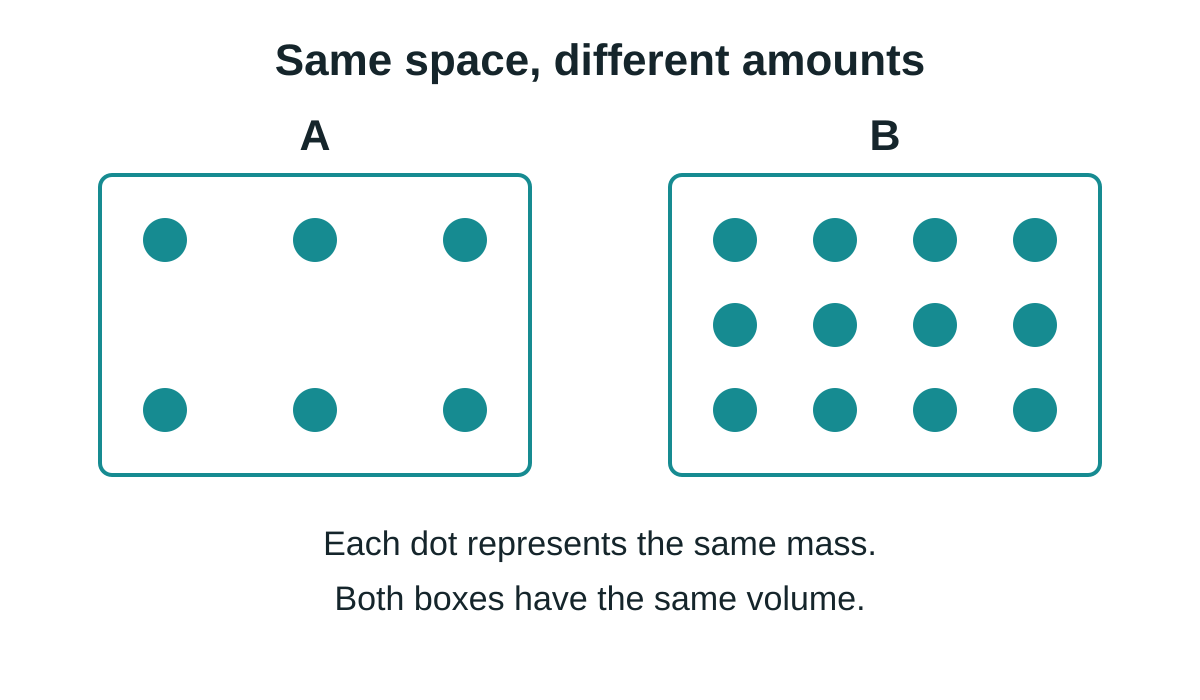
B. [1]
It has more mass in the same volume. [1]
100
Which is linked to temperature: average particle kinetic energy or total thermal energy? Which quantity also depends on the amount of material? [2 marks]
Temperature is linked to average particle kinetic energy. [1]
Total thermal energy also depends on the amount of material. [1]
100
How can energy from the Sun reach a robot in space when there is no air? [2 marks]
By radiation. [1]
Radiation does not need particles and can travel through a vacuum. [1]
100
A puddle dries up. What happens to the water? [1 mark]
It changes into water vapour, a gas. [1]
100
Which three are not units of temperature? State what each one measures. [3 marks]
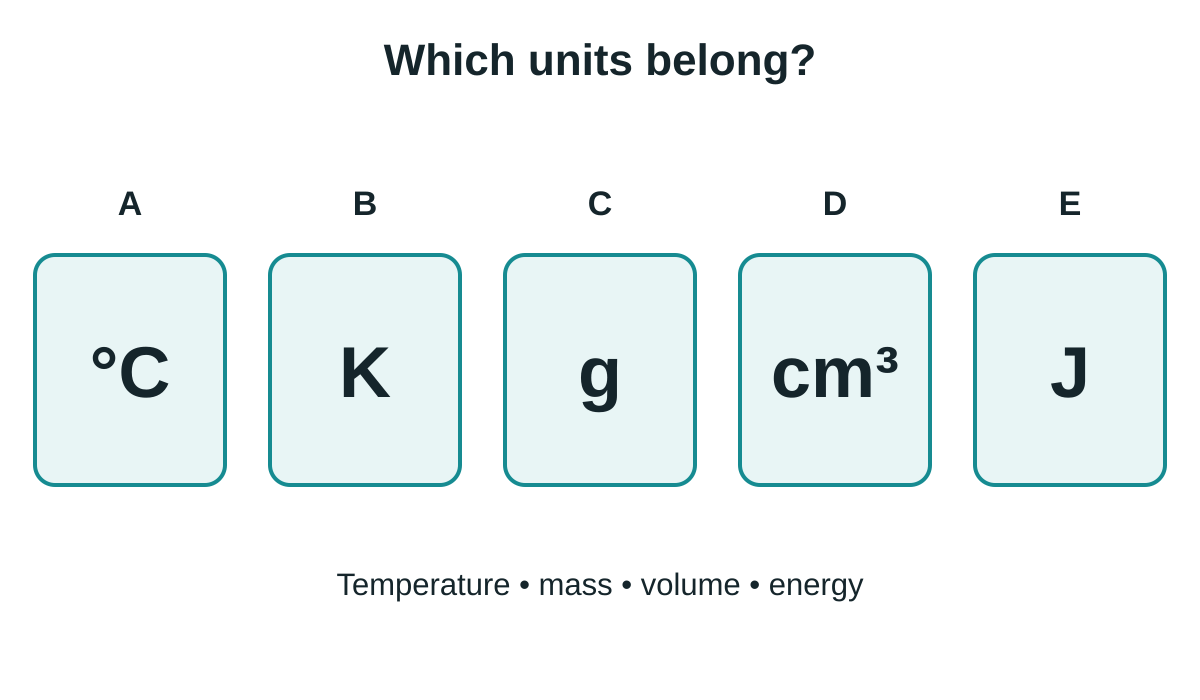
g measures mass. [1]
cm³ measures volume. [1]
J measures energy. [1]
200
A robot calculates density using 20 ÷80. The volume is 20 cm³ and the mass is 80 g. Correct its calculation and give the answer with units. [2 marks]
Density = mass ÷ volume, so use 80 ÷20. [1]
4 g/cm³. [1]
200
Does a battery create energy? Explain your answer. [2 marks]
No. It transfers energy from its chemical store. [1]
Energy cannot be created or destroyed, only transferred or transformed. [1]
200
The metal seat and cushion are both 20°C. Why does the metal feel colder to your hand? [2 marks]
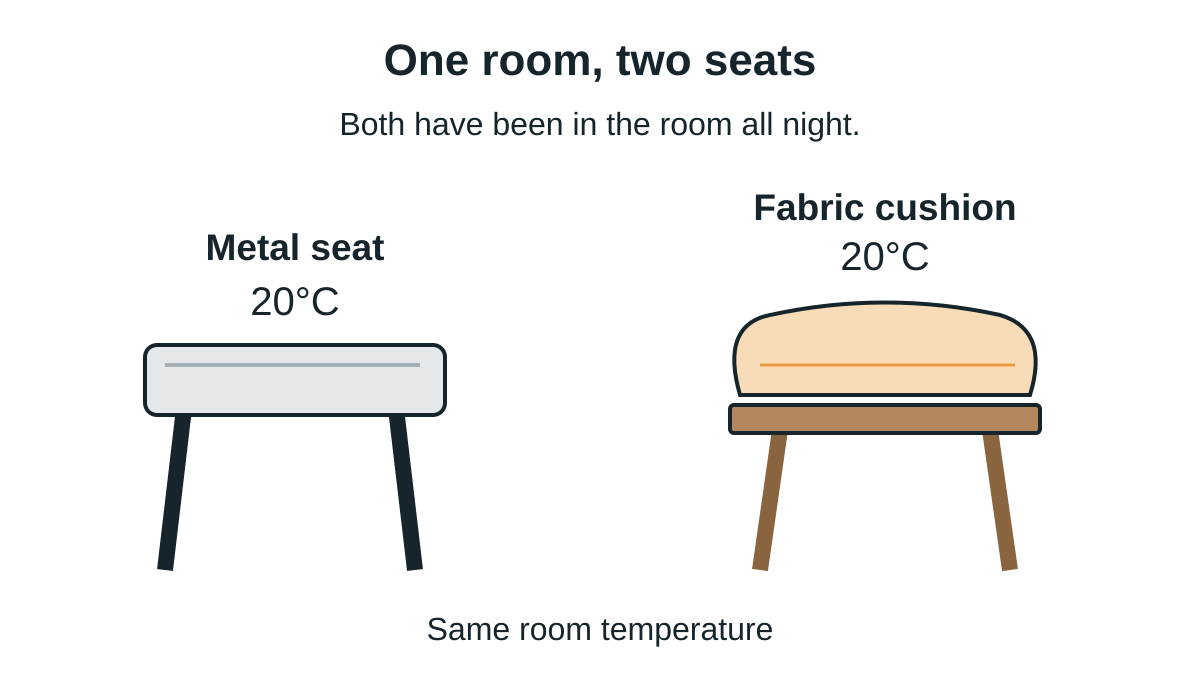
Energy transfers from your warmer hand to the seat. [1]
Metal conducts energy away faster than the cushion. [1]
200
Which surface particles are most likely to evaporate? Explain why. [2 marks]
The faster particles with more energy. [1]
They have enough energy to overcome attractions and escape. [1]
200
A cooling log reads 68, 61, 400, 49°C. A student deletes 400. What should they do instead? [2 marks]
Flag the unusual reading and keep an honest record. [1]
Check for a recording or measurement error, or repeat the reading if possible. [1]
300
Which two parcels have the same density? Show your working. [3 marks]
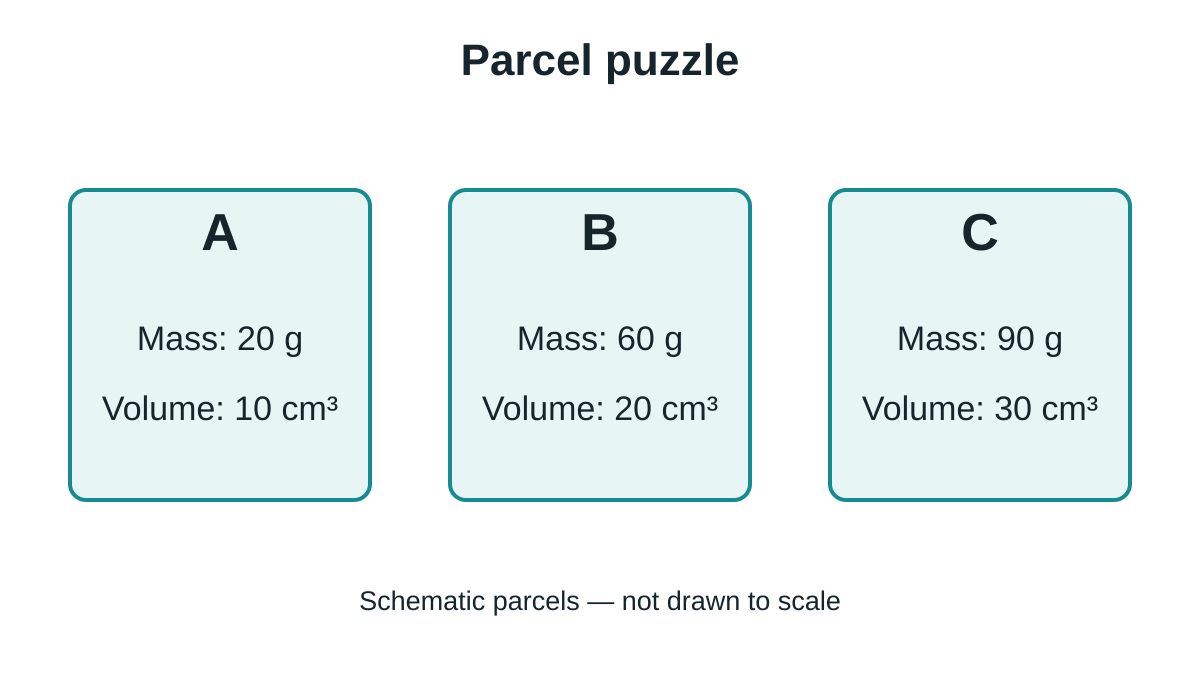
B and C. [1]
B:60 ÷20 =3 g/cm³. [1]
C:90 ÷30 =3 g/cm³. [1]
300
An electric blanket gives out warmth and an unwanted buzzing sound. Which is useful? Which is wasted? What happens to the wasted energy? [3 marks]
Warmth is useful. [1]
The unwanted sound is wasted. [1]
It transfers to the surroundings; it is not destroyed. [1]
300
Which cools faster, the matte-black can or the shiny-metal can? Explain why and name one variable to keep the same. [3 marks]
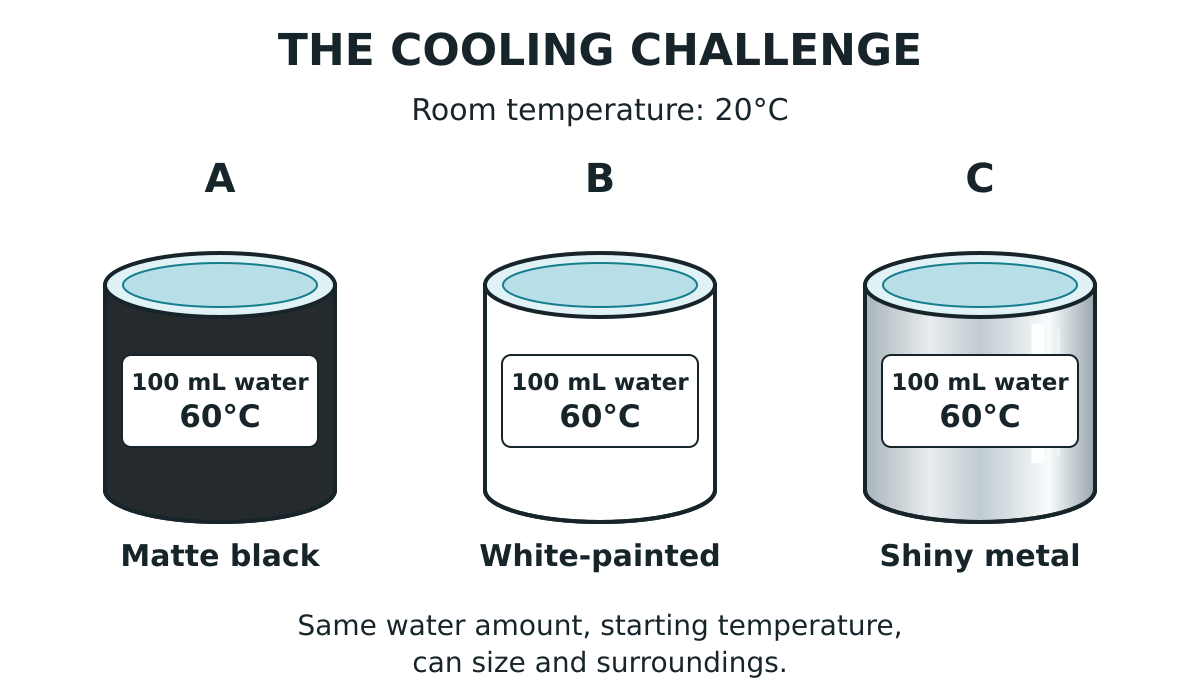
The matte-black can. [1]
It is a better emitter of infrared radiation at the same temperature. [1]
Keep the water amount, starting temperature, can dimensions, surroundings or measurement time the same. Any one. [1]
300
A student says water cannot evaporate below 100°C. Explain why this is wrong. [2 marks]
The particles have a range of energies. [1]
Some surface particles have enough energy to escape below the boiling point. [1]
300
Which thermometer is precise but inaccurate? Explain both parts of your answer. [3 marks]
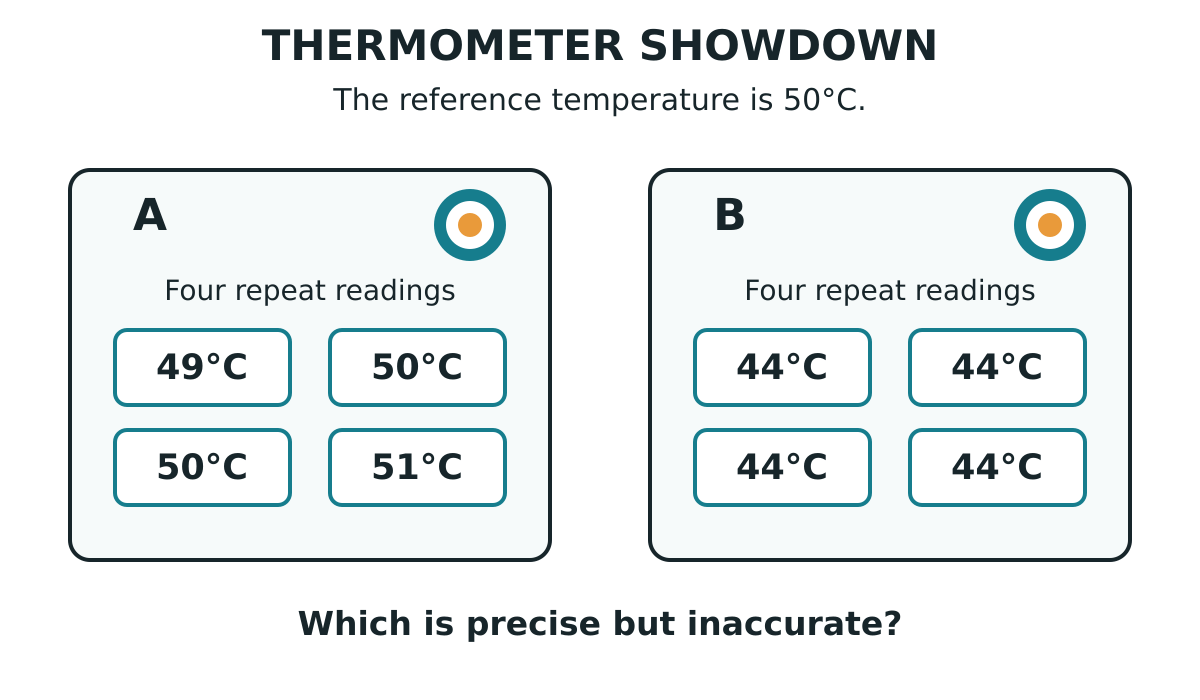
B. [1]
Its repeat readings agree closely. [1]
It reads 44°C instead of the known 50°C. [1]
400
A clay ball sinks. The same clay is made into a hollow boat and floats. Explain why. [3 marks]
The mass of clay stays the same. [1]
The boat has a larger total volume, including the air inside. [1]
Its average density is now lower than water’s. [1]
400
Check the robot’s energy budget. What is wrong? Use the numbers in your answer. [2 marks]
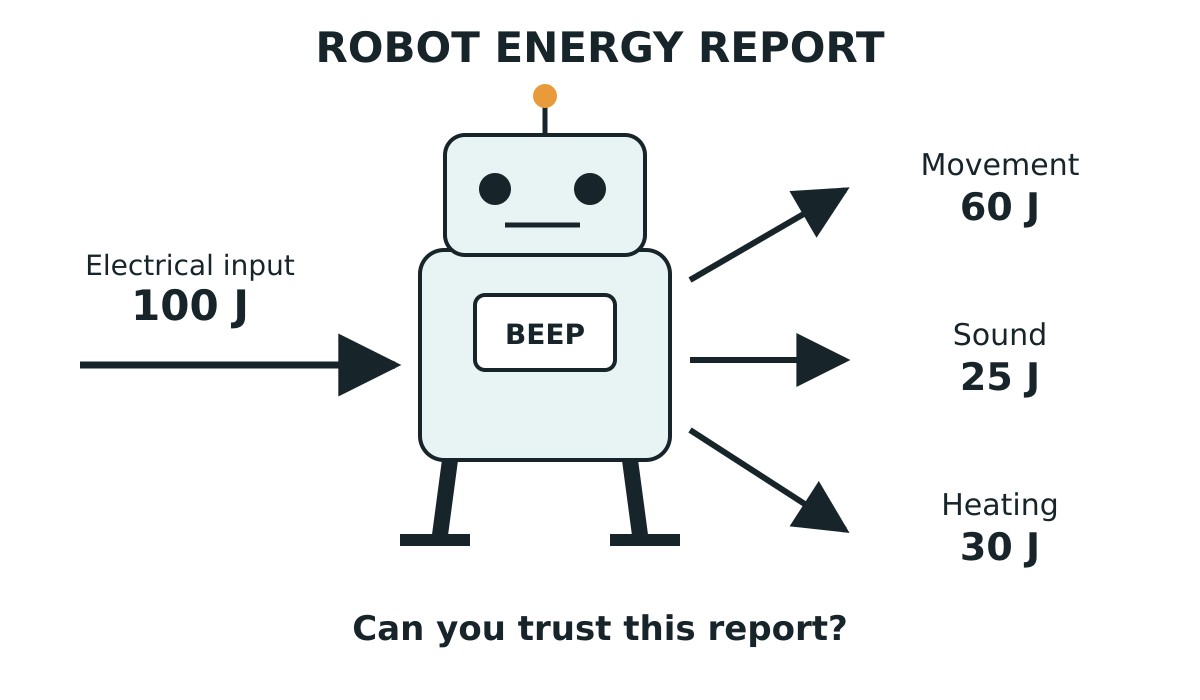
The outputs add up to 60 +25 +30 =115 J. [1]
That is 15 J more than the 100 J input, so the budget is incomplete or incorrect. [1]
400
A picnic cooler has a shiny outer cover. Explain how this helps keep the drinks cold. Consider radiation only. [2 marks]
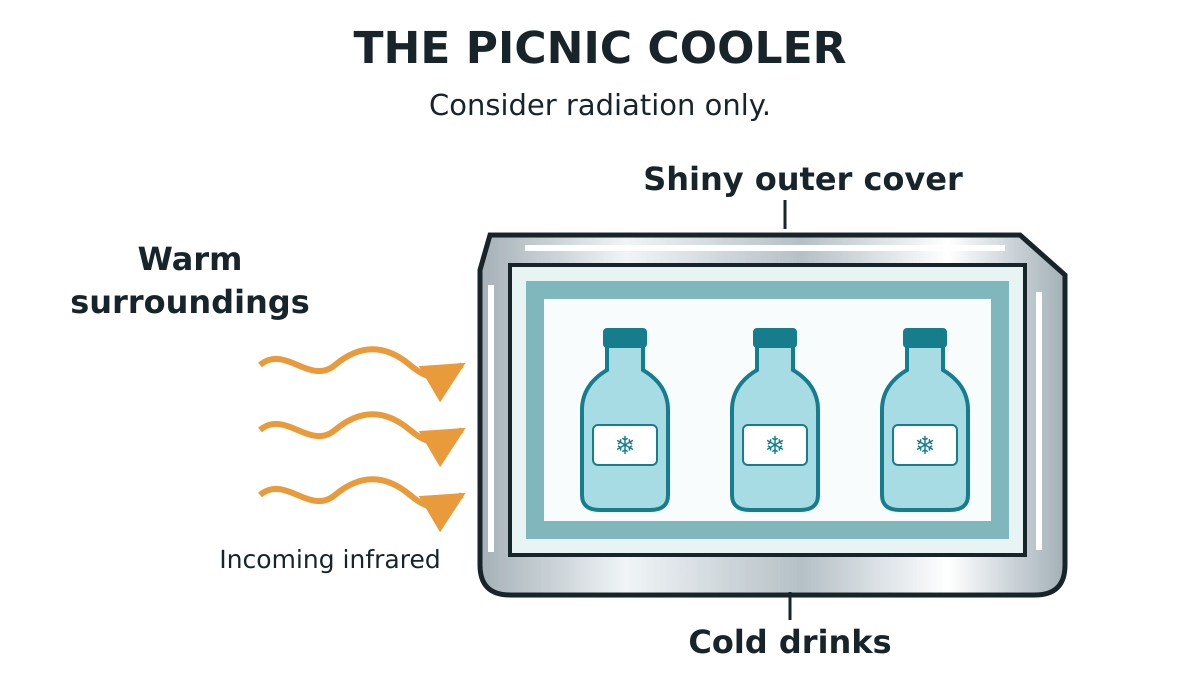
The shiny surface reflects incoming radiation and absorbs little of it. [1]
Less energy enters by radiation, so the drinks warm more slowly. [1]
400
A clay water pot has a damp outer surface. Water evaporates from the outside and the pot and water inside become cooler. Explain why. [2 marks]
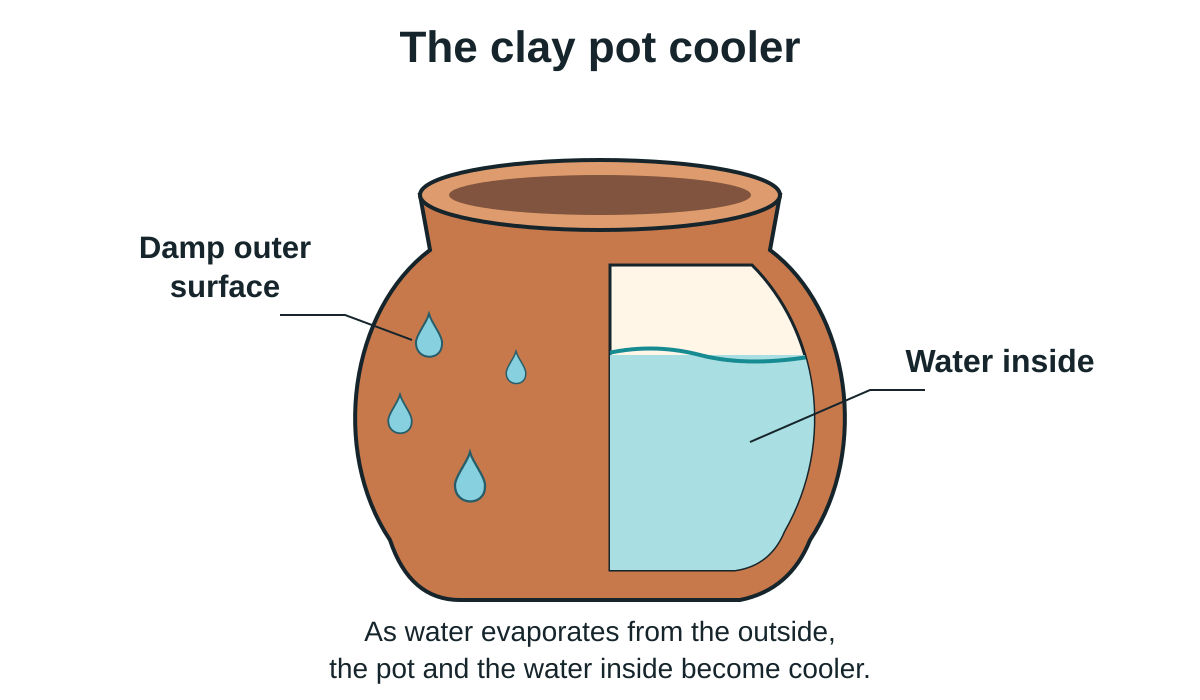
Any two, maximum 2 marks:
Surface water changes from liquid to gas. [1]
Thermal energy transfers from the pot and its contents to the surface water, then to the air. [1]
Evaporation requires thermal energy. [1]
Also accept faster particles escaping [1] or lower-energy particles remaining in the liquid [1]. Maximum 2 marks in total.
400
Cup A cools from 80 to 60°C. Cup B cools from 60 to 48°C. A student says A has better insulation because it ends hotter. Explain why this is not a fair conclusion and how to fix the test. [2 marks]
The cups started at different temperatures, so the final temperatures cannot show which insulation is better. [1]
Repeat the test with the same starting temperature, keeping the other conditions the same. [1]
500
Three liquids do not mix: A is 0.8, B is 1.0 and C is 1.3 g/cm³. A bead is 1.1 g/cm³. Which liquids does it sink through? Where does it stop? Explain. [3 marks]
It sinks through A and B. [1]
It floats at the boundary between B and C. [1]
It is denser than A and B, but less dense than C. [1]
500
During the journey, 30 J of the 45 J of movement energy becomes heating.
1. How much movement energy is left?
2. Once all the movement energy becomes heating, what is the total energy transferred by heating?
3. Why is 105 J the wrong total? [3 marks]
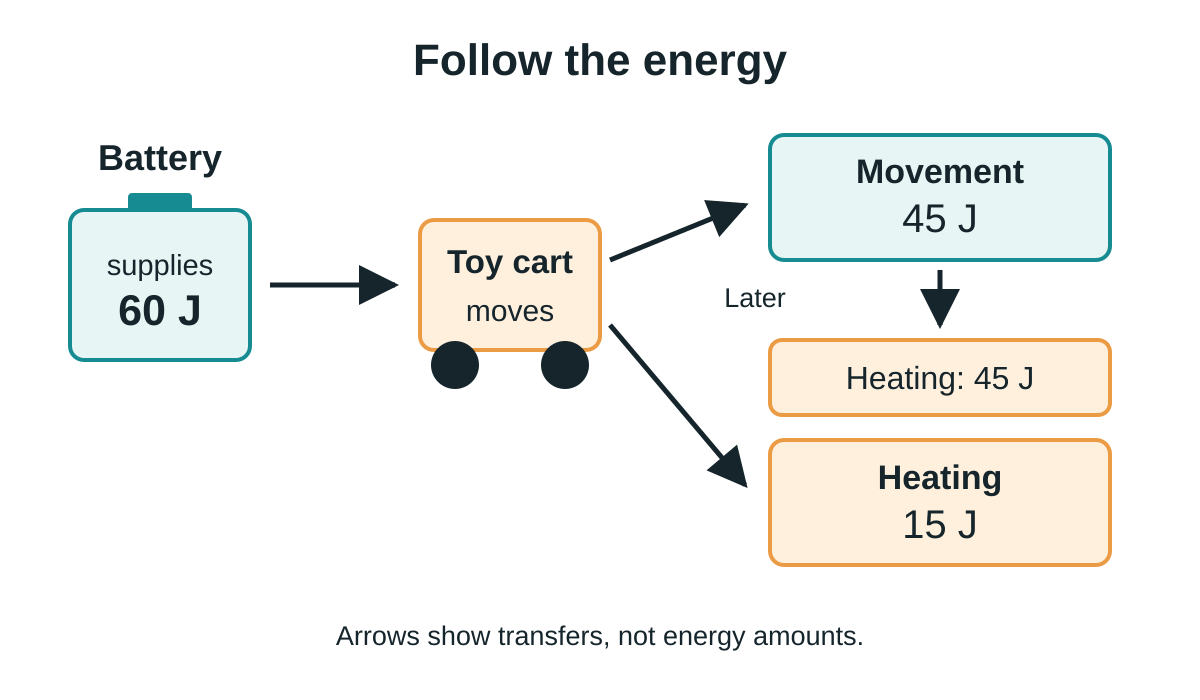
15 J is left:45 −30. [1]
60 J in total:15 J at first +45 J later. [1]
The 45 J is counted as movement and again as heating. It is the same energy at two stages. [1]
500
Describe how all of the water in the metal beaker becomes hot by convection. [3 marks]
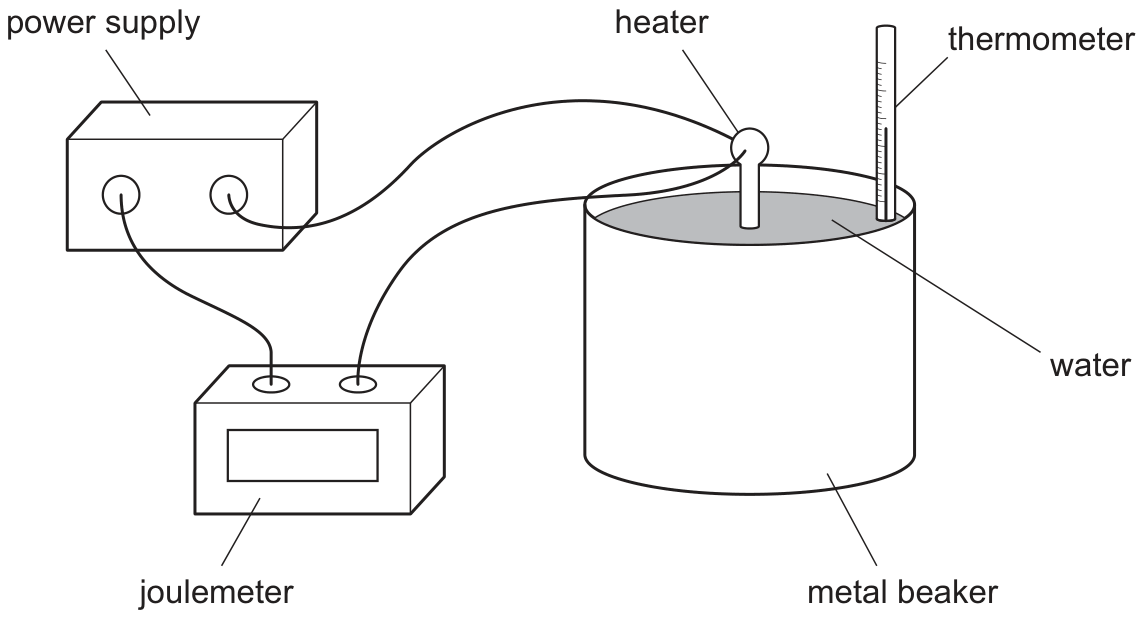
Any three, maximum 3 marks:
Warm water expands or becomes less dense. [1]
Warm water rises. [1]
Cooler water replaces the warm water. [1]
A convection current forms or the water circulates until it reaches an equal temperature. [1]
500
Use the arrows to explain why the liquid cools as particles escape. [3 marks]
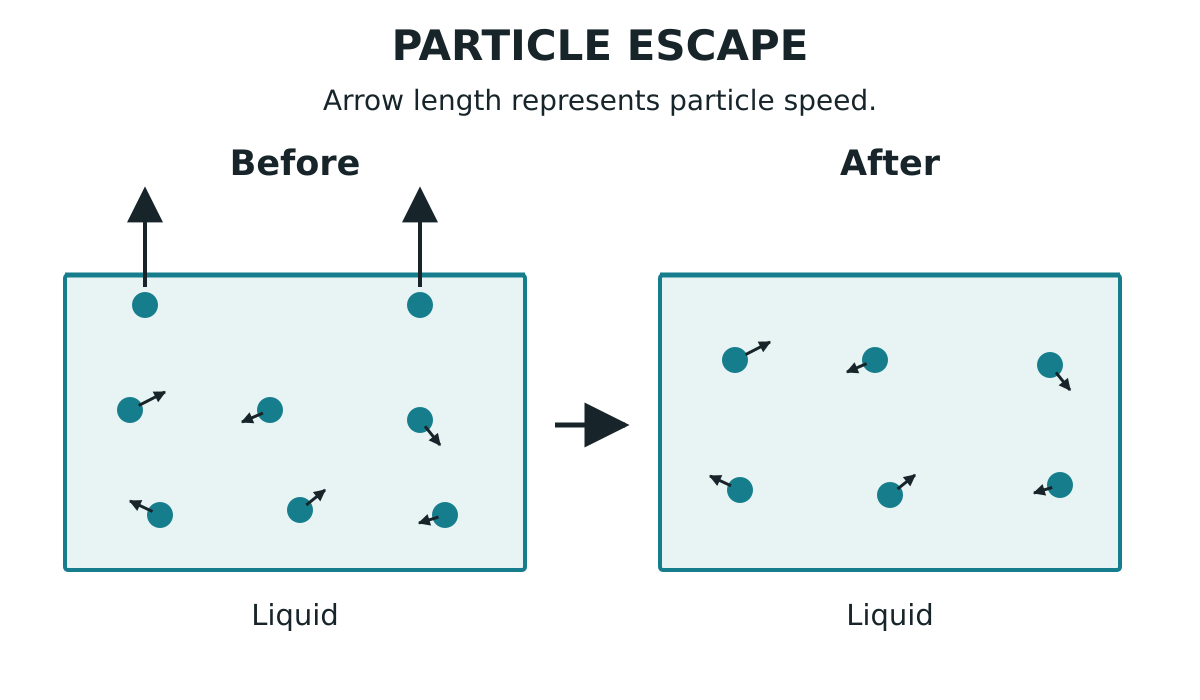
Some of the fastest particles escape. [1]
The average kinetic energy of the remaining particles decreases. [1]
This lowers the temperature. [1]
500
Which rod is the best conductor? Explain why its paper clip falls first and name one control variable. [4 marks]
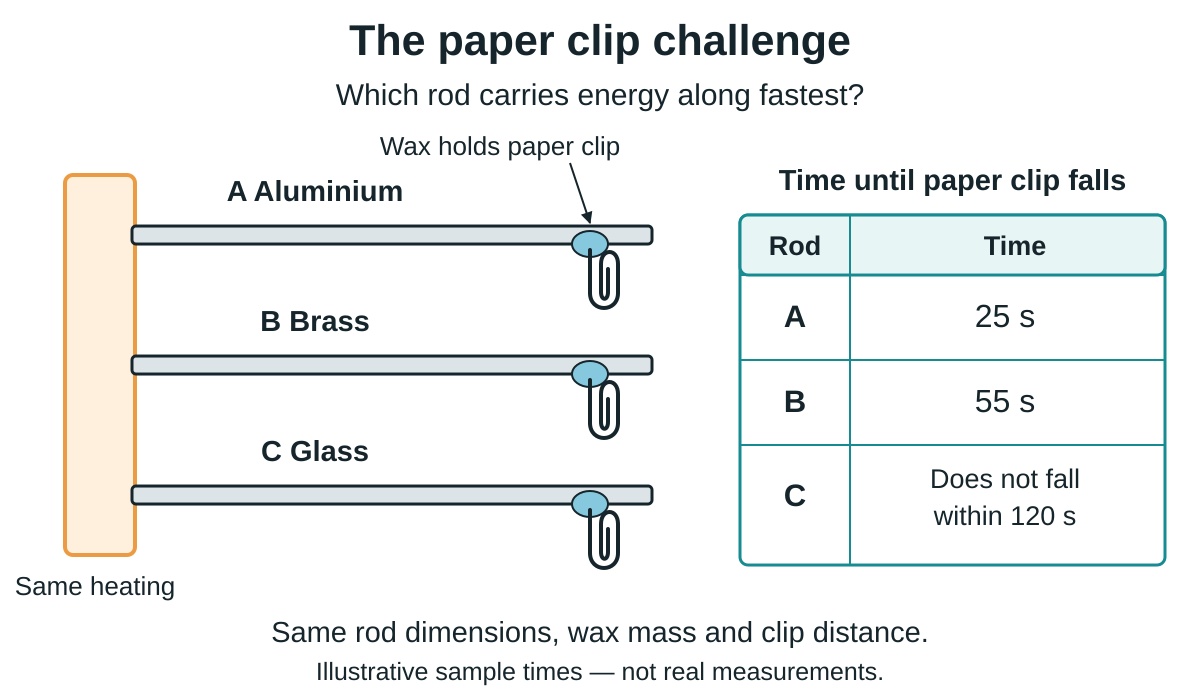
A, aluminium. [1]
Energy conducts along the rod. [1]
The wax melts and releases the paper clip. [1]
Keep rod dimensions, wax mass, clip distance or heating conditions the same. Any one. [1]