Index Laws
Compound Interest
Linear Equations
Pythagoras Theorem
Trigonometric Ratios
100
22 x 23
25
100
Compound Interest Formula
A=P(1+r/100)^n
100
Simplify
7a + 3a
10a
100
State Pythagoras' Theorem
a^2+b^2=c^2
100
State the 3 Trig ratios
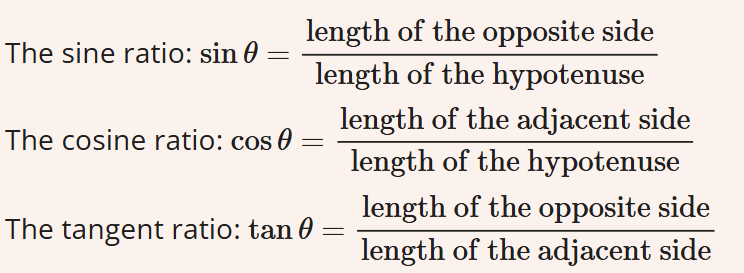
200
(6p^4q^2)/(3p^2p^2)
2p^2
200
What does P stand for in the compound interest formula
P=Principal
200
Simplify
5xy+2xy^2-2xy+3y^2x
3xy+5xy^2
200
State Pythagoras' Theorem to solve a shorter side
a^2=c^2-b^2
200
Solve for x
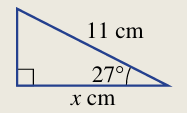
x=9.80
300
(2y^5)^3
8y^15
300
What does r stand for in the compound interest formula
R=Rate of interest as a percentage
300
Simplify
3(x+2)-4)2x-4)
-5x+22
300
Solve the unknown side 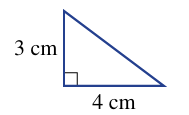
5cm
300
Solve for x
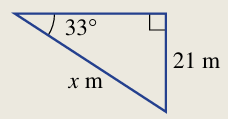
x=38.56
400
(a^3b^2)^3 xx(a^2b^4)^-1
a^7b^2
400
What does n stand for in the compound interest formula
n= number of periods in years
400
Solve
3(2x+5)=4x
x=-15/2
400
Solve the unknown side
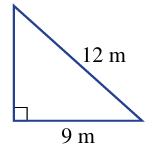
7.94m
400
Solve the
theta
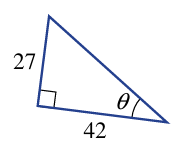
theta = 32.72
500
Answer with positive indices
(4(x^-2y^4)^2)/(x^2y^-3) xx(xy^4)/(2x^-2y)
(2y^14)/x^3
500
Determine the amount after 5 years if $4000 is compounded annually at 8%. Round to the nearest cent.
$5877.31
500
Solve
(4x-2)/(3)=(3x-1)/2
x=-1
500
Find the distance between A and B
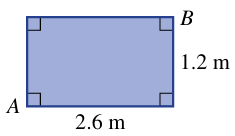
2.86m
500
Solve for
theta
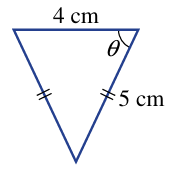
theta=66.4