Colonisation and the Frontier Wars
Federation
Terminology
White Australia Policy and Women's suffrage
Sources
200
Who led the First Fleet and became the first Governor of New South Wales?
Captain Arthur Phillip
200
What date, month and year did the Australian colonies federate to become one nation?
1st January, 1901
200
A term we have looked at which means believing in the principle that all people are equal and deserve equal rights and opportunities
You must spell it correctly.
Egalitarian
200
Which colony/state in Australia was the first to allow women to vote?
South Australia
200
Other than 'perspectives' of sources, what are the 4 other types of questions you may get in your exam?
- Reliability
- Usefulness
- Implicit meaning
- Explicit meaning
300
What industry pushed settlers further inland and increased conflict with Indigenous peoples?
Pastoralism (sheep or cattle farming) OR will accept agriculture
300
What document outlines how Australia’s government operates?
Constitution
300
This word relates to having or showing a dislike of or prejudice against people from other countries.
Xenophobic
300
What test was used to restrict non-European immigration to Australia?
Dictation test
400
In what year did the First Fleet arrive in Australia?
1788
400
This word relates to evaluating other cultures according to preconceptions originating in the standards and customs of one's own culture.
Ethnocentric
400
Source: “The Gall of Sydney”
Explain two ways in which the cartoon “The Gall of Sydney” is useful for understanding opposing viewpoints about the Federation of Australia.
Use two specific features from the cartoon to justify your answer.
Shows fear of political control by Sydney - Sydney is drawn as the head of the octopus controlling Australia.
Suggests economic influence from Sydney - the tentacles reach into different regions, implying control of trade or resources (exports, mining).
Shows concerns from other colonies about losing independence - the tentacles wrapping around the map suggest domination.
Suggests Sydney is greedy or power-hungry -the octopus symbol is often used to represent something grasping or controlling.
Suggests smaller regions feared being controlled by a major city — the rest of Australia is shown being grabbed by the tentacles.
Apparent Sydney characteristics "Greed, Envy, Jealously"
Shows negative attitudes toward Sydney’s power — the aggressive octopus imagery implies threat or danger.
Suggests power being concentrated in one place — Sydney is the central body controlling the rest of the map.
500
What Latin term meaning “land belonging to no one” was used to justify British settlement?
Terra Nullius
500
Identify four reasons why people/Australians supported Federation.
Growing nationalism – by the 1890’s 75% of the population were born in Australia
Better communication – the colonies felt less isolated
Defence - many felt that having one national army would be stronger than multiple small, colonial armies
Immigration – having one policy makes it easier to keep in or out the ‘kinds’ of people that were seen as ‘desirable’
Trade - thought that goods would sell better overseas if they came from a recognisable nation
British support – the British saw advantages in Federation and allowed it to proceed
Influential people – strong support from people such as Parkes and premiers from other colonies
Compromise between colonies – the new constitution clearly defined the rights of the colonies, so that one would not be stronger than the other
500
This word was often used by Europeans to describe the Indigenous way of life that they believed were less developed or less advanced.
Primitive 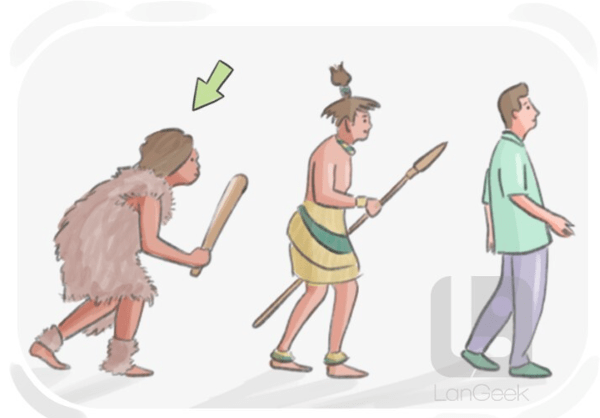
500
When evaluating the reliability of a source, it's best to consider 4 main 'criteria/aspects' ie. Factors to consider when evaluating the reliability of a source. What are they?
a. Purpose / motive of the source – Does the author have a reason to persuade audience, or rather just inform about a topic?
b. Origin and context of the source – Who created it, when, and in what situation?
c. Information or evidence in the source – What details or facts does it provide?
d. Language or imagery used – Does the wording or visuals show bias or strong opinions?