Heat transfer
Waves
Soundwaves
Wave calculations
Light
100
what are the 3 methods of heat transfer
conduction, convection, radiation
100
what are the 2 types of waves? give an example of each
transverse- light, x-rays
longitudinal- sound
100
which medium does sound travel the fastest through?- why
solids, because the particle are tightly packed/close together allowing the vibrations to travel faster
100
state the symbols and units for the following sound wave terms: wavelength, speed, frequency
•wave speed (v) is measured in metres per second (m/s)
•frequency (f) is measured in Hertz (Hz)
•wavelength (λ) is measured in metres (m)
100
give an example of 3 types of waves on the electromagnetic spectrum
radio waves, microwaves, visible light, UV light, X-rays, gammas rays
200
Which type of heat transfer occurs when particles touch each other?
conduction
200
what is a medium/media? what are the mediums waves can travel through?
solids, liquids, gasses, space
200
why is the phrase "in space no one can hear you scream" true?
there are no particles in space, sound needs particles to vibrate and create noise.
200
what is the formula to use to calculate wavelength?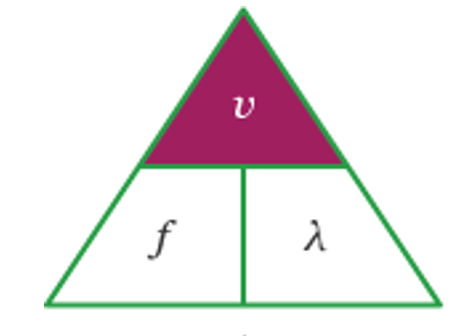
wavelength = speed / frequency
200
What is the difference between transparent, translucent, and opaque materials?
Transparent lets most light through, translucent lets some light through, and opaque lets no light through.
300
Give one real-life example of convection.
Boiling water / warm air rising / sea breeze.
300
If the wavelength increases (speed stays the same), what happens to frequency?
frequency decreases
300
define compression and rarefaction: in your response use the word pressure
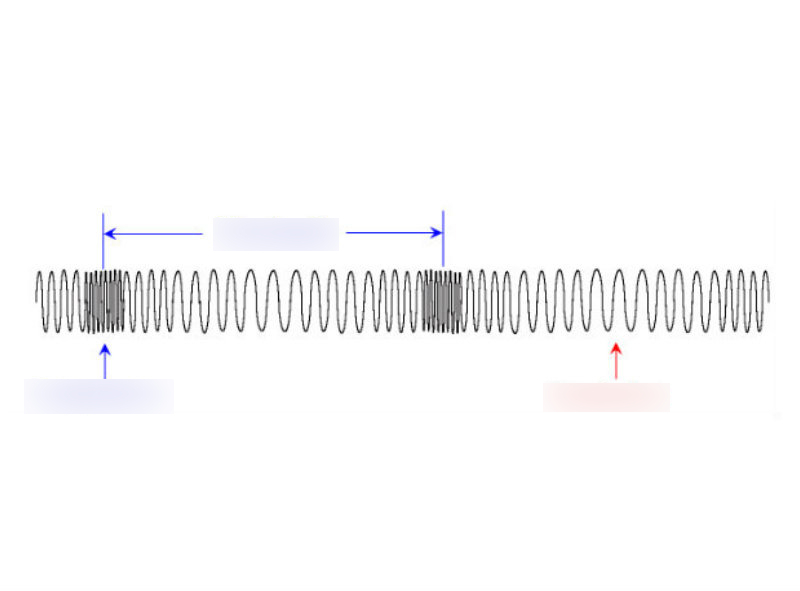
compression: a region in a longitudinal wave where the particles of the medium are closest together, creating high pressure
rarefaction: the region where particles are spread apart, creating a zone of low pressure
300
A wave has a frequency of 5 Hz and a wavelength of 2 m. What is its speed?
10 m/s
300
What happens to white light when it passes through a prism, and why?
It splits into a spectrum of colours because different colours of light bend by different amounts (refraction).
400
Why does a black shirt feel hotter in the sun than a white shirt?
Black absorbs more radiation/heat energy.
400
Label the missing terms of the wave

A - CREST
B- TROUGH
C- WAVELENGTH
D- AMPLITUDE
400
Name structures F, A, D

f- eardrum
a- ossicles
d- cochlea
400
A wave speed is 24 m/s and frequency is 6 Hz. Find the wavelength.
lambda = 24 /6 = 4m
400
Using the law of reflection, explain which angles are equal and why
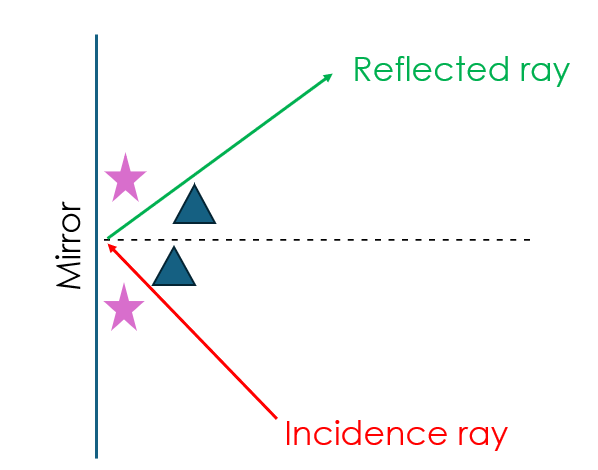
Both angles are measured from the normal line (an imaginary line perpendicular to the surface). Light hits a surface (like a mirror). It bounces off. The angle it comes in at = the angle it goes out at
500
Explain TWO ways to reduce heat transfer in a house.
Insulation traps air and reduces conduction/convection.
Double glazing reduces heat transfer through windows.
Reflective roofing reduces radiation.
500
Compare transverse and longitudinal waves using particle movement.
In transverse waves, particles move/propagate perpendicular to the wave direction.
In longitudinal waves, particles move/propagate parallel to the wave direction.
500
Explain how the ear allows humans to hear.
Sound waves enter the ear canal, vibrate the eardrum and ossicles, then the cochlea converts vibrations into electrical signals sent to the brain.
500
What is the frequency of a 5m wavelength if the wave can cycle at 0.4m/s
f = v / λ
0.4 / 5
= 0.8 Hz
500
What is refraction?
The bending of light when it changes speed as it passes into a different medium
600
A metal spoon left in a hot pot becomes very hot, but a wooden spoon does not. Explain why.
Metal is a good conductor of heat, so heat transfers quickly through it. Wood is an insulator, so heat transfers much more slowly.
600
Explain the difference between mechanical and electromagnetic waves.
Mechanical waves need a medium to travel through.
Electromagnetic waves can travel through a vacuum.
600
how does temperature effect a sound wave?
- When temperature increases, particles in the medium (like air) move faster and collide more quickly. This means sound travels faster.
- When temperature decreases, particles move more slowly, so sound travels slower.
600
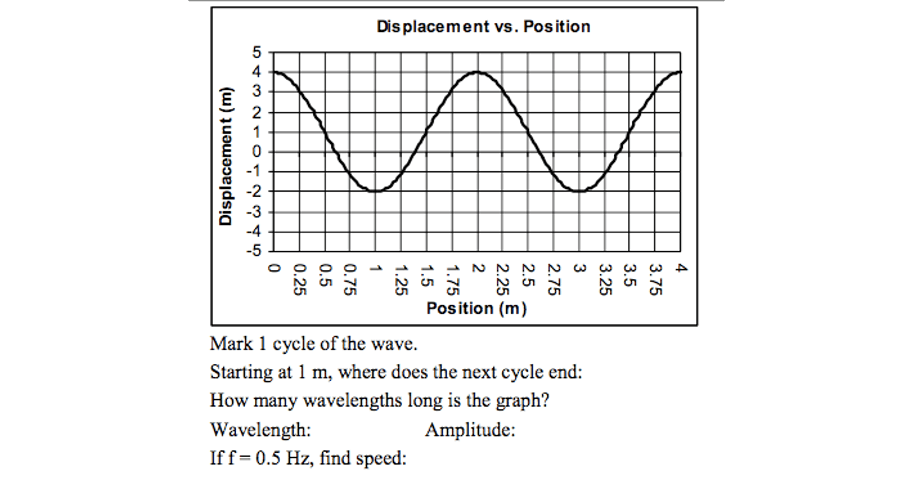
v = f λ
v =1.5 m/s
600
What are the missing angles?
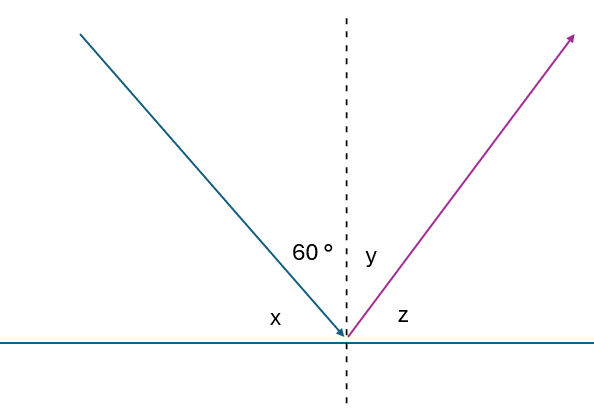
x=30
y= 60
z=30