MOMENTS
PRESSURE
HOOKE'S LAW
STOICHIO
REDOX
100
A force of 10 N is applied 1.5 m from a pivot. What is the magnitude and direction of the moment?
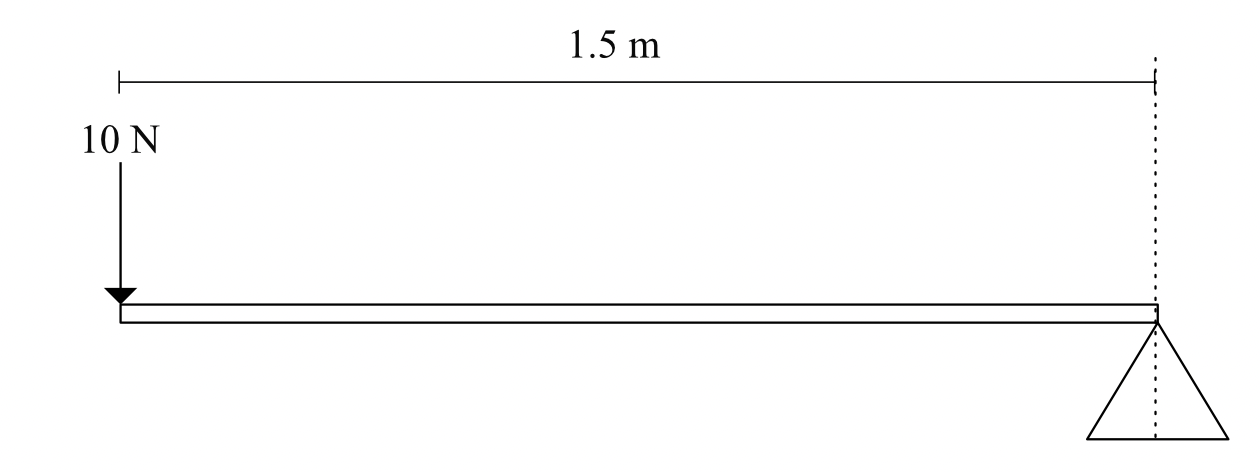
15 Nm CCW
100
Define pressure.
Is the concentration of force.
Force per unit area.
P = F/A
100
State Hooke’s Law. Use words like extension, load and the p word.
the extension of a spring is directly proportional to the applied force
OR
F = kx
100
Define a mole. State number of particles.
A mole is the amount of substance that contains 6.02 × 10²³ particles
100
Define oxidation in two ways.
Gain or oxygen
Loss of electrons
200
A seesaw is balanced. One side has a 200 N force 1.5 m from the pivot. How far from the pivot must a 300 N force act on the other side?
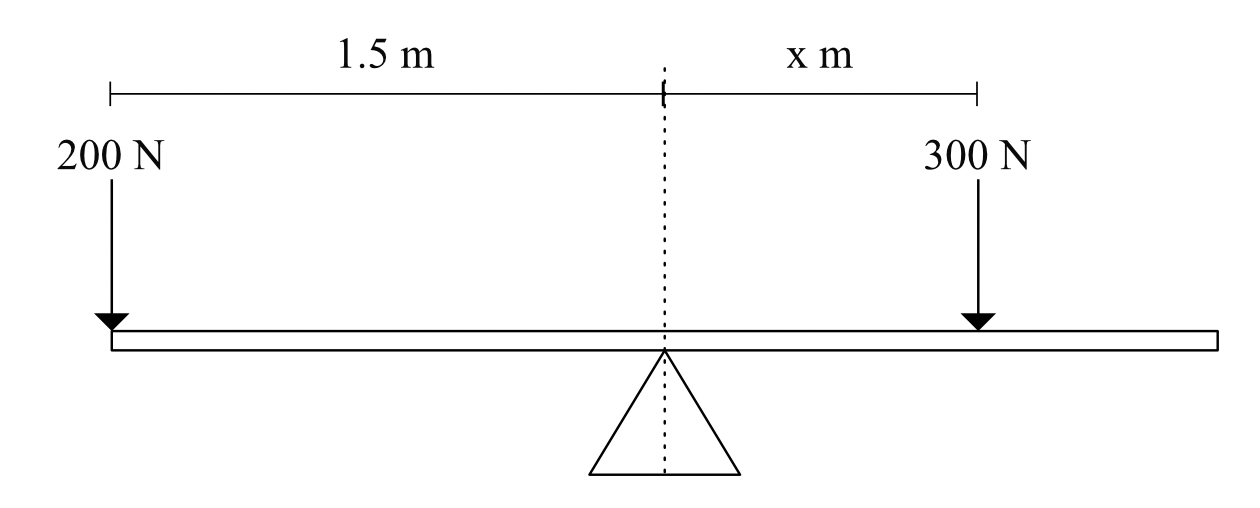
CCW 200 x 1.5 = 300 Nm
CW 300Nm/300N = 1 m
200
Explain why a camel has wide feet when walking on sand.
Wider feet → greater area → less pressure → less sinkage
200
A spring has a spring constant (k) of 200 N/m.
What force is needed to extend it by 0.1 m?
F = k x
F = 200 N/m x 0.1 m
F = 20 N
200
What is the molar mass of carbon monoxide?
C = 12; O = 16
28 g/mol
200
What is the oxidation number of oxygen in most compounds?
-2
300
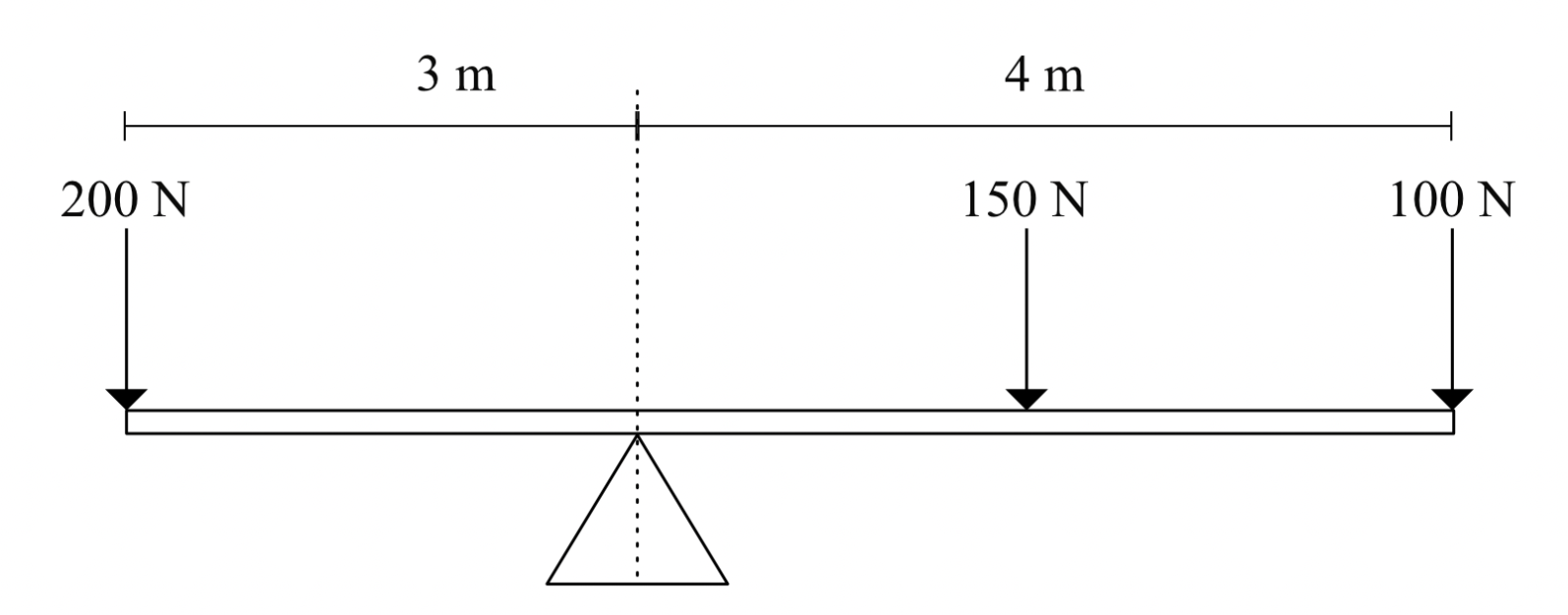 A weightless lever is in equilibrium about a pivot.
A force of 200 N acts 3.0 m to the left of the pivot.
Forces of 100 N at 4.0 m and 150 N at distance x act to the right.
Calculate x.
200N x 3m = (100 x 4) + (150x)
600 = 400 +150x
200 = 150x
1 ⅓ m = x
300
A force of 500 N acts on an area of 0.2 m².
Calculate the pressure.
2500 Pa or N/m²
300
Describe what happens when a spring is stretched beyond the limit of proportionality. (3 things)
1. The spring does not extend in proportion to applied force
3. Beyond the elastic limit the spring will break.
300
2H₂ + O₂ → 2H₂O
How many moles of water are produced from 17 moles of oxygen?
34 moles
300
Identify which substance is oxidised in:
Zn + Cu²⁺ → Zn²⁺ + Cu
Zinc loses electrons to become a Zn²⁺ cation.
400
A beam is supported at both ends by supports X and Y.
A load is placed 3.0 m from X and 1.0 m from Y.
What fraction of the load is supported by Y?
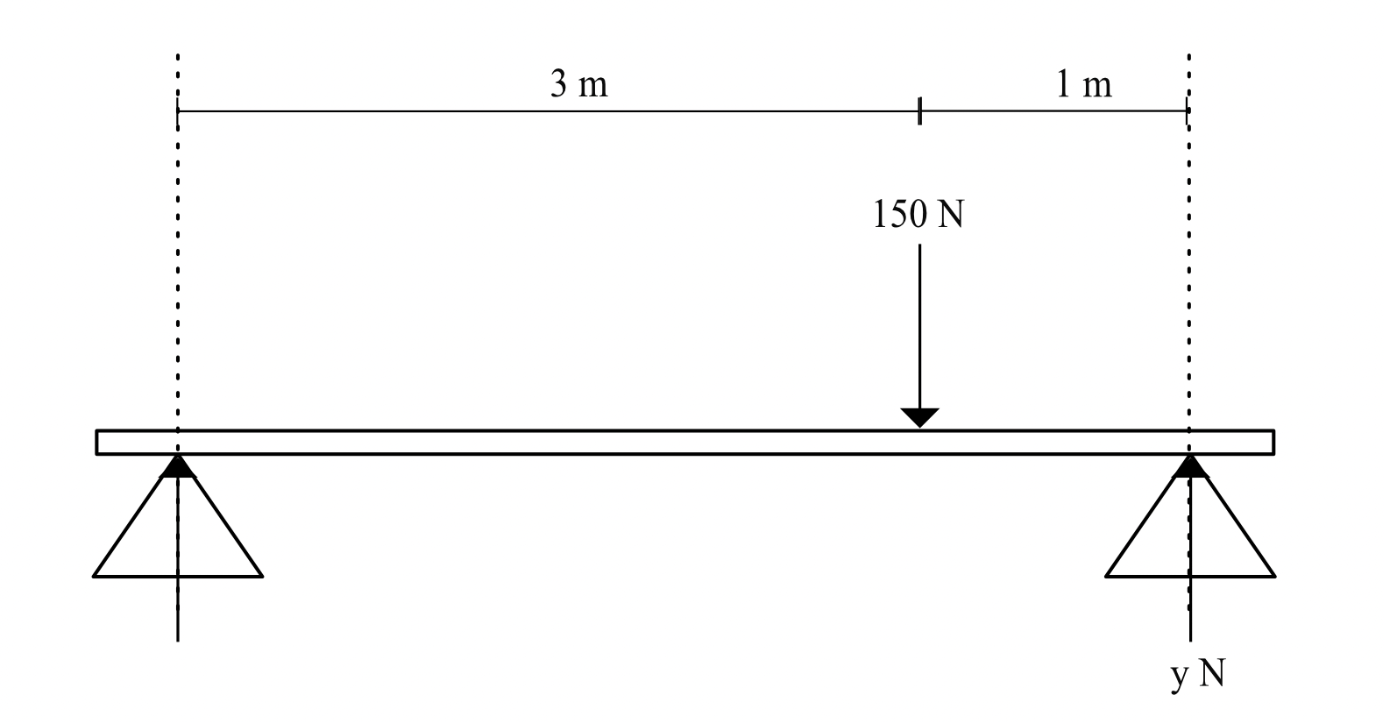
3 x 150 = 4y
450/4 = y
112½ = y
400
A diver is at a depth of 30 m in water.
The density of water is 1000 kg/m3 g=10N/kg.
Calculate the pressure in kPa due to the water.
P = ρgh
P = 1000 x 10 x 30
P = 300,000 Pa
P = 300 kPa
400
Two springs, A and B, have their extensions plotted against applied force on a graph. Which spring has the greater stiffness (spring constant)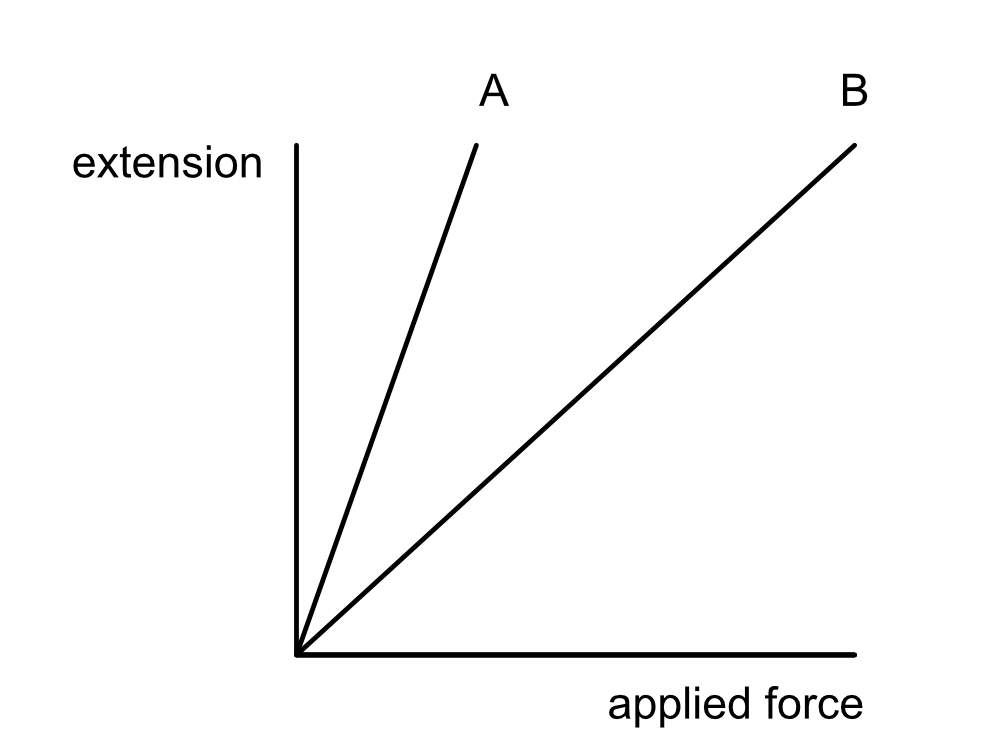
Spring B requires more force to attain the same extension as A. Therefore B is stiffer.
400
A student has 6 g of Mg (Mr = 24). How many moles is this?
6/24 = ¼ mol
400
State which electrode is the cathode and whether oxidation or reduction happens there.
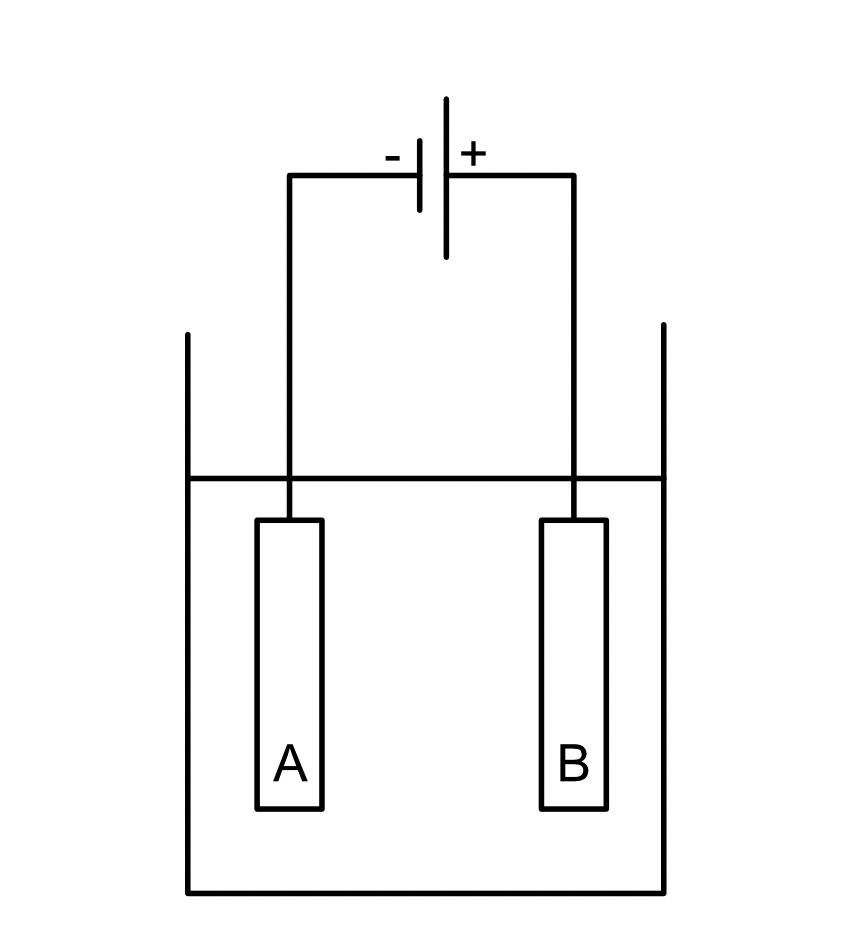
A is the cathode (cations (+ ions) are attracted to the cathode)
Cations gain electrons there and so reduction occurs there. (RED CAT)
500
A 3.0 m weightless beam has forces of 200 N and 50 N acting at its left and right ends respectively.
The beam is in equilibrium.
Find the distance x of the pivot from the right end.
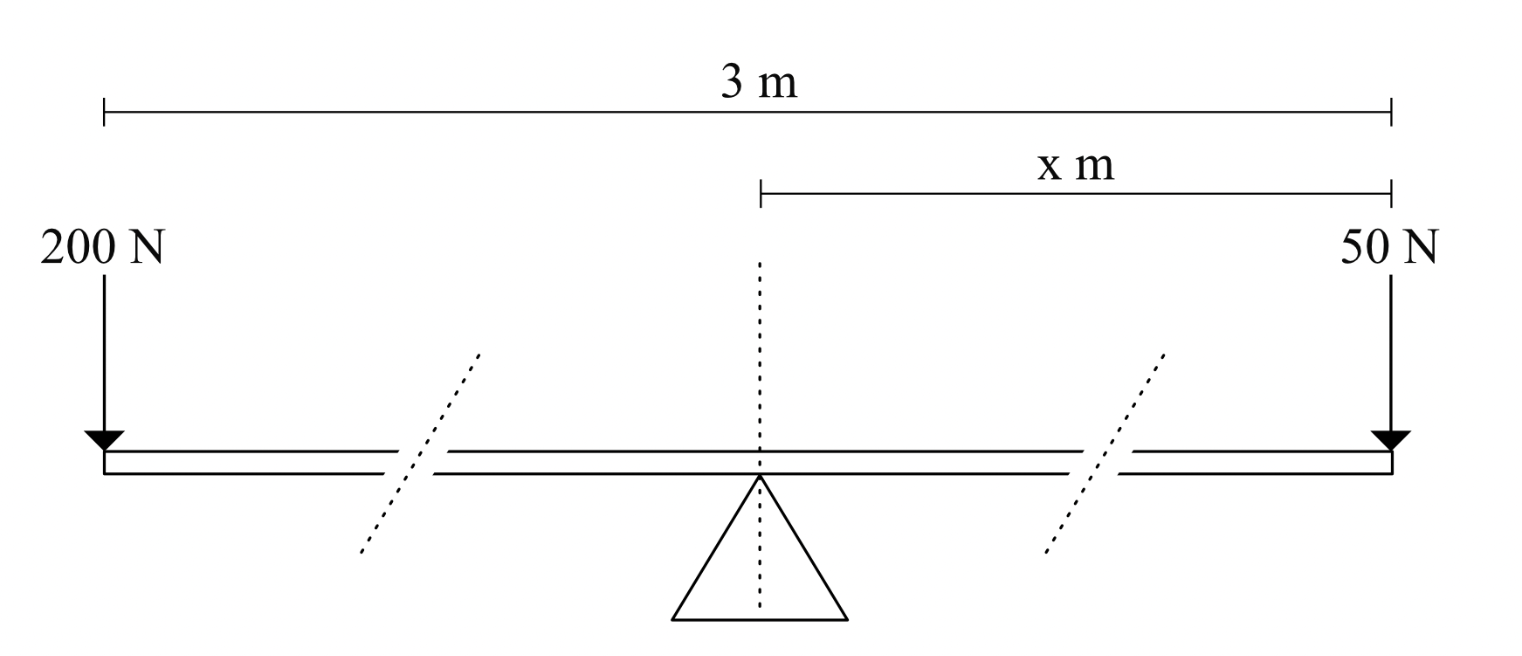
200(3-x) = 50x
600 - 200x = 50x
600 = 250x
600/250 = x
2.4 m = x
500
A cylindrical container is filled with two immiscible liquids.
Liquid A has density 800 kg/m3 and occupies a depth of 0.50 m.
Liquid B has density 1200 kg/m3 and occupies a depth of 0.75 m below liquid A.
Atmospheric pressure is 100 kPa.
What is the total pressure in Pascals at the bottom of the container?
g = 10 N/kg
P = ρgh
PA = 800 x 10 x 0.5 = 4000 Pa
PB = 1200 x 10 x 0.75 = 9000 Pa
100,000 + 4000 + 9000 =
113,000 Pa
500
A student investigates the extension of a spring as the load is increased.
The graph of force (N) against extension (cm) is a straight line through the origin. What is the spring constant of the spring k (N/m)?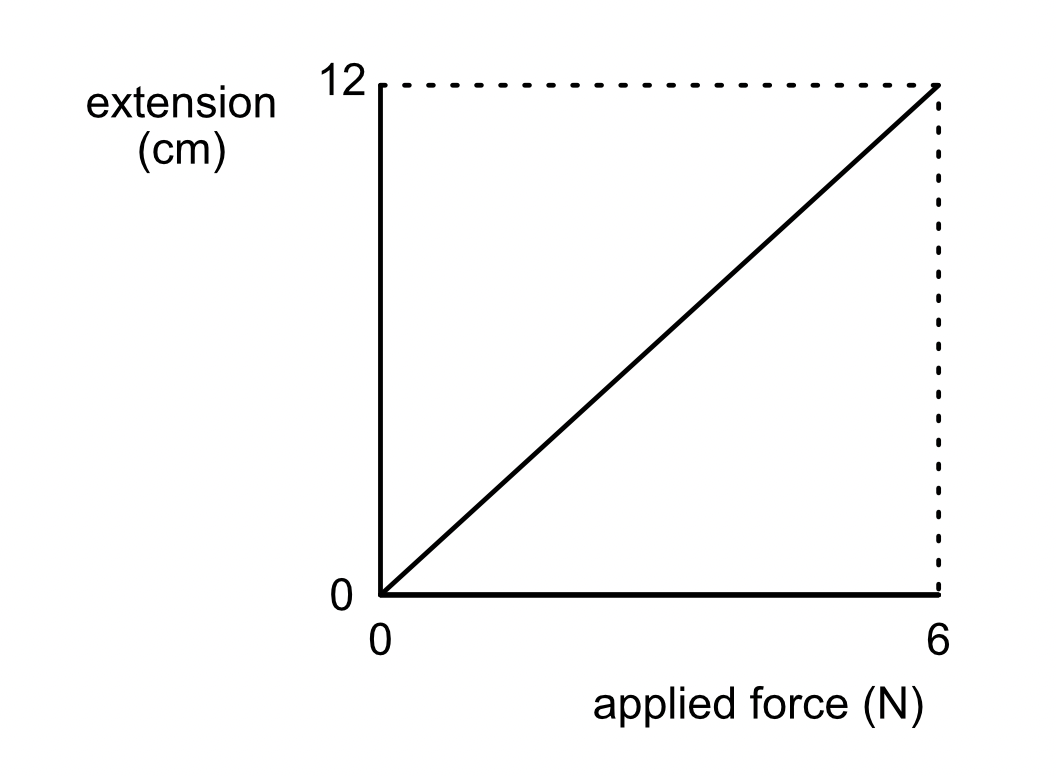
6 N / 0.12 m = 50 N/m
500
A solution contains 0.5 mol of solute in 250 cm³.
Calculate the concentration in mol/dm³.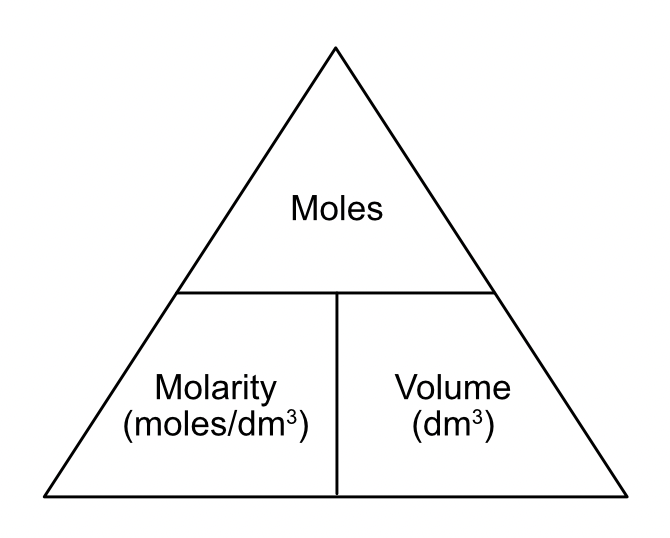
0.5 mol / 0.25 dm³ = 2 mol/dm³
500
What is the oxidation number of chromium in K₂Cr₂O₇?
The whole compound adds up to 0
Oxygen is -2 x 7 = -14
Potassium is +1 x 2 = +2
-14 + 2 = -12 so Chromium must be Cr x 2 = +12
Therefore Cr = +6