MANTRAS/MUDRAS
PRANAYAMA
ASSISTS/HANDS-ON / MUSIC
ART OF SEQUENCING
CLOSING A PRACTICE
CLOSING A PRACTICE
VOICE / CUES
100
What is the Gayatri Mantra?
The Gayatri is called a “master mantra” and the “essence of all mantras”. It is considered the “supreme in bestowing enlightenment”.
The Gayatri is a meditation on spiritual light, a prayer to the realm of truth (sacred source) to illuminate (liberate, enlighten) our intellect.
The mantra itself speaks of three states of consciousness: (earth, middle region & heaven)
Om Bhur Bhuvaha Swaha
Om Tat Savitur Varenyam
Bhargo Devasya Dhimahi
Dhiyo Yonaha Prachodayat
100
What is Brahmari Pranayama
Demonstrate this Pose / Breath
Brahmari is a vocal meditation that resembles the buzzing of a bee and helps to open and balance your throat chakra.
100
Why / When should an assist/hands-on be used?
- Remove student from an unsafe position
- Give information about alignment of pose and energy of pose
- Increase students awareness of his/her body and/or breath
- Provide an alternative way of experiencing and/or depending the pose
- Provide encouragement
- Respond to student who is asking for clarification or guidance
- Give a student a ‘feel good adjustment’ that helps to deepen stretch, massage muscles or otherwise bring an “ahhhhhh”
100
What is the MOST important aspect of closing a practice?
Provide time for Savasana
100
What is one of the most important understanding on the use of your voice as a Yoga teacher?
Be authentic: Speak from your own experience, your own truth, what you’ve personally observed and what feels ‘real’ to you.
Keep it real. Teach what you know~
200
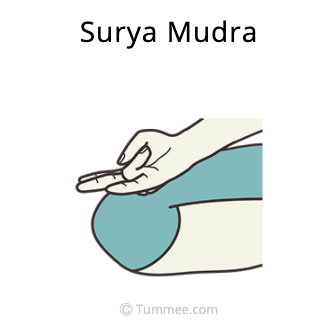
What is Surya Mudra?
Popularly known as Surya mudra, this mudra increases the Agni (fire) element within the body. It can, therefore, be called Agni-vardhak mudra, too. At the same time, this mudra decreases the Prithvi (earth) element within the body.
Surya Mudra Benefits:
The practice of Surya Mudra can be done by anyone irrespective of age and the level of practice in yoga. Since this mudra activates and stimulates the heat in the body there are many benefits derived with the same. These are :
- Energy and Heat: The sun element is related to the heat in the body producing energy. The thumb represents the fire element and it rests on the ring finger which represents earth element. And this practice increases the heat (sun) in the body giving more room for energy that can be channelized well.
- Weight Loss: An increased heat in the body is a great way to lose the excess weight in the body. Hence with the practice of Surya Mudra it is believed to help in obesity provided this practice is done for about 15-20 minutes everyday but with a gap of 3 hours post any meal.
- Body Temperature: The practice of Surya Mudra when done during winters along with Surya Namaskar Sun Salutation) can help to maintain the body temperature reducing shivering due to cold and low temperatures. It also helps if students have absence of sweating.
- Metabolism and Immunity: The practice of Surya Mudra helps to increase the metabolism rate through increased energy in the body to help absorb the food eaten. It also helps to keep the immunity in control with the increased head and energy in the body by keeping harmful invaders away.
- Digestion: With increased heat in the body, the practice of Surya Mudra helps to keep digestion in control reducing constipation, acidity, and indigestion.
- Depression: When the heat in the body increases it throws out all the antioxidants thereby reducing the stress levels in the body. This further helps to keep depression away.
200
When might you use Brahmari pranayama?
If you are a singer, teacher, or someone who has to speak in public – or simply want to improve your speech and communication skills.
Someone who wants to clear their mind – and get a sense of inner peace.
200
Why Not Assist?
- New student
- New student to the teacher
- Injuries or particular medical condition
- History of unresolved trauma
- Uncomfortable with touch
- Student has request not to be touched or assisted
- Teacher is not trained in adjustments
- Teacher is not confident in providing an adjustment or has had limited experience
200
In Yoga-Mojo's Methodology, what movements/poses might be used in the "Post Flow / Closing"?
- Cool down poses / inversions
- Slow/Deep Stretches
- Supine Twists
- Savasana
200
- In teaching (voice), be mindful of your ___________________ and ________________.
Cadence and Rhythm
Yoga Voice and Pauses
Patience and Be Present
300
What is Anjali Mudra?
The Anjali Mudra is the practice of meeting the hands together by the sternum in a “prayer position”. This hand gesture is used frequently during the practice of yoga. It is not only used at the opening and closing of yoga classes, but also during some of the other yoga asanas.
Anjali is Sanskrit term which means, “to offer” or “to salute”, and the term Mudra means “seal”. So basically, it symbolizes that we are “honoring and celebrating this moment”.
The following is explanation given by Krishnamacharya:
“This gesture signifies the potential for an intention to progress to greatest spiritual awakening. When done properly the palms are not flat against each other; the knuckles at the base of the fingers are bent a little, creating space between the palms and fingers of the two hands resembling a flower yet to open, symbolizing the opening of our hearts.”
300
What demographic really enjoys Brahmari Pranayama?
Children~ However, it can help all yoga practitioners/everyone to feel a sense of calm.
300
List five (5) Keys to Good Adjustments
- Observe the student
- Be aware of your own bias – Teacher ‘knows’ the pose
- Create a clear intention
- Ground the student
- Feel and sense
- Adapt to the moment
- Adapt to the student
- Move into the adjustment slowly
- Create space and length
- Use good body mechanics
- Don’t over adjust
300
List the Five Qualities of Breath and why is it important to remind students about their breath at the close of a practice?
- Smooth breath
- Quiet breath
- Continuous and seamless breath
- Deep breath (or full breath)
- Even and balanced breath
Bringing students back to their breath in Savasana can/may help students to release any remaining/lingering tension/tightness. It helps bring students back to their mind/body/breath and helps ease the student inward enabling savasana to be sweeter.
300
Name three ways to ‘cue’:
- Anatomical
- Provide a feeling
- Energy-based cue
- Self-reflection cues
- Visual Cues
400
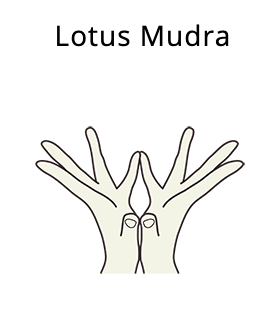
What is Padma Mudra?
The Lotus seal represents the purity and perseverance of the lotus flower floating above the muddy waters of desire, fear, and attachment
The Lotus Mudra opens the heart chakra and is a symbol of purity. Think of the white lotus flower sitting on the surface of a pond, opening its petals towards the sun as its roots remain deeply embedded into the muddy bottom, holding it firm and strong. It is a symbol of the light and beauty that emerges from the darkness.
The message of the Lotus Mudra is to stay connected to your roots, open yourself to the light and realise that the greatest sense of steadiness in life comes from an open heart.
To create this Mudra, bring your hands into a soft Anjali Mudra in front of the heart center. Slowly unfurl your fingers like a lotus flower blossoming open, while keeping the base of the hands, the thumbs and little fingers together. Allow the index, middle, and ring fingers to gently open. Traditionally, it is practiced in a seated position, but it can also be incorporated into a more flowing practice where it becomes a 'floating' Lotus that can be used in a Tai Chi way, as if you were carrying a chalice filled with offerings from your heart from one posture to the next.
This Mudra can leave us feeling grounded and strong like a lotus flower, while opening our heart to the joys of life. It is a great reminder of the beauty and grace that is within us all. You can use it to cultivate love and affection, to ease loneliness, and can also be practiced when we feel drained or misunderstood.
400
What are some of the benefits of practicing Brahmari?
- Clears the mind and brings a sense of inner peace
- Soothes anxiety by lengthening exhalation
- Said to improve concentration, memory and confidence
- Preparation for meditation
- Said to stimulate and purify the visshudha (throat) chakra, leading to an improved ability to listen and communicate one’s truth
- “Helps to banish feelings of self-doubt as well as the urge to gossip (Swami Saradananda)
- May alleviate throat problems such as hoarseness and a weak voice
- A number of sources recommend it for women in labor
400
- What is one of the principles of providing Hands On Assists (noted by Christina Sell)?
- First, try other ways to communicate what your student may do via verbal and visual cues
- Use your hands to further communicate what your words have been meaning.
- Come in slowly – move slowly – exit slowly
- Touch bone to bone
- Have confidence (not a light touch)
- Calm yourself first
- Provide stability / grounding
Overview principles include:
- Be sensitive
- Help the student find stability
- Make adjustments with student participation
- As a teacher, be a student of the energy of the pose
- Recognize common misalignment cues vs. obscure misalignment
400
List poses you might use post a flow or standing postures?
Balance Poses
"Play time" (if appropriate) - Hand stand or peak poses that often are more challenging or where the movement of the 'flow' has prepared the student to attempt a challenging / peak pose.
Seated Poses for Deep Stretch / Supine Poses for deep stretch.
Easy front body opener (bridge) and easy supine twists.
Savasana
400
List common cues for Natural Spinal curves.
- Lengthen spine
- Draw low ribs in
- Lengthen tail bone
- Draw lower abdominal muscles in and up
500
***In Vedic culture, the fingers of the hands represent an element. List them here:
Thumb –
Index Finger -
Middle Finger -
Ring Finger -
Small Finger –
Thumb = Fire
Index Finger = Air
Middle Finger = Space/Ether
Ring Finger = Earth
Little Finger = Water
500
What pranayama practice is your favorite?
Dirga Breath (3-part Breath; Belly/Rib Cage/Chest)
Sama Vritti
Ujjayi Pranayama
Shitoli
Nadi Shodhana
500
Will you play music in your classes? If so, why? If not, why?
What should you be aware of in playing of music in classes?
Music should not detract the student from the practice (volume, familiar songs, lyrics) -- and ideally, music should complement the practice.
500
How long should Savasana be?
As long as you can make it :)
500
List common cues for Standing Poses AND
List common cues for Balance Poses
Common cues for Standing Poses
- Align Knee over Ankle
- Distribute weight evenly across all four corners of your feet
- Release the shoulders
- Engage the muscles of your legs (lift the toes)
- Align knee over second toe of the foot
- Notice the drishti point
Common cues for Balance Poses
- Drishti Point
- Give a slight bend in the standing/supporting leg
- Steady the breath