GODS/GODDESSES/ MANTRAS
PRANAYAMA & SURYA NAMASKAR
KNEELING POSES & BALANCE POSES
SANSKRIT
ART OF SEQUENCING
100
Who is Durga?
Durga (Hindustani pronunciation: [ˈd̪ʊrɡaː]; Sanskrit: दुर्गा), meaning "the inaccessible" or "the invincible", the fortress, the flaming one is one of the most popular incarnation of Devi and one of the main forms of the Goddess Shakti in the Hindu pantheon. Durga is the original manifested form of Mother Parvati or Adi-Parashakti.
100
What is Simhasana?
Demonstrate this Pose / Breath
Lion’s Pose
100
List Three (3) Kneeling Poses
1. Parighasana – Gate Pose
2. Vajrasana - Thunderbolt / Diamond Pose
3. Anjaneyasana - Low Lunge
4. Bharmanasana - Table Top Pose
100
Please indicate the Sanskrit word & draw a Stick Figure for Low Lunge
Anjaneyasana 
100
Name five (5) characteristics of a good yoga sequence / intelligent sequence?
A good sequenced flow is:
- Well planned, i.e., planned in advance with a known objective/ Intention
- Built from a foundation of the teacher’s knowledge
- Easy and effortless (ultimately) – and repeatable
- Feels good, is safe, effective and logical
- Taught from a place of knowledge and confidence From the heart and head
A good sequenced flow will:
- Build strength
- Improve flexibility
- Have a focus or build to a peak pose
- Challenge balance
- Increase concentration
- Balance effort with ease
- Feel good
- Take the student on a journey with a destination in mind*
A sequenced flow is not:
- A pose ‘dump’, i.e., how many poses can be cycled in to a class
- A hodge-podge of flows that move the body in awkward or ineffective ways
Include intricate, advanced or deep poses without sufficien
200
What is Durga's Mantra?
Om Dum (doom) Durgayei Namaha. The Goddess Durga is said to have the combined powers of Lakshmi, Saraswati and Kali. This mantra is often used for protection against internal or external negative forces. Simple Translation. "Om and Salutations to that feminine energy which protects from all manner of negative influences."
200
When is the pranayama practice of Simhasana Pranayama used?
Simhasana may be used anytime one wishes to “clear the air” so to speak at or near the beginning of an asana or pranayama practice.
Simhasana is said to relieve tension in the chest and face.
200
What are the physical effects of Kneeling Poses?
- Stretches buttocks
- Opens hips & groins
- May strengthen & lengthen legs
- Releases tension
- Stimulates abdominal organs
- Massages reproductive organs
200
What is the Sanskrit word for Gate Pose?
What is Parighasana 
200
List the highlights of the Mojo Method and characteristics of a Yoga-Mojo Practice.
- Arrive, awaken & prepare for the practice
- Build, develop and move in to the flow
- Repeat and work the flow
- ‘Cool down’ / ‘slow down’
- Stretch and renew
- Conclude the practice with relaxation of the body/mind
300
What are some of the lessons learned from the story of Durga?
Goodness overcomes greed; Love overcomes all.
The Power of Love is Stronger than the Love of Power.
300
What is Surya Namaskar A?
How might Surya Namaskar A be considered a component of the Yoga-Mojo Methodology?
Sun Salutation - A series of postures that awaken the body and where the student moves from pose to pose with breath.
Surya Namaskar A -- Is often the 'intro' to take students to Downward Facing Dog
300
What are the energetic effects of kneeling poses?
May be calming and cooling or heating & energizing; May be grounding.
300
What is the Sanskirt word for side plank?
What is Vasisthasana 
300
What was the most challenging aspect of creating an Arrival & Awakening Sequence?
Capturing the breath movement?
How to begin?
What to share?
How to capture (spreadsheet, picture, words)
400
What is Hanuman's Mantra?
What is Lakshmi's Mantra?
What is Durga's Mantra?
Om Hum Hanumate Vijayam
Om Shrim Maha Lakshmiyei Namaha
Om Dum Durgayei Namaha
400
Define Vinyasa Krama?
Vinyasa Krama has been defined including:
- Moving by numbers
- ‘a step’ or ‘in stages’
- To learn the postures one by one, observing the correct order
In Sanskrit, Vinyasa Krama means ‘movement and sequence methodology’. Srivatsa Ramaswami indicates in the Introduction of The Complete book of Vinyasa Yoga, Vinyasa Krama Yoga is an ancient practice of physical and spiritual development. It is a systematic method to study, practice, teach and adapt yoga. This booklet provides an overview Vinyasa and provides an overview of the Yoga-Mojo methodology~
400
What are the Yoga-Mojo Four Elements for Balance
1. Connection with the foundation
2. Drishti - Gaze
3. Steady & Easy Breath
4. Engagement of abdominal muscles
400
Name the Sanskrit word for Tree Pose?
What is Vrksasana

400
Name characteristics of a Yoga-Mojo Sequence
- Breath connection and breath control (fluid) with purposeful movement (Ananta Samapatti – Focusing the mind on the breath)
- A mindful and mental engagement throughout the practice (being present)
- A natural progression where one observes the beginning, middle and end of each breath, the space between each breath (Kumbhaka), the beginning, middle and end of each pose/asana
- Easing in to or building up to more challenging asanas; with easier poses leading toward more difficult or challenging poses
- An awareness of stability/steadiness (Sthira) and comfort/ease (Sukha) with each and every asana and balancing same
- Consistency - repeatability
- Opportunities to build strength, improve flexibility and challenge balance
- Time for stillness and release
- Happiness, Joy, Peace~
500
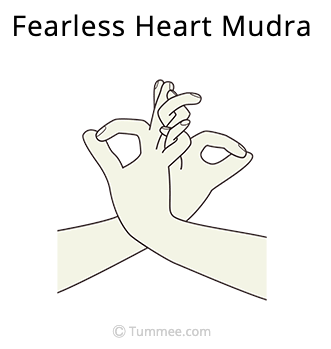
Name and demonstrate a mudra associated with Durga
Abhaya Hridaya -- Fearless Heart Mudra
500
Two Part Question:
What is the Sanskrit word for Intention? and
Why is it important?
Intention is defined as: the thing that you plan to do or achieve -- An aim or purpose. It is further defined as a determination to act in a certain way – or determining mentally upon an action or result. Another thought is that an intention is the end or object that is intended and taking a course of action that one desires to follow and a commitment to match your actions with your inner wisdom and spirit.
So, why set an intention? Setting an intention may or may not be part of your practice, but the reasons for setting an intention may be helpful to your students. Setting an intention brings clarity to yourself on exactly what it is you plan to do. Intentions are personal, sometimes deeply personal -- and private, just as the practice of yoga is personal and private.
500
Two Part Question:
How might you suggest a student support kneeling poses when the student displays discomfort when on their knees?
How might you support a student who finds balance poses challenging?
Cushion the knee with a blanket or sukhamat
Shift where the weight is being distributed (top of knee versus bottom of knee)
Come out of the pose and come to a supine position to move the leg/hip/ankle/foot
*~*~*~*~*~*
Suggest a block, chair or wall; Provide verbal encouragement; Give them permission to release the balance pose and try the pose again if they choose
500
Name the Sanskrit word for Pigeon Pose
What is Eka Pada Raja Kapotasana

500
Before you start to plan a practice and create a 'sequence', what question(s) might you ask yourself?
What do I want to teach today?
Is there a theme I'd like to bring into the practice?
Is there a peak pose? & if so, what poses support that peak pose?
What is the 'level' of the class you will lead?
What time of day will the practice be taken?