macromolecules
graphs, pictures
enzymes
enzyme behavior
review
100
what are the elements found in a lipid?
C, H, O
100
what macromolecule is this?
protein
100
true or false: enzymes can be reused
true
100
what do enzymes end in?
ase
100
what is a heterotroph?
must consume in order to get energy
200
how can you tell the difference between a carbohydrate and a lipid? Name at least two ways.
shape, function, -ose
200

lipid
200
true or false: enzymes give energy to the reactant to lower the activation energy
false
200
what two things effect enzyme activity?
temp and pH
200
what zone of the ocean has little to no sunlight?
aphonic
300
what are the monomers for all four carbohydrates?
carbs: monosaccharides
protein: amino acid
lipid: fatty acid
nucleic acid: nucleotides
300
what line is the catalyzed reaction? what letter represents its activation energy?
red, B
300
what elements are found in an enzyme?
protein: C, H, O, N
300
define "denature"
an enzyme is physically changed and can no longer interact with the substrate
300
a bear needs to gain a lot of weight before it goes into hibernation for the winter. Because of this, a bear will eat all sorts of foods, including berries, salmon, and coyotes. What type of consumer is it?
tertiary
400
what are the three functions of a protein?
regulate cell processes, cell transport, build muscles
400
what can you assume happens to the enzyme at around 60 degrees C?
denatured
400
define "substrate"
what the enzyme acts on
400
define what "optimum" means in terms of enzyme activity.
highest amount of activity/best conditions for the enzyme to work
400
a secondary consumer gives .5 J to the tertiary consumer. How many J did the producer originally receive from the sun?
500 J
500
why are lipids so important for arctic animals?
make blubber to keep warm
500
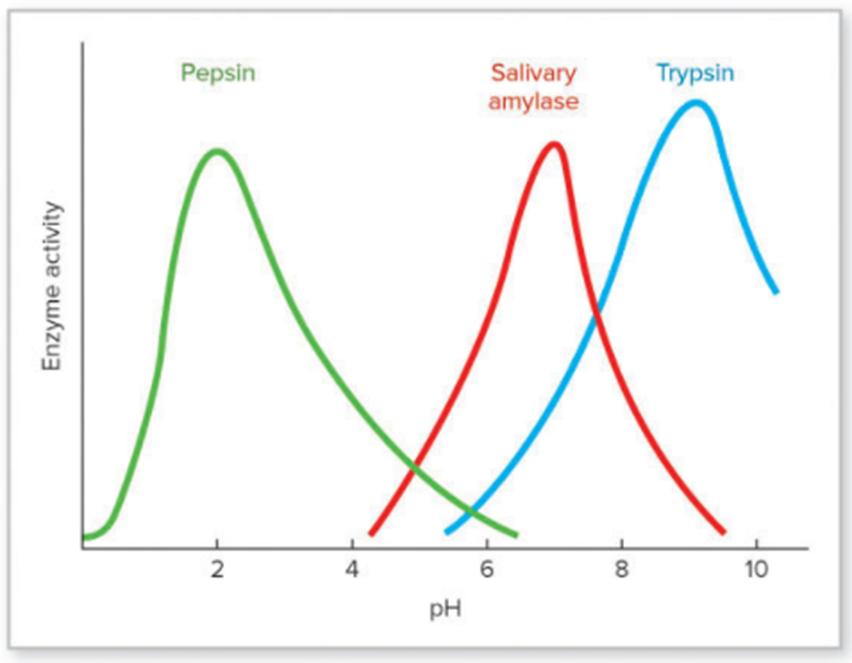
pepsin: 2
salivary amylase: 7
trypsin: 9
500
what is the relationship between enzymes and the products/reactants of a reaction?
no change, no relationship
500
how did temperature effect the effectiveness of the catalase in the potatoes from yesterday's lab?
the cooked potatoes changed the active sight on the enzymes and denatured them, so that they were unable to aid in speeding up the breakdown of hydrogen peroxide
500
what trophic level has the smallest biomass?
tertiary consumers