Shorings
Soil Types & Sloping
Ladders & Barriers
Utility Safety
Safety Roulette
Locates
100
A protective system must be in place for trenches exceeding this depth, before workers are permitted to enter. What is the depth?
1.2 m (3.93 ft)
100
Soil that is very stiff and dense, has medium internal strength, appears damp after excavation, and can be penetrated with moderate difficulty is classified as what soil type?
Type 2 soil
100
Where must ladders be positioned in relation to the excavation support system?
Within the protected area
100
These people onsite must review locates and confirm it matches marks on ground
Who is EVERYONE? (Crew, hydrovac operator, mechanical operator, Supervisor)
100
The minimum distance any tools, debris, material, or dirt piles must be placed away from an excavation edge.
What is 1 meter?
100
What 4 things are missing on this gas locate?
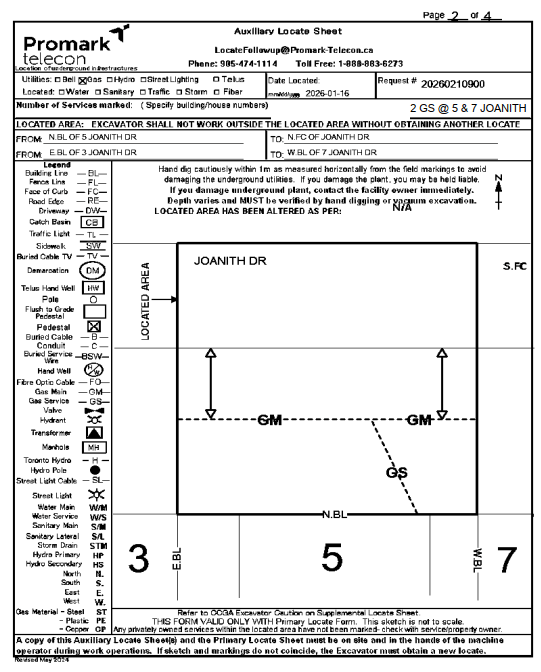
Measurements, Size, Material, Service to #7
200
As a trench gets deeper, what must be done with trench boxes to keep workers protected?
They must be stacked on top of each other
200
Soil that shows surface cracking, water seepage, may cave in to a natural 45° slope when dry, or slab off when wet, is classified as what soil type?
Type 3 soil
200
This is the maximum distance a ladder can be from any worker in a trench to ensure safe egress.
7.5 m (24.6 ft)
200
During hydrovaccing, which role is personally responsible for reviewing all locates, confirming exposed utilities, and communicating any discrepancies to the supervisor?
Vac Operators
200
These two activities must never be performed while a worker is inside a trench, as they can lead to sudden collapse, engulfment, or struckby.
Adjusting/installing/removing shoring, and backfilling.
200
Is this located area valid? And Why?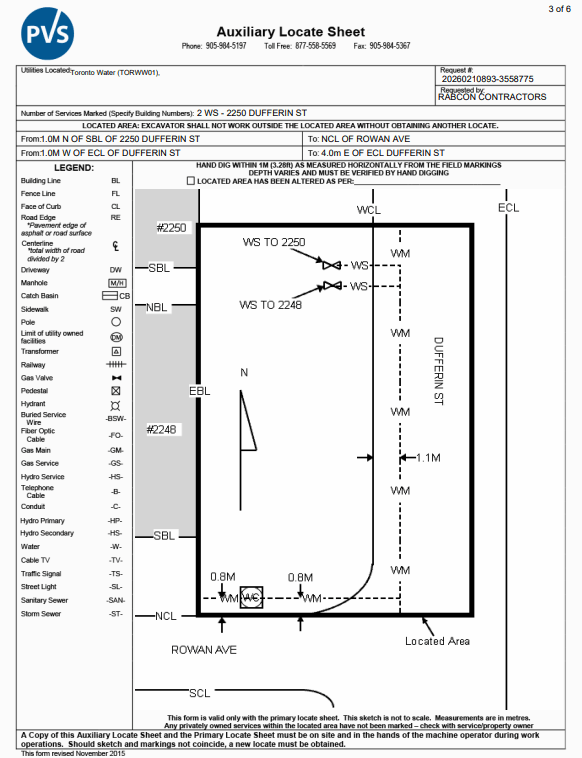
No - the written area does not match the drawing. It should say: East Building Line of 2248 Dufferin St not 4m east of east curb line Dufferin St.
300
Protective systems for excavations deeper than what depth must be designed and approved by a professional engineer?
More than 6 m (20 ft)
300
Soil that has almost no internal strength, especially when wet or muddy, and is sensitive to vibration, is classified as what soil type?
Type 4 soil
300
This is how far a ladder must extend above the landing area in an excavation to ensure safe access and exit.
900 millimetres (35 inches) (3 ft)
300
These are the excavation methods you must use when digging within 1.2m of underground utilities.
hydrovac and hand digging
300
This designated person must always be present when a worker enters a trench, acting as a safety watch and communicating with workers below. What is this person called?
A topman.
300
There are 3 runs of Bell in the South Blvd, how many conduits in each?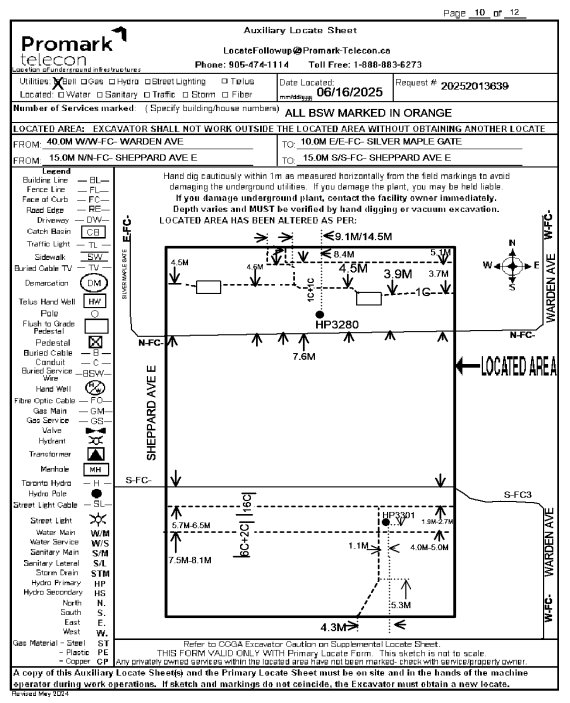
25 = TOTAL (First line: 16 + Second line: 8 + Third line: 1)
400
Supports must be installed at intervals no greater than how many metres (unless an engineer specifies otherwise)?
1.5 metres (4.9 ft)
400
For Type 2 or 3 soil, what is the required slope ratio? (if you choose to slope)
1:1 (45 degrees). Equates to a 1 meter horizontal distance for every 1 meter of vertical rise
400
What is the minimum height a support system, such as shoring or a trench box, must extend above the top edge of an excavation (unless engineer drawings say otherwise)?
0.3 metres (0.9 ft) (11.8 inches)
400
This is the minimum distance you must maintain from an UNEXPOSED utility when using mechanical excavation equipment.
1.2 m (3.93 ft)
400
Spotters are mandatory when... (give 3 major situations)
Reversing, Operating near underground utilities, operating near overhead utilities, around tree protection zones, in tight workspaces
400
What does this sticker mean?
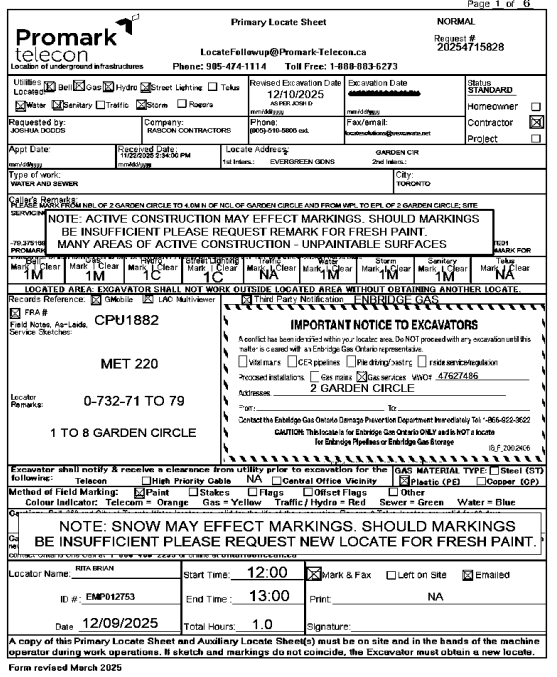
Proposed Gas Service - we need Enbridge clearance to dig
500
Shoring boxes must be installed how close to the bottom of the trench (unless the manufacturer or engineer specifies otherwise)?
No more than 1 foot gap (0.3 m)
500
For Type 4 soil, what slope ratio is required? (if you choose to slope)
1:3. Equates to a 3 meter horizontal distance for every 1 meter of vertical rise
500
Excavations exceeding what depth must be protected with a barrier or guardrail at least 1.1 meters (3.6 feet) high to prevent falls?
2.4 meters (7.9 feet)
500
This is the minimum distance you must maintain from an EXPOSED utility when using mechanical excavation equipment.
0.3 metres (0.9 ft) (11.8 inches)
500
Under Rabcon’s rules, which soil types do we NEVER classify/approach soil as (to take the most precaution)?
Type 1 or Type 2
500
Name 5 locate issues where work must be stopped immediately and the Utilities Coordinator (Jessica) must be notified for relocates.
-The drawing does not match the written locate area
-A utility shown on the locates is not found
-A utility is found outside the 1 m tolerance zone
-A utility is found but is not shown on the locates
-The utility found does not match the locate description (material, size, or service)