Gene therapy & Genome editing
Pedigree/Inheritance
Probability of Inheritance
Allele/Gene Interactions
Evolution & Genome Analysis
100
In a CRISPR/Cas9 system, what is the role of the tracrRNA?
Binds to both the crRNA and Cas9 enzyme, forming the complex required for DNA targeting and cleavage
100
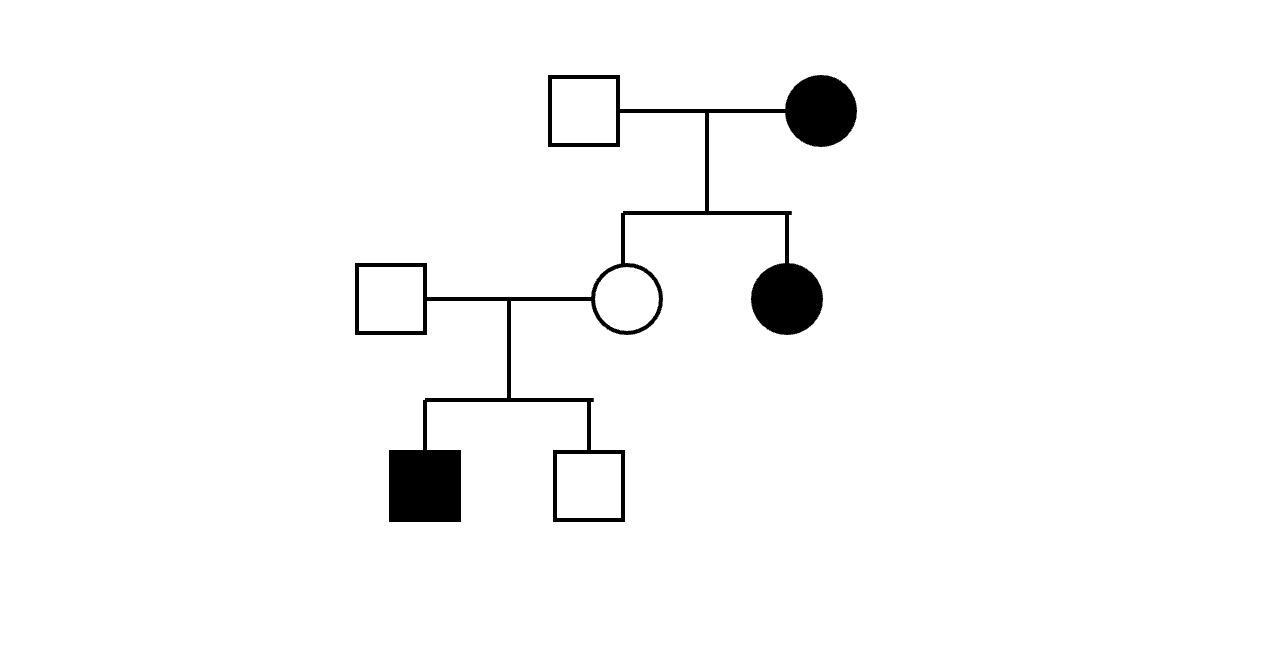
What is the most likely genotype of individual II-2?
Assume the tracked trait is autosomal recessive
Heterozygous (carrier)
100
Consider a cross between a homozygous dominant (AA) individual and a heterozygous (Aa) individual. What is the probability an offspring will be homozygous dominant?
50%
100
You perform a complimentation test on two recessive mutations and discover the mutations do NOT compliment each other. Are the mutations most likely located on the same gene or different genes?
The same gene
100
When performing Sanger Sequencing, what aspect of the dideoxynucleosides (ddNTP) stops chain extension
The lack of the 3' OH group prevents chain extension
200
Why does non-homologous end joining (NHEJ) have a higher error rate than homologous recombination (HR)?
A. NHEJ occurs only in the G1 phase of the cell cycle
B. NHEJ uses a template from a homologous chromosome
C. NHEJ joins DNA ends directly without a repair template
D. NHEJ requires DNA replication before repair
C. NHEJ joins DNA ends directly without a repair template
200
What is the most likely mode of inheritance for this single gene trait being tracked in this pedigree?
Autosomal recessive
200
A chi-square test produces a p-value greater than 0.05. What does this indicate about the null hypothesis?
You fail to reject the null hypothesis
200
Gene Ay is a recessive lethal allele. Two heterozygous parents are crossed, what is the resulting ratio of phenotypes of the offspring?
2:1 ratio
(The homozygous recessive Ay/Ay offspring will die as embryos)
200
Would a population of birds or a population of tomato plants be more likely to experience gene flow?
Population of birds
300
A patient has a mutation in a gene required for normal heart function. You use CRISPR/Cas9 to correct the mutation in the cardiac cells of the patient. The patient's heart improves, but their future children do not inherit the edited gene.
Is this an example of somatic or germline gene therapy?
Somatic gene therapy
300
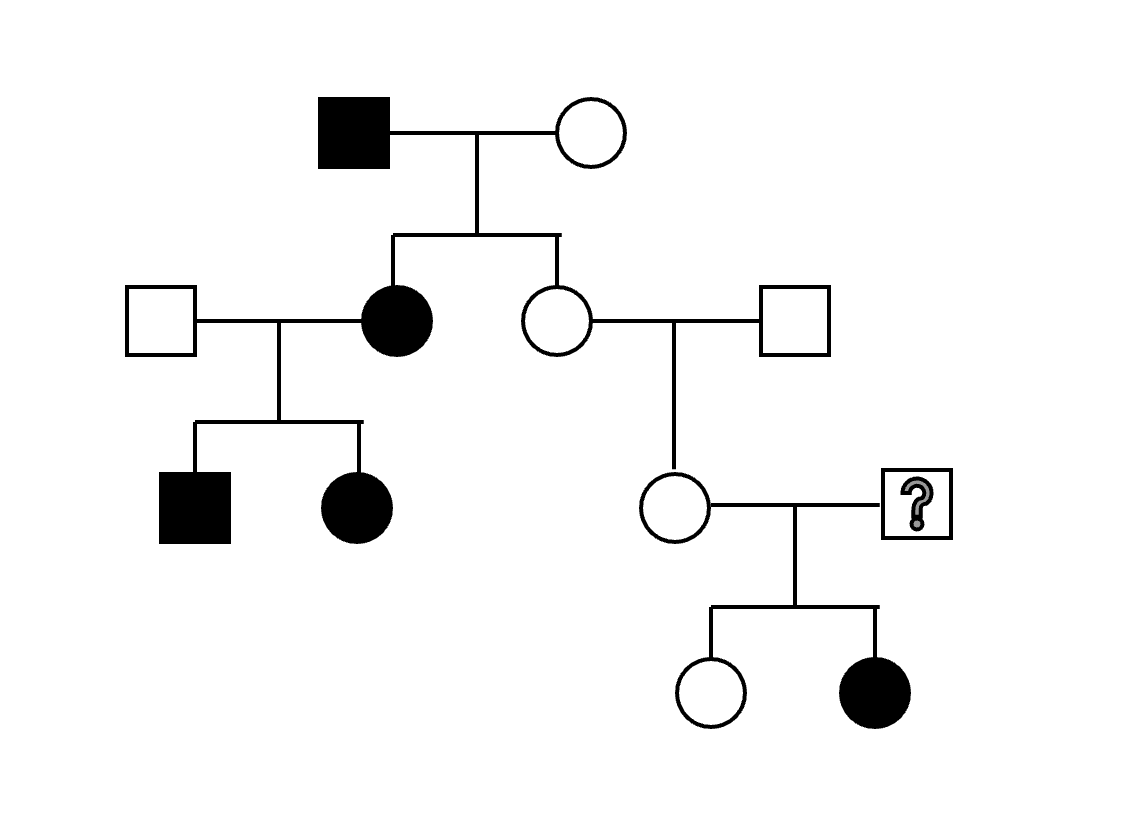
Given this pedigree is tracking an autosomal dominant trait, what must be the genotype of individual III-4?
Heterozygous (carrier)
300
When tracking 3 unlinked genes, two parents have the genotypes:
Parent 1: a/a ; b/b ; C/c
Parents 2: A/a ; B/B ; C/c
What is the probability an offspring will have the genotype: A/a ; B/b ; C/C
1/8
300
In Hyraxes, the following alleles of an autosomal gene affecting coat color are listed in decending order of dominance:
B (brown) > bg (green) > bb (black) > ba (albino)
A cross between a green male and a brown female produced the following progeny:
10 brown, 5 green, 5 black
What is a possible genotype of the green male parent?
Either of the following:
bg / bb
or
bg / ba
300
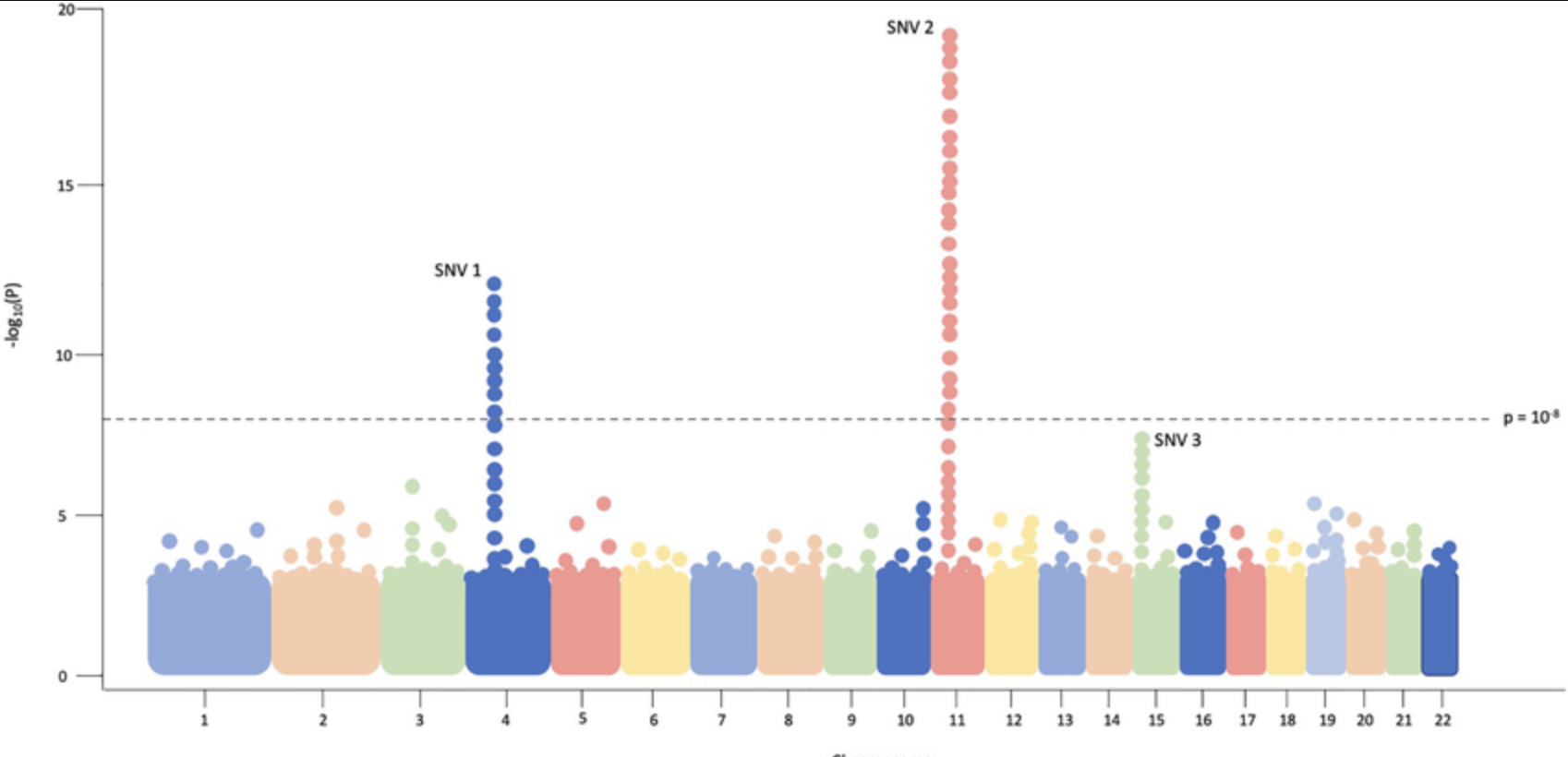
Given this Manhattan plot, how many chromosomes have strongly associated risk loci?
citation:
Rich KA, Roggenbuck J and Kolb SJ (2021) Searching Far and Genome-Wide: The Relevance of Association Studies in Amyotrophic Lateral Sclerosis. Front. Neurosci. 14:603023. doi: 10.3389/fnins.2020.603023
2 chromosomes (4 and 11)
400
Scientists are studying three genetically modified frogs:
Frog A: Using CRISPR/Cas9, scientists insert the gene encoding green fluorescent protein (GFP), which comes from a Jellyfish, into the frog's genome. As a result, the frog's tongue glows green under UV light.
Frog B: Scientists insert a gene from a bacterium into the frog's genome. The bacterial gene produces a protein that gives the frog a new biological trait.
Frog C: Scientists use CRISPR/Cas9 to introduce a mutation into the frog's own gene responsible for foot development, causing the frog to have unusually large feet.
Which frog(s) are considered transgenic?
Frogs A and B are transgenic.
Frog C is a genetically modified organism (GMO) but not transgenic.
400
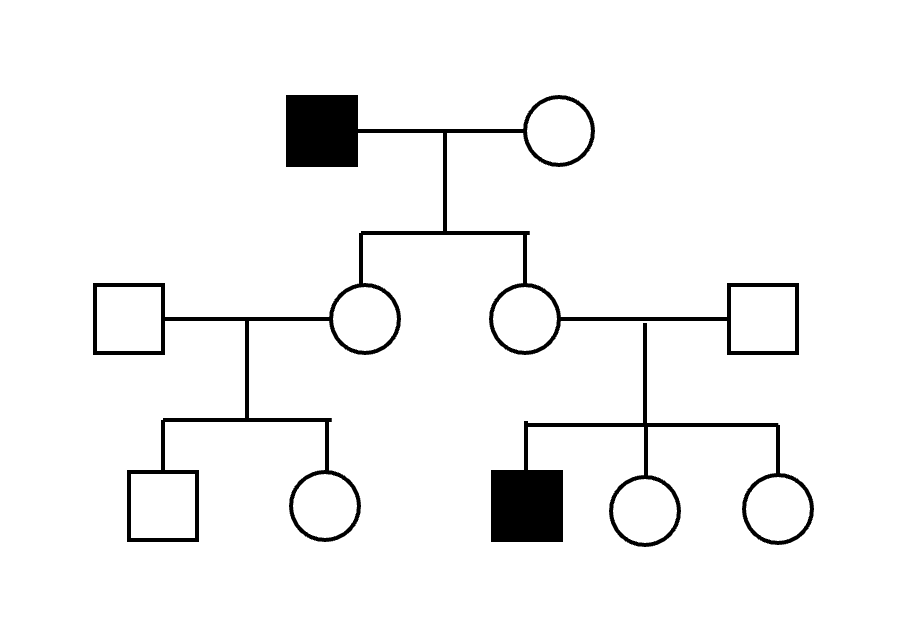
This pedigree tracks an x-linked recessive single gene trait. What is the probability individual III-4 is a carrier for the trait?
50% chance of III-4 being a carrier
400
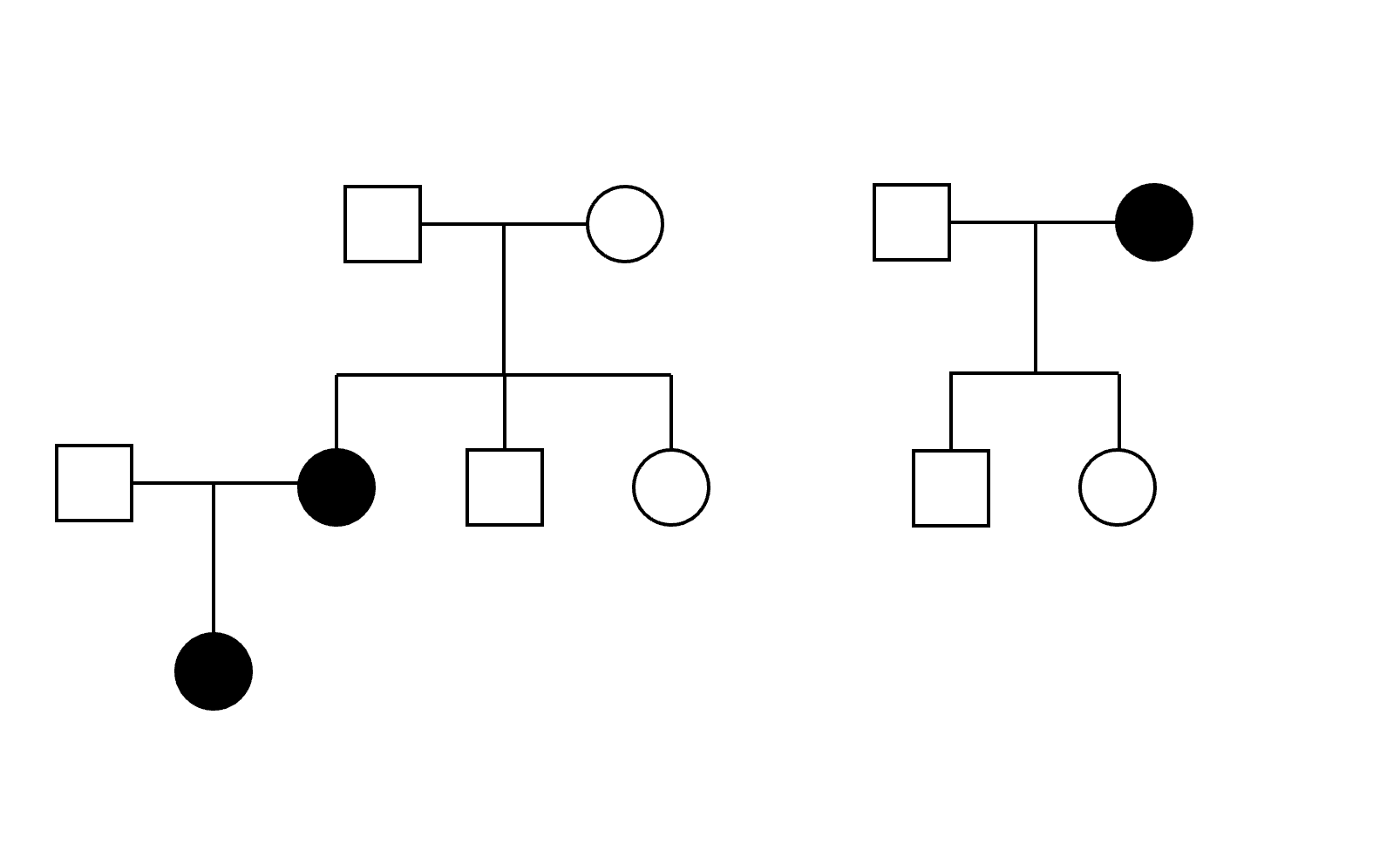
Given these pedigrees for an autosomal recessive disorder, if individuals II-4 and II-5 have a child, what is the probability the child will be a carrier?
1/2
400
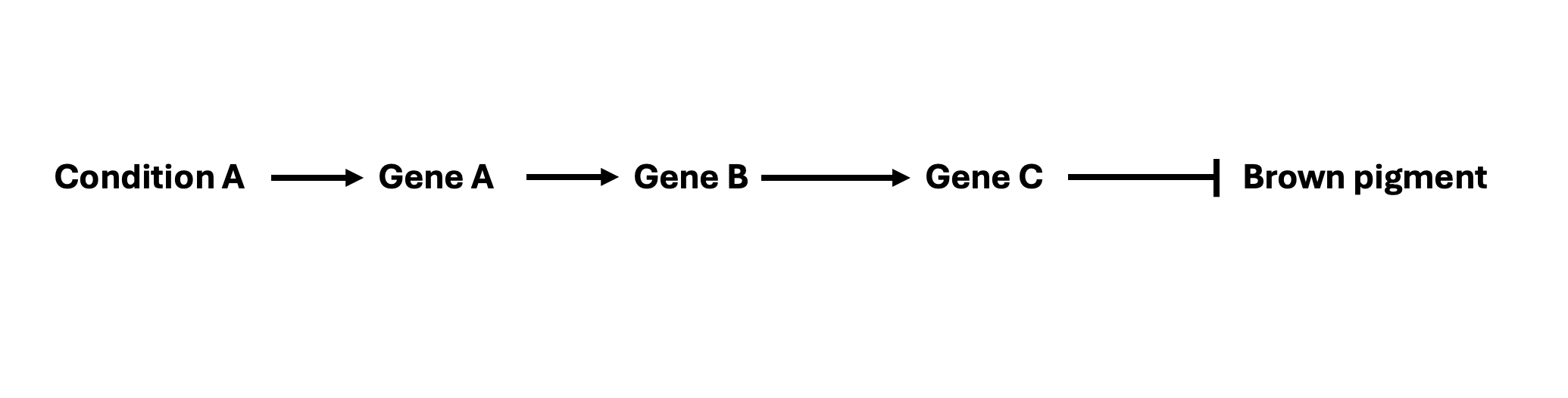 Use this regulatory pathway.
A scientist creates a Gene B knockout, a Gene C knockout, and a double Gene B and Gene C knockout.
The double knockout (BkoCko) has the same phenotype as the Gene B knockout.
Which gene is epistatic?
Gene C is epistatic to Gene B
400
You are performing Sanger Sequencing and prepare the following reagents: template DNA, ddGTP, DNA polymerase, dNTPs, and primers.
When you go to analyze the data you discover the sequencing did not work. What is the most likely reason?
Only ddGTP was included, you were missing the other ddNTPs such as ddATP, ddTTP, and ddCTP.
500
A scientist uses the CRISPR/Cas9 system to make a precise double strand break in a gene they want to edit in cells. They notice the edit is more successful in cells that are actively dividing.
What is the most likely explanation for this?
The available sister chromatid in dividing cells provides the template for homologous recombination, a less error-prone DNA repair method.
500
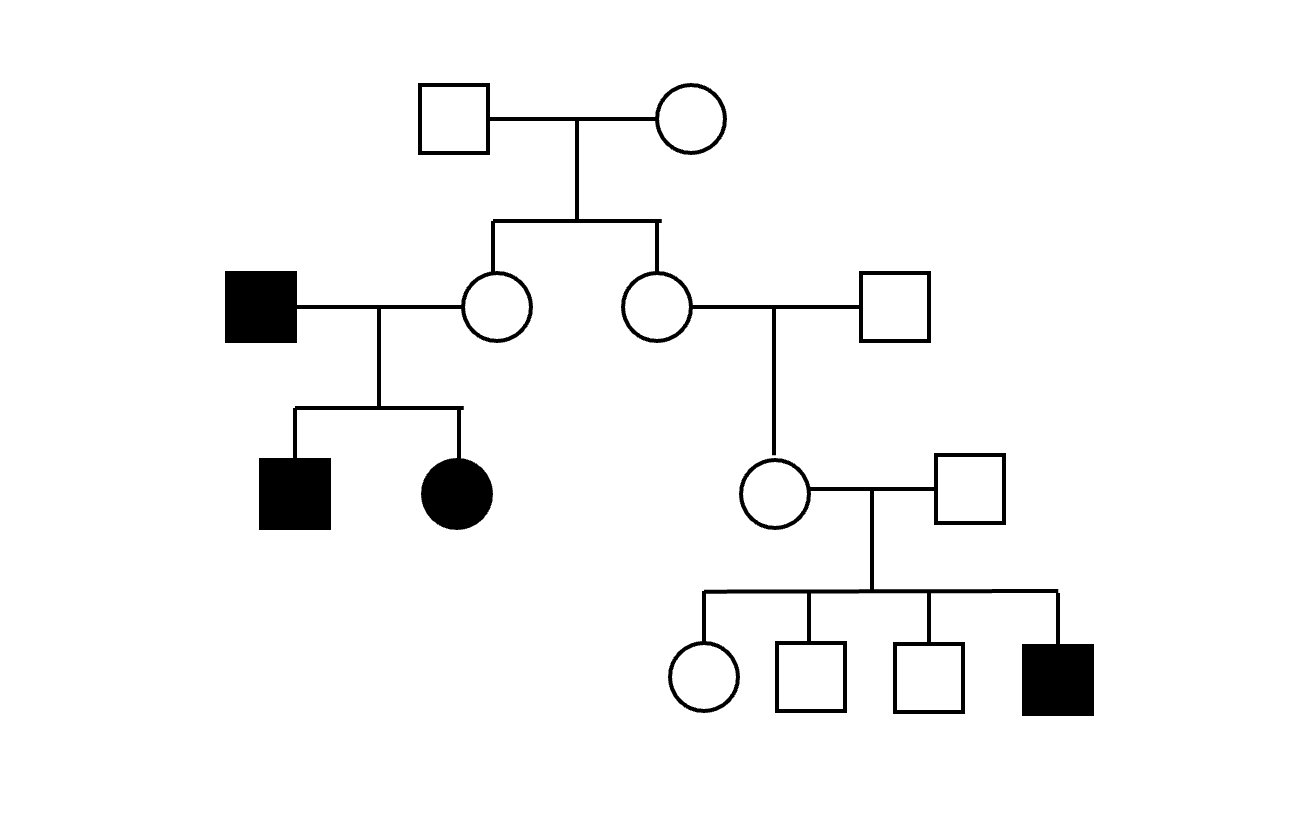
Given that this pedigree is tracking an X-linked recessive trait, if individual IV-3 mates with an affected female, what proportion of the female offspring will be carriers?
100% of female offspring will be carriers
IV-3 is XAY, mates with an affected female XaXa
So all daughters will be XAXa (carrier)
500
In a species of crab, the claw gene and fur gene are being studied.
CL = normal-sized claws (dominant)
cl = small claws (recessive)
FR = furless (dominant)
fr = fur (recessive)
A crab heterozygous for both genes (CL/cl | FR/fr) is testcrossed with a crab that is homozygous recessive for both genes.
The observed offspring phenotypes are:
Normal claws & furless - 61
Small claws & furless - 39
Normal claws & fur - 41
Small claws & fur - 59
Is there statistical evidence (p<0.05) these genes are linked?
Yes.
You should get a chi-squared value of 8.08, and with 3 degrees of freedom, that would give a p-value of less than 0.05.
500
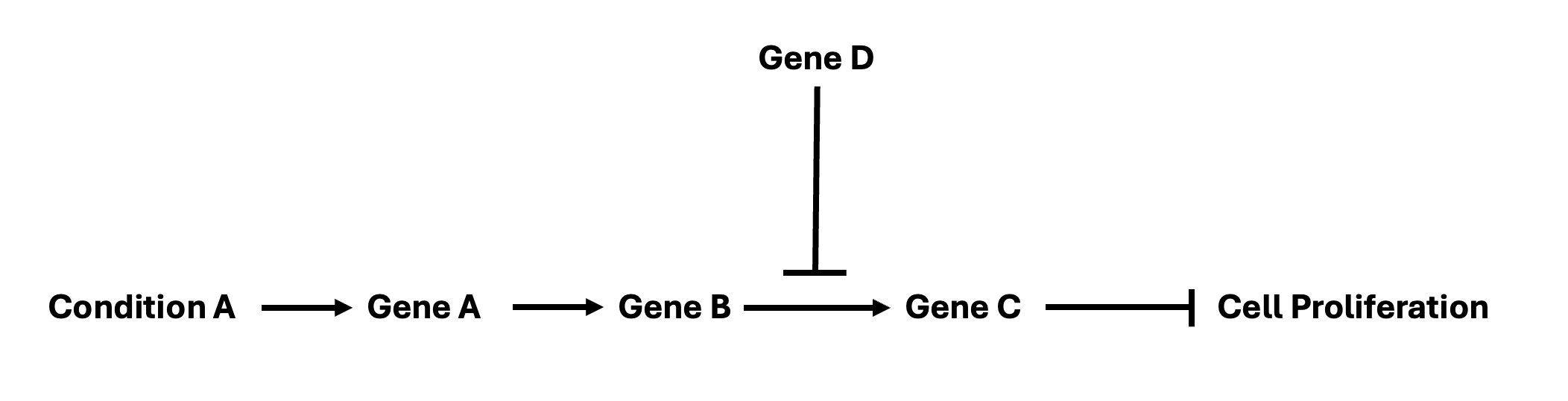
The following regulatory pathway is involved in cell proliferation (division). One parent is homozygous null for Gene D, the other parents is homozygous wildtype for Gene D.
Assume both parents are homozygous wild type for all genes except Gene D. The Gene D wild-type allele is dominant to the null allele.
What will be the phenotype (increased/decreased proliferation) of the offspring of these parents?
The offspring will show increased cell proliferation
500
In humans, red hair is an autosomal recessive trait involved in variation in the MC1R Gene. In a population sample, 1.2% of individuals have red hair (mc1r/mc1r) whereas the rest do not.
Assuming the population is in Hardy-Weinberg equilibrium, calculate the proportion of heterozygous carriers of the MC1R in this population.
0.195 or 19.5%