Lesions
Auditory Neuroscience
Language/ Aphasia
Motor Speech
Executive Function
Name! That! Structure!
100
The meninges are three layers of protective connective tissue membranes that surround the brain and spinal cord.
Name all 3.
What is inflammation of the meninges called?
Dura Mater, Arachnoid Mater, and Pia Mater
Meningitis
100
Define the "threshold of pain"
The threshold of pain in human hearing is typically around 120–140 dB SPL (Sound Pressure Level).
At this intensity, sound waves create excessive vibration in the ear, leading to physical discomfort and potential damage to the auditory system.
100
Let's start with basics:
Define Speech vs. Language
Language: A system of rules and symbols for communication
Speech: The physical act of producing spoken words
100
The neural coordination of speech starts in the ______ of the brain and ends at our speech _______.
The neural coordination of speech starts in the CORTEX/BROCA'S AREA of the brain and ends at our speech MUSCLES (in the respiratory, phonatory, and articulatory systems).
100
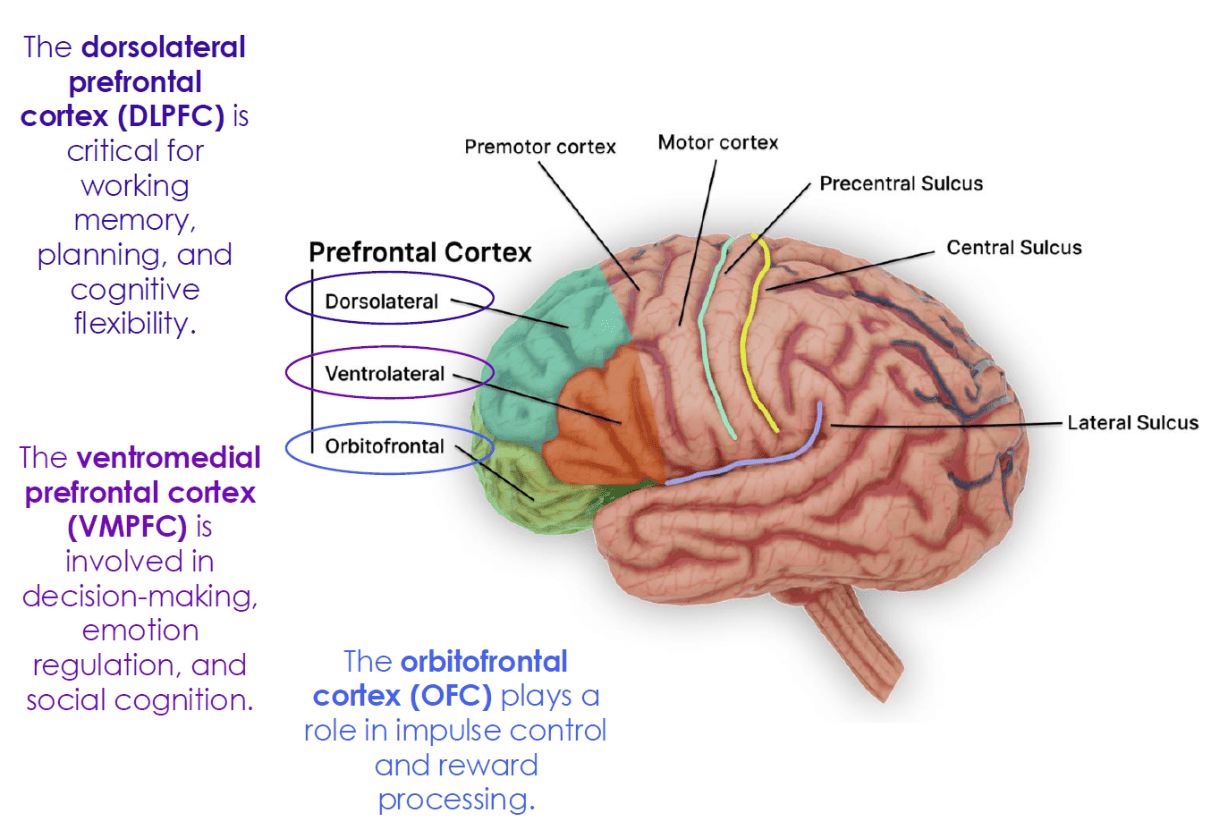
Which prefrontal region is most associated with working memory and planning? (Broadly and Specifically)
Dorsolateral prefrontal cortex (DLPFC)
100

"Speech production HQ" – helps you turn thoughts into spoken words
Broca's Area
200
Match the type of lesion with the possible cause/presentation:
LESIONS:
- Infectious Lesions
- Vascular (conditions affecting the network of blood vessels) Lesions
- Neoplastic (abnormal, uncontrolled growth of cells) Lesions
CAUSE/PRESENTATION:
- Sarcomas (connective tissue origin)
- Arteriovenous Malformations
- Brain-Eating Amoeba
- Infectious Lesions --> Brain-Eating Amoeba
- Vascular Lesions --> Arteriovenous Malformations
-Neoplastic Lesions --> Sarcomas (connective tissue origin)
200
What is "tonotopicity" and where can you find it in the auditory system?
Tonotopicity: the organized spatial arrangement of neurons in the auditory system based on their response to different frequencies of sound
- Basilar Membrane
- Hair Cells
- Auditory Nerves
- Subcortical Structures for Hearing
- Cortical Structures for Hearing
200
Name the types of aphasia where you'd expect fluent speech, but it may be nonsensical OR difficult to find (but not physically speak) the right word.
Wernicke’s (damage to Wernicke’s area—intact production but impaired comprehension)
Transcortical Sensory (similar to Wernicke's, but intact repetition skills. May repeat questions instead of answer them)
Conduction (intact production and comprehension, but impairment in their ability to repeat simple phrases; rare)
Anomic (difficult “word finding” or naming; the mildest of aphasias)
200
Some structures, like the hands, fingers, and mouth, take up more area on the "motor homunculus" than other structures that may actually be bigger on the human body. Why?
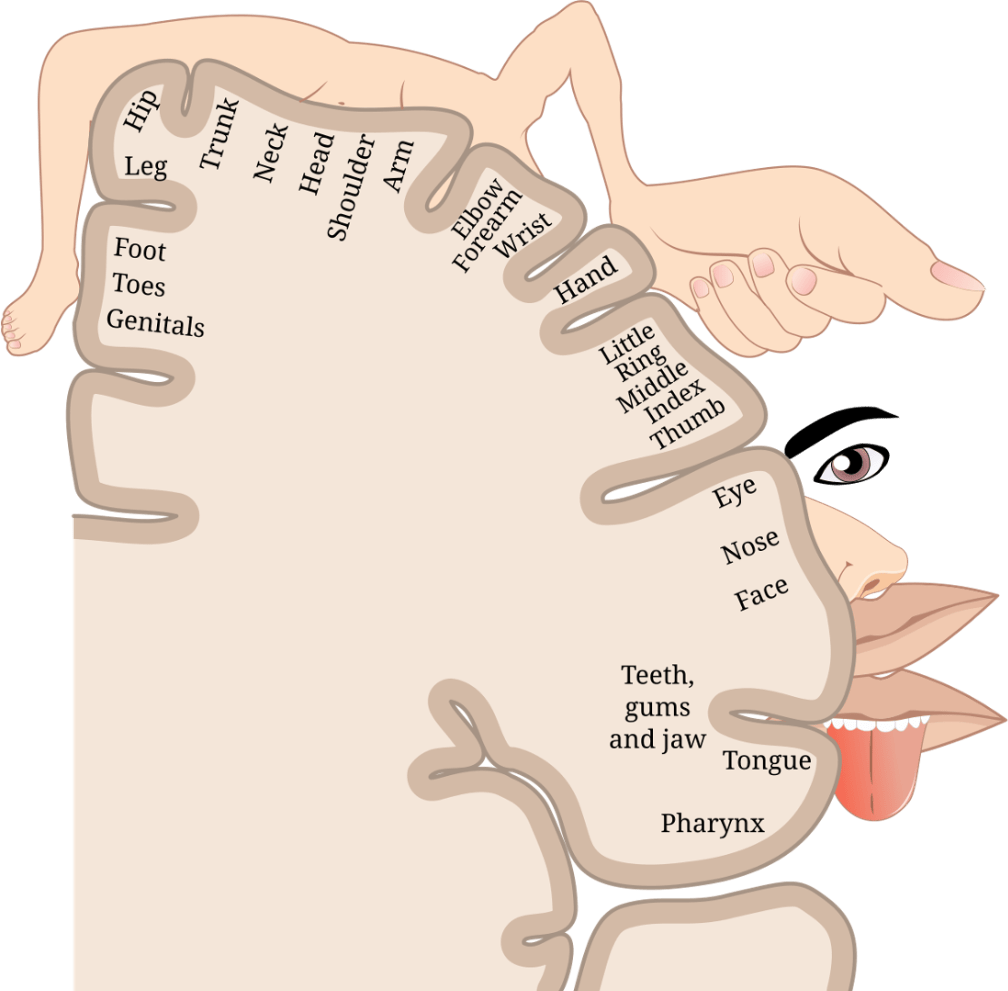
Body parts, like the hands and mouth, that are required to make very complex and accurate movements are given more brain area. That is why the homunculus looks different from an actual human body, with very big hands and mouth and small feet
200
Describe how you'd set up a response inhibition task using images like this. In that task, what would be a congruent trials vs an incongruent trial?
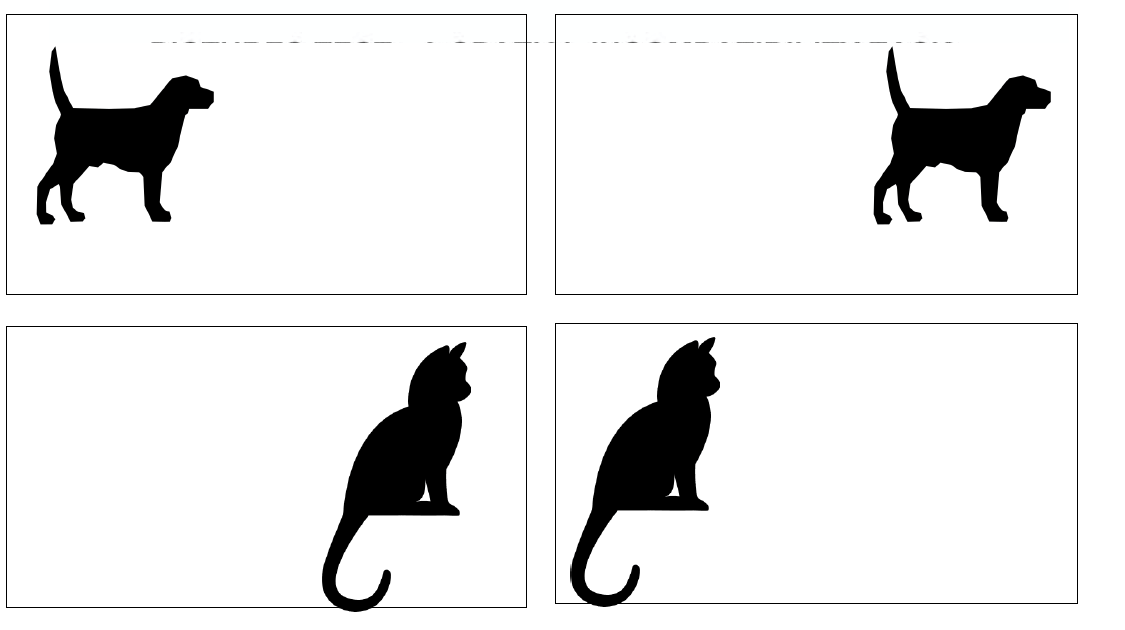
"Press the button on the right when you see a dog, but press the button of the left when you see a cat."
In congruent trials, the stimulus and the required response are spatially aligned.
In incongruent trials, the stimulus and the required response are spatially misaligned
200
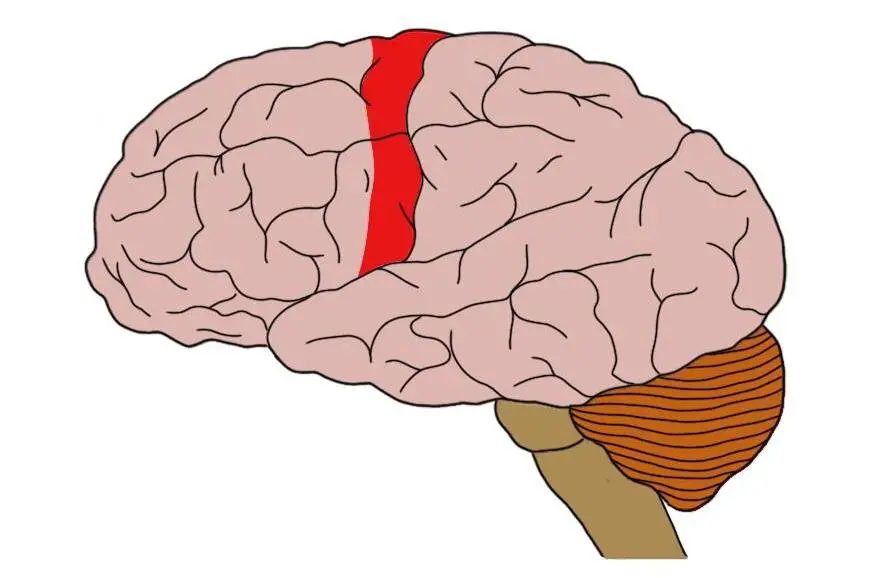
"Movement commander" – sends signals to control voluntary muscles
Primary Motor Cortex
300
Neurofibrillary Tangles are deposits of an unwanted protein in the brain that causes cell death and brain atrophy (shrinkage).
What is this protein and what 2 diseases is this seen in?
Chronic Traumatic Encephalopathy (CTE) (localized tau)
Alzheimer’s Disease (widespread tau)
300
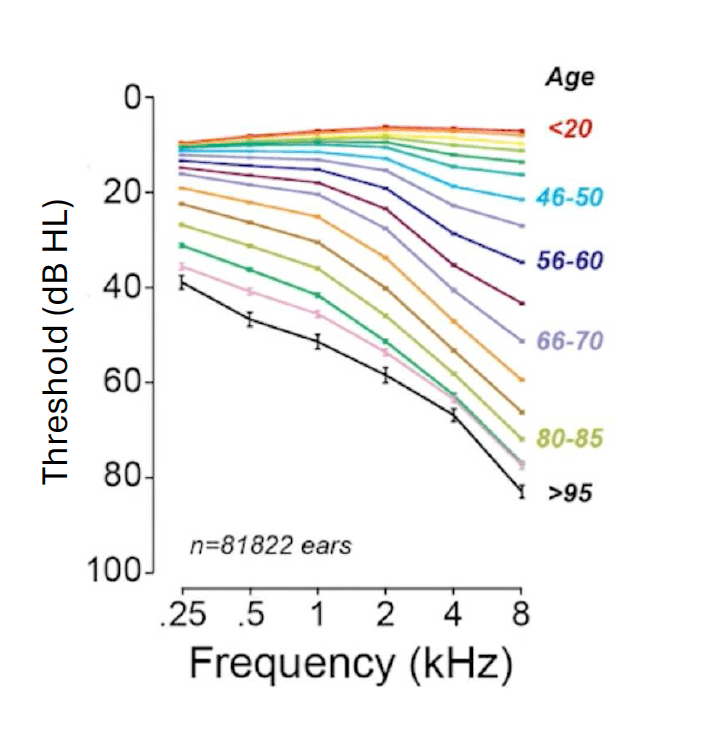
Describe how hearing changes with age. What structures are dying and how does this impact the audiogram?
Stereocillia and OHCs start to die/dysfunction with age, targeting HIGH FREQUENCIES first. The audiogram will be sloping, with elevated thresholds starting at higher frequencies.
300
This is the Cookie Theft Picture from the Boston Diagnostic Aphasia Examination.
As an SLP, how do you present this to a patient with aphasia? What would you expect from someone with Broca's aphasia? Wernicke's?
"Describe what you see"
Brocas = hard time expressing their words
Wernicke's = might talk quite a bit, but may not be relevant
300
The Substantia Nigra produces this neurotransmitter in this area of the brain.
Dopamine in the Basal Ganglia
300
What does the N in the N100 and N400 stand for? What does the 100 and 400 stand for?
Which is an EEG measure of attention, and which is an EEG measure of semantic meaning?
NEGATIVE
TIME IN MS
N100 = Attention
N400 = Semantic Meaning
300
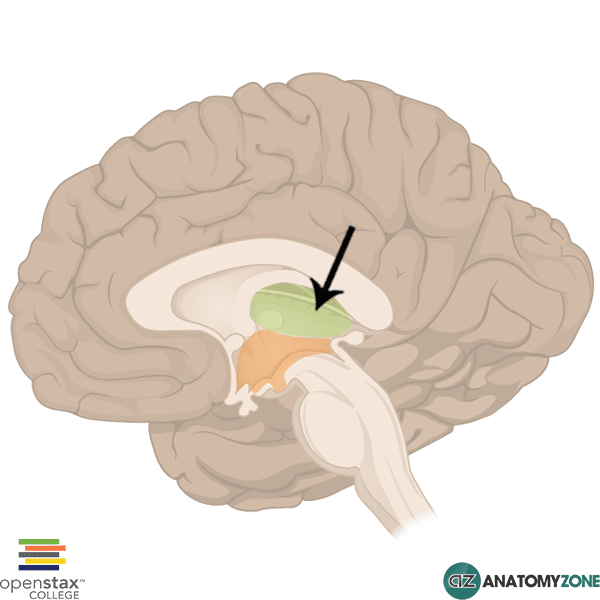
"Sensory relay station" – directs incoming sensory info to the right part of the brain
Thalamus
400
What are the two main types of Hematomas (seen in red and blue)?
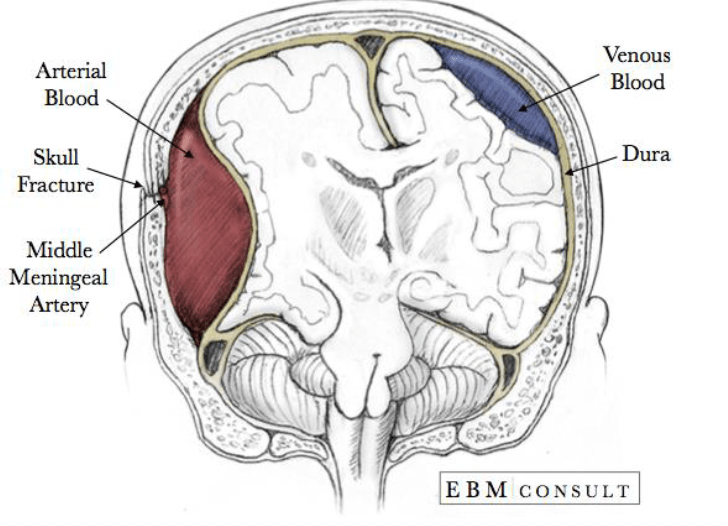
Subdural & Epidural Hematomas
Subdural Hematoma – Bleeding between the dura and arachnoid mater
Epidural Hematoma – Bleeding between the dura mater and skull
400
Auditory Neuropathy Spectrum Disorder (ANSD) is a hearing condition where the inner ear detects sound normally but fails to transmit it properly to the brain.
What do OAEs and ABRs look like in patients with ANSD?
OAEs = Normal
ABRs = Abnormal
What about acoustic reflexes? What about audiograms? (Study on your own!)
400
Who may be on a patient care team for somebody with Aphasia? Why more than just an SLP if it's a langauge disorder ?
A patient care team for someone with aphasia may include an SLP, neurologist, occupational therapist, physical therapist, nurse, audiologist, and psychologist or counselor.
Even though aphasia is a language disorder, more than just an SLP is needed because aphasia often results from broader brain injury (e.g., stroke, TBI), which can affect mobility, cognition, hearing, and emotional well-being.
A multidisciplinary team ensures comprehensive care addressing all aspects of the patient’s recovery, not just speech and language.
400
What two areas of the brain provide feedback for speech/"integrated support".
Think: AMOUNT of movement and SMOOTHNESS of movement
Basal ganglia → movement amount problem
(too much or too little movement)
Cerebellum → movement coordination problem
(messy, inaccurate movement)
400
What does "chunking" mean in working memory?
400
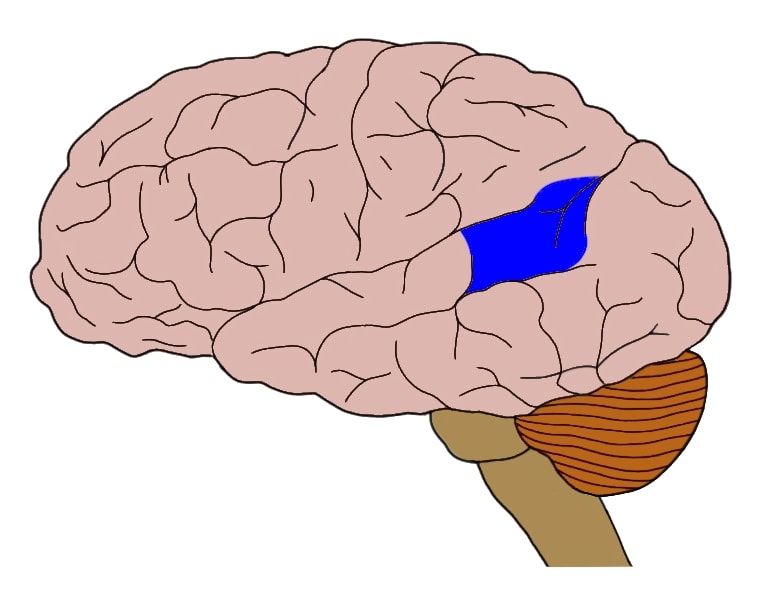
"Language decoder" – helps you understand spoken and written language
Wernicke's