Feature Presentation
Put me in, Coach!
Good to Know...
Abort Mission!
Stretched Too Thin
100
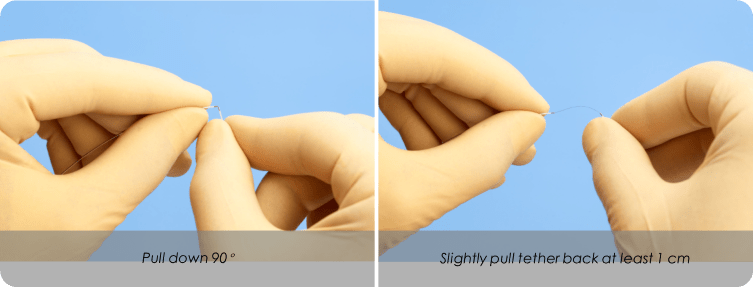
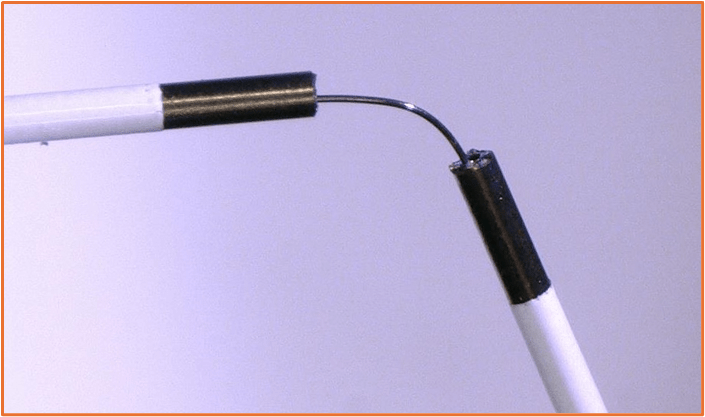
No detachment handle? No problem! Embold coils don't need one. Instead, they offer easy, handle-free detachment. Snap the pusher wire between the white markers and pull back the proximal end this much to deploy the coil.
At least 1cm
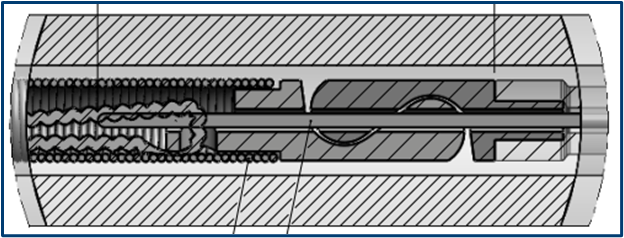
100
This coil is the workhorse coil within the Embold family. Use it in small vessels, large vessels, high-flow & low-flow vessels, as a framing coil or as a backstop for subsequent coils!
Embold Fibered
100
Prep work to get Embold coils ready to deploy is minimal… but always do this prior to inserting your first coil, after using contrast, and after every couple coils to keep things moving smoothly.
Flush the microcatheter
100
Always be sure to do this to visually confirm that the coil has detached prior to retracting the delivery system. Inadvertent coil pullback can be a pain!
View with fluoro
100
These are some reasons why coil stretch occurs.
Multiple retractions/manipulations
- incorrect sizing
- coil not forming correctly
Inadvertent coil pullback
- couplers in MC
- couplers in small vessel <1.5mm
Coil advanced or withdrawn against high resistance
- intertwined coil nest, MC tip kept in coil nest while advancing
- Pinning coil with MC
- kink in MC
200
All Embold coils have multi-catheter compatibility. This means any Embold coil is compatible with any microcatheter that has an ID within this range.
.021" - .027" ID
200
This coil has the ability to densely fill up space and create a compact mechanical occlusion. It's great in aneurysms or large vessels… but never use it on its own! It always needs a dance partner.
Embold Packing
200
Radial entry is your access of choice for the embolization at hand. No problem! … unless you choose a microcatheter of this length.
175 cm
Embold can not be deployed through 175cm radial length microcatheter
200
Full retractibility is one of Embold's landmark features. Keep at least one of these on the sterile table to protect the coil in case one is retracted and you plan to try using the coil again.
Introducer sheath
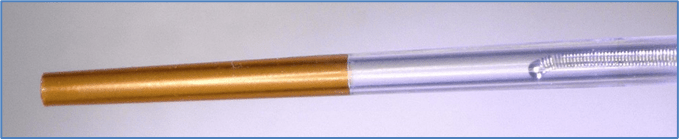
Bathe coil in hep saline once retracted & re-sheathed
200
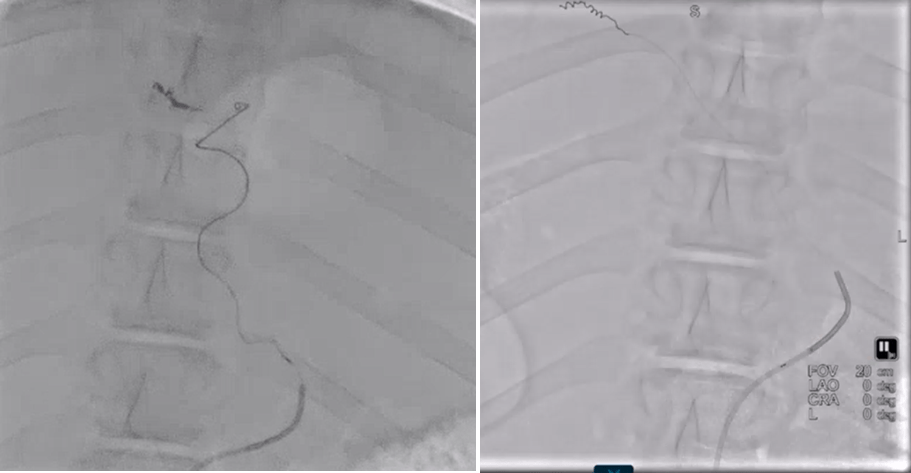
Stretch can happen with any retractable coil. If it does occur, early recognition of stretch is important to best manage the affected coil. On fluoro, this is the first telltale visual sign that coil stretch has or is beginning to occur.
Loss of coil radiopacity
300
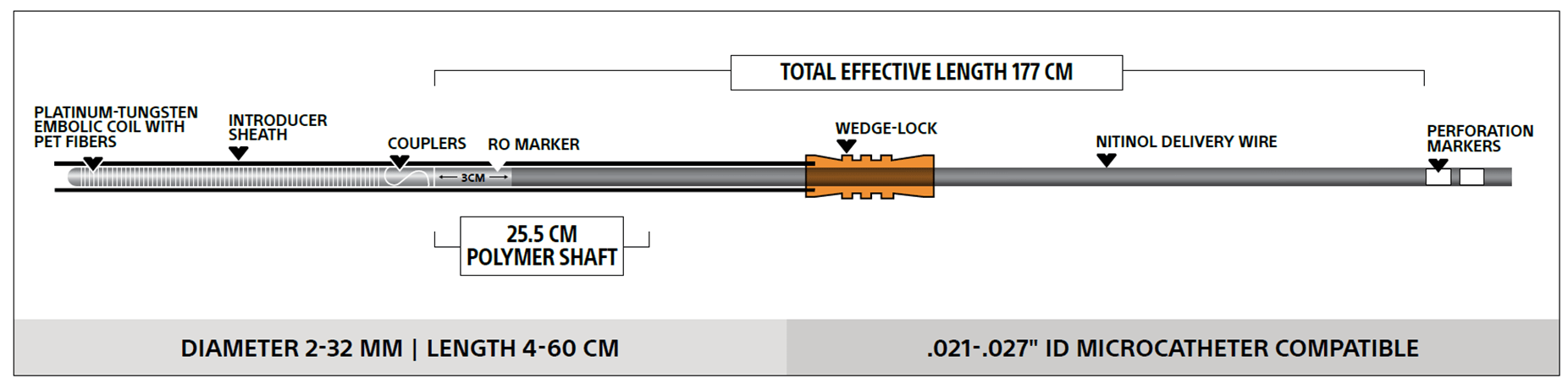
Your microcatheter tip is buried in a coil mass. You can't see the end of it on fluoro, so you can't tell if your Embold coil has completely exited the microcatheter. This additional indicator will help you determine if the coil is advanced far enough.
RO Marker 3cm from proximal coil couplers
300
This Embold coil is best served in small vessels, near a vessel ostium, or in a small landing zone. A smooth, easy delivery with limited catheter kickback and a dense pack in small vessels is its claim to fame.
Embold Soft
300
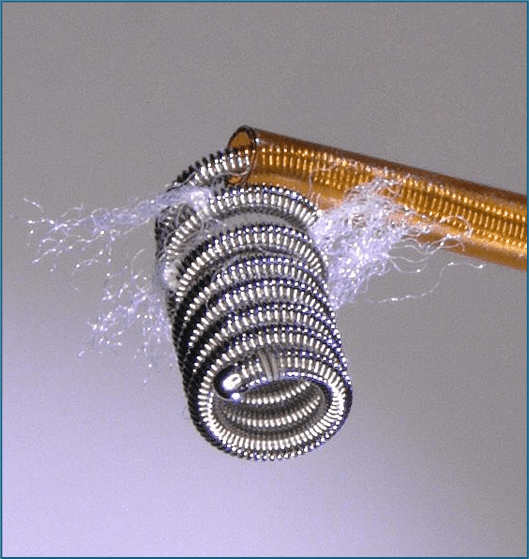
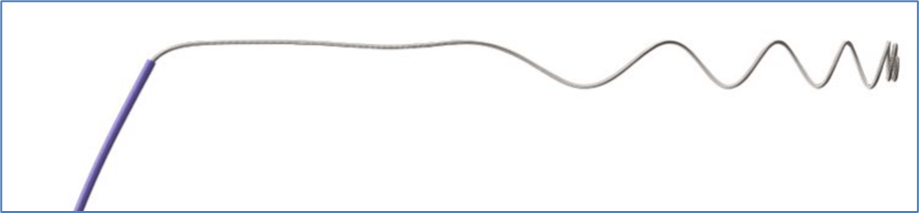
This coil has the most outward radial force, making it ideal for anchoring. Similarly, this coil also has outward force, abeit 10x less than the former. Regardless, both can be used for anchoring and finishing in the right scenarios.
Embold Fibered = defined helical shape c/ anchorable wind, most radial force
Embold Soft = defined helical shape c/ softer wind, has radial force, but less
(Embold Packing = no outward radial force, oscillating shape, no anchorability, requires backstop)
300
You've decided you'd like to retract your Embold coil. If your microcatheter is advanced very close to the coil mass, doing this with the MC prior to coil retraction will help ensure your the coil comes back smoothly by preventing it from being withdrawn along a tight, angled path.
Pull back the Microcathether to improve retraction angle.
Coil should be in-line with MC when retracting.
300
From a tactile standpoint, coil stretch can present as a spectrum depending on the severity of the stretch. Minor stretch might present as a subtle "gritty" feeling, increased friction, a loss of 1:1 response, or a delay in forward motion & retraction. With significant stretch, you'll probably lose this ability altogether.
Loss of ability to push & pull
400
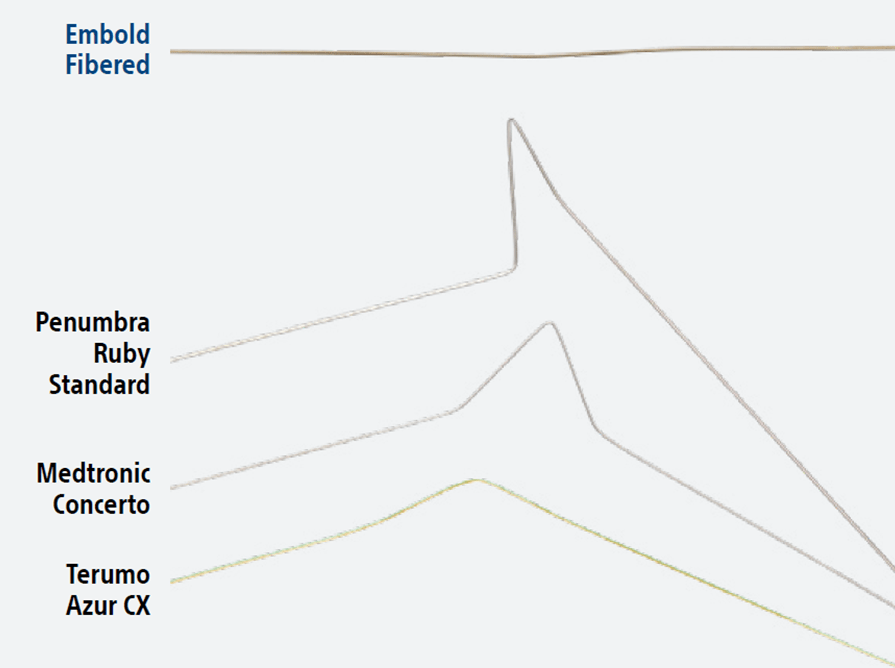
Any "ordinary" detachable coil can't be advanced if its pusher wire gets one of these sharp twists in it. Good thing all Embold coils have a special nitinol delivery system that prevents this from happening!
Delivery wire kink
Nitinol delivery wire offers kink-less performance!
Bonus: what are the constituent metals of nitinol?
400
This coil does a fantastic job of filling up large spaces, achieving a dense coil mass. However, for best results, consider it for vessels that are 5-6mm or larger. For smaller vessels, consider Soft instead.
Embold Packing

400
Fibered pushable coils often have fibers attached along the entire coil length. Embold Fibered coils only have them along this much of the coil, allowing for low-resistance advancement.
Proximal 1/3 of coil.

400
Coil not forming correctly, coil isn't sticking in place, coil is pulsating with systole under fluoro... these are all signs that the coil is sized in this manner and that it may need to be retracted.
Sized incorrectly. Ie. too big or too small
400
You've been working a coil quite a bit and you've identified that it might be starting to stretch. Most of your coil is already deployed and you're happy with its position. Taking this next step is probably the best path forward.
Advance coil to acceptable position & deploy completely
500
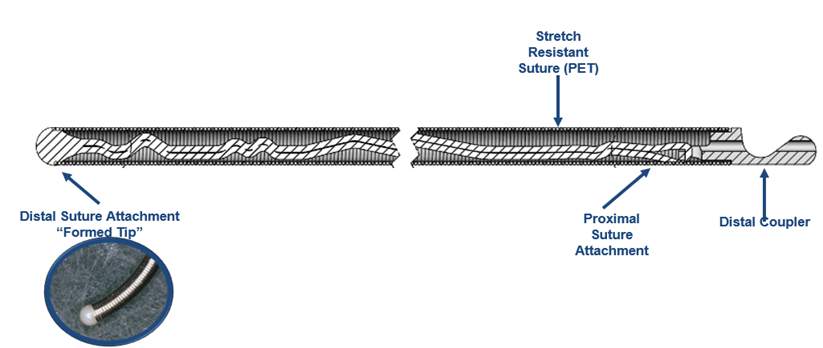
Embold Fibered coils have PET fibers attached to promote thrombogenicity. Embold Soft & Packing don't have fibers... but do have a PET suture inside the coil to combat this elongating event from happening to the coil. Luckily, it promotes thrombosis here, too!
Coil Stretch
Stretch-resistant PET suture runs from proximal to distal end of coil.
500
In small vessels (~2-5mm), size Soft & Fibered coils at this ratio. Vessel over 5mm? Try sizing them this way instead.
1:1 in small vessels up to ~5mm
Oversize coil 25% in larger vessels
(upsize to next coil size)
500
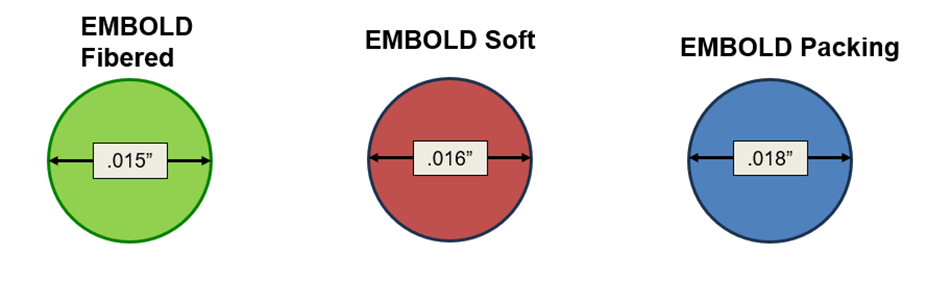
This Embold coil uses the least metal within its family, having the thinnest primary wind... but it has a hairy, occlusive helper. This coil puts the most metal in a vessel, using the largest primary wind. This coil falls in the middle.
Embold Fibered: Thinnest primary wind, least metal volume but fibered
Embold Soft: Intermediate primary wind thickness, intermediate metal volume
Embold Packing: Thickest primary wind, most metal volume
500
This is the most common cause for the coil couplers not separating when the coil is deployed… and the coil then inadvertently retracts along with the delivery wire.

Couplers constrained by external forces
Examples: Couplers inside Microcatheter, couplers buried within dense coil pack, couplers in vessel <1.5mm
500
An aggressive pullback has caused your coil to stretch significantly; you can no longer push/pull the coil but most of it is still within the microcatheter. Do this to save the day.
1. Don't panic
2. Don't detach coil
3. Bail out - remove entire system as a unit
- Pin the pusher wire to the MC hub, pull the MC and the coil out together.
MC retraction is a nuisance. Foreign body retrieval is a disaster.