Whiplash
Gait Assessments
Posture Assessments
Headaches & Migraines
Torticollis
IASTM
TOS
TMJD
100
What is the most common mechanism of injury for whiplash?
Motor vehicle accidents
100
What is a stride length?
The distance between two successive placements of the same foot
100
What is a plumb line?
Vertical line representing gravity drawn from the body's center of gravity equidistant from the medial malleoli.
100
What muscle group commonly contributes to tension headaches?
Suboccipitals and upper cervical extensors
100
What is torticollis?
Abnormal positioning of the head relative to the body
100
What does IASTM stand for?
Instrument Assisted Soft Tissue Mobilization
100
Name a structure that becomes compressed with TOS.
brachial plexus, subclavian vein, subclavian artery
100
What is mastication?
chewing
200
What is the optimal headrest position and why?
Headrest at center of skull to support in case of accident.
200
Name one cause of a hip-hiking gait.
Weak hip flexors, leg length discrepancy, limited knee flexion, pain avoidance
200
What is a Dowager's Hump?
A hump located at the base of the neck, related to kyphosis
200
What muscle's trigger point often causes pain around the eye and temple?
Temporalis, SCM, upper trapezius
200
What self care is recommended for a patient with torticollis?
address postural imbalances, recommend OT or PT, diaphragmatic breathing
200
What is petechiae?
Red dots showing capillary damage
200
What are 2 (local or systemic) contraindications to working TOS.
Uncontrolled hypertension, atherosclerosis, muscle relaxers, anti-inflammatories, cervical rib
200
Name a trait or mechanism unique to the TMJ.
bilaterally functioning synovial joints with articular discs
300
What test would you perform to assess if the pain was originating from the SCM?
Swallowing Test. Palpate and pincer grasp SCM, patient swallows. Pain swallowing indicates TrP in SCM.
300
Weakness of what muscles commonly leads to a Trendelenburg gait?
Weakness in gluteus medius
300
Describe the knee position.
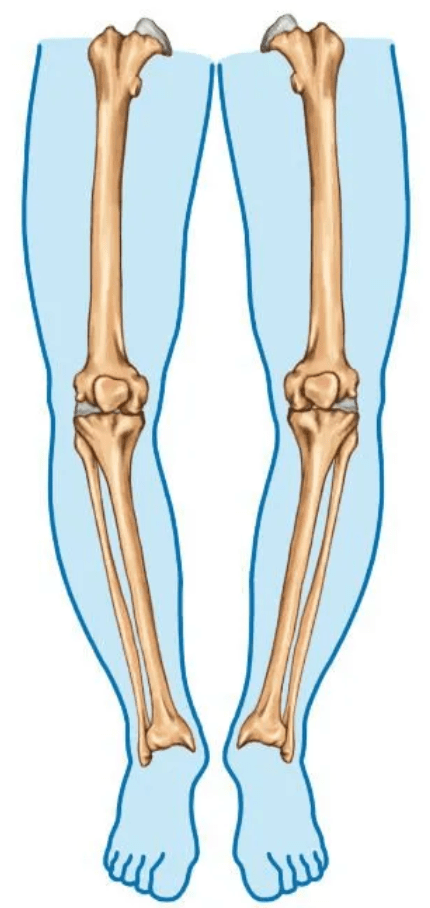
Genu varum.
300
Name two red flags for headaches requiring medical referral for treatment.
Sudden severe onset, neurological deficits, fever, confusion, visual changes
300
What is spasmodic torticollis?
Adult onset, intermittent, muscles twitch/jerk, improved with rest
300
Name 2 common errors?
non specific treatment goal, lack of anatomical knowledge, excessive emollient, overgripping
300
Where are the 3 locations the brachial plexus is easily compressed?
Between anterior/middle scalene, clavicle and first rib, and pec minor and coracoid process
300
What is the primary mover for depression of the mandible?
gravity, then hyoid muscles
400
Name three anterior neck muscles affected by whiplash.
Rectus capitis anterior, rectus capitis lateral, longus collis, longus capitis, platysma, supra and infrahyoids
400
Name a visual indicator of foot overpronation.
Collapsed medial arch, foot eversion, pain avoidance
400
What is the difference between a hammer toe and a claw toe?
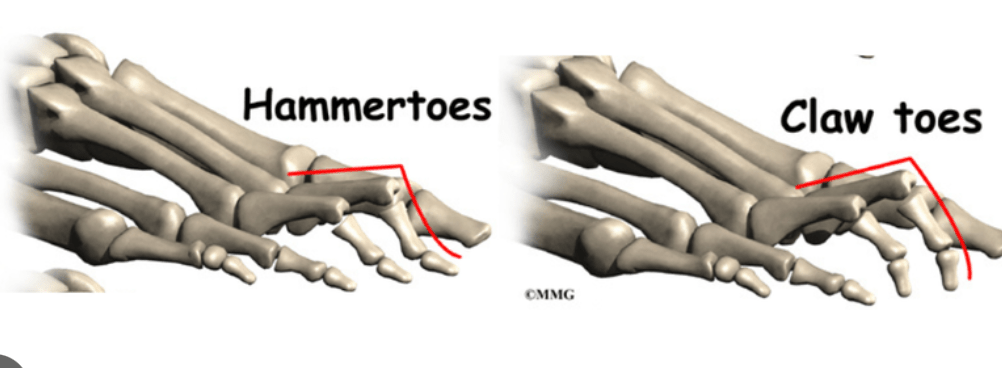
400
What is the difference between a primary and secondary headache?
Primary: headache is condition (tension or migraine)
Secondary: result of underlying pathology (hypertension, trauma)
400
What is the difference between acute acquired and congenital torticollis?
Acute acquired: sudden onset, muscle shortened and spasmed
Congenital torticollis: present at birth
400
Name 2 absolute contraindications.
infection, thrombosis, fever, undiagnosed lump, uncontrolled hypertension, neurogenic condition
400
Name two causes for thoracic outlet syndrome, unrelated to posture or activities of daily living.
cervical rib, systemic immune or metabolic disorder (diabestes, hypothyroidism, rheumatoid arthritis), trauma, pregnancy
400
What self care would you recommend to a patient with TMJD?
pterygoid (using cork) and suboccipital stretch, intraoral self massage
500
Which large cervical ligament is commonly injured in whiplash?
Anterior Longitudinal Ligament
500
Describe a diplegic gait.
stiffness and difficulty coordinating movement in both legs (scissoring gait)
500
What is the Q angle?
describes the relationship between the pelvis, leg and foot.
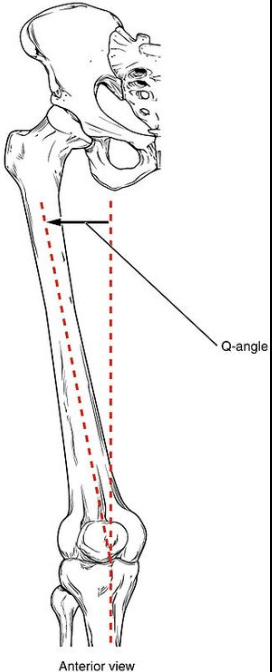
500
What is a paroxysmal neurological disorder?
Conditions causing sudden brief attacks of involuntary movement or cerebellar disfunction
500
What are considerations of working on a baby with torticollis?
Parental consent, patient positioning, still developing cranial structures
500
What are the 5 metrics to determine proper dosing? (hint: TTIPS)
Time, Treatment angle, Instrument Shape, Pressure, stroke rate
500
Describe and explain the cervical distraction test.
Client seated or supine
Grasp occiput and frontal bone
Return head to neutral and slowly traction in superior direction hold at least 30 seconds
Positive sign- reduction in symptoms as nerve root compression or facet joint compression is relieved
500
Name the two tests for TMJD.
AROM (C or S shape), 3 knuckle test