Perception
Depth Cues
Thinking & Problem-Solving
Memory
100
This German word for "whole" or "pattern" describes the human tendency to perceive visual patterns.
Gestalt
100
The blocking of one object by another, creating the impression that one object is closer than the other.
Interposition
100
The ideal example of a given concept.
Prototype
100
This is the first step in the process of forming a memory.
Encoding
200
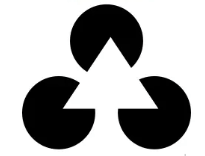
The tendency to perceive a triangle in this image is due to this Gestalt principle of grouping.
Closure
200
A depth cue that makes it appear that parallel lines are converging in the distance.
Linear perspective
200
This cue involves exposing people to specific stimuli in order to get them to notice or perceive something.
Priming
200
This is a memory that recalls a specific event that happened in a person's life.
Episodic memory
300
This is a failure to perceive a change in an environment due to selective attention.
Change blindness
300
A depth cue that causes an object to appear farther away because it is smaller.
Relative size
300
Through this cognitive bias, individuals mistakenly believe that the odds of something happening are linked to some other random thing that happened previously.
Gambler's Fallacy
300
This is the process through which brain synapses are strengthened so as to facilitate memory and processing over the long-term.
Long-term potentiation
400
An aspect of top-down processing that affects what we perceive by unconsciously influencing our expectations.
Perceptual set
400
The principle that surfaces appear to change (become less detailed) as distance from the observer increases.
Texture gradient
400
This is a cognitive bias that limits a person's ability to see alternative uses for a familiar object.
Functional fixedness
400
This part of the brain helps process highly emotional memories, in particular.
Amygdala
500
This is the ability to perceive an object as unchanging in size or shape even as our viewpoint changes.
Perceptual constancy
500
This binocular depth cue involves the merging of retinal images by the brain.
Convergence
500
The process of adding new categories to one's schemas in order to reflect new information.
Accommodation
500
This is the deepest level of memory encoding, according to the levels of processing model of memory.
Semantic encoding