Fluid and Electrolytes
Fluid and Electrolytes
Fluid and Electrolytes
Fluid and Electrolytes
Fluid and Electrolytes
100
define Intracellular fluids and where they are stored for your clients
What is Intracellular Fluid= Water in the cells, 40% of body weight and stored in muscles?
100
The pituitary gland secrete this to regulate fluid balance.
What is anit-diuretic hormone (ADH)= vasopressin?
100
Common causes of fluid volume overload.
What is over-hydration, abnormal intake, HF, and kidney failure?
at risk - older adults, chronic debilitating conditions, any person receiving IV therapy
100
Normal sodium range.
What is 135-145 mEq/L?
100
Common causes of hyponatremia.
What is GI suctioning, diarrhea, inadequate salt intake, vomiting, diuretics, fluid shifts?
200
Define Extracellular fluids
Extravascular Fluid= Intravascular (PLASMA), Interstitial (Between Cells), Transcellular space (Fluid in abdominal cavity, synovial cavity, etc.)
200
Low ADH is also known as what condition and what fluid volume status are they at risk for
What is diabetes insipidus?
increased output
risk for fluid volume deficit
200
Clinical manifestations of fluid volume deficit.
What is weight loss, decreased skin turgor, dry oral mucous membranes, decreased urinary output, increased urinary specific gravity, increased BUN and HCT?
200
Normal magnesium range
What is 1.3-2.1 mEq/L ?
200
Common causes of hypernatremia.
What is Cushing's syndrome, diabetes insipidus, excessive water loss, high sodium food?
300
Define osmolarity/osmolality.
What is the concentration of solute in solution?
300
High ADH also know as
What is the SIADH (syndrome of inappropriate ADH)?
decreased output
300
Clinical manifestations of fluid volume overload.
What is weight gain, peripheral edema, distended neck veins, increased central venous pressure, Fluid in the lungs, SOB dyspnea, JVD, Polyuria, decreased BUN, & HCT?
300
Normal blood PH range.
What is 7.35-7.45?
300
Clinical manifestation of hyponatremia
What are neurological changes, headache, lethargy, muscle twitching, coma, & seizures?
400
Double Jeopardy!!!! 500,000 points!
What is a Normal Urine for Specific Gravity test and what are the levels
Level up and answer below!
What conditions would be 1.001 ( less particles) and 1.040 ( more particles)
What is the number of particles in the urine and The normal range for urine specific gravity is 1.005 to 1.030. ?
Low particles/more water like 1.001-
- Damage to kidney tubule cells ( renal tubular necrosis )
- Diabetes insipidus.
- Drinking too much fluid.
- Kidney failure.
- Low sodium level in the blood.
- Severe kidney infection (pyelonephritis)
High particles / less water USG like 1.040-
- Adrenal glands do not produce enough hormones (such as Addison disease)
- Glucose in the urine.
- Heart failure.
- High sodium level in the blood.
- Loss of body fluids ( dehydration )
- Narrowing of the kidney artery (renal artery stenosis)
- Shock
400
The adrenal cortex secretes this hormone to regulate blood pressure.
What is aldosterone?
400
Normal Potassium Range.
What is 3.5-5?
400
pH 7.29 CO2 48 HCO3 34
What is Partly Compensated Respiratory Acidosis
400
Clinical manifestations of hypernatremia.
What is confusion, lethargy, restlessness, increased edema, decreased urine output, thirst, elevated temp, dry mouth, + sticky mouth membranes?
500
Your client received a head injury in high school soccer and has alterations with the thirst mechanism. What gland would you anticipate has had trauma which regulates thirst?
What is the Hypothalamus?
500
Common causes of fluid volume deficiency (FVD).
What is diarrhea, blood loss, trauma, GI suctioning, burns, vomiting, diuretics?
500
Normal Calcium and Magnesium range.
What is 9.0-10.5 mg/dL? Calcium
What is 1.3-2.1 mg/dL? Magnesium
500
Normal hemoglobin.
What is 12-18 g/dL ?
500
Normal Albumin range.
What is 3.5-5.0g/dL ?
600
Interpret pH-7.35, CO2-38, HCO3-24
What is normal acid base balance numbers
600
5 IV Potassium Safety Measures
-IV KCl adm. at a maximal rate of 10 mEq/hr.
- Never give IV push
- Never add to existing IV solutions
- Monitor IV site for inflammation
- Always with a IV pump
- Monitor cardiac rhythm for dysrhythmias
600
Your client has hyperkalemia.
Your client asks which foods they should avoid foods high in potassium.
What will you teach your client?
- Bananas
- Avocados
- Sweet potatoes
- White potatoes (with skin)
- Tomatoes and tomato products
- Oranges and orange juice
- Spinach
- Beans (white, lima, kidney)
- Salmon
- Yogurt
600
The client has hypocalcemia and has lactose intolerance. What foods can you provide to the client to eat ,besides dairy, that are high in calcium
- Orange Juice with Added Calcium.
- Tofu with Added Calcium.
- Canned Fish
- Beans
- Almonds
- Leafy Green Vegetables
600
Double Jeopardy!!! 1 million points!!
Match the Imbalanced Electrolyte to description
1.Hypernatremia 2.Hyponatremia
3. Hypocalcemia 4. Hypercalcemia
A Your client is at risk for muscle twitching and/or weakness, thirst, tachycardia, GI upset, edema (excess fluid), irritability or agitation, and coma.
B Your client is at risk for Muscle cramps or weakness, Nausea and vomiting, Lethargy, or extreme low energy, Headache, Confusion or other mental changes, Seizures
C- Kidney pain (due to kidney stones),Bone pain, Aches and pains, Abdominal pain, Nausea and vomiting, Poor appetite, Constipation, Chronic fatigue/tiredness.
D- Chvostek's sign, Trousseau's sign, Paresthesia, Tetany, Seizures (focal, petit mal, grand mal),Muscle cramps, Muscle weakness, Laryngospasm,
1-A
2- B
3- D
4- C
700
Inadequate water intake, excess water loss, or rarely too much intake of this electrolyte
What is Hypernatremia
700
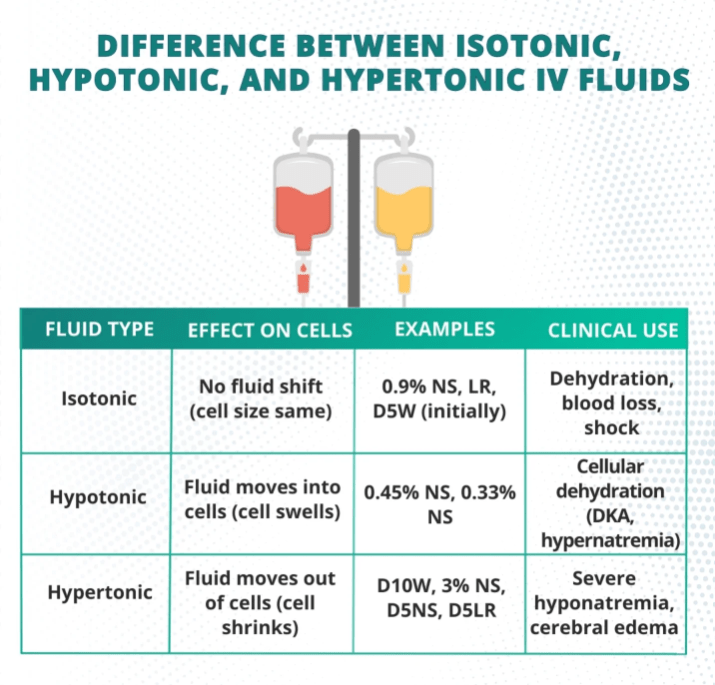
Name the type of solutions and an example (ex .9NS, D5W, .45NS, LR, 3%NS ) to anticipate using:
a. we need the Cells to swell to absorb fluid
b. we need the Cells to shrink to remove fluid
c. we need the Cell size same , but increase intravascular volume
a . Hypotonic
b. Hypertonic
c. Isotonic
700
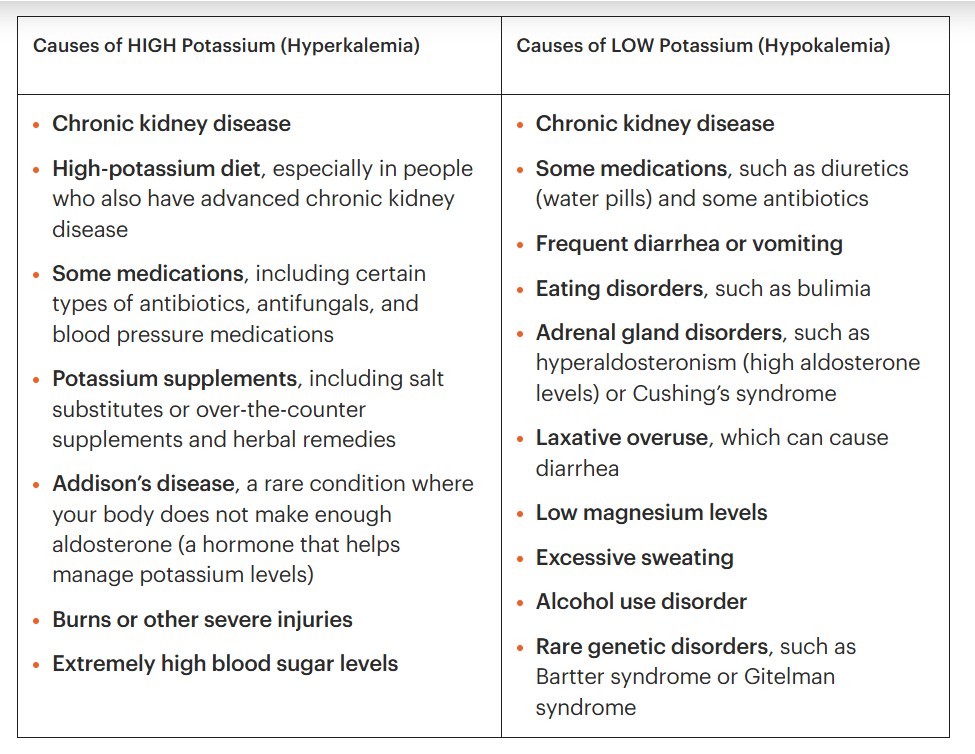
Who am I ? Usually I like to stay inside, If I am out and too high, client who may have chronic kidney disease never let me go or they take medications to increase me, clients with Addison's disease love keeping me around, or those who have burns or trauma. If their blood sugar goes very high, I come out and really increase. I don't like insulin and albuterol, it makes me go home. I don't like normal rhythms , I peak and invert T waves depending if I am high or low
700
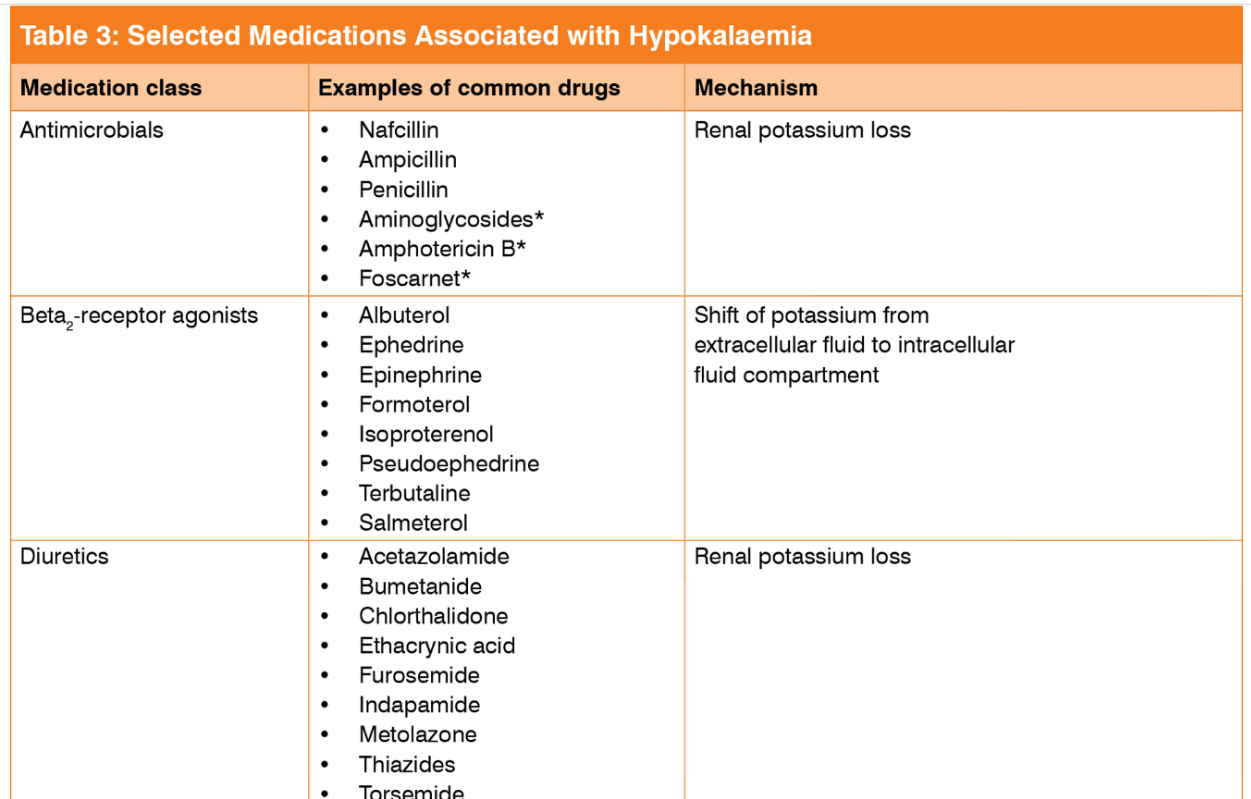
We all have something in common we are used for:
Sodium Polystrene Sulfate ( if gut working)
IV insulin
Albuterol
Diuretics
Medications that will lower potassium intentionally or unintentionally
700
-evaluate fluid status continuously
-intervene quickly to prevent complications such as hypovolemic shock, acute kidney injury, or electrolyte disturbances.
-frequent monitoring of intake and output, assessment of vital signs,
-evaluate mental status, skin integrity, and laboratory values.
What is nursing interventions for fluid volume alterations